Iran Hormuz Statement: Future Without American Presence
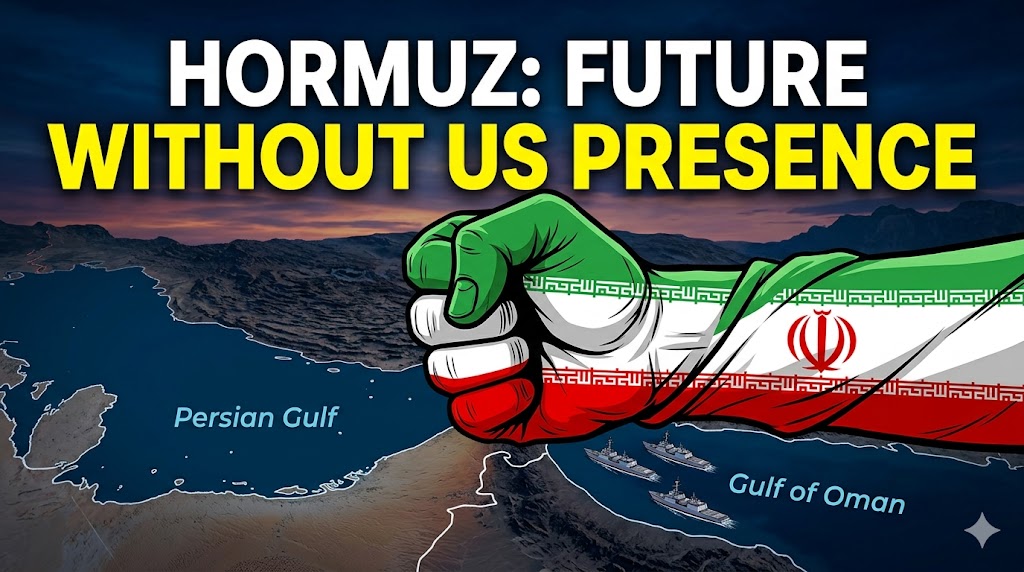
On April 30, 2026, Iran’s Parliament Speaker Mohammad Bagher Ghalibaf issued a strong statement asserting that Iran’s continued control over the strategic Strait of Hormuz would secure “a future free from American presence and interference.” Speaking on the occasion of Iran’s national Persian Gulf Day, Ghalibaf described this control as a “precious blessing” not only for Iran but also for its neighbors in the region.
This declaration comes at a highly sensitive moment in the ongoing US-Iran standoff. The fragile ceasefire established in early April 2026 remains in place, yet tensions persist due to the US naval blockade of Iranian ports and Iran’s restrictions on shipping through the Strait of Hormuz. The waterway, through which approximately one-fifth of the world’s oil and significant volumes of liquefied natural gas pass, has become the central theater of economic and strategic confrontation.
Ghalibaf’s remarks reflect Tehran’s broader narrative of resisting external influence in the Persian Gulf and positioning Iran as the natural guardian of this vital maritime chokepoint. They also serve as a political message aimed at both domestic audiences and international actors amid stalled negotiations and fluctuating global energy prices.
The Strategic Importance of the Strait of Hormuz
The Strait of Hormuz is one of the world’s most critical maritime passages, connecting the Persian Gulf to the Gulf of Oman and the Arabian Sea. Its narrowest point is only about 21 nautical miles wide, making it highly vulnerable to disruption.
Historically, roughly 20-21% of global oil consumption and a substantial share of LNG transit through this route daily. Any significant restriction or closure has immediate and far-reaching consequences for energy markets, international trade, and economic stability.
Iran has long claimed sovereignty over parts of the strait and maintained the capability to disrupt traffic using naval forces, mines, anti-ship missiles, and fast-attack boats. In the current 2026 crisis, Iran has leveraged this geographic advantage by restricting shipping in response to US actions, while the United States has imposed a counter-blockade on Iranian ports.
Ghalibaf’s statement underscores Iran’s determination to maintain influence over the strait and use it as leverage in negotiations with the United States and its allies.
Details of Ghalibaf’s Statement and Persian Gulf Day Context
Ghalibaf made the remarks in a post on X (formerly Twitter) to mark Persian Gulf Day, an annual observance highlighting Iran’s historical and cultural connection to the waterway, which Iran prefers to call the Persian Gulf rather than the Arabian Gulf.
He stated: “Today, by managing the Strait of Hormuz, Iran will provide itself and its neighbors with the precious blessing of a future free from American presence and interference.”
This language frames Iranian control not merely as a security or economic matter but as a moral and regional benefit that would liberate the Gulf from external powers. It aligns with statements from other Iranian leaders, including Supreme Leader Mojtaba Khamenei, who have similarly asserted that the future of the region lies without US military presence.
The timing is significant. It follows weeks of a dual blockade — Iran restricting Hormuz traffic and the US blocking access to Iranian ports — which has severely reduced shipping volumes and driven oil prices to multi-year highs.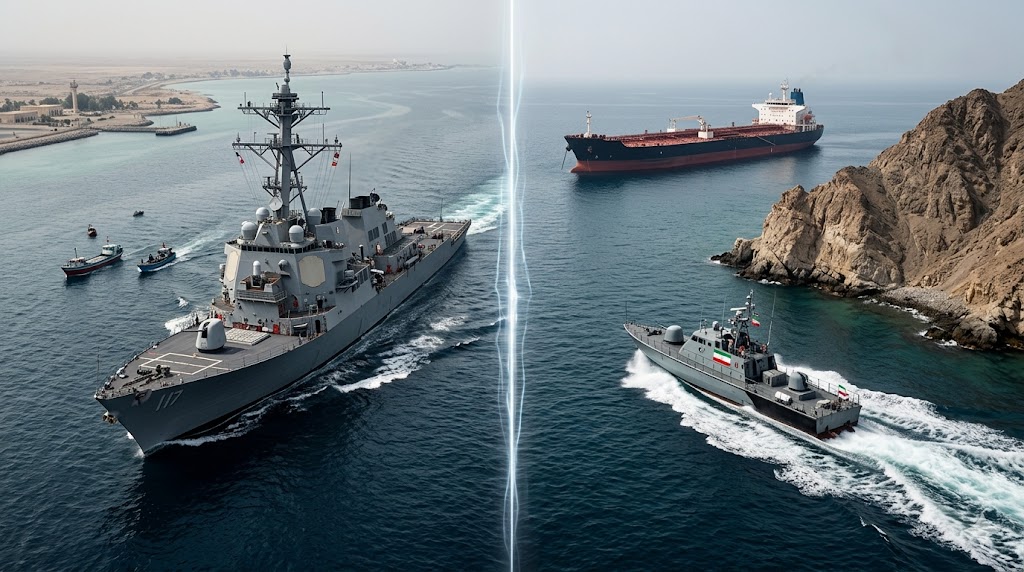
visualization of the "Dual Blockade" in 2026: On the left, a US Navy destroyer sails near Bandar Abbas, enforcing the port blockade; on the right, an Iranian Revolutionary Guard fast-attack craft patrols the chokepoint entrance of the Strait of Hormuz, restricting commercial transit
Current Situation in the Strait of Hormuz (May 2026)
As of early May 2026, the Strait of Hormuz remains heavily restricted. Shipping traffic has dropped dramatically compared to pre-crisis levels, with only a small fraction of normal daily transits occurring. This has created supply chain disruptions for oil, gas, and other commodities, affecting economies far beyond the region.
The US maintains a naval presence to enforce its blockade and protect commercial shipping where possible, while Iran continues to assert its right to control navigation in what it considers its territorial waters and adjacent zones.
Negotiations mediated by countries such as Pakistan have made limited progress. Iran has signaled willingness to reopen the strait in exchange for sanctions relief and an end to the US blockade, but the Trump administration has insisted on verifiable limits on Iran’s nuclear program as a precondition for broader concessions.
Global energy markets remain volatile, with Brent crude prices reflecting ongoing uncertainty about when full shipping through the strait might resume.
Iran’s Broader Strategic Objectives
Iran’s emphasis on the Strait of Hormuz serves multiple purposes:
Deterrence and Leverage: By highlighting its control, Tehran aims to deter further US or Israeli military action and strengthen its negotiating position.
Regional Leadership: Framing the strait as a shared regional asset under Iranian stewardship seeks to appeal to Gulf neighbors while isolating the United States.
Domestic Consolidation: Strong rhetoric helps rally domestic support and project resilience despite economic pressures from sanctions and the ongoing standoff.
Long-term Vision: Iranian leaders envision a Gulf security architecture that excludes external military bases and prioritizes cooperation among littoral states.
These objectives are consistent with Iran’s long-standing policy of resisting what it calls “foreign interference” in the region.
Reactions and International Implications
The statement has drawn attention from regional and global actors. Gulf Arab states, many of which maintain security partnerships with the United States, are likely monitoring developments closely. While some may share concerns about excessive external involvement, others rely on US security guarantees for protection against perceived Iranian threats.
The United States has not issued an immediate official response to Ghalibaf’s specific remarks, but the Trump administration continues to emphasize freedom of navigation as a core principle and has explored options for international coalitions to secure shipping lanes.
Energy-importing nations, particularly in Asia, face the most direct economic impact. Higher oil prices and supply uncertainties affect inflation, transportation costs, and industrial production worldwide.
The situation also complicates broader diplomatic efforts. Any escalation involving the strait risks wider conflict, humanitarian challenges, and environmental damage from potential oil spills or military actions.
Challenges and Risks Ahead
Several factors complicate the current impasse:
Economic Pressure: Prolonged restrictions hurt Iran’s own oil exports and economy while simultaneously straining global markets.
Military Risks: Renewed strikes or attempts to forcibly reopen the strait could trigger dangerous escalation.
Diplomatic Hurdles: Deep mistrust between Washington and Tehran, coupled with differing priorities (nuclear issues versus immediate economic relief), slows progress.
Regional Dynamics: Proxy networks, differing Gulf state perspectives, and involvement of other powers such as Russia and China add layers of complexity.
Sustainable resolution will likely require compromises that address security concerns on all sides while restoring stable commercial shipping.
The Path Forward: Diplomacy or Continued Standoff?
As negotiations continue, the role of third-party mediators remains crucial. Countries with good relations with both sides may help bridge gaps on sequencing issues — such as initial maritime confidence-building measures followed by nuclear discussions.
For its part, Iran appears determined to use its geographic position as a strategic asset while projecting confidence in a future with reduced US influence. Whether this vision can be realized peacefully or will lead to further confrontation remains one of the defining questions of the current crisis.
The international community has a shared interest in de-escalation, unimpeded navigation, and stable energy supplies. Diplomatic ingenuity and restraint from all parties will be essential in the coming weeks and months.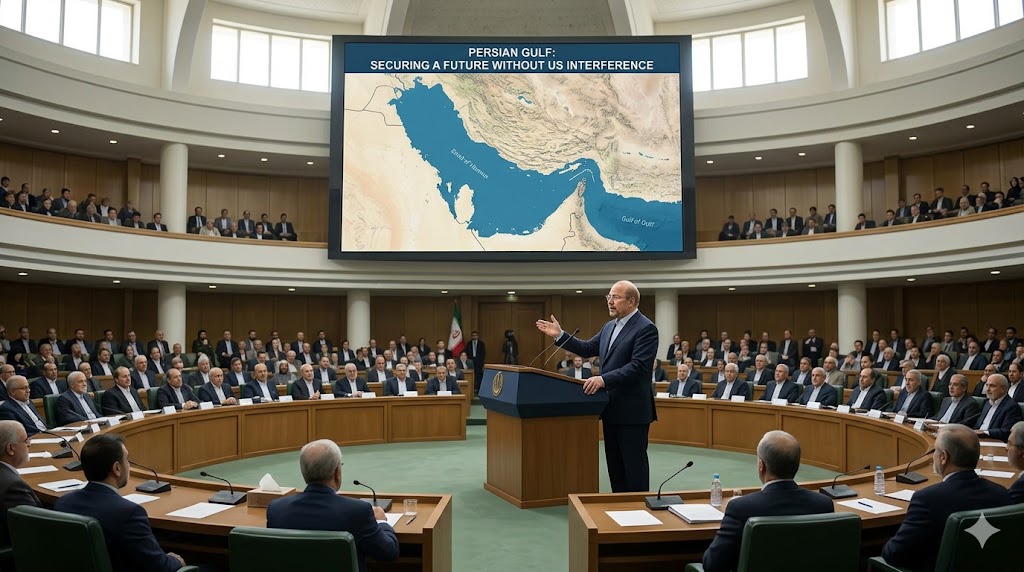
Persian Gulf Day Assertion
Conclusion: A Pivotal Moment in Regional Affairs
Iran’s assertion that control over the Strait of Hormuz will ensure a “future free from American presence” reflects deep-seated strategic ambitions and a defiant stance amid the 2026 US-Iran tensions. Delivered by Parliament Speaker Mohammad Bagher Ghalibaf on Persian Gulf Day, the statement highlights the central role of this vital waterway in Tehran’s regional calculus.
While the rhetoric underscores Iran’s determination, the practical realities of global interdependence, economic costs, and military risks suggest that a purely confrontational approach carries significant dangers. The path to stability lies in balanced negotiations that respect legitimate security interests while restoring the free flow of commerce through one of the world’s most important maritime passages.
As developments unfold, the Strait of Hormuz will continue to serve as both a litmus test for regional power dynamics and a reminder of how interconnected global security and energy markets truly are.