Israel Destroys Hezbollah Tunnels in Southern Lebanon
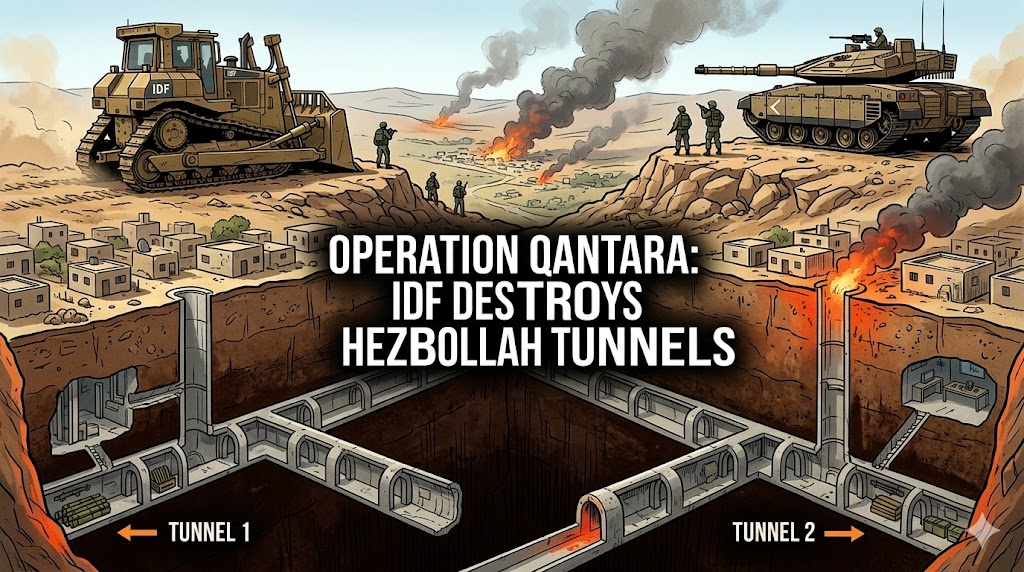
The Major IDF Operation
On April 28, 2026, the Israel Defense Forces (IDF) carried out a significant military operation in southern Lebanon, destroying two extensive underground tunnel networks belonging to Hezbollah in the town of Qantara. The demolition involved more than 450 tonnes of explosives, resulting in powerful blasts that were felt across parts of northern Israel and triggered seismic alerts.
The IDF described the tunnels as among the largest and most sophisticated discoveries in southern Lebanon to date. Built over approximately a decade with direct guidance and support from Iran, the networks were designed to facilitate cross-border attacks, including potential large-scale incursions similar to those seen in other conflict zones. This operation underscores Israel’s ongoing efforts to neutralize Hezbollah’s subterranean infrastructure along its northern border, even amid a fragile regional environment.
This article examines the details of the tunnel destruction, the background of Hezbollah’s underground strategy, the technical aspects of the operation, its broader strategic implications, and the current state of Israel-Hezbollah dynamics.
Background: Hezbollah’s Underground Strategy in Southern Lebanon
Hezbollah, the Iran-backed Lebanese militant group, has invested heavily in developing an extensive network of tunnels and underground facilities in southern Lebanon over the past two decades. These tunnels serve multiple purposes: storing weapons, enabling covert movement of fighters, launching rockets and drones, and preparing for ground incursions into Israeli territory.
The elite Radwan Force, Hezbollah’s special operations unit, was reportedly intended to utilize these tunnels for offensive operations. Israeli intelligence has long monitored such infrastructure, viewing it as a direct threat to civilian communities along the Israel-Lebanon border.
This is not the first time Israel has targeted Hezbollah’s subterranean capabilities. Earlier efforts, such as Operation Northern Shield launched in 2018, focused on detecting and neutralizing cross-border attack tunnels. However, the April 2026 operation in Qantara targeted deeper, more extensive domestic tunnel networks within Lebanese territory, highlighting the evolution of Hezbollah’s engineering efforts.
Israeli officials have repeatedly stated that Iran has played a central role in funding, designing, and guiding the construction of these systems, providing advanced engineering expertise and resources to enhance Hezbollah’s capabilities.
Details of the Qantara Tunnel Destruction
According to the IDF, troops from Division 36, including Brigade 7, the Golani Brigade, and the elite Yahalom special forces unit, located two major tunnel systems in the Qantara area. The networks extended for a combined length of approximately two kilometers (1.2 miles) and reached depths of up to 25 meters in places. Carved into hard granite rock, the tunnels included operational shafts, command facilities, and connections to firing positions directed toward Israel.
The military emphasized that the tunnels were constructed over roughly a decade and represented a significant investment by Hezbollah and its backers. One Israeli source described the operation as targeting the “largest Hezbollah tunnel city” discovered in southern Lebanon.
On the afternoon of April 28, 2026, the IDF detonated over 450 tonnes of explosives to demolish the underground structures. The massive blast created large craters visible from afar and sent shockwaves that were detected as far as northern Israel. Footage released by the IDF showed dramatic plumes of smoke and debris rising from the site.
Prime Minister Benjamin Netanyahu addressed the operation in a recorded statement, saying, “Today we blew up a huge Hezbollah terror tunnel. We are destroying their terror infrastructure… and we’re not done yet.” The military stressed that the action was part of broader efforts to systematically dismantle Hezbollah’s offensive capabilities in the region.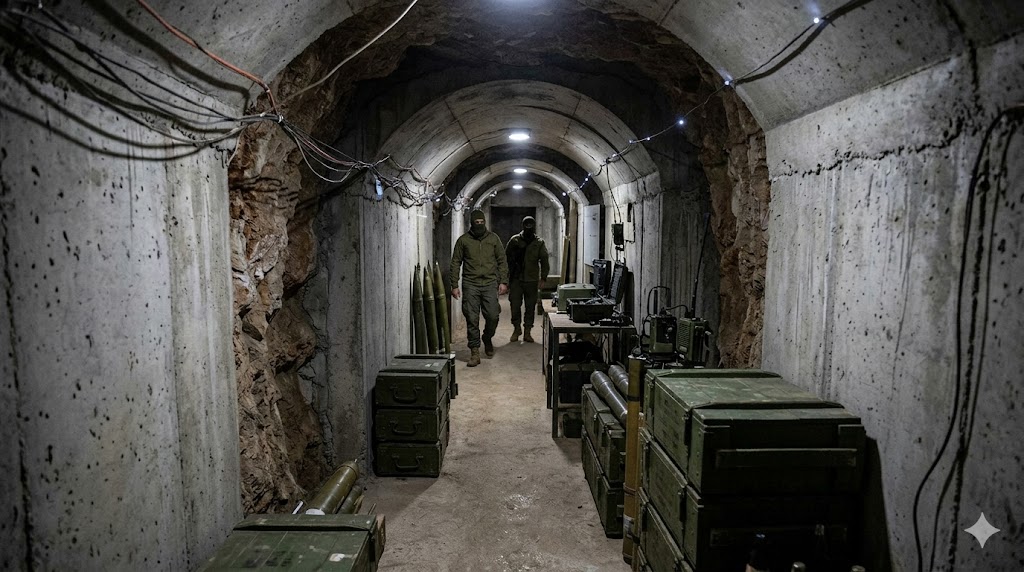
It provides a detailed look at the sophistication of the tunnels before their destruction
Technical and Operational Aspects
The scale of the demolition — requiring 450 tonnes of explosives — reflects the engineering challenge posed by the tunnels. Built deep underground in challenging terrain, the structures were designed for durability and concealment. Israeli forces employed specialized units trained in underground warfare to map, access, and ultimately neutralize the networks.
The operation also involved issuing new evacuation orders for nearby areas in southern Lebanon, aimed at minimizing civilian risk during the high-explosive demolition. Lebanese media reported a large crater at the site and described the event as a major demolition operation.
This action occurred against the backdrop of continued low-level violations of the fragile ceasefire. Hezbollah has continued sporadic drone attacks and other provocations, while Israel has maintained strikes on militant infrastructure to prevent rearmament and repositioning.
Strategic Significance and Security Implications
The destruction of the Qantara tunnel networks delivers a substantial blow to Hezbollah’s operational readiness in southern Lebanon. By eliminating these underground assets, Israel reduces the group’s ability to launch surprise ground attacks, store large quantities of weapons close to the border, and move fighters undetected.
The tunnels were reportedly linked to rocket launchers and command centers, making them dual-use infrastructure for both defensive and offensive purposes. Their removal enhances the security of northern Israeli communities that have faced repeated threats and displacements due to cross-border fire.
From a broader perspective, the operation highlights the persistent challenge posed by Hezbollah’s military buildup, estimated to include tens of thousands of rockets and advanced weaponry. Israel views these capabilities — many supplied or supported by Iran — as an existential threat that must be addressed to restore deterrence and enable the safe return of displaced residents to the north.
The timing of the operation, amid regional tensions including the US-Iran conflict, also reflects Israel’s determination to address multiple threats simultaneously without allowing any single front to escalate unchecked.
Hezbollah’s Response and Regional Reactions
Hezbollah has dismissed the Israeli claims as propaganda intended to justify the large-scale demolition. The group has continued its activities, including drone strikes on Israeli positions, resulting in casualties on both sides even after ceasefire arrangements.
Lebanese officials and media have expressed concern over the impact on civilian areas and the risk of further escalation. The operation has renewed debates about the implementation of UN Security Council Resolution 1701, which calls for the disarmament of non-state actors south of the Litani River and the deployment of the Lebanese Army in the border region.
International observers, including the United Nations Interim Force in Lebanon (UNIFIL), continue to monitor the situation closely. Calls for restraint and full adherence to ceasefire terms have come from various quarters, though progress toward a more stable arrangement remains slow.
Broader Context: Israel-Hezbollah Tensions in 2026
The tunnel destruction is part of a longer pattern of conflict between Israel and Hezbollah that intensified significantly after October 2023. Despite periodic ceasefire efforts, both sides continue to engage in tit-for-tat actions, with Israel focusing on degrading Hezbollah’s military infrastructure and the group seeking to maintain pressure and demonstrate resilience.
The discovery and demolition of sophisticated tunnels underscore the high stakes involved. For Israel, neutralizing such threats is essential for long-term border security. For Hezbollah, these assets represent both defensive depth and offensive potential, closely tied to its identity as a resistance movement.
The involvement of Iranian expertise in tunnel construction further illustrates the proxy dimensions of the conflict, linking events in Lebanon to wider regional rivalries.
Humanitarian and Civilian Considerations
Large-scale demolitions in populated areas inevitably raise humanitarian concerns. Israeli forces issued evacuation warnings prior to the operation, but the powerful explosions still affected nearby communities. Reports of damage to civilian infrastructure, including possible proximity to schools and mosques, have surfaced, though details remain contested.
Both sides accuse each other of endangering civilians by embedding military assets within or near populated zones. Long-term resolution will require addressing the underlying presence of armed groups in southern Lebanon while ensuring the protection of civilian populations on both sides of the border.
Future Outlook and Challenges
The successful demolition of the Qantara tunnels represents a tactical achievement for the IDF, but it does not eliminate the broader threat posed by Hezbollah’s arsenal and organizational capacity. Israel has indicated that similar operations may continue as long as threats persist.
Achieving lasting stability will likely depend on diplomatic efforts to enforce Resolution 1701, strengthen the Lebanese state’s authority in the south, and address the root causes of the conflict, including Iranian support for Hezbollah.
In the meantime, both Israel and Lebanon face the difficult task of balancing security needs with the desire to prevent further escalation that could draw in wider regional actors.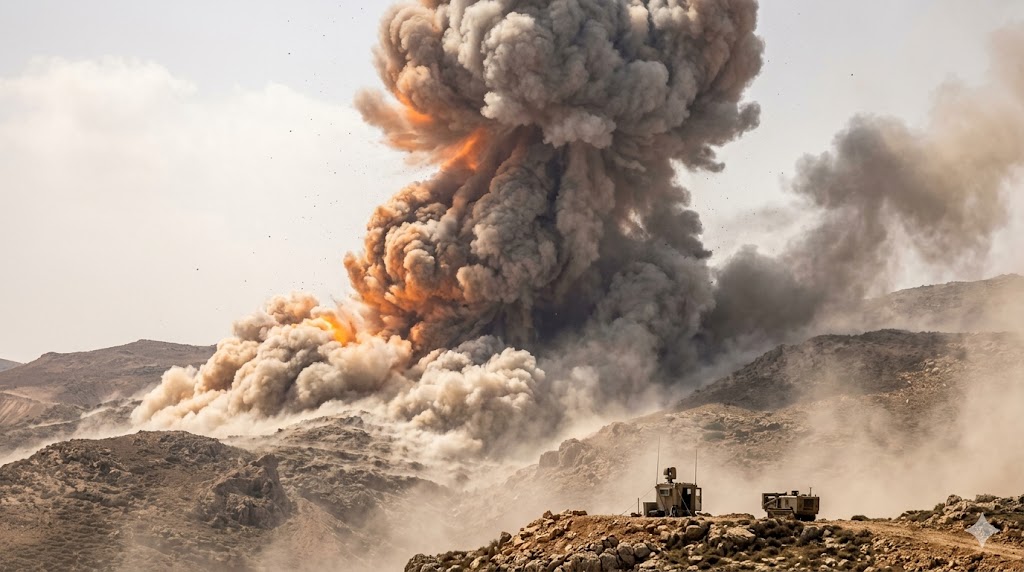
This image vividly illustrates the Details of the Qantara Tunnel Destruction and the scale of the 450-tonne explosion
Conclusion: A Decisive Strike Against Underground Threats
The Israeli operation on April 28, 2026, to destroy two major Hezbollah tunnel networks in Qantara using over 450 tonnes of explosives marks a notable development in the ongoing efforts to secure Israel’s northern border. The tunnels, constructed over a decade with Iranian guidance, represented a sophisticated component of Hezbollah’s military strategy.
While the action has weakened Hezbollah’s immediate capabilities in the area, it also highlights the persistent challenges of underground warfare and the complexities of achieving durable peace in a volatile region. As both sides continue to maneuver amid fragile ceasefire conditions, the focus remains on preventing further escalation while addressing core security concerns.
The events in Qantara serve as a reminder of the high stakes involved and the importance of sustained vigilance, diplomatic engagement, and adherence to international norms in managing one of the Middle East’s most enduring conflicts.