"Trump Orders Long Iran Blockade for Nuclear Deal"
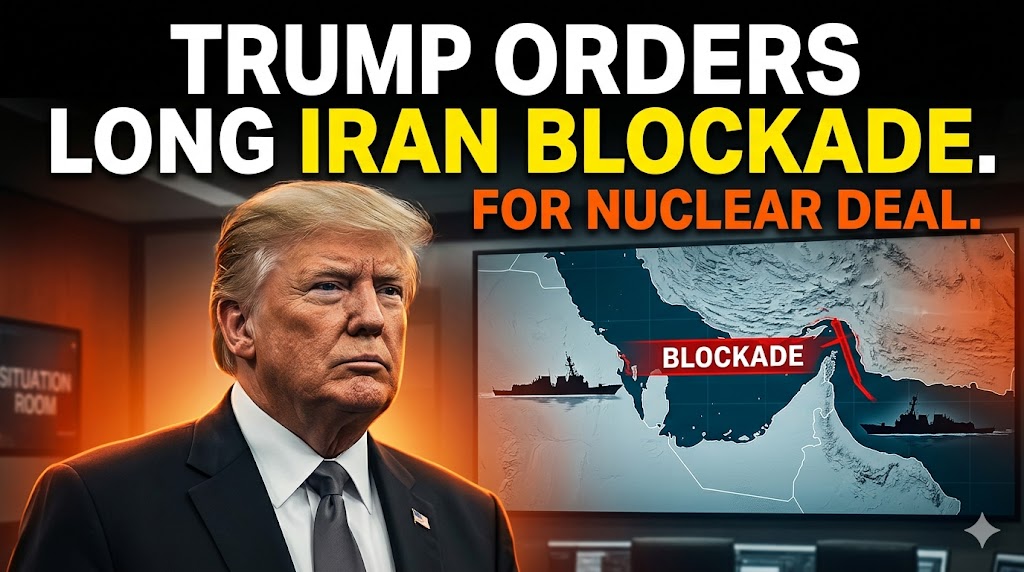
President Donald Trump has directed senior US national security officials to prepare for an extended naval blockade of Iran’s ports, with the explicit goal of compelling Tehran to make significant concessions on its nuclear program. This directive, reported in late April 2026, underscores the Trump administration’s preference for sustained economic and military pressure over immediate resumption of direct combat operations.
The decision comes as the fragile ceasefire between the United States and Iran — established in early April following weeks of direct military exchanges — faces ongoing challenges. By maintaining and potentially prolonging the blockade, the administration aims to tighten the economic noose on Iran’s oil exports, which are vital to the Iranian regime’s revenue.
This approach reflects a calculated assessment that a long-term blockade carries fewer risks than either restarting large-scale strikes or withdrawing without securing a robust nuclear agreement. As global energy markets remain volatile due to disruptions in the Strait of Hormuz, Trump’s strategy has significant implications for regional stability, international trade, and domestic energy prices in the United States.
This article explores the details of Trump’s instructions, the strategic rationale behind the prolonged blockade, the current state of US-Iran negotiations, potential challenges, and the broader geopolitical consequences as of May 2026.
Background of the US-Iran Conflict and Ceasefire
The 2026 US-Iran confrontation escalated sharply on February 28 with coordinated strikes on Iranian military and nuclear-related targets. Iran responded with missile and drone attacks, leading to significant disruptions in maritime traffic through the Strait of Hormuz — a critical chokepoint for global oil supplies.
A conditional ceasefire was brokered in early April, providing a temporary pause in direct hostilities. However, fundamental disagreements persist. Iran proposed reopening the Strait of Hormuz and easing restrictions in exchange for the lifting of the US naval blockade, while suggesting that detailed nuclear talks could be deferred. The Trump administration rejected this sequenced approach, insisting that any lasting deal must include upfront, verifiable limits on Iran’s nuclear enrichment activities and its stockpile of highly enriched uranium.
In this context, President Trump has viewed the naval blockade — which prevents vessels from accessing or departing Iranian ports — as a powerful lever of influence. Rather than viewing it as a temporary measure, he has instructed officials to plan for its extension over several months if necessary.
Trump’s Directive to National Security Officials
According to multiple reports, President Trump conveyed his intentions during high-level meetings, including sessions in the Situation Room and discussions with energy executives. He directed national security advisers, Pentagon officials, and other key personnel to develop plans for sustaining the blockade for an extended period.
The president reportedly assessed that continuing the blockade represents the least risky option among available alternatives: resuming bombing campaigns, accepting a weaker deal, or simply walking away from the conflict. Trump has publicly described the blockade as “incredible” and “genius,” emphasizing its effectiveness in squeezing Iran’s oil exports — the lifeblood of the regime’s economy.
Senior officials have begun laying groundwork for this extension, including measures to mitigate potential impacts on global energy markets and American consumers. Discussions with US oil companies focused on ensuring domestic supply stability and minimizing price spikes at the pump, which have already risen noticeably due to the Hormuz disruptions.
Trump’s stance is clear: the blockade will remain in place until Iran demonstrates serious commitment to a comprehensive nuclear agreement that addresses US concerns about enrichment, weaponization pathways, and regional proxy activities.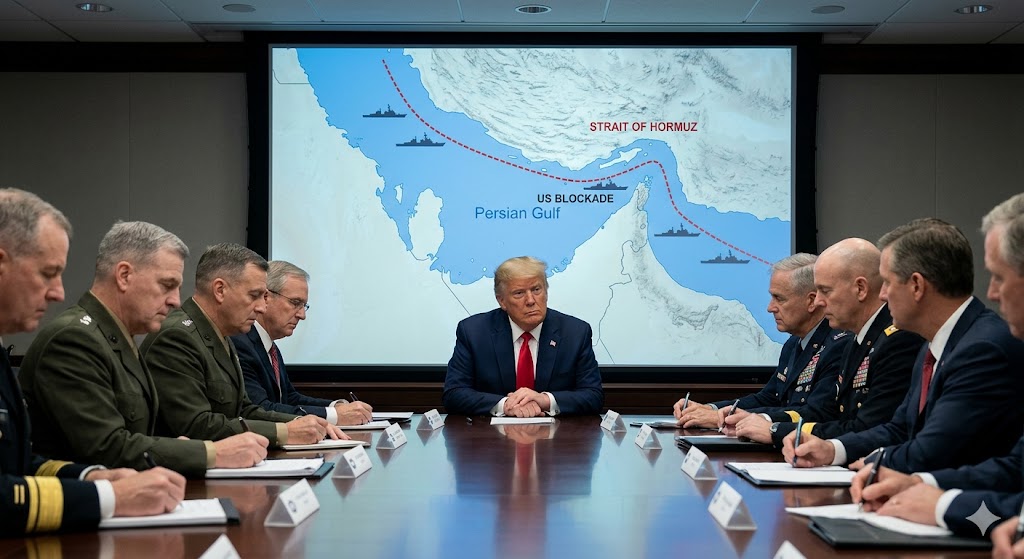
President Donald Trump receives an intelligence briefing on the operational plans for a prolonged naval blockade of Iranian ports in the White House Situation Room, May 2026. This directive aims to maintain max economic pressure until Tehran accepts a revised nuclear agreement.
Strategic Rationale Behind the Prolonged Blockade
The administration’s strategy rests on several key calculations:
Economic Pressure as Leverage: Iran’s economy is already strained by existing sanctions. By halting oil exports, the blockade aims to create sufficient internal pressure to force Tehran back to the negotiating table with meaningful concessions.
Avoiding Escalation Risks: Trump and his advisers reportedly believe that a prolonged blockade is less likely to trigger immediate regional spillover or direct military retaliation compared to renewed airstrikes. It allows the US to maintain pressure while keeping military options in reserve.
Nuclear Non-Proliferation Priority: The core objective remains preventing Iran from advancing toward a nuclear weapons capability. Administration officials have stressed that any deal must include long-term suspension of enrichment activities and robust verification mechanisms.
Domestic and Allied Considerations: By consulting energy executives, the White House seeks to manage potential backlash from higher fuel prices. The strategy also aligns with the concerns of key allies, particularly Israel, which views Iran’s nuclear program as an existential threat.
This approach reflects Trump’s preference for decisive, leverage-based diplomacy combined with maximum economic pressure — a hallmark of his foreign policy style.
Current Status of the Naval Blockade and Hormuz Situation
As of early May 2026, the US naval blockade continues to restrict access to Iranian ports, significantly reducing Iran’s ability to export oil. In response, Iran has imposed its own limitations on shipping through the Strait of Hormuz, creating a dual-restriction environment that has driven global oil prices higher, with Brent crude briefly surpassing $120 per barrel.
Shipping traffic through the strait has declined sharply, affecting not only Iran but also other Gulf producers and international consumers. The situation has prompted concerns about supply chain disruptions, inflation, and energy security worldwide.
Iran has rejected the blockade as “doomed to fail” and an extension of military operations, while vowing to protect its nuclear and missile capabilities. Tehran has also signaled readiness for talks but insists on addressing immediate economic relief before deeper nuclear concessions.
Challenges and Potential Risks of the Strategy
While the prolonged blockade offers a pathway to pressure without immediate kinetic escalation, it is not without challenges:
Economic Costs: Extended disruption risks higher global energy prices, impacting consumers and industries in the US and abroad. The administration is actively working to mitigate these effects through increased domestic production and strategic reserves.
Humanitarian Concerns: Prolonged economic isolation could exacerbate hardships for the Iranian population, raising ethical and diplomatic questions.
Risk of Iranian Retaliation: Tehran possesses asymmetric capabilities, including missiles, drones, and proxy networks, which could be activated in response to sustained pressure.
International Diplomacy: Maintaining allied support and managing reactions from powers like Russia and China will be crucial. Some nations may view the blockade as overly aggressive, potentially complicating multilateral efforts.
Negotiation Dynamics: Success depends on Iran eventually returning to serious talks. If Tehran digs in, the blockade could become a long-term feature of the conflict rather than a short-term lever.
Broader Geopolitical Implications
Trump’s decision to prepare for a long blockade highlights the interconnected nature of US foreign policy priorities. It links the Iran nuclear issue with regional security, energy markets, and great-power competition.
The strategy also tests the limits of economic coercion in the 21st century. In an era of diversified energy sources and alternative trade routes, the effectiveness of traditional blockades faces new variables. Nevertheless, the Strait of Hormuz remains a uniquely vulnerable chokepoint, giving both sides significant leverage.
For the international community, the situation underscores the need for creative diplomacy that can de-escalate tensions while addressing core proliferation concerns. Third-party mediators continue to play important roles, though progress remains incremental.
The Road Ahead: Pressure, Diplomacy, or Escalation?
As national security officials develop detailed plans for sustaining the blockade, the coming weeks will be critical. Key indicators to watch include:
Iran’s economic resilience and internal political dynamics.
Movements in global oil prices and shipping patterns.
Signals from Tehran regarding willingness to engage on nuclear issues.
Diplomatic initiatives from regional and international actors.
President Trump has indicated openness to a deal if Iran “gets smart” and makes substantial concessions. Whether the extended blockade will achieve this outcome or lead to further complications remains to be seen.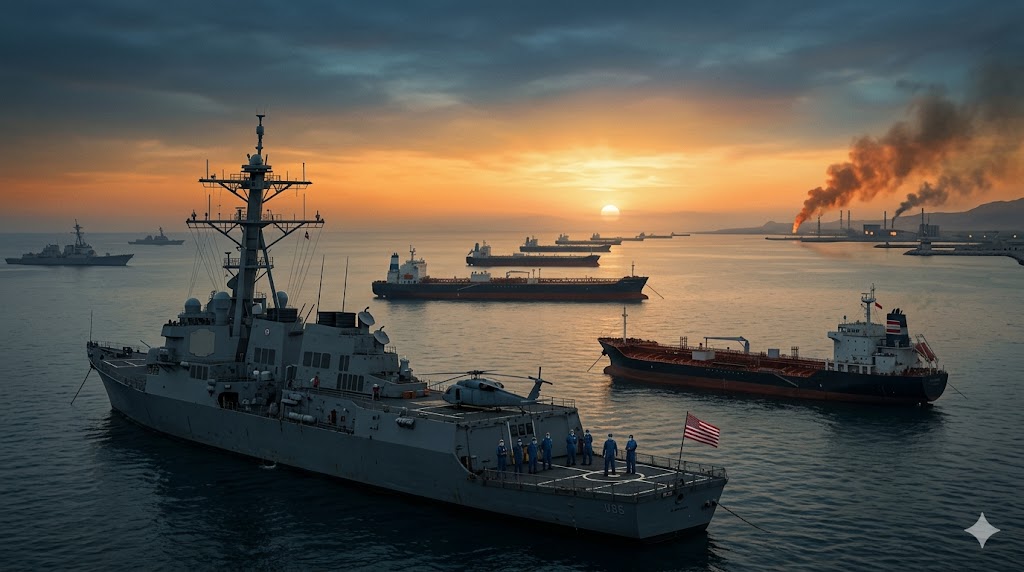
Tense standoff graphic depicting President Trump and the Persian Gulf.
Conclusion: A High-Stakes Strategy of Sustained Pressure
President Donald Trump’s instruction to prepare for a long naval blockade of Iran’s ports represents a bold and calculated approach to compelling Tehran to address US concerns over its nuclear program. By opting for extended economic pressure rather than immediate military escalation or premature withdrawal, the administration aims to maximize leverage while minimizing certain risks.
This strategy, however, carries significant economic, humanitarian, and geopolitical implications that will unfold in the months ahead. As the fragile ceasefire holds and negotiations continue indirectly, the world watches closely to see whether sustained blockade can deliver the desired nuclear concessions or whether new diplomatic breakthroughs will emerge.
In the complex landscape of US-Iran relations, Trump’s blockade policy underscores the enduring challenge of balancing power, diplomacy, and national security interests in one of the world’s most volatile regions.