Peshwa Bajirao: Greatest Undefeated Warrior of India
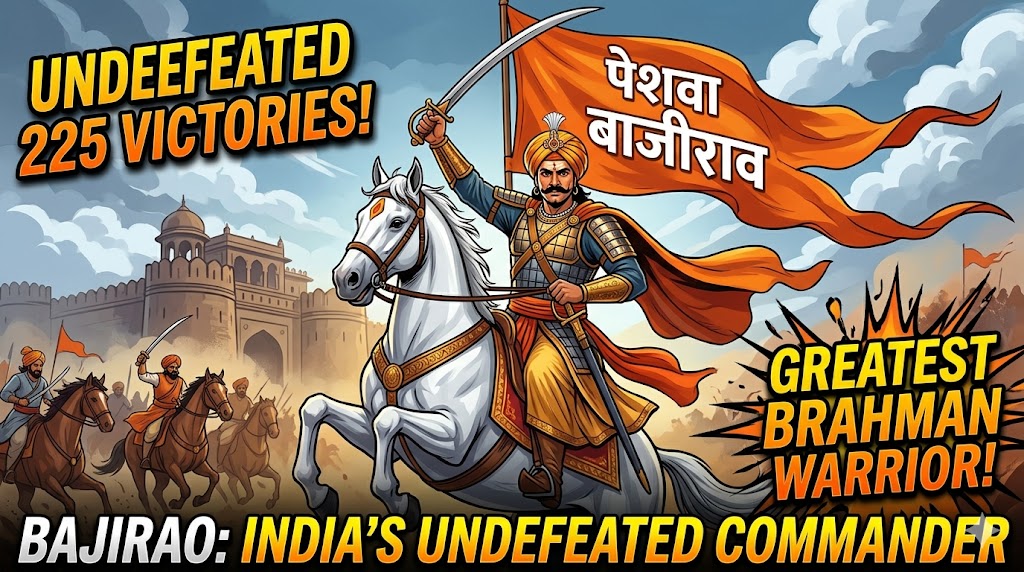
Bajirao I, popularly known as Bajirao, stands as one of the most celebrated military geniuses and warriors in Indian history. Born into a Chitpavan Brahmin family, he rose to become the Peshwa (Prime Minister) of the Maratha Empire at the remarkably young age of 20. What makes Bajirao truly exceptional is not just his Brahmin heritage but his transformation into one of the greatest Brahman warriors India has ever produced — a rare blend of scholarly background and battlefield brilliance.
Often remembered for his undefeated record of approximately 225 battles and campaigns, Bajirao expanded the Maratha Empire from a regional power to a dominant force across much of the Indian subcontinent. His lightning-fast cavalry tactics, strategic vision, and fearless leadership earned him the title “Bajirao the Invincible.” Yet, beyond his military achievements, his personal life — particularly his passionate love for Mastani — and his deep sense of duty toward his king and kingdom continue to fascinate historians and the public alike.
This article explores Bajirao’s remarkable journey, his military conquests, his role in strengthening the Maratha Empire, his personal relationships, and why he is revered as one of the greatest Brahman warriors in Indian history.
Early Life and Rise to Power
Bajirao was born on August 18, 1700, in Sinnar, near Nashik, Maharashtra, into a prominent Chitpavan Brahmin family. His father, Balaji Vishwanath, served as the first Peshwa under Chhatrapati Shahu Maharaj of the Maratha Empire. Growing up in a politically charged environment, young Bajirao received rigorous training in warfare, administration, and classical knowledge.
Even as a teenager, Bajirao displayed exceptional talent in military strategy and horsemanship. When Balaji Vishwanath passed away in 1720, Chhatrapati Shahu appointed the 20-year-old Bajirao as the new Peshwa. This decision was met with skepticism by many senior Maratha nobles, who doubted whether a young Brahmin could effectively lead military campaigns. Bajirao soon proved them wrong through decisive action and brilliant victories.
His elevation to Peshwa marked the beginning of a new era in which the Peshwa became the de facto leader of the Maratha Empire, with the Chhatrapati remaining the symbolic head.
Bajirao as the Greatest Brahman Warrior
Bajirao is widely regarded as one of the greatest Brahman warriors in Indian history because he shattered the traditional perception that Brahmins were suited only for scholarly or priestly roles. He embodied the rare combination of intellectual sharpness and martial prowess.
Unlike many warriors of his time who relied on sheer numbers, Bajirao mastered the art of mobile warfare. He perfected the use of light cavalry, rapid movements, and surprise attacks — tactics that allowed him to defeat much larger and better-equipped armies. His ability to cover vast distances in short periods earned him the reputation of being “fast as lightning.”
Historians often compare him with legendary figures like Alexander the Great and Napoleon for his undefeated record and innovative battlefield strategies. What sets Bajirao apart is that he achieved these feats while maintaining deep respect for his Brahmin roots and dharma. He fought not for personal glory but for the expansion and glory of the Maratha Empire and the protection of Hindu dharma against Mughal decline and other threats.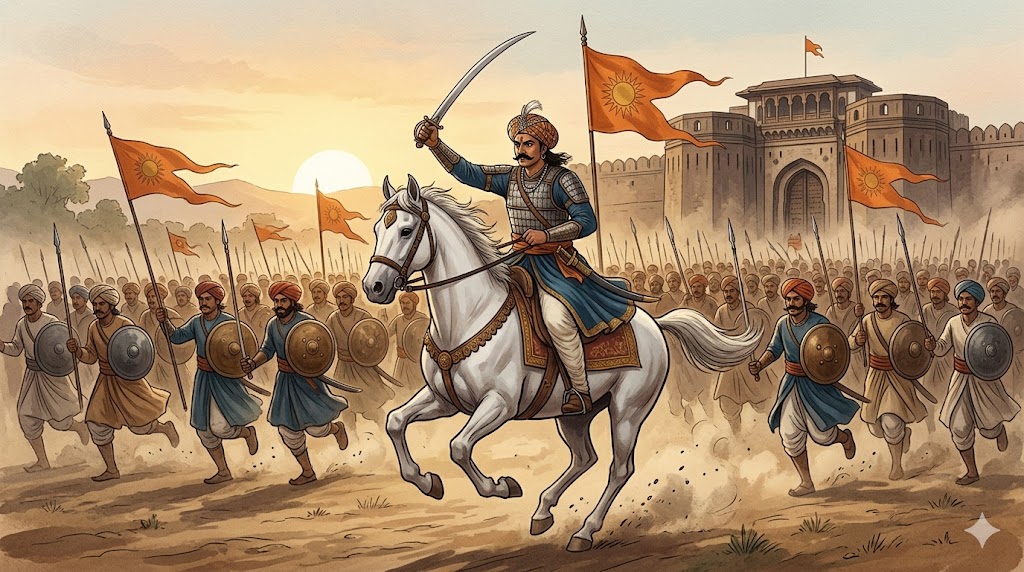
Bajirao, the Undefeated Cavalry Commander
Military Achievements and the Legend of 225 Victories
Bajirao’s military career is extraordinary. In his 20-year tenure as Peshwa (1720–1740), he is said to have fought and won around 225 battles and campaigns without suffering a single major defeat. Some of his most notable victories include:
Battle of Palkhed (1728): A masterclass in strategic maneuver. Bajirao outmaneuvered the Nizam of Hyderabad, forcing him to surrender without a major pitched battle.
Battle of Bhopal (1737): Bajirao led a daring campaign deep into Mughal territory, defeating combined Mughal and Rajput forces near Bhopal.
Campaigns against the Portuguese: He successfully challenged Portuguese control along the western coast.
Northern Expeditions: Bajirao extended Maratha influence up to Delhi and beyond, weakening Mughal authority significantly.
His cavalry-based warfare allowed the Marathas to strike quickly and retreat before enemies could regroup. Bajirao’s emphasis on speed, intelligence gathering, and terrain knowledge made him nearly unstoppable on the battlefield.
He transformed the Maratha Empire from a kingdom largely confined to Maharashtra into a vast confederacy stretching across large parts of northern and central India. Under his leadership, the Marathas collected chauth (tribute) from vast territories, significantly increasing the empire’s revenue and power.
Bajirao’s Love Story with Mastani
No account of Bajirao is complete without mentioning his legendary love for Mastani. Mastani was the daughter of Chhatrasal, the Bundela Rajput king of Panna, and a Persian noblewoman. She was gifted to Bajirao as a token of gratitude after he helped Chhatrasal defeat the Mughals.
Their relationship was passionate yet deeply controversial. As a Brahmin Peshwa, Bajirao’s marriage to Mastani, who was considered of mixed heritage, faced strong opposition from orthodox Brahmin society and his own family. Despite intense social pressure and political complications, Bajirao stood by Mastani. Their love story remains one of the most romantic and tragic chapters in Maratha history.
Mastani proved herself not only as a devoted partner but also as a capable warrior and administrator who accompanied Bajirao on several campaigns. Their son, Shamsher Bahadur, later played a role in Maratha affairs. Bajirao’s unwavering commitment to Mastani, even at the cost of social ostracism, reveals the depth of his character and his willingness to challenge rigid societal norms for love.
Bajirao’s Loyalty to King and Kingdom
Throughout his life, Bajirao remained fiercely loyal to Chhatrapati Shahu Maharaj. He never sought to usurp the throne and always worked to strengthen the Maratha state. His vision was to establish Hindu Pad Padshahi — a sovereign Hindu empire that would replace Mughal dominance.
Bajirao’s administrative skills were as impressive as his military ones. He reformed revenue systems, encouraged agriculture, and promoted capable officers regardless of caste. His leadership style emphasized merit, speed, and loyalty to the Maratha cause.
Even on his deathbed in 1740 at the young age of 39, Bajirao’s last thoughts were reportedly about the welfare of the empire and the safety of his family.
Personal Life, Legacy, and Death
Bajirao’s personal life was marked by both glory and tragedy. While he enjoyed a close relationship with his first wife Kashibai, his love for Mastani brought him immense joy as well as societal conflict. He had several children, including Balaji Baji Rao (Nanasaheb), who succeeded him as Peshwa.
Bajirao passed away on April 28, 1740, at Raverkhedi on the banks of the Narmada River, reportedly due to a sudden illness. His death at the peak of his power shocked the Maratha Empire. He was cremated with full honors, and his legacy lived on through his sons and the continued expansion of the Maratha Confederacy.
Today, Bajirao is remembered not only as a military genius but also as a symbol of courage, love, and selfless service to the nation. His life has inspired countless books, plays, and the popular 2015 film Bajirao Mastani.
Why Bajirao Remains Relevant Today
Bajirao’s story continues to inspire because it transcends mere military success. He proved that courage, intelligence, and determination could overcome social barriers. As a Brahman warrior, he challenged stereotypes and showed that true leadership lies in action and vision rather than birth alone.
His emphasis on rapid mobility, intelligence-based warfare, and loyalty to a larger cause offers valuable lessons in leadership and strategy even in modern times. For Maharashtra and India as a whole, Bajirao symbolizes the spirit of resistance, expansion, and cultural pride during a critical period of Indian history.
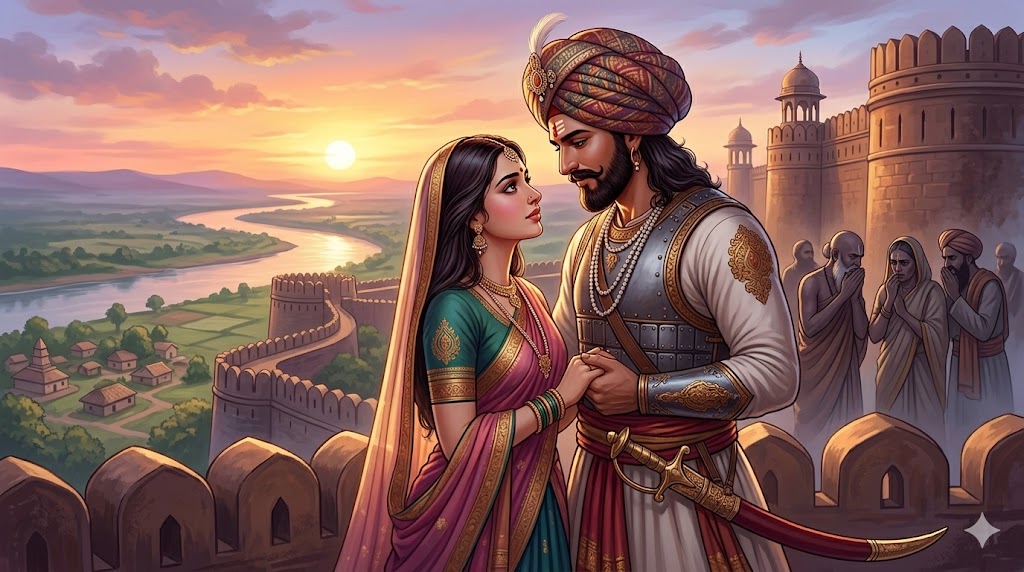
Bajirao’s Enduring Devotion: Love and Duty
Conclusion: The Eternal Legacy of Bajirao
Bajirao I remains one of the greatest Brahman warriors and military leaders India has ever seen. From his dazzling record of victories to his passionate love for Mastani, from his unwavering loyalty to Chhatrapati Shahu to his visionary expansion of the Maratha Empire, Bajirao’s life was nothing short of extraordinary.
He fought over 225 battles without a major defeat, expanded Maratha influence across the subcontinent, and left an indelible mark on Indian history. His ability to balance personal emotions with public duty, combined with his unmatched battlefield brilliance, makes him a timeless icon of courage and leadership.
Even centuries later, Bajirao continues to be celebrated as a hero who rose above limitations, defended dharma, and shaped the destiny of a nation. His legacy serves as a powerful reminder that true greatness lies in courage, vision, and unwavering commitment to one’s people and purpose.