"Maharana Sanga: The Indomitable Warrior of Mewar"
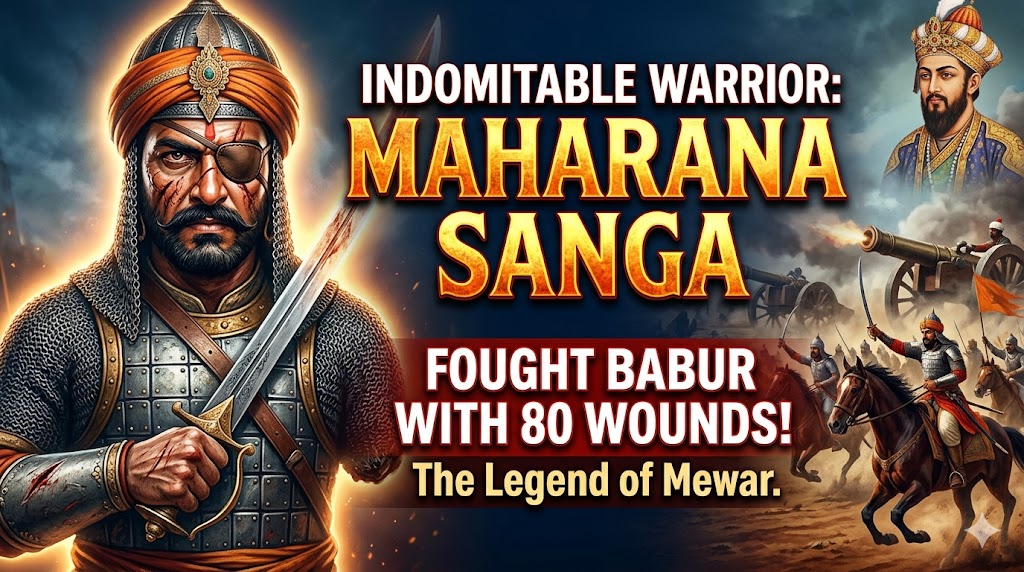
The Legend of Maharana Sangram Singh
In the annals of Indian history, few figures embody raw courage, unyielding resolve, and selfless dedication to homeland as profoundly as Maharana Sanga, also known as Maharana Sangram Singh I. Ruling the Kingdom of Mewar from 1509 to 1528, this Rajput warrior-king rose as one of the most powerful sovereigns in northern India during a turbulent era marked by invasions and shifting alliances.
Born on April 12, 1482, as the third son of Rana Raimal, Sanga overcame personal adversities and familial rivalries to ascend the throne. His reign transformed Mewar into a formidable power, uniting fractured Rajput clans and challenging mighty sultanates. Rajasthanis and Indians alike take immense pride in his story—a tale of a leader who prioritized self-respect and freedom over submission, even when facing overwhelming odds and personal losses.
Sanga's life was defined by relentless warfare. Tradition holds that he fought around 100 battles, emerging victorious in most, and sustained over 80 wounds. He lost one eye, one arm, and suffered a crippling leg injury, yet these setbacks never diminished his spirit. His defiance against the emerging Mughal threat under Babur remains a shining example of Rajput veerta (bravery), inspiring generations with lessons in honor and resilience.
Early Life and Rise to Power
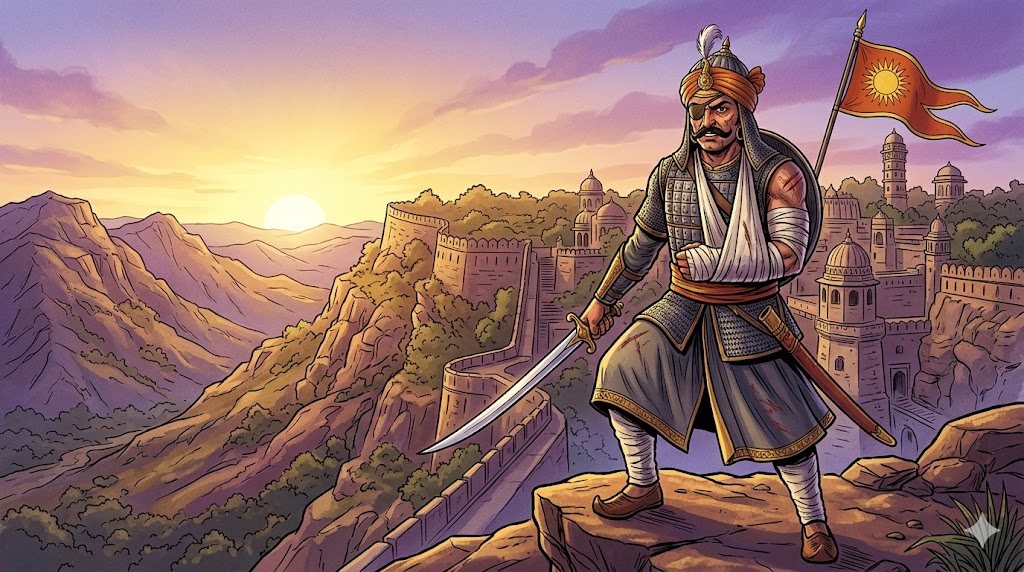
Maharana Sanga's journey began amid the rugged hills of Mewar, centered around the iconic Chittorgarh fort. As a young prince, he displayed exceptional martial skills and strategic acumen. His path to the throne was not smooth; succession struggles with his brothers Prithviraj and Jagmal led to a conflict in which he lost one eye. This early injury foreshadowed the many scars he would carry, yet it also forged an unbreakable will.
Upon ascending in 1509 after his father's death, Sanga quickly consolidated power. He expanded Mewar's influence through a series of successful campaigns against neighboring kingdoms. His military prowess earned him respect across Rajputana, as he forged alliances and subdued rivals. Unlike many rulers content with defensive postures, Sanga pursued an ambitious vision: uniting the Rajput clans into a confederacy capable of resisting external dominance and establishing Hindu sovereignty in northern India.
His early victories included decisive wins against the Sultans of Malwa, Gujarat, and the Delhi Sultanate under the Lodis. These triumphs not only expanded territory but also boosted morale among Rajput warriors, who saw in him a leader worthy of Prithviraj Chauhan's legacy. Sanga's ability to rally diverse clans—Sisodias, Rathores, Kachwahas, and others—highlighted his diplomatic skill alongside battlefield genius.
Major Battles and Military Achievements
Maharana Sanga's military career was extraordinary. He reportedly engaged in 18 major campaigns against the combined forces of Delhi, Malwa, and Gujarat, winning most with tactical brilliance and fierce charges. Key victories included the Battle of Khatoli (1518) against Ibrahim Lodi, where he inflicted a heavy defeat on the Delhi Sultanate despite sustaining severe injuries, including the loss of one arm from a sword cut and further damage to his leg from an arrow.
In another notable clash at Dholpur, he again routed Lodi forces. Against the Sultan of Malwa, Mahmud II, Sanga achieved significant successes, even capturing the sultan at one point. His campaigns against Gujarat further secured Mewar's western frontiers.
These battles showcased Sanga's preference for aggressive Rajput cavalry tactics—swift charges, close combat, and personal leadership from the front. He led by example, often fighting in the thick of action, which inspired his troops to extraordinary feats of valor. His forces liberated territories and protected Hindu temples and traditions from iconoclastic threats, earning him admiration as a defender of dharma.
By the mid-1520s, Sanga had built one of the strongest powers in northern India. His confederacy controlled vast regions from parts of Gujarat and Malwa to areas near Agra. This expansion inevitably brought him into conflict with a new player on the Indian stage: Zahir-ud-din Muhammad Babur, the founder of the Mughal Empire.
The Battle of Khanwa: Valor Against Gunpowder
The most defining confrontation of Sanga's life was the Battle of Khanwa, fought on March 16, 1527, near the village of Khanwa in present-day Rajasthan, not far from Agra. Following Babur's victory at Panipat in 1526 against Ibrahim Lodi, Sanga viewed the Mughal advance as a threat to Indian independence. He assembled a massive Rajput-Afghan coalition, estimated at over 100,000 warriors, including allies like Hasan Khan Mewati, Medini Rai, and others, aiming to expel Babur and secure northern supremacy.
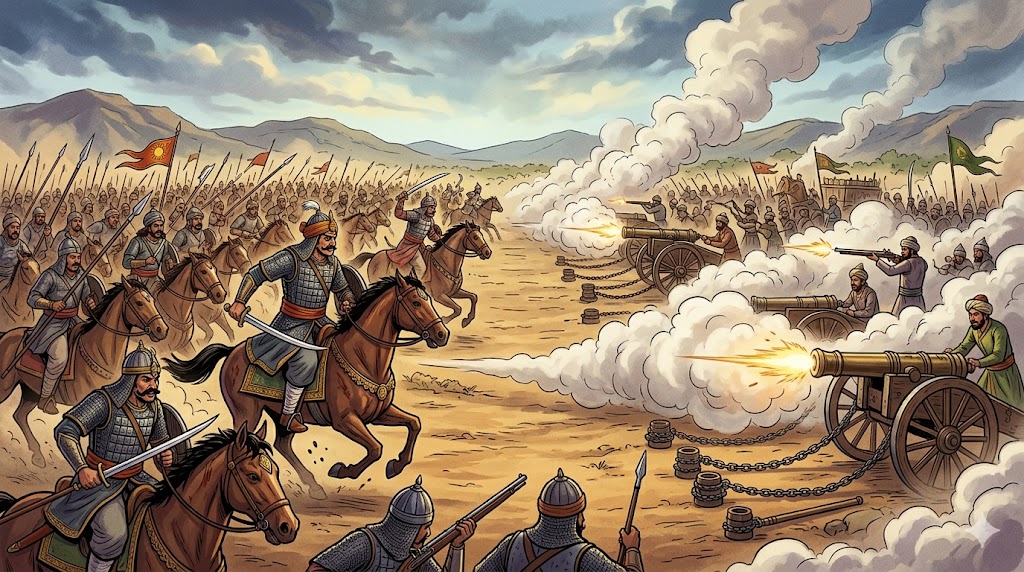
Prior to Khanwa, Sanga's forces achieved success at the Battle of Bayana in February 1527, defeating a Mughal detachment and capturing the fort. This boosted confidence, but Babur, a seasoned commander with experience in Central Asian warfare, prepared meticulously. He employed innovative tactics, including the tulughma (flanking) maneuver, and crucially, field artillery—cannons and matchlocks—that were relatively new and devastating in the Indian context.
On the day of battle, the Rajput army launched ferocious charges, crashing against Mughal lines with traditional swords, spears, and unmatched bravery. Sanga himself led from the front, embodying the spirit of Rajput warriors who preferred death with honor over retreat. Despite initial gains and heavy fighting, the Mughal artillery took a toll. Arrows and bullets rained down, breaking formations.
In the heat of combat, Sanga was severely wounded—struck by an arrow that rendered him unconscious. His brother-in-law Prithviraj Kachwaha and prince Maldev Rathore carried him from the field. Confusion spread among Rajput ranks upon seeing their leader fall, leading to a tactical retreat. Babur claimed victory, consolidating the Mughal hold over the Delhi-Agra region. However, the battle was no rout; Rajput resistance was fierce, with thousands falling on both sides, including many brave commanders like Ajja Jhala and others who fought to the end.
Sanga survived the immediate aftermath but carried fresh wounds from this clash. The defeat did not break his resolve. Even after losing the field at Khanwa, he retreated to regroup, still determined to challenge Babur again. His spirit remained undefeated, focused on protecting Mewar's sovereignty and Rajput dignity.
Enduring Injuries and Unyielding Courage
One of the most inspiring aspects of Maharana Sanga's story is his ability to fight despite grievous personal losses. Across his battles, he accumulated more than 80 wounds. He lost one eye during early succession struggles or in combat. A sword blow cost him one arm, while an arrow injury left one leg crippled and lame for life.
These were not mere scars—they were testaments to a warrior who refused to yield. Even after the Battle of Khanwa, where he sustained additional injuries and was carried unconscious from the battlefield, Sanga did not surrender to despair. He chose self-respect over any thought of submission or alliance that compromised Mewar's independence.
Historical accounts note that after Khanwa, some nobles, fearing prolonged conflict with Babur's superior technology, urged caution or even poisoned Sanga to prevent further campaigns. Yet, Rana's heart burned with the desire to continue the struggle for freedom. He was transported toward Chittorgarh but breathed his last on January 30, 1528, near Mandalgarh, where a memorial stands today in his honor.
Sanga's physical disabilities never hindered his leadership. He rode into battle, commanded armies, and inspired unity even when his body bore the marks of countless clashes. This resilience symbolizes the Rajput ethos: honor above comfort, duty above survival. For people of Rajasthan and India, he represents the pride of never bowing before invaders, fighting for swadharma and swaraj with whatever strength remains.
Legacy: Pride of Rajasthan and India
Maharana Sanga's contributions extend far beyond individual battles. He was among the last major independent Hindu sovereigns of his era, striving to create a unified front against foreign dominance at a time when many regional powers were fragmented. His efforts to forge a Rajput confederacy laid ideological groundwork for later resistance, influencing figures like Maharana Pratap.
In Rajasthan, Sanga is revered as a folk hero whose tales of veerta echo in ballads, songs, and festivals. New songs and status updates celebrating "Maharana Sanga ki veerta" continue to inspire youth, blending history with cultural pride. His life teaches timeless lessons: true strength lies in character, not physical perfection; leadership demands personal sacrifice; and self-respect is non-negotiable.
Though the Mughal Empire eventually expanded, Sanga's stand at Khanwa delayed and complicated their consolidation. His memory fuels national pride, reminding Indians of a glorious past where warriors defended sovereignty with unmatched glory. Rajasthan proudly claims him as its son—a king who turned personal losses into collective inspiration.
Timeless Lessons from a Warrior King
Maharana Sanga's story offers profound insights for modern times. In an age of rapid change and challenges, his perseverance despite losing an arm, eye, and mobility highlights the power of inner resolve. He chose the path of honor, refusing easy compromises even after battlefield setbacks.
For students studying history (including Class 12 curricula), Sanga exemplifies Rajput valor and the complexities of medieval Indian politics. His unification attempts underscore the importance of collective strength against external threats.
As Rajasthan and India celebrate warriors who shaped our identity, Sanga stands tall. His battles, injuries, and unbowed spirit continue to evoke pride. Whether through Mahabharata-like epics of duty or modern retellings in songs and episodes, his legacy endures as a beacon of courage.
Conclusion: Eternal Flame of Rajput Honor
Maharana Sanga fought not just for territory but for the soul of his people. Even after the intense clash at Khanwa against Babur, where he lost consciousness amid cannon fire and arrows, he harbored no thoughts of defeat in spirit. Despite losing one arm and one eye, and carrying the burden of eighty wounds, he embodied a king who valued self-respect over safety and glory over comfort.
His glorious resistance makes every Indian and especially every Rajasthani proud. In the face of superior technology and shifting fortunes, Sanga's unwavering commitment to freedom and dharma shines brightly. Today, as we remember his life through history lessons, cultural songs, and heartfelt tributes, Maharana Sanga remains an immortal symbol of veerta—a warrior whose body was broken but whose honor remained forever intact.
His memorial at Mandalgarh and the forts of Mewar stand as silent witnesses to a life lived with unparalleled bravery. In celebrating Maharana Sanga, we honor not only a king of the past but the enduring spirit of resilience that defines India's rich heritage.