Red Fort History: PM Flag Hoisting on Independence Day
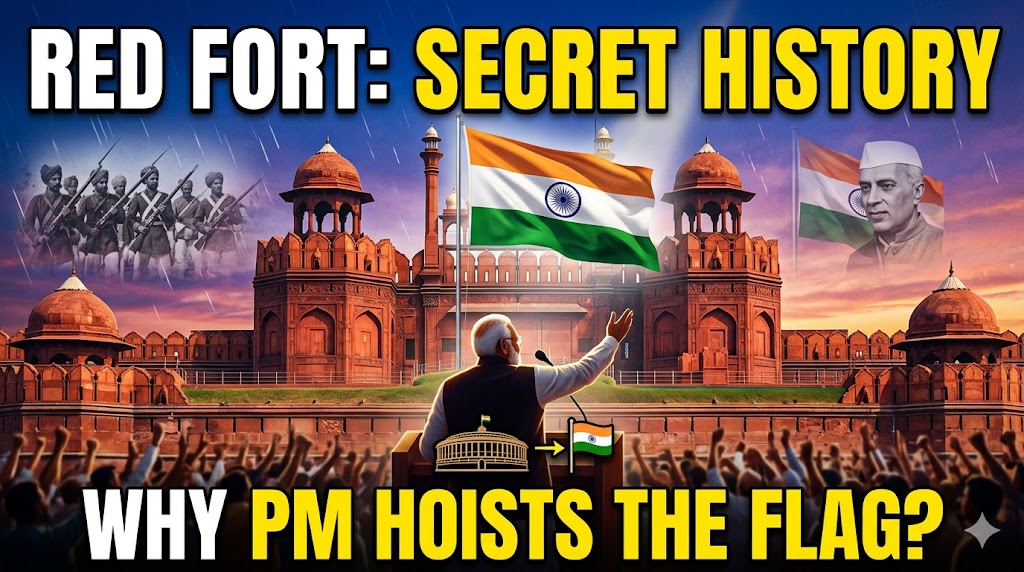
Every year on 15 August, the Prime Minister of India ascends its ramparts to hoist the national tricolour and address the nation. This annual ceremony is far more than a ritual—it represents the transfer of power from colonial rulers to the people of India. The tradition, initiated by Jawaharlal Nehru on the very day of Independence in 1947, underscores why the Red Fort holds a unique place in the Indian psyche, comparable in symbolic importance to the Parliament itself as a seat of democratic authority.
This article traces the complete history of the Red Fort and examines its profound connection to India's Independence Day celebrations, highlighting how a Mughal palace became the eternal backdrop for proclaiming national freedom.
The story of the Red Fort begins in the 17th century during the reign of Mughal Emperor Shah Jahan, renowned for architectural marvels like the Taj Mahal. In 1639, Shah Jahan decided to shift the Mughal capital from Agra to Delhi, envisioning a new city called Shahjahanabad (present-day Old Delhi). Construction of the fort commenced on 12 May 1639 under the supervision of architect Ustad Ahmad Lahori and was largely completed by 1648, with the emperor formally taking residence on 6 April that year.
Built primarily with red sandstone—hence the name Lal Qila—the fort sprawls over 254 acres along the Yamuna River. Its design reflects a harmonious blend of Persian, Timurid, and Indian architectural styles, featuring massive defensive walls up to 33 meters high and 2.5 kilometers in perimeter. Key structures within the complex include:
Diwan-i-Aam (Hall of Public Audience): Where the emperor met commoners, featuring a raised marble platform for the throne.
Diwan-i-Khas (Hall of Private Audience): An opulent space for nobles, famous for its marble pillars, pietra dura inlays, and the inscription "If there is Paradise on earth, it is here, it is here, it is here."
Rang Mahal, Hammam, and private apartments: Lavish quarters adorned with intricate carvings, gilded ceilings, and the Nahr-i-Bihisht (Stream of Paradise) water channel for cooling and aesthetics.
For nearly 200 years, the Red Fort served as the principal residence and seat of power for Mughal emperors. It was the administrative, cultural, and ceremonial heart of the empire, hosting grand durbars, festivals, and diplomatic events. Under Aurangzeb and later rulers, however, the empire faced decline. In 1739, Persian invader Nadir Shah sacked Delhi, looting the legendary Peacock Throne and Kohinoor diamond from the fort, dealing a severe blow to Mughal prestige.
Despite internal challenges, the Red Fort remained a potent symbol of imperial authority until the mid-19th century.
Transition Through British Rule and the 1857 Revolt
The 19th century marked a dramatic shift in the fort's fortunes. As Mughal power waned, European influence—particularly that of the British East India Company—grew. The British captured Delhi in 1803, gradually asserting control over the Red Fort while allowing the Mughal emperor nominal authority.
The turning point came with the Indian Rebellion of 1857, often regarded as the First War of Independence. Sepoys and civilians rose against British rule, proclaiming the last Mughal emperor, Bahadur Shah Zafar II, as their symbolic leader from the Red Fort. The fort became a focal point of resistance, but British forces recaptured Delhi after a brutal siege. Bahadur Shah Zafar was tried for treason within the fort's premises, exiled to Rangoon (Yangon), and the Mughal dynasty effectively ended.
In the aftermath, the British unleashed retribution. They demolished large sections of the fort's exquisite marble pavilions, gardens, and structures to make way for military barracks, hospitals, and administrative buildings. The once-lush interiors were converted into a garrison for the British Indian Army. The iconic red sandstone walls largely survived, but the fort lost much of its royal splendor. For the next 90 years, it stood as a stark reminder of colonial dominance, with the Union Jack flying over its ramparts instead of Mughal standards.
This period of British occupation transformed the Red Fort from a palace of emperors into a military stronghold, yet it retained its aura as a historic seat of power. Its association with the 1857 revolt further cemented its place in the narrative of Indian resistance against foreign rule..jpeg)
Dawn of Sovereignty: Reclaiming History (1947)
Independence Day Tradition: The First Flag Hoisted by the Prime Minister
The Red Fort's most transformative moment arrived with India's Independence on 15 August 1947. In the early hours of that historic day, power was formally transferred at Parliament House (then the Constituent Assembly). A few hours later, the focus shifted to the Red Fort.
Jawaharlal Nehru, India's first Prime Minister, hoisted the national tricolour above the Lahori Gate—the main public entrance—of the Red Fort. He then delivered his iconic "Tryst with Destiny" speech, addressing a massive gathering and the nation. This act was profoundly symbolic: it reclaimed a monument long associated with ruling powers and declared that sovereignty now rested with the people of a free India.
Why the Red Fort specifically? Historians point to several layers of significance:
It had been the seat of power for centuries, representing continuity of authority.
Its role in the 1857 revolt made it a symbol of the freedom struggle.
Hoisting the flag here marked the end of colonial occupation and the beginning of self-rule, visually replacing the British presence with the Indian tricolour.
Since 1947, this tradition has continued unbroken. Every Prime Minister has hoisted the national flag from the ramparts near Lahori Gate on Independence Day, followed by a nationally broadcast address outlining the government's vision, achievements, and future goals. The ceremony includes a 21-gun salute, cultural performances, and fly-pasts by the Indian Air Force, drawing thousands of spectators and millions of television viewers.
Notably, the President of India does not hoist the flag on 15 August; that honour belongs to the Prime Minister, reflecting the democratic principle that executive power resides with the elected government. On Republic Day (26 January), the President presides over the parade at Rajpath (Kartavya Path), maintaining a clear distinction in ceremonial roles.
Why Flag Hoisting at Red Fort Remains a Big Deal
The annual event at the Red Fort transcends mere protocol. It serves multiple vital purposes in India's democratic framework:
1. Symbol of Sovereignty and Continuity: The fort's history—from Mughal emperors to British viceroys to elected Prime Ministers—illustrates the journey from monarchy and colonialism to democracy. Each flag hoisting reaffirms that political power now belongs to the people through their chosen representatives.
2. Connection to Parliament and Governance: While Parliament is the legislative heart of India, the Red Fort has become the platform for the executive to directly communicate with citizens. The Prime Minister's speech from its ramparts is often seen as complementary to parliamentary proceedings, setting the national agenda in a public, accessible manner.
3. Tribute to Freedom Fighters: The location honours the sacrifices of those who fought in 1857 and the subsequent independence movement. It reminds the nation that freedom was hard-earned, not gifted.
4. National Unity and Pride: The grand setting, combined with military displays and cultural shows, fosters a sense of collective identity and pride. It transforms a historic monument into a vibrant stage for celebrating India's diversity and progress.
The tradition's consistency over nearly eight decades underscores its importance. Changes in government, political ideologies, or global contexts have not altered this practice, highlighting its status as a non-partisan national institution.
Architectural and Cultural Legacy Today
Designated a UNESCO World Heritage Site in 2007, the Red Fort Complex (including Salimgarh Fort) preserves a layered history. Restoration efforts by the Archaeological Survey of India have revived many original features, making it a major tourist attraction and venue for events like the annual Light and Sound show.
Beyond politics, the fort hosts cultural festivals, exhibitions, and sound-and-light performances that narrate its story. Its museums showcase artifacts from Mughal and colonial eras, educating visitors about India's multifaceted past.
Relation to Current Importance and Future Relevance
In contemporary India, the Red Fort bridges history and modernity. Its annual Independence Day role keeps it relevant as a dynamic symbol rather than a static relic. The Prime Minister's address often touches on contemporary issues—economic reforms, social justice, national security, and global standing—while rooted in the fort's legacy of power and resilience.
The site's proximity to other landmarks like Jama Masjid and Chandni Chowk reinforces Old Delhi's cultural vibrancy. Security concerns and large crowds during celebrations also highlight its status as a high-profile national asset, managed with the same seriousness as Parliament.
As India progresses, the Red Fort continues to evolve. Initiatives for better conservation, accessibility, and digital outreach ensure that future generations understand its journey from a Mughal citadel to a beacon of democratic India.
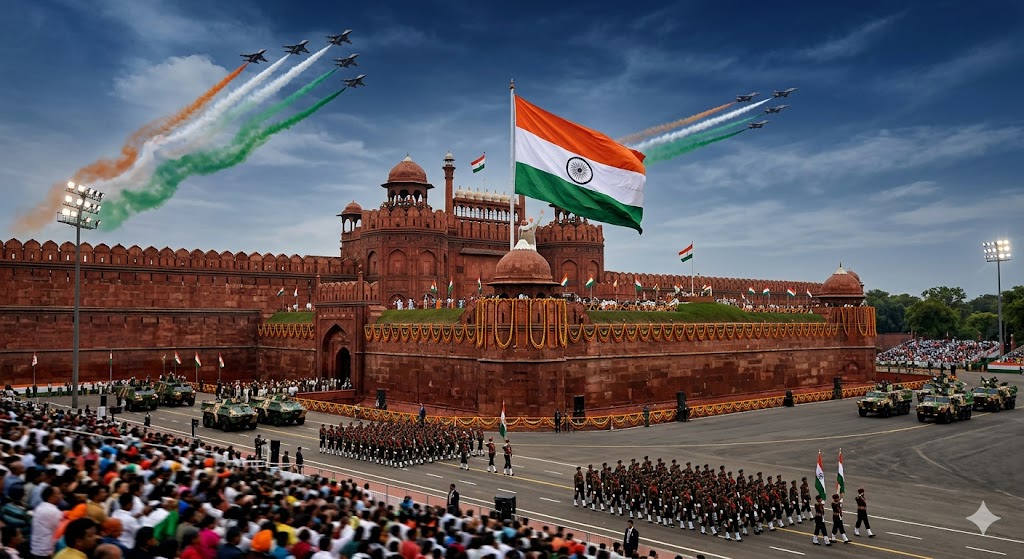
The Modern Ceremony: Executive Sovereignty
Conclusion
The Red Fort's history is a compelling saga of empire, invasion, resistance, and rebirth. Built by Shah Jahan as a testament to Mughal grandeur, it endured plunder, destruction, and occupation, only to emerge as the enduring stage for India's Independence Day celebrations. Since Jawaharlal Nehru first hoisted the tricolour there on 15 August 1947, every Prime Minister has followed suit, making the flag hoisting a cornerstone of national identity.
This tradition is significant not just for its historical weight but for what it represents today: the triumph of democracy over colonial rule, the continuity of governance from ancient seats of power to modern Parliament, and an unwavering commitment to the ideals of freedom. As the tricolour rises each year from its ramparts, the Red Fort reminds us that India's story is one of resilience, unity, and an unyielding spirit.
The monument stands not merely as stone and sandstone, but as a living embodiment of the nation's soul—where the past salutes the present and inspires the future.
Red Fort history, Red Fort Independence Day, PM flag hoisting Red Fort, Lal Qila history, why PM hoists flag at Red Fort, Red Fort Delhi Mughal history, first flag hoisting Red Fort Nehru, Red Fort 1857 revolt, Red Fort British rule, Red Fort significance Independence Day, history of Red Fort in Hindi context, Red Fort UNESCO, Prime Minister speech Red Fort.