History of the Great Depression: Causes, Impact & Recovery
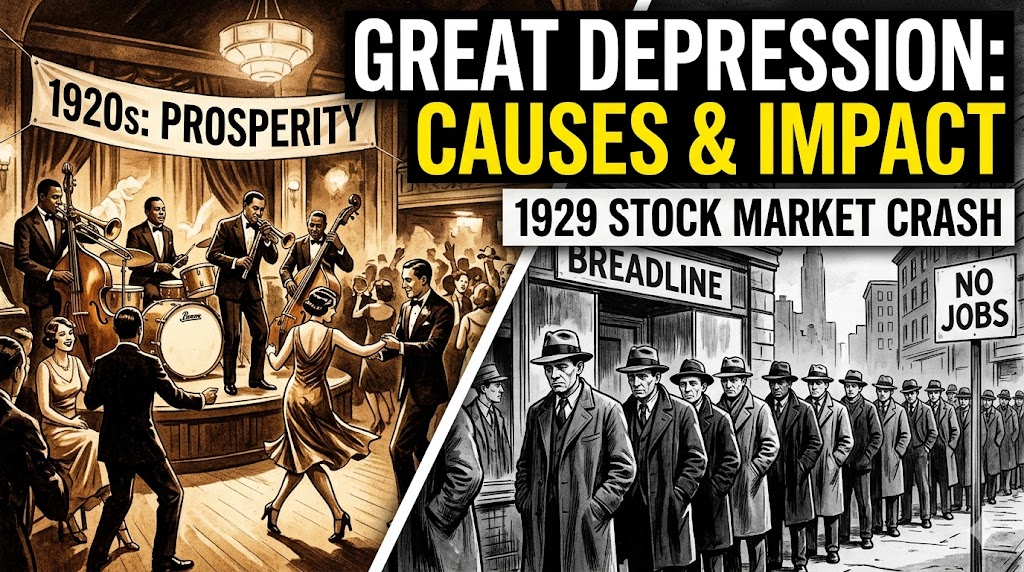
The Great Depression stands as the most severe economic downturn in the history of the industrialized world. Spanning from 1929 to the late 1930s, it reshaped economies, societies, and governments across the globe. What began as a sharp contraction in the United States quickly rippled outward, bringing mass unemployment, deflation, and widespread hardship. Its effects lingered for over a decade, influencing economic policies and political landscapes for generations.
Understanding this period offers more than a history lesson. It reveals how fragile modern economies can be and why thoughtful policy responses matter. From the exuberance of the Roaring Twenties to the despair of the 1930s, the story of the Great Depression remains relevant today as nations navigate financial uncertainties.
Roots of Prosperity: The Roaring Twenties
The 1920s in the United States appeared to be a time of boundless optimism. Industrial production soared, consumer goods like automobiles and radios became widely available, and the stock market climbed steadily. Many Americans invested heavily, often buying stocks on margin—borrowing money to purchase shares with the expectation that rising prices would cover the loans.
This era of apparent prosperity masked underlying weaknesses. Income inequality widened, with wealth concentrated among a small percentage of the population. Agricultural prices had already begun declining after World War I, leaving farmers vulnerable. Banks operated with limited oversight, and international economic ties, including war debts and reparations from Europe, created fragile dependencies.
By the summer of 1929, signs of slowdown emerged. Industrial output dipped slightly, and the Federal Reserve raised interest rates to curb speculation. Yet few anticipated the storm ahead. The stage was set for one of history's most dramatic financial collapses.
The Spark: The 1929 Stock Market Crash
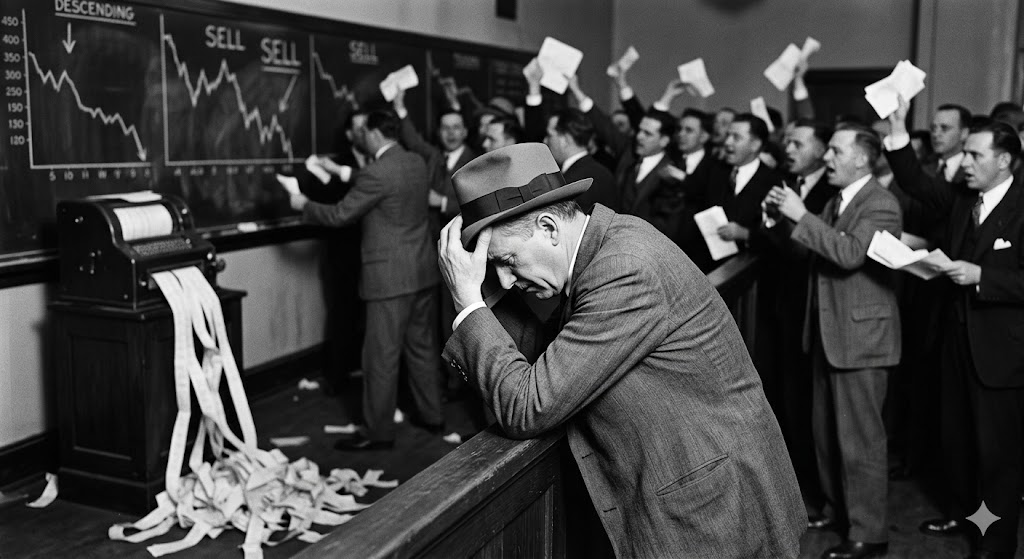
The Wall Street Crash of 1929 marked the symbolic beginning of the Great Depression. On October 24—known as Black Thursday—panic selling erupted as investors rushed to unload shares. Trading volume surged, and the ticker tape fell hours behind. Leading bankers intervened to stabilize the market temporarily by buying large blocks of stock.
The respite proved short-lived. On October 28 (Black Monday) and October 29 (Black Tuesday), the market plummeted further. Over 16 million shares traded on Black Tuesday alone, with the Dow Jones Industrial Average dropping nearly 12 percent in a single day. By mid-November, stocks had lost nearly half their value from September peaks. Billions in wealth evaporated virtually overnight.
The crash did not single-handedly cause the Depression, but it shattered confidence. Consumer spending and investment dried up as fear spread. Businesses cut production, and layoffs began. What might have been a ordinary recession deepened into something far worse.
Underlying Causes: A Perfect Storm
Economists continue to debate the precise triggers, but several interconnected factors amplified the downturn:
Overproduction and Underconsumption: Factories produced more goods than consumers could afford, especially as wages lagged behind productivity gains.
Banking Vulnerabilities: The U.S. banking system lacked strong federal safeguards. Thousands of small banks held risky loans and had limited reserves. When depositors panicked and demanded their money, banks failed in waves.
Monetary Policy Missteps: The Federal Reserve failed to provide sufficient liquidity early on. Instead of easing credit, tight policies contributed to deflation—a dangerous drop in prices that encouraged hoarding and further reduced spending.
International Imbalances: The gold standard tied currencies rigidly, limiting governments' ability to respond flexibly. War debts and reparations strained European economies.
Protectionist Trade Policies: The Smoot-Hawley Tariff Act of 1930 raised U.S. import duties sharply in hopes of protecting domestic industries. Other nations retaliated with their own tariffs, causing global trade to collapse by more than 50 percent.
Environmental disaster compounded the crisis in the American heartland. Severe drought and poor farming practices created the Dust Bowl, displacing hundreds of thousands of families from the Great Plains.
These elements fed on one another. Falling prices led to more bank failures, which tightened credit, reduced spending, and deepened the slump.
Shattered Optimism
The Depths of the Crisis: 1930–1933
By 1933, the economy had reached its nadir. In the United States, industrial production fell nearly 47 percent from 1929 levels. Real GDP declined about 30 percent. Unemployment soared to over 25 percent, leaving roughly 13 million Americans without jobs. Many more worked reduced hours or accepted drastic pay cuts.
Banking panics wiped out thousands of institutions. An estimated 9,000 of the nation's 25,000 banks failed between 1929 and 1933. Millions lost their life savings. Foreclosures swept farms and homes, creating "Hoovervilles"—shantytowns named derisively after President Herbert Hoover, who many blamed for insufficient action.
Daily life changed profoundly. Soup kitchens and breadlines became common sights in cities. Families doubled up in housing, and young people delayed marriage or children. Migration surged as people sought work elsewhere, though opportunities proved scarce. In rural areas, the Dust Bowl turned fertile land into dust storms that buried homes and livestock.
The crisis extended far beyond economics. Psychological tolls included shame, despair, and a questioning of the American Dream. Suicide rates rose, though not as dramatically as sometimes portrayed. Social tensions grew, with protests like the Bonus Army march of World War I veterans demanding early payment of benefits.
Global Ripples: The Worldwide Economic Downturn
The Great Depression was not confined to the United States. As the world's leading economy, America's contraction spread rapidly. International trade plummeted, hitting export-dependent nations hardest. In Germany, unemployment reached nearly 30 percent, fueling political instability and the rise of extremist parties. Britain and France saw sharp drops in industrial output and trade. Even countries in Latin America and Asia suffered from collapsing commodity prices.
Some nations responded with devaluation or leaving the gold standard earlier, which allowed modest recovery in places like Britain. Others turned inward with protectionism, worsening the global spiral. The interconnectedness of economies in the interwar period demonstrated how quickly shocks could propagate worldwide.
Government Response: From Hoover to the New Deal
President Herbert Hoover initially favored voluntary cooperation and limited intervention, believing the economy would self-correct. He supported some public works and encouraged businesses not to cut wages. However, his approach proved inadequate as conditions deteriorated. The Reconstruction Finance Corporation, created in 1932, provided loans to banks and industries, but critics argued it came too late and helped the wealthy more than ordinary citizens.
The 1932 election brought Franklin D. Roosevelt to the presidency in a landslide. Promising a "New Deal" for the American people, Roosevelt took office in March 1933 amid a nationwide banking crisis. In his inaugural address, he famously declared, "The only thing we have to fear is fear itself."
Roosevelt's First Hundred Days saw sweeping legislation. Banks were temporarily closed for inspection, with sound ones reopening under federal guarantees. Key programs included:
Relief Efforts: The Federal Emergency Relief Administration provided direct aid to states for the unemployed.
Public Works: The Civilian Conservation Corps (CCC) employed young men in environmental projects. The Works Progress Administration (WPA) later funded infrastructure, arts, and cultural projects, employing millions.
Agricultural Support: The Agricultural Adjustment Act sought to raise farm prices by reducing production.
Banking and Financial Reforms: The Glass-Steagall Act separated commercial and investment banking. The Securities and Exchange Commission (SEC) regulated stock markets.
Labor and Social Programs: Later measures included the Social Security Act, establishing unemployment insurance and old-age pensions, and the National Labor Relations Act, protecting workers' rights to organize.
The New Deal represented a fundamental shift. Government took a more active role in stabilizing the economy, providing a social safety net, and regulating business. While it did not fully end the Depression—unemployment remained high through the 1930s—it relieved immediate suffering, restored some confidence, and laid foundations for modern welfare and regulatory systems.
Critics argued certain programs prolonged recovery by raising costs or creating uncertainty. A sharp recession in 1937–1938 highlighted ongoing challenges. Nevertheless, the New Deal transformed the relationship between citizens and their government.
Path to Recovery: The Role of Policy and War
Signs of improvement appeared by the mid-1930s. Industrial production recovered somewhat, and unemployment fell gradually. Monetary expansion after abandoning the gold standard helped. Yet full recovery proved elusive until the outbreak of World War II.
The war mobilized the U.S. economy on an unprecedented scale. Defense spending surged, creating jobs in factories producing ships, planes, and weapons. Millions entered military service or war-related industries. Unemployment dropped dramatically. By the early 1940s, the economy operated at or near full capacity.
Historians debate whether the war truly "ended" the Depression or merely masked underlying issues through massive government spending. Postwar demobilization occurred without a return to 1930s conditions, thanks in part to pent-up consumer demand, technological advances, and lessons learned from the 1930s. The GI Bill, infrastructure investments, and a more stable financial system supported the postwar boom.
Lasting Legacy and Lessons Learned
The Great Depression left an indelible mark on the 20th century. It accelerated the shift toward managed economies with greater government involvement. Institutions like the FDIC (Federal Deposit Insurance Corporation) and Social Security endure today. Economists developed new theories, notably Keynesian economics, emphasizing the role of government spending during downturns.
Politically, it contributed to the realignment that made the Democratic Party dominant for decades in the U.S. and influenced the rise of authoritarian regimes abroad, setting the stage for World War II.
Key lessons include the dangers of unchecked speculation, the importance of strong banking regulation, the risks of protectionism, and the value of counter-cyclical policies. Central banks now prioritize financial stability and act more decisively during crises. International cooperation, through bodies like the IMF and World Bank established after the war, aims to prevent similar global contagions.
In everyday terms, the era reminds us of human resilience. Families adapted, communities supported one another, and innovations—from public works to cultural expressions—emerged amid hardship. Oral histories, photographs of breadlines, and stories of Dust Bowl migrants capture both the suffering and the determination of ordinary people.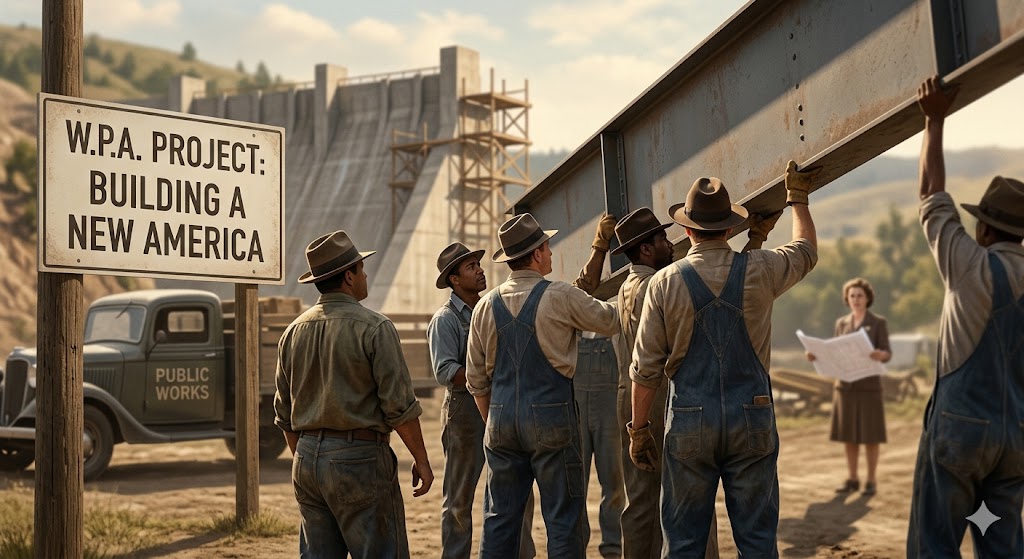
New Deal Recovery
Conclusion: Echoes Through Time
The history of the Great Depression illustrates how economic forces, policy choices, and human behavior intertwine during crises. What started with a stock market tumble evolved into a decade-long ordeal that tested democratic institutions and reshaped the world. While the precise mix of causes and cures continues to spark debate among scholars, one truth stands clear: proactive, coordinated responses can mitigate the worst effects and pave the way for renewal.
Today, as economies face new challenges—from technological disruption to global supply shocks—studying this period equips us with perspective. The Great Depression was not inevitable, nor was its length. Its story underscores the need for vigilance, adaptability, and compassion in economic governance. By remembering the past, societies strengthen their ability to navigate the uncertainties of the future.