Ashramavasika Parva: The Hermitage Chapter of Mahabharata
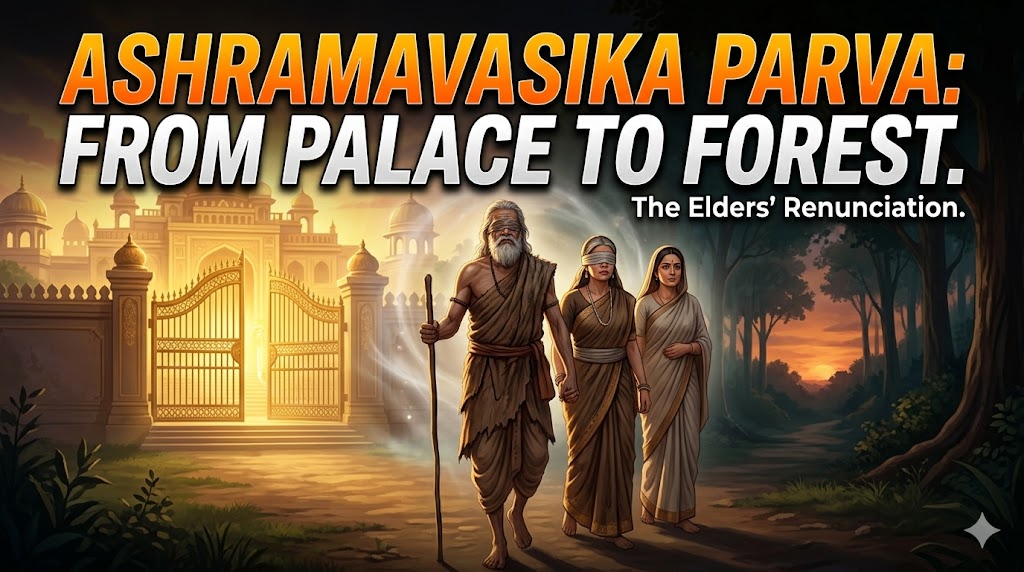
The Mahabharata, one of the greatest epics of ancient India, unfolds through 18 major sections known as Parvas. Each Parva builds the intricate tapestry of dharma, karma, war, and peace that defines the narrative. Among these, Ashramavasika Parva (also spelled Ashramvasik Parva or Ashramavasika Parva) stands as the 15th book, often translated as the "Book of the Hermitage" or "The Book of Residence in the Hermitage."
This Parva shifts the focus from the thunderous clashes of the Kurukshetra war to a quieter, introspective phase. It explores the aftermath of devastation, the restoration of order under righteous rule, and the poignant transition of the older generation toward renunciation. Far from being a mere epilogue, Ashramavasika Parva offers profound insights into human grief, familial duty, forgiveness, and the eternal cycle of life stages prescribed in Hindu philosophy—the four ashramas: Brahmacharya, Grihastha, Vanaprastha, and Sannyasa.
In this detailed exploration, we delve into the story of Ashramavasika Parva, its place within the broader Mahabharata structure, the historical and philosophical context leading to it, and the moving departure of key figures like Dhritarashtra, Gandhari, and Kunti from palace luxuries to the simplicity of forest life.
The 18 Parvas of Mahabharata: A Complete Overview
To fully appreciate Ashramavasika Parva, it is essential to understand its position in the epic's architecture. Vyasa structured the Mahabharata into 18 Parvas, each addressing distinct phases of the Kuru dynasty's saga:
1. Adi Parva – The Book of the Beginning: Origins of the Kuru lineage, births of Pandavas and Kauravas, and early conflicts.
2. Sabha Parva – The Book of the Assembly Hall: Construction of Indraprastha, Yudhishthira's Rajasuya sacrifice, the fateful game of dice, and Draupadi's humiliation.
3. Vana Parva (Aranya Parva) – The Book of the Forest: The Pandavas' 12-year exile in the woods, filled with adventures and spiritual discourses.
4. Virata Parva – The Book of Virata: The 13th year of exile spent incognito at King Virata's court.
5. Udyoga Parva – The Book of Effort: Diplomatic maneuvers and preparations for the impending war.
6. Bhishma Parva – Includes the Bhagavad Gita: The war begins; Bhishma commands the Kaurava army.
7. Drona Parva: Drona leads the Kauravas; tragic deaths like Abhimanyu's occur.
8. Karna Parva: Karna takes command and meets his fate.
9. Shalya Parva: Shalya leads; Duryodhana's final battle and fall.
10. Sauptika Parva – The Book of the Sleeping: Ashwatthama's nocturnal massacre of the Pandava camp.
11. Stri Parva – The Book of the Women: Lamentations by Gandhari and other women over the slain warriors.
12. Shanti Parva – The Book of Peace: Yudhishthira's coronation and extensive teachings on governance and dharma from Bhishma.
13. Anushasana Parva – The Book of Instructions: Further teachings, including Bhishma's final discourses.
14. Ashvamedhika Parva – The Book of the Horse Sacrifice: Yudhishthira performs the Ashvamedha Yajna to consolidate power and atone.
15. Ashramavasika Parva – The Book of the Hermitage: Post-war prosperity and the elders' retirement to the forest.
16. Mausala Parva – The Book of the Clubs: The destruction of the Yadava clan.
17. Mahaprasthanika Parva – The Book of the Great Departure: The Pandavas' final journey to the Himalayas.
18. Svargarohana Parva – The Book of the Ascent to Heaven: The Pandavas' entry into heaven and the epic's philosophical conclusion.
Ashramavasika Parva follows the grand Ashvamedha ritual, marking a return to domestic and spiritual concerns after the intense political and martial focus of earlier books. It bridges the war's immediate consequences with the ultimate fates of the characters.
Context and Prelude to Ashramavasika Parva
The events of Ashramavasika Parva unfold approximately 15 years after the cataclysmic Kurukshetra war, which claimed millions of lives and left both Pandavas and Kauravas shattered. The war, triggered by Duryodhana's greed and the insult to Draupadi, tested the limits of dharma. Yudhishthira, though victorious, was overwhelmed by guilt and grief. He performed the Ashvamedha Yajna (horse sacrifice) to purify the kingdom and assert sovereignty, as detailed in the preceding Ashvamedhika Parva.
In the years following the war, Hastinapura witnessed a remarkable period of reconciliation and prosperity under Yudhishthira's rule. The Pandava brothers— Yudhishthira, Bhima, Arjuna, Nakula, and Sahadeva—extended profound respect to their uncle Dhritarashtra, the blind former king. Despite Dhritarashtra's past partiality toward his sons (the Kauravas), which contributed to the conflict, the Pandavas treated him with filial devotion. Yudhishthira regularly consulted him on matters of state, ensuring that governance reflected wisdom from the older generation.
The royal women, including Draupadi, Subhadra, and others, attended to Gandhari and Kunti with care. Luxuries abounded: fine foods, wines, garlands, attendants, and all comforts of palace life were provided. Vidura played a key role in efficient administration, while Sage Vyasa offered consoling recitals of ancient histories to ease the elders' sorrow. This phase symbolized healing—turning enemies into a unified royal family and restoring dharma to the land.
This period of amity echoes earlier ashrama-like phases in the epic. During the Pandavas' own exile in Vana Parva, they lived ascetically in forests, learning resilience and receiving spiritual knowledge from sages. Ashramavasika Parva mirrors and inverts this: now it is the elders who choose the forest path, while the younger generation shoulders royal responsibilities. It reinforces the varnashrama dharma, where Grihastha (householder) duties give way to Vanaprastha (forest-dwelling) in later life, preparing for ultimate Sannyasa.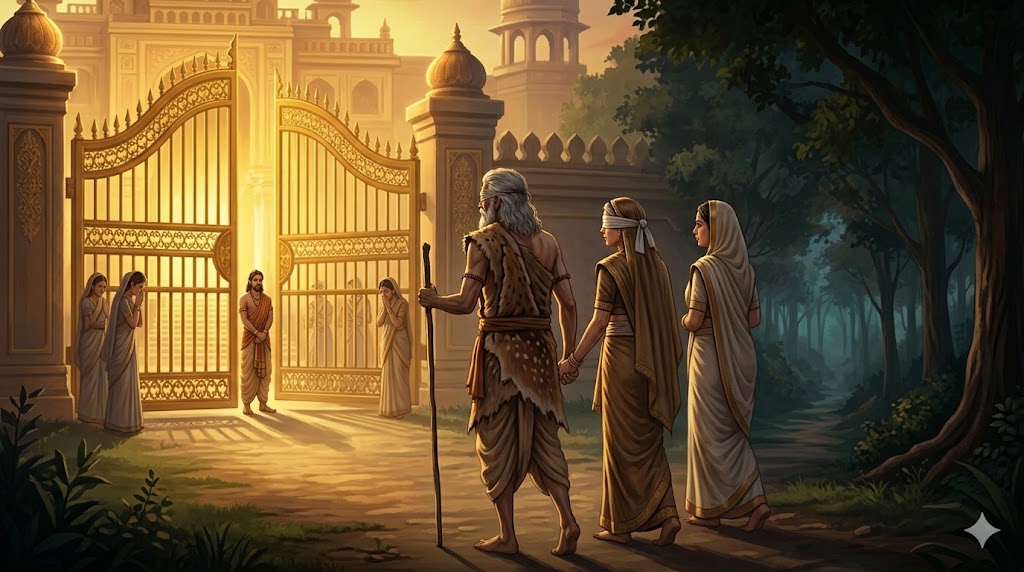
The Departure for Vanaprastha
Detailed Story of Ashramavasika Parva
Ashramavasika Parva is traditionally divided into three sub-parvas (upa-parvas) with around 47 chapters in the critical edition:
1. Ashramavasa Parva (The Residence in the Hermitage)
This section describes the 15 years of peaceful rule. Yudhishthira governs with integrity, consulting Dhritarashtra scrupulously. The kingdom prospers; there is harmony between the surviving Kauravas and Pandavas. However, beneath the surface, Dhritarashtra and Gandhari carry deep sorrow over their lost sons. Kunti, the Pandavas' mother, also grieves silently while serving her brother-in-law and his queen.
Over time, Dhritarashtra feels the weight of his past karma. On a auspicious full-moon day in the month of Kartika, he decides to embrace the ascetic life. Clad in deer skins and bark garments, he performs Vedic rites, renounces palace luxuries, and seeks permission to retire. Yudhishthira, deeply attached, initially protests, swooning in grief along with his brothers and the citizens. Arjuna sighs in distress, and the women lament loudly.
Yet, guided by Vyasa's counsel, Yudhishthira grants permission. Dhritarashtra, Gandhari (who remains blindfolded out of loyalty to her husband), and Kunti depart for the forest, accompanied initially by Vidura and Sanjaya. The procession evokes widespread mourning as the elders leave behind the opulent life of Hastinapura for the simplicity of Vyasa's hermitage near the Ganges (Gangadwara).
Vidura, an incarnation of Dharma, merges with Yudhishthira before his end, symbolizing the unity of righteous conduct. Sanjaya later proceeds to higher Himalayan regions.
2. Putradarsana Parva (The Vision of the Sons)
The Pandavas, accompanied by their families, later visit the hermitage. Through Vyasa's divine powers, they witness a miraculous vision: the spirits of the slain warriors—Kauravas and Pandavas alike—appear without enmity. Fathers reunite with sons, and old rivalries dissolve in the afterlife. This poignant episode brings emotional closure, highlighting that death transcends earthly conflicts and that all souls find peace beyond the cycle of hatred.
3. The Later Events and Conclusion
The elders live ascetically for about two years, practicing penance. Eventually, a forest fire engulfs their hermitage. Dhritarashtra, Gandhari, and Kunti choose not to flee, accepting it as their destined end. This is portrayed as a noble departure (svarga-gati), leading them to higher realms. Their passing marks the closure of one generation of the Kuru lineage, allowing the next to fully assume its duties.
Dhritarashtra, Gandhari, and Kunti: From Palace Luxury to Forest Asceticism
The departure of these three central figures forms the emotional core of Ashramavasika Parva. Dhritarashtra, once a powerful yet conflicted king blinded not only physically but also by paternal love, had presided over a court that enabled Duryodhana's excesses. Post-war, he lived in luxury—attended by servants, enjoying royal delicacies—yet his heart remained heavy.
Gandhari, who had voluntarily blindfolded herself upon marriage to share her husband's disability, exemplified unwavering loyalty and dignity. She bore the loss of all 100 sons with stoic grief, her curse-like vision earlier having forewarned the destruction.
Kunti, the matriarch who had endured widowhood, exile, and the trials of raising her sons in hiding, chose to accompany her brother-in-law and sister-in-law. As a devoted daughter-in-law in the traditional sense, she served them in the forest, cooking and caring for them despite her own royal background.
Their transition underscores a key Hindu ideal: timely renunciation. After fulfilling Grihastha duties—raising families and ruling—they embraced Vanaprastha. Leaving behind silk garments, feasts, and attendants, they adopted bark clothes, simple meals, and rigorous penance. This act provided them spiritual purification and set an example for future generations. The Pandavas' grief at their departure reflects the tension between familial love and respect for dharma.
The narrative contrasts sharply with Draupadi's earlier trials, such as the vastraharan (disrobing) in Sabha Parva, reminding readers how the epic cycles through suffering and resolution.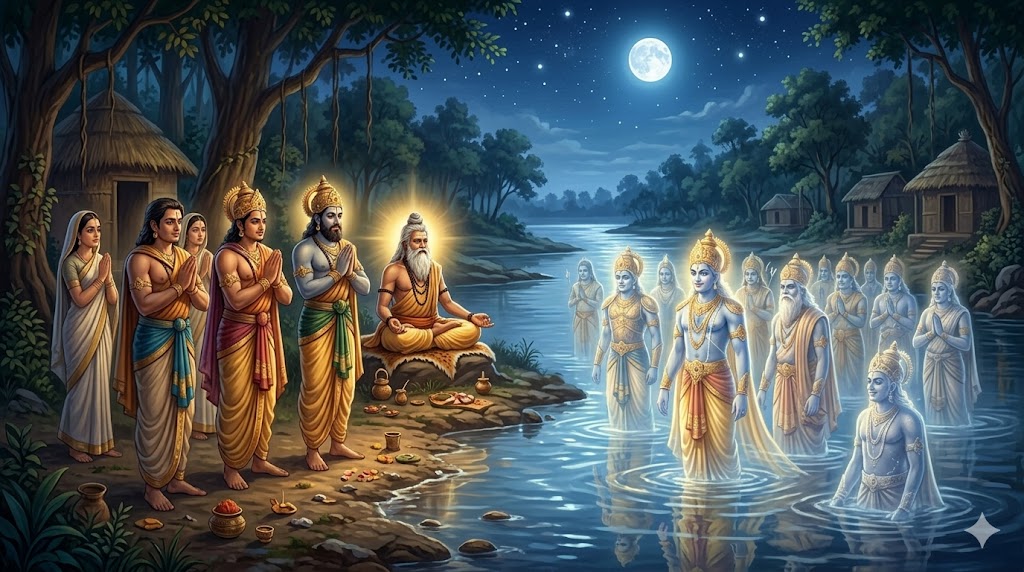
Putradarsana Parva - The Celestial Vision
Philosophical Significance and Lessons
Ashramavasika Parva is not just historical recounting; it is philosophical. It illustrates:
Reconciliation and Forgiveness: The Pandavas' respectful treatment of Dhritarashtra shows that dharma demands rising above personal vendettas.
The Four Ashrams: It reinforces the progression of life stages, where forest retirement allows detachment from material bonds.
Karma and Closure: The vision of departed souls without rancor teaches that enmity ends with life; the forest fire symbolizes both destruction and liberation.
Grief and Healing: Even victors like Yudhishthira carry wounds; true peace comes through acceptance and spiritual practice.
In popular culture, episodes from this Parva, including references in B.R. Chopra's Mahabharat TV series (around episode 850 in some adaptations), and modern shorts or talks, continue to resonate, exploring themes like "Mahabharat rahasya" (secrets) and character arcs such as Draupadi (played by Pooja Sharma in later versions).
Conclusion: Enduring Relevance of Ashramavasika Parva
Ashramavasika Parva serves as a contemplative bridge in the Mahabharata, moving from the chaos of war to the serenity of renunciation. It reminds us that victory on the battlefield is incomplete without inner victory over grief and attachment. The elders' choice to abandon luxurious palace life for the forest exemplifies courage in embracing life's final stages with dignity.
For readers and devotees, this Parva offers timeless wisdom: dharma endures beyond conflict, and true fulfillment lies in detachment. Whether through scholarly study, television adaptations, or viral discussions, its message continues to inspire reflection on duty, loss, and liberation in our own lives.
By understanding Ashramavasika Parva in the context of the full 18 Parvas, we gain a holistic view of the epic—not merely as a tale of war, but as a profound guide to righteous living and graceful departure.