Yudhishthira's Ashvamedha Yagna:Embodiment of Kingship
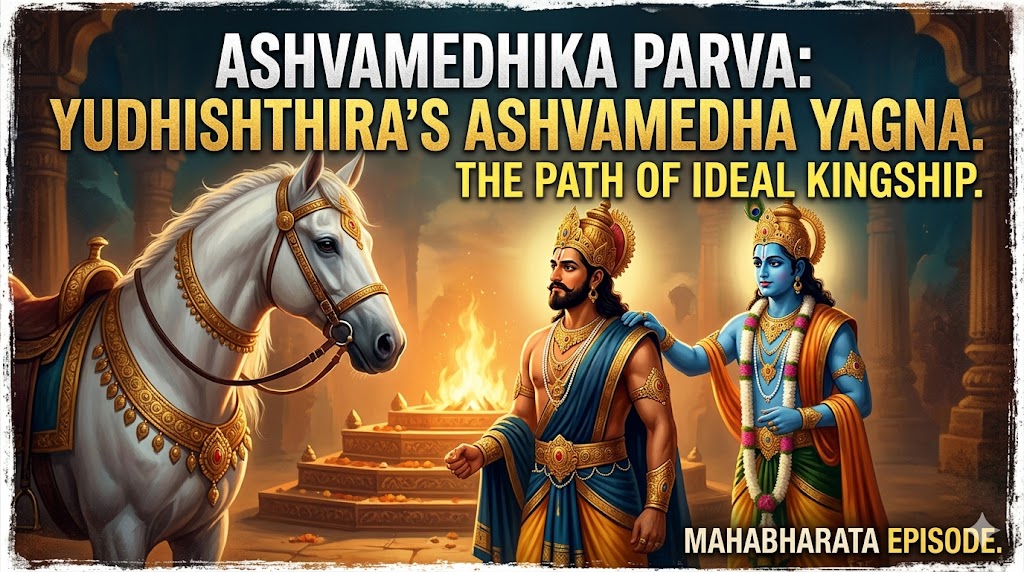
Ashvamedhika Parva and the Context of the Great Sacrifice
The Mahabharata, one of the greatest epics of ancient India, unfolds across eighteen major parvas (books), each revealing profound layers of dharma, karma, and human experience. Following the cataclysmic Kurukshetra war and the extensive teachings in Shanti Parva and Anushasana Parva, where the dying Bhishma imparts timeless wisdom on governance, ethics, and royal duties to Yudhishthira, the narrative shifts to restoration and renewal in the Ashvamedhika Parva (also spelled Ashwamedhika Parva).
This fourteenth parva, comprising two sub-parvas and approximately 92 chapters in traditional counts, centers on the grand Ashvamedha Yagna—the horse sacrifice—performed by Yudhishthira. It serves as a bridge between the war's aftermath and the later parvas like Ashramavasika Parva (detailing the hermitage life of Dhritarashtra and others), Mahaprasthanika Parva (the great journey of the Pandavas), and the concluding events.
In the wake of the devastating war that claimed millions, including kin and elders, the kingdom of Hastinapura lay economically and emotionally drained. Yudhishthira, crowned king but burdened by guilt over the bloodshed (often attributed to the policies of Duryodhana and the Kauravas), grappled with profound remorse. Sage Vyasa and Lord Krishna advised him to undertake the Ashvamedha Yagna not merely as a ritual of imperial assertion but as a means of atonement, purification, and economic revival. The sacrifice symbolized universal sovereignty while emphasizing righteous conduct over conquest through force.
The parva opens with Vyasa urging Yudhishthira to emulate great kings like Rama (son of Dasharatha) and his own ancestors by performing the rite with proper dakshina (gifts) and procedure. Yudhishthira, ever mindful of his subjects' welfare, hesitated due to the depleted treasury. He refused to burden grieving citizens with extra taxes or seize wealth unjustly. Vyasa resolved this by guiding him to ancient treasures from King Marutta's sacrifice in the Himalayas, accumulated by Brahmanas. With Krishna's guidance, preparations began, marking the transition from mourning to responsible rule.
This context sets the stage for understanding Yudhishthira not as a conqueror driven by ambition but as a thoughtful ruler prioritizing dharma amid adversity.
The Ashvamedha Yagna: Ritual, Symbolism, and Execution
The Ashvamedha is an ancient Vedic royal ceremony described in the Yajurveda, designed to affirm a king's supremacy and bring prosperity. A consecrated white or black horse is released to roam freely for a year, accompanied by an army. Any king whose territory the horse enters must either submit or challenge it in ritual combat. Upon successful return, the horse is sacrificed, and lavish gifts are distributed, signifying the performer's unchallenged authority and dharmic governance.
In Yudhishthira's case, the yagna carried deeper significance. Advised by Krishna and Vyasa, it aimed to cleanse the sins of war, replenish the kingdom's wealth, and establish peace across Bharatvarsha. Arjuna led the protecting army, encountering various kingdoms—some former allies, others adversaries. Notable episodes include confrontations where Arjuna faced unexpected challenges, such as his son Babhruvahana in Manipura, highlighting themes of familial bonds and dharma's complexities.
Yudhishthira ensured the ritual adhered strictly to Vedic injunctions. Vyasa, along with sages like Paila and Yajnavalkya, presided over the proceedings. The yagna was conducted on the sacred banks of the Ganga, with Krishna playing a central advisory and honored role. Wealth retrieved from the Himalayas enabled generous dakshina without exploiting subjects. The parva also includes the Anugita, where Krishna imparts spiritual knowledge to Arjuna, underscoring that true strength lies in supreme wisdom rather than mere ritual or power.
A memorable anecdote at the yagna's conclusion involves a blue-eyed mongoose whose half-body turned golden. It narrated the story of a humble Brahmin family's small charitable offering during a famine, which surpassed the grandeur of the sacrifice in merit. This tale reinforced that genuine dharma and selfless giving hold greater value than ostentatious rituals, a lesson Yudhishthira internalized deeply.
The sacrifice was so exemplary that tradition holds Yudhishthira performed it successfully multiple times, with kings across the land acknowledging his sovereignty through humility and justice rather than fear.
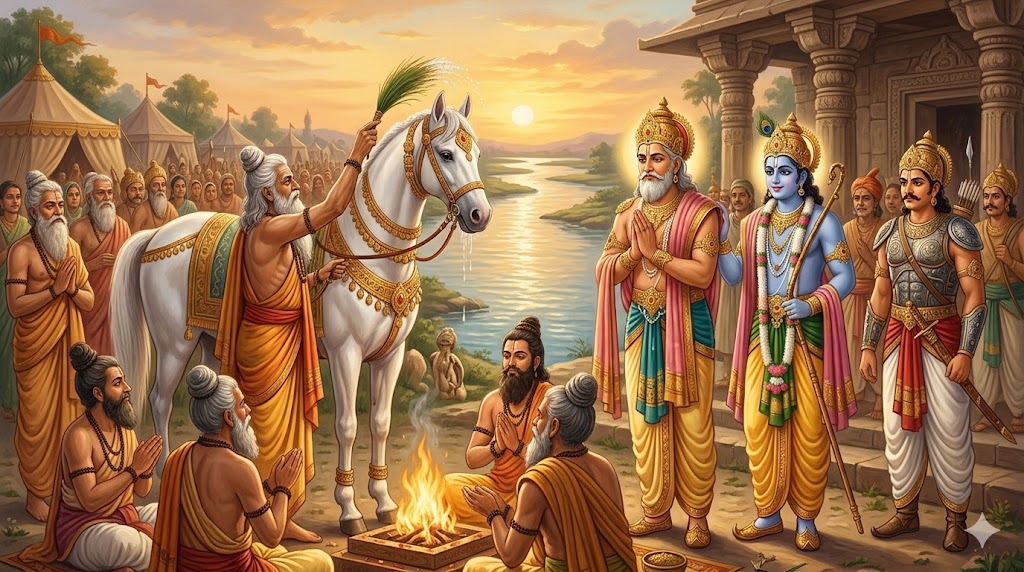
The Consecration of the Sacrificial Horse
Yudhishthira as the Embodiment of Raja Dharma and Ideal Kingship
Yudhishthira, often called Dharmaraja (King of Dharma) or Dharmaputra (son of Dharma), stands as one of the Mahabharata's most compelling figures—a ruler who possessed profound wisdom and an unwavering commitment to ethical governance. His portrayal in Ashvamedhika Parva exemplifies how a king should conduct duties toward his kingdom.
From his youth, Yudhishthira embodied patience, truthfulness, and justice. As the eldest Pandava, he navigated exile, gambling losses, and war with restraint, always weighing dharma over personal gain. Post-war, his remorse revealed a king haunted not by defeat but by the moral cost of victory. He repeatedly sought counsel from elders like Bhishma, Vyasa, and Krishna, demonstrating humility and a thirst for knowledge—hallmarks of wise leadership.
In the Ashvamedhika Parva, his hesitation to perform the yagna due to the kingdom's poverty highlights Raja Dharma (kingly duties). He prioritized subjects' welfare, refusing to impose hardships on a war-weary populace. This reflects core principles: a king must protect praja (citizens), ensure economic stability without exploitation, and uphold justice. Krishna and Vyasa guided him, but Yudhishthira's decisions—consulting sages, retrieving wealth ethically, and distributing gifts generously—illustrated balanced rule.
The epic frequently praises him as foremost in intelligence and virtue. He answered complex philosophical questions (as in the Yaksha Prashna episode earlier) with clarity, showing mastery over ethics, governance, and human nature. As king, he consulted Dhritarashtra on state matters even after the latter's retirement, fostering harmony. His rule in Hastinapura, described in subsequent parvas, brought fifteen years of prosperity marked by amity between Pandavas and Kaurava survivors.
Key lessons from Yudhishthira's kingship include:
Wisdom through Counsel: He never acted impulsively, always seeking guidance from Krishna (supreme advisor), Vyasa (repository of knowledge), and Bhishma's teachings on duties of rulers, officials, and society.
Ethical Resource Management: Facing treasury depletion, he opted for legitimate means (Himalayan treasures) rather than burdensome taxation, teaching sustainable governance.
Atonement and Renewal: The yagna symbolized inner purification. A king must atone for lapses (even justified wars) and restore dharma.
Humility and Merit over Grandeur: The mongoose story taught him (and readers) that true merit flows from compassion, not scale of sacrifice.
Universal Sovereignty via Dharma: Arjuna's campaigns asserted primacy without unnecessary destruction, aligning with the ideal that a king's influence spreads through righteousness, not coercion.
Yudhishthira's character contrasts with power-hungry figures, positioning him as a model for leaders: compassionate yet firm, knowledgeable yet humble, victorious yet reflective. His journey underscores that ideal kingship integrates Kshatriya duty with Brahminical wisdom, ensuring the kingdom's material and spiritual well-being.
Connection to Broader Mahabharata Narrative and Later Parvas
Ashvamedhika Parva does not stand in isolation. It follows the instructional Shanti and Anushasana Parvas, where Bhishma detailed kingly responsibilities—protecting dharma, taxation ethics, justice systems, and personal conduct. Yudhishthira applied these lessons practically through the yagna.
It precedes Ashramavasika Parva, which depicts fifteen years of harmonious rule, with Yudhishthira attentively caring for Dhritarashtra and Gandhari before their retirement to the forest. Later, Mahaprasthanika Parva shows the Pandavas' final great journey toward the Himalayas, culminating in their ascent, with Yudhishthira's steadfast dharma guiding even in renunciation. The parva thus illustrates the full arc: from war's chaos to righteous rule, and eventually to spiritual transcendence.
In popular culture, such as B.R. Chopra's Mahabharat TV series, episodes around Ashvamedhika Parva (including references to episodes 805, 807, 808 in certain narrations) bring these teachings alive, blending ritual details with philosophical dialogues on renunciation, mind control, and Krishna's guidance.
Timeless Lessons for Modern Leadership
Yudhishthira's Ashvamedha Yagna offers enduring insights. In an era of complex governance, his emphasis on ethical resource use, consultation with wise advisors, atonement for collective errors, and balancing power with compassion remains relevant. A true leader, like Dharmaraja, measures success not by dominance but by the prosperity and moral health of the realm.
The parva reminds us that rituals and achievements gain meaning only when rooted in inner wisdom and duty. Yudhishthira, with his vast knowledge of Raja Dharma, teaches that a king exists to serve dharma, not vice versa—fostering a kingdom where justice, knowledge, and harmony prevail.
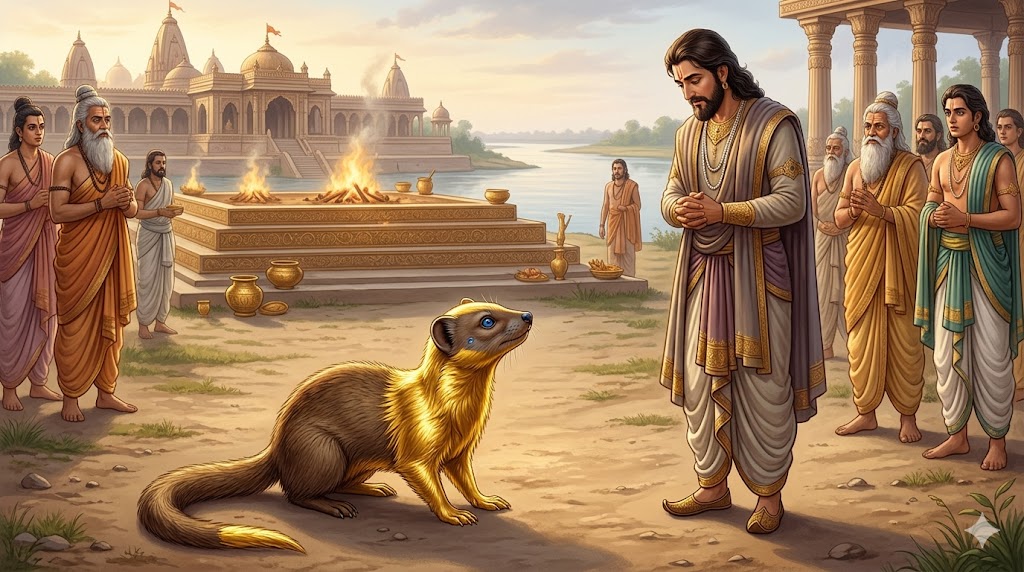
The Mongoose Lesson
Conclusion
The first major Ashvamedha Yagna conducted by Yudhishthira in the Ashvamedhika Parva stands as a pinnacle of Mahabharata's exploration of kingship. Through careful preparation, ethical execution, and profound reflection, he transformed post-war desolation into renewal. Described across the epic as a paragon of wisdom, Yudhishthira exemplified how a king should embody dharma: ruling with justice, seeking knowledge, protecting subjects, and pursuing purification.
His story, from the parva's context amid Bhishma's teachings to its ripple effects in later books, continues to inspire. Whether exploring Mahabharata quizzes, MCQs on Ashwamedhika Parva, or the epic's timeless lessons, Yudhishthira's ideal of enlightened rule offers a beacon for all ages—proving that true sovereignty arises from wisdom, duty, and unwavering righteousness.