Sanatan Dharma stands as the timeless bedrock of spiritual and philosophical knowledge that has shaped human consciousness for millennia. Often referred to as the eternal way or Sanatana Dharma, it is not a religion founded by any single prophet but a living tradition rooted in the Vedas, Upanishads, and ancient scriptures. At its heart lies yoga—a profound science of union between the individual self and the universal consciousness. Without Sanatan Dharma, the world might never have known the transformative power of yoga. This article delves deeply into how Sanatan Dharma is the true mother of yoga, tracing its historical roots, divine connections, diverse types, the role of mudras, and its unparalleled relevance in today’s fast-paced, post-pandemic world. Through this exploration, we see why yoga continues to inspire millions, particularly the youth, toward complete holistic development.
The Eternal Essence of Sanatan Dharma
Sanatan Dharma, meaning the eternal law or duty, embodies principles that transcend time, culture, and geography. It emphasizes dharma (righteous living), karma (action and consequence), and moksha (liberation). Unlike dogmatic faiths, Sanatan Dharma offers flexible paths suited to every temperament, encouraging self-realization through knowledge, devotion, action, and meditation. Its scriptures, from the Rigveda to the Bhagavad Gita, weave yoga seamlessly into daily life and spiritual practice. Yoga, derived from the Sanskrit root “yuj” meaning to yoke or unite, emerges directly from this eternal framework as the practical method to achieve harmony between body, mind, and soul. Historians and scholars trace yogic references back to the Vedic period, with echoes possibly in the Indus Valley Civilization’s seals depicting meditative postures. Sanatan Dharma thus provided the philosophical soil in which yoga took root and flourished, making it impossible to separate the two without losing their essence.
From the sacred mudras of the sages to the mindfulness we seek today, Sanatan Dharma provides the ultimate blueprint for holistic health. Whether it is Karma, Bhakti, or Jnana, there is a path for everyone to achieve emotional balance and physical vitality.
Yoga’s Historical Roots in Sanatan Dharma
The history of yoga is inseparable from Sanatan Dharma’s ancient legacy. The earliest mentions appear in the Rigveda, where terms related to meditation and inner discipline surface. The Upanishads further elaborate on yoga as a means to transcend the material world and realize the Atman (soul). By the time of the Mahabharata and especially the Bhagavad Gita, yoga is presented as a comprehensive discipline taught by Lord Krishna himself. Patanjali’s Yoga Sutras, compiled around 400 BCE to 200 CE, systematized these teachings into the famous eight limbs (Ashtanga Yoga): yama (ethical restraints), niyama (observances), asana (postures), pranayama (breath control), pratyahara (sense withdrawal), dharana (concentration), dhyana (meditation), and samadhi (absorption). Patanjali drew heavily from earlier Vedic and Upanishadic wisdom, positioning yoga firmly within Sanatan Dharma’s fold.
Later medieval texts like the Hatha Yoga Pradipika (15th century) and Gheranda Samhita expanded physical practices while remaining rooted in the same eternal philosophy. These works describe asanas, pranayama, and mudras as tools for purifying the body and awakening kundalini energy. Sanatan Dharma’s emphasis on holistic balance—physical vitality supporting mental clarity and spiritual insight—made yoga a complete system rather than mere exercise. This ancient heritage explains why yoga today feels universal yet profoundly Indian in origin: it sprang from the eternal wellspring of Sanatan Dharma, adapting across eras while preserving its core purpose of self-realization.
Divine Yogis: Gods as Exemplars of Yoga Practice
Sanatan Dharma elevates yoga through its divine practitioners, most notably Lord Shiva, revered as Adiyogi—the first yogi. Mythology recounts how Shiva, seated in deep meditation in the Himalayas, transmitted yogic knowledge to the Saptarishis (seven sages) at Kanti Sarovar near Kedarnath. This transmission formed the foundation of all yogic sciences, positioning Shiva not merely as a deity but as the originator of the inner technology that balances energy, breath, and awareness. Devotees practice yoga in his honor, viewing asanas and meditation as pathways to emulate his state of blissful detachment.
Lord Krishna, another central figure, embodies yoga in the Bhagavad Gita, where he expounds on its various forms to Arjuna on the battlefield. Krishna teaches that true yoga integrates action without attachment, devotion, and wisdom. Other deities, such as Vishnu’s avatars, also symbolize yogic ideals of preservation and balance. These divine notes underscore Sanatan Dharma’s view that yoga is not a human invention but a cosmic gift, accessible to all who seek union with the divine. Practicing yoga thus becomes an act of connecting with this sacred lineage, honoring the gods who first demonstrated its power.
Types of Yoga: Paths Tailored by Sanatan Dharma
Sanatan Dharma offers multiple yogic paths to suit different temperaments, ensuring no one is excluded from spiritual growth. The four classical paths, beautifully outlined in the Bhagavad Gita, form the cornerstone:
-Karma Yoga: The yoga of selfless action. Practitioners perform duties without attachment to results, transforming everyday work into worship. It cultivates humility and service, ideal for active individuals.
-Bhakti Yoga: The path of devotion and love. Through prayer, chanting, and surrender to the divine, one dissolves the ego in pure emotion. Temples, kirtans, and rituals embody this heart-centered approach.
-Jnana Yoga: The yoga of knowledge and wisdom. It involves inquiry, study of scriptures, and discrimination between the real and unreal, appealing to intellectual seekers pursuing self-realization through insight.
-Raja Yoga: The royal path of meditation and mind control, systematized by Patanjali. It includes the eight limbs and integrates Hatha Yoga’s physical practices for steadiness.
Beyond these, Hatha Yoga focuses on balancing sun (ha) and moon (tha) energies through asanas, bandhas, and pranayama to prepare the body for higher states. Modern expressions like Ashtanga, Vinyasa, and Kundalini all trace back to these Sanatan Dharma roots. Religious or spiritual types emphasize moksha, while physical forms support daily wellness. Sanatan Dharma’s genius lies in this inclusivity: yoga adapts to the practitioner while guiding all toward the same goal of union
"The Eternal Science of Self-Realization 🕉️✨: Yoga is not just a sequence of postures; it is the ancient technology of the soul."
The Power of Mudras: Energy Seals from Ancient Texts
Integral to yogic practice within Sanatan Dharma are mudras—symbolic gestures that seal and direct prana (life force). Ancient texts like the Hatha Yoga Pradipika list ten key mudras, while the Gheranda Samhita describes twenty-five. These are categorized into hasta (hand), mana (head), and kaya (body/postural) mudras. Hand mudras, the most accessible, include:
Jnana/Gyan Mudra: Thumb and index finger touch, symbolizing wisdom and knowledge; it enhances concentration and memory.
Prana Mudra: Activates vital energy, boosting immunity and vitality.
Vayu Mudra: Balances air element, aiding digestion and reducing anxiety.
Anjali Mudra: Palms pressed together at the heart, fostering reverence and unity.
Dhyana Mudra: Hands in lap for meditation, promoting inner peace.
Other notable ones like Shunya Mudra (for hearing and space element) or Apana Mudra (for elimination and grounding) address specific physical or energetic needs. Practiced with pranayama and asanas, mudras amplify benefits by influencing nadis (energy channels) and chakras. Sanatan Dharma views them as subtle tools for self-healing, proving yoga’s depth beyond physical postures.
Yoga’s Evolution: From Vedic Past to Global Present
Yoga’s journey mirrors Sanatan Dharma’s resilience. From Vedic hymns to Patanjali’s codification and medieval Hatha texts, it evolved while staying true to eternal principles. The 20th century saw Swami Vivekananda introduce yoga to the West, followed by global teachers who adapted it without diluting its essence. Today, International Yoga Day on June 21, recognized by the United Nations since 2015, celebrates this heritage worldwide. Yet its core remains Sanatan Dharma’s gift: a complete system for holistic development addressing physical strength, mental clarity, emotional balance, and spiritual awakening.
Yoga’s Relevance in Today’s World, Especially Post-COVID
In the modern era, yoga has become indispensable, particularly after the COVID-19 pandemic exposed vulnerabilities in physical and mental health. Lockdowns amplified stress, anxiety, and isolation, but yoga emerged as a lifeline. Studies and practitioner reports highlight how pranayama and asanas strengthened respiratory health and immunity, while meditation reduced cortisol levels and fostered resilience. Online classes surged, making yoga accessible from homes and turning it into a daily essential for millions.
Today, yoga addresses contemporary challenges: sedentary lifestyles, digital overload, and emotional turbulence. It promotes whole-person development—physical through flexible, strong bodies; mental via sharpened focus and reduced overthinking; emotional through equanimity and compassion. Sanatan Dharma’s emphasis on balance resonates powerfully in a fragmented world, offering sustainable wellness rather than quick fixes. Whether in corporate boardrooms, schools, or wellness retreats, yoga’s integration proves its timeless utility.
Inspiring Youth: Fitness, Focus, and Holistic Growth
Yoga’s appeal among today’s youth is profound, inspiring them to become fit, resilient, and purposeful. In an age of social media pressure and academic demands, young practitioners discover yoga as more than exercise—it is a mindset. Asanas build physical strength and posture, countering screen-related ailments. Pranayama and meditation enhance emotional regulation, combating anxiety and building mental toughness. Many youths report improved concentration for studies and careers, alongside a sense of inner peace that helps them navigate uncertainty.
Sanatan Dharma’s holistic vision encourages complete development: physical vitality supports energetic pursuits, mental discipline fuels ambition, and emotional maturity fosters meaningful relationships. Youth-led yoga communities, influencers, and campus programs blend ancient wisdom with contemporary fitness trends, making Sanatan Dharma’s legacy vibrant and relevant. Stories abound of young people finding direction through yoga, transforming stress into strength and confusion into clarity. This inspiration underscores yoga’s power to shape future generations grounded in eternal values.
Conclusion: Embracing Sanatan Dharma’s Gift for a Balanced Future
Sanatan Dharma is undeniably the mother of yoga, providing the philosophical, scriptural, and spiritual foundation that continues to nourish humanity. From divine origins with Adiyogi Shiva to diverse paths and subtle practices like mudras, yoga offers a complete toolkit for life’s challenges. In today’s world—post-pandemic and hyper-connected—its relevance has never been greater. It equips individuals with tools for physical health, mental resilience, emotional harmony, and spiritual depth.
As we honor this ancient heritage, let us integrate yoga into daily routines, not as a trend but as a way of life. Sanatan Dharma teaches that true wellness arises from balance within and union with the cosmos. By embracing yoga, we reconnect with our eternal roots and forge a brighter, more centered future—for ourselves, our youth, and the world. The power of Sanatan Dharma lives on through yoga, inviting every seeker to experience its profound beauty and transformative grace..
Frequently Asked Questions
What is the primary significance of "Sanatan dharma: as the ancient mother of the yoga"?
Yoga is the journey of the self, through the self, to the self." — The Bhagavad Gita 📖Sanatan Dharma stands as the timeless bedrock of spiritual and philosophical knowledge that has shaped human consciousness for millennia. Often referred to as the eternal way or Sanatana Dharma, it is not a religion founded by any single prophet but a living tradition rooted in the Vedas, Upanishads, and ancient scriptures.
How does this development impact Dharma?
At its heart lies yoga—a profound science of union between the individual self and the universal consciousness. Without Sanatan Dharma, the world might never have known the transformative power of yoga.
What are the key future projections to monitor?
This article delves deeply into how Sanatan Dharma is the true mother of yoga, tracing its historical roots, divine connections, diverse types, the role of mudras, and its unparalleled relevance in today’s fast-paced, post-pandemic world.

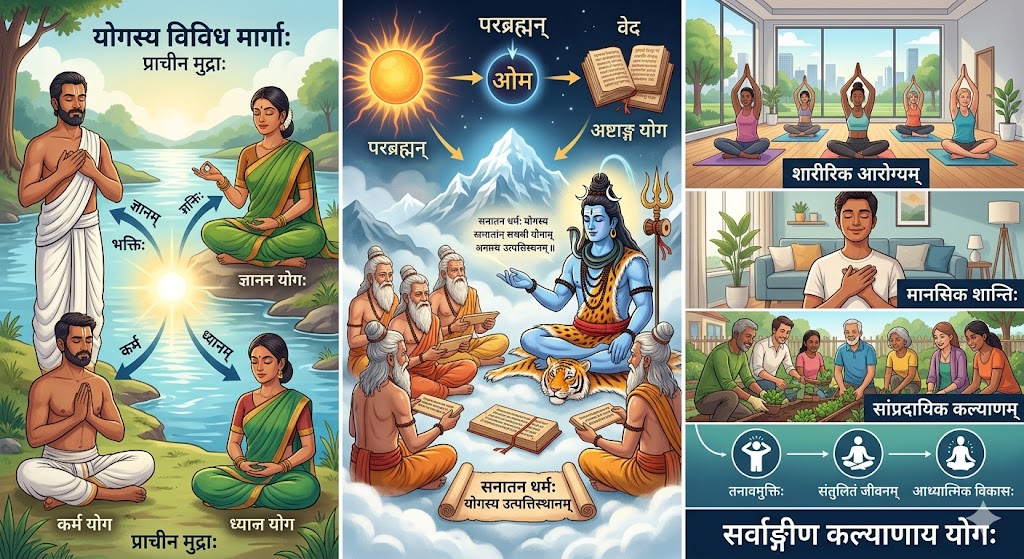 From the sacred mudras of the sages to the mindfulness we seek today, Sanatan Dharma provides the ultimate blueprint for holistic health. Whether it is Karma, Bhakti, or Jnana, there is a path for everyone to achieve emotional balance and physical vitality.
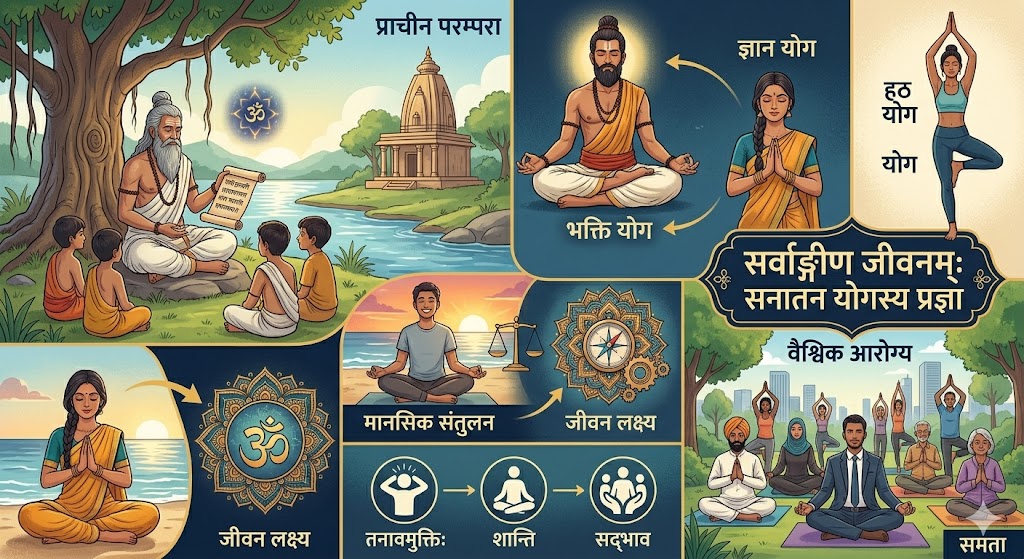 "The Eternal Science of Self-Realization 🕉️✨: Yoga is not just a sequence of postures; it is the ancient technology of the soul."