West Bengal Assembly Elections 2026: Intense Campaigning
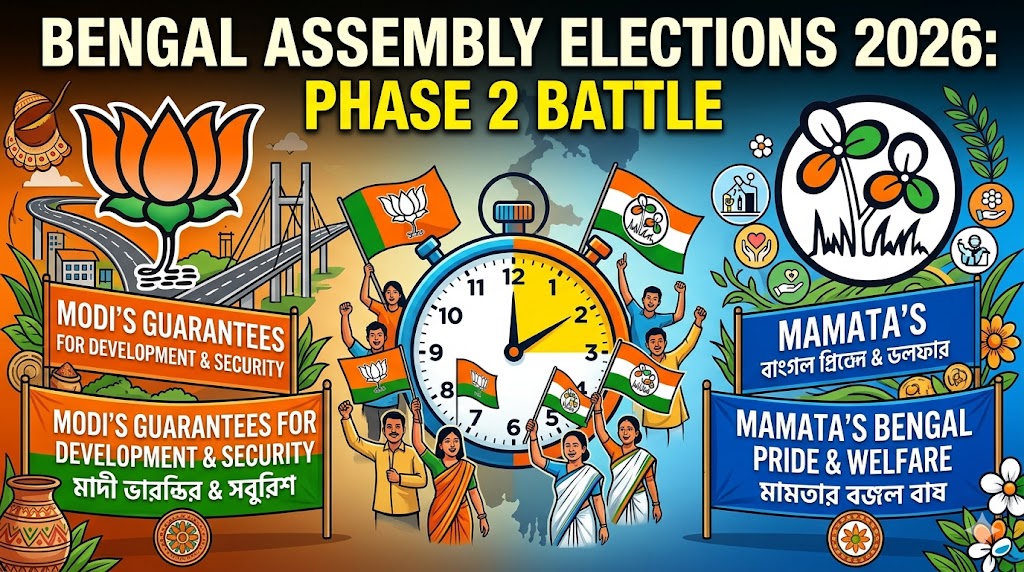
As the dust settles on the high-turnout first phase of the West Bengal Assembly Elections 2026, campaigning for the second and final phase has reached a fever pitch. Scheduled for April 29 across 142 constituencies in South Bengal districts, this round will play a decisive role in determining the fate of the 294-member state assembly. With results expected on May 4, the contest between the ruling Trinamool Congress (TMC) led by Chief Minister Mamata Banerjee and the Bharatiya Janata Party (BJP)-led NDA has intensified, marked by sharp accusations, cultural appeals, and development promises.
The elections reflect deep political socialization in West Bengal, where voters navigate a complex mix of regional identity, governance issues, and ideological divides. Years of entrenched party loyalties, influenced by local leaders, community networks, and media narratives, have shaped public opinion. Cultural debates around "Bengali asmita" (pride) versus broader national integration add another layer, making this poll not just about seats but about the soul of Bengal's politics.
The Current Landscape of Campaigning
Campaigning for the second phase has seen top leaders from both sides crisscrossing the state. Prime Minister Narendra Modi has been particularly active, addressing multiple rallies and roadshows in areas like North 24 Parganas, Hooghly, and Kolkata. Union ministers, including Amit Shah and Rajnath Singh, have bolstered the NDA's outreach, focusing on grassroots mobilization.
On the other side, Mamata Banerjee and her nephew Abhishek Banerjee have led TMC's aggressive ground campaign, emphasizing the party's welfare schemes and warning against "outsider" interference. The Left Front and Congress, though diminished, continue to field candidates in select pockets, adding a multi-cornered flavor to the contest.
High voter turnout in Phase 1—reportedly over 93% in many areas—has set a competitive tone. Security measures by the Election Commission of India (ECI), including deployment of central forces, reflect efforts to ensure free and fair polling amid past concerns over violence.
Accusations Flying Thick and Fast Between BJP and TMC
The campaign trail has been dominated by mutual allegations. The BJP has accused the TMC government of fostering "jungle raj," lawlessness, and failing to protect women. References to incidents like the RG Kar hospital case have been frequent, with PM Modi promising fresh probes and justice after May 4. TMC leaders, in turn, have hit back, labeling BJP's narrative as falsehoods aimed at polarizing voters and alleging misuse of central agencies like ED and CBI for political vendetta.
Hate speech complaints have flown both ways to the ECI. TMC has raised concerns over provocative remarks, while BJP has pointed to alleged threats and obstructions during their campaigns. Issues like the Special Intensive Revision (SIR) of electoral rolls have sparked controversy, with TMC claiming selective deletions disproportionately affect certain communities, while the ECI maintains the process ensures clean rolls by removing deceased or absentee voters.
These exchanges highlight the polarized nature of West Bengal politics, where every statement is scrutinized for its impact on community sentiments. Accusations of appeasement politics versus majoritarianism have further deepened divides, influencing how voters perceive governance and identity.
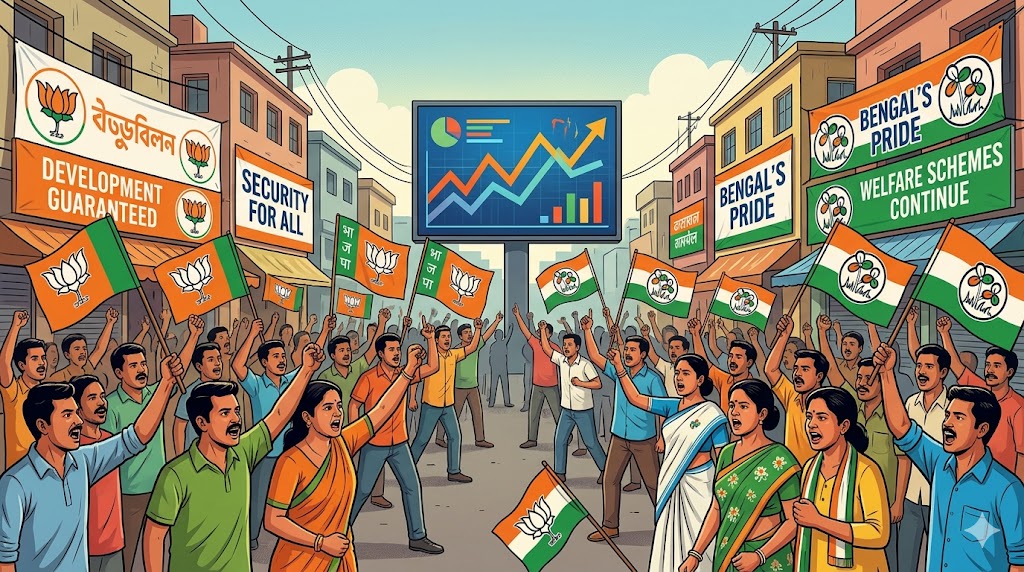
west bengal election campaign phase 2
Political Socialization and Culturalization in Pre-Election Discourse
West Bengal's elections exemplify how political socialization occurs through family traditions, local clubs, cultural events, and digital echo chambers. Many voters inherit party affiliations from previous generations, reinforced by TMC's "Ma, Mati, Manush" slogan or BJP's emphasis on development and national integration.
Culturalization plays a significant role too. Debates around Bengali language, literature, and lifestyle versus perceived imposition of external norms have gained traction. TMC positions itself as the defender of inclusive Bengali identity, while NDA leaders stress unity with India's broader progress story. Issues like refugee rights, particularly for Matua and Namasudra communities, alongside discussions on infiltration and border security, reflect how cultural and demographic concerns get woven into electoral narratives.
This pre-election heat often amplifies emotional appeals, shaping voter priorities beyond pure policy. Social media and street-level mobilization accelerate this process, turning elections into contests of narratives as much as manifestos. In a state with rich leftist and regional histories, the current bipolar tilt between TMC and BJP underscores shifting socialization patterns among youth and women voters.
Narendra Modi's Promises to the People of West Bengal
Prime Minister Narendra Modi has outlined several guarantees to woo Bengal voters, framing them as "Modi's guarantees" for a transformative future. Key among them:
Restoring Law and Order: Replacing alleged "fear" with trust, including a proposed "Durga Squad" for women's safety and reopening serious cases like rapes for fresh investigation.
Administrative Reforms: Implementing the Seventh Pay Commission for state employees and ensuring accountability in governance.
Economic and Welfare Measures: Boosting fisheries and seafood sectors, supporting youth through skill programs and the "orange economy" for content creators, and providing aid schemes for women.
Refugee and Citizenship Issues: Expediting Citizenship Amendment Act (CAA) implementation for eligible communities like Matuas and Namasudras, alongside Uniform Civil Code to end "appeasement."
Development Focus: Promises of a "double-engine" government for accelerated infrastructure, jobs, and anti-corruption drives, with assurances that corrupt elements will face accountability post-elections.
Modi has repeatedly expressed confidence in a BJP-led government taking oath after May 4, urging voters to reject what he calls TMC's misrule of the last 15 years. These pledges aim to address longstanding grievances while projecting a vision of prosperity aligned with national goals.
Why These Elections Matter: Stakes of Political Socialization
The 2026 West Bengal Assembly Elections hold immense significance due to their role in reinforcing or reshaping political socialization. For over a decade, TMC has dominated through populist welfare and strong regional appeal. A strong NDA showing could signal a broader realignment, influencing how future generations view governance, federalism, and identity.
High stakes stem from Bengal's strategic position—culturally vibrant yet grappling with economic challenges, migration, and border sensitivities. Voter turnout and community mobilization will reflect evolving socialization, particularly among first-time voters exposed to national versus regional narratives.
Moreover, the outcome could impact national politics, testing the limits of opposition strongholds and the NDA's expansion strategy. Issues of corruption-free administration, as highlighted by NDA's emphasis on transparent governance and complaints to the ECI regarding poll irregularities, underscore demands for cleaner politics.
In essence, these polls test whether cultural pride and welfare legacies outweigh calls for change and development. The intense accusations and promises reveal a democracy where socialization through heated debates ultimately empowers voters to decide Bengal's trajectory.
NDA's Stance on Election Commission and Anti-Corruption
The NDA has consistently approached the Election Commission of India with concerns over alleged irregularities, including voter list manipulations and instances of bias by local officials. In some cases, the ECI has acted by suspending officers for failing to maintain neutrality, signaling its commitment to impartiality.
BJP leaders have praised the Commission's efforts in curbing violence and ensuring higher turnout through central force deployment. They position the NDA as a force for corruption-free elections and governance, contrasting it with TMC's alleged history of scams and favoritism. This narrative of accountability forms a core part of their campaign, appealing to voters tired of perceived systemic issues.
While TMC has questioned certain ECI processes like SIR, the Commission has defended its actions as routine and necessary for accurate electoral rolls. Such engagements highlight the importance of institutional trust in India's democratic framework.
Conclusion: A Defining Moment for Bengal's Democracy
As campaigning wraps up for the second phase of the West Bengal Assembly Elections 2026, the state stands at a crossroads. The fierce battle between NDA and TMC, laced with accusations and counter-claims, mirrors the vibrant yet contentious nature of Indian democracy. PM Modi's promises offer a blueprint for change, while TMC banks on its grassroots connect and cultural guardianship.
Ultimately, the elections underscore how political socialization—through family, community, and cultural lenses—guides voter decisions amid heated demands for better governance, safety, and identity preservation. With the ECI overseeing the process, the focus remains on a peaceful poll and credible results.
Whatever the outcome on May 4, these elections will leave a lasting imprint on West Bengal's political culture, influencing socialization for years to come. Voters hold the power to shape whether continuity or transformation defines the state's future.