US-Iran Conflict Update: Stalemate Over Hormuz Blockades
An Uneasy Stalemate in the US-Iran Conflict
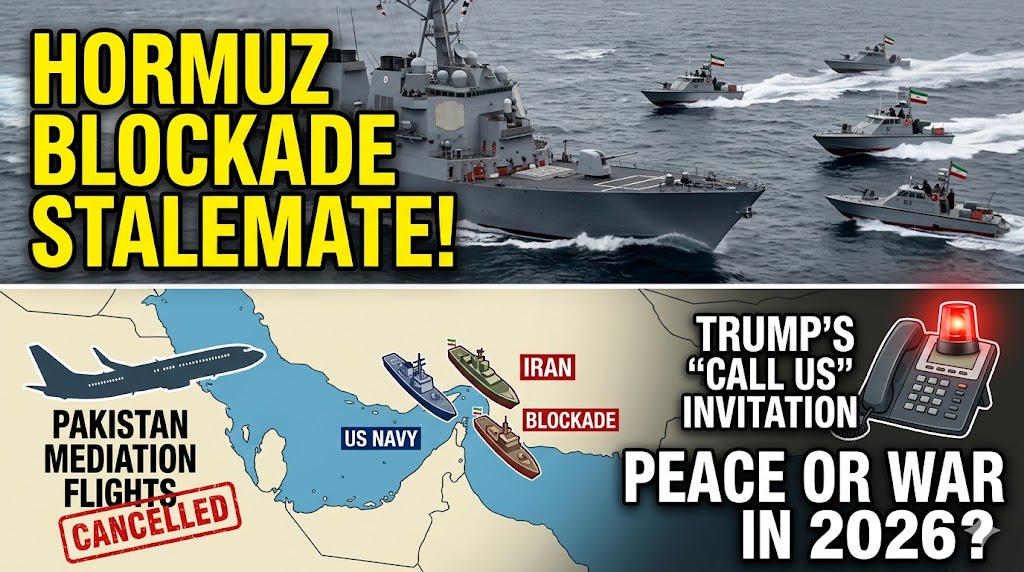
As of late April 2026, the conflict between the United States and Iran, which escalated dramatically in late February with joint US-Israeli strikes, continues in a tense limbo. A conditional ceasefire, initially short-term and later extended unilaterally by President Donald Trump, has failed to bring lasting peace. The core dispute centers on the Strait of Hormuz, the critical chokepoint through which roughly 20% of global oil trade once flowed freely. Both sides maintain blockades—Iran restricting traffic and reportedly seeking tolls, while the US enforces a naval blockade on Iranian ports—severely disrupting maritime commerce and sending ripples through global energy markets.
President Trump has publicly stated that Tehran can simply “call us” if it wants to engage in peace talks, emphasizing that lengthy travel for negotiations is unnecessary. Iran, through its Foreign Minister Abbas Araghchi, has signaled openness to diplomacy but insists that the US must first lift its blockade, viewing it as a violation of the ceasefire. Pakistan has emerged as a key mediator, hosting rounds of talks in Islamabad and actively pushing for dialogue. However, recent developments show setbacks, including Trump canceling a planned US envoy trip to Pakistan and Araghchi departing after consultations without direct US-Iran meetings.
This article provides an educational overview of the current situation, the economic fallout on global GDP and stock markets, the diplomatic maneuvers involving Pakistan, and the broader implications for regional and international stability. From a geopolitical and economic perspective, the standoff highlights how localized conflicts in vital energy corridors can quickly affect the world economy.
Current Military and Diplomatic Situation
The war began with US and Israeli airstrikes on Iranian targets in late February 2026. After weeks of exchanges, a fragile ceasefire was negotiated, partly through Pakistani mediation. Trump extended the ceasefire indefinitely to allow more time for talks, but practical implementation has stalled.
Key sticking points include:
Strait of Hormuz control: Iran has at times restricted or sought to impose tolls on shipping, actions the US labels as “extortion” or “blackmail.” The US responded with a counter-blockade targeting vessels entering or exiting Iranian ports, which has effectively halted much of Iran’s seaborne trade.
Nuclear concerns: The US demands limits on Iran’s nuclear program, including enrichment curbs and removal of highly enriched uranium. Iran insists on its right to peaceful nuclear energy and rejects what it calls “maximalist” US positions.
Regional proxies and sanctions: Broader issues involve Iran’s support for regional groups and the lifting of US sanctions.
Trump has repeatedly messaged that Iran wants a deal and can contact the US directly. In one statement, he noted that lengthy flights for talks are inefficient and that “we have all the cards.” Iran’s Foreign Minister Araghchi, after visiting Islamabad, has stressed that the US blockade violates the ceasefire spirit and remains a major obstacle. He has also planned visits to Oman and Russia for further consultations, signaling Tehran’s efforts to build diplomatic support.
Recent talks in Islamabad, hosted by Pakistan, collapsed or failed to produce breakthroughs. Iran submitted proposals, but differences over the strait and nuclear issues proved insurmountable in initial rounds. Trump canceled a follow-up visit by US envoys Steve Witkoff and Jared Kushner, citing insufficient Iranian offers and the burden of travel. Despite this, he has extended the ceasefire while maintaining the blockade until a satisfactory agreement emerges.
The situation remains volatile, with occasional incidents involving shipping in the strait. Both sides accuse the other of breaches, yet neither appears ready for full escalation at present.
Economic Impact: Effects on Global GDP and Stock Markets
The disruption in the Strait of Hormuz has significant economic consequences. Before the conflict, the waterway handled about one-fifth of global oil supply. With shipping heavily curtailed, oil prices have risen sharply, contributing to inflationary pressures worldwide.
Analysts estimate that prolonged closure or restricted access could shave 0.5% to 1% or more off global GDP growth in 2026, depending on duration and severity. Energy-importing nations, including major economies in Europe and Asia, face higher fuel costs that feed into transportation, manufacturing, and consumer prices. Stock markets have shown volatility, with energy sector gains offset by concerns over broader economic slowdowns. Airlines, shipping companies, and industries reliant on stable oil supplies have faced headwinds.
For the United States, higher energy costs could complicate domestic inflation goals, even as domestic production offers some buffers. For Iran, the blockade exacerbates economic strain, limiting oil export revenues crucial for its budget. Globally, supply chain disruptions and uncertainty have weighed on investor sentiment, with occasional rallies tied to hopes of diplomatic progress.
Pakistan’s push for talks partly stems from its own vulnerabilities. The country faces a severe economic crisis, with high debt servicing, depleting foreign reserves, and inflation fueled partly by elevated global oil prices. Repaying a substantial $3.5 billion loan to the UAE in April 2026 has further pressured reserves, risking breaches of IMF program targets. Remittances from Gulf workers and trade routes could suffer if the conflict drags on. By mediating, Islamabad aims to stabilize energy markets and protect its fragile economy.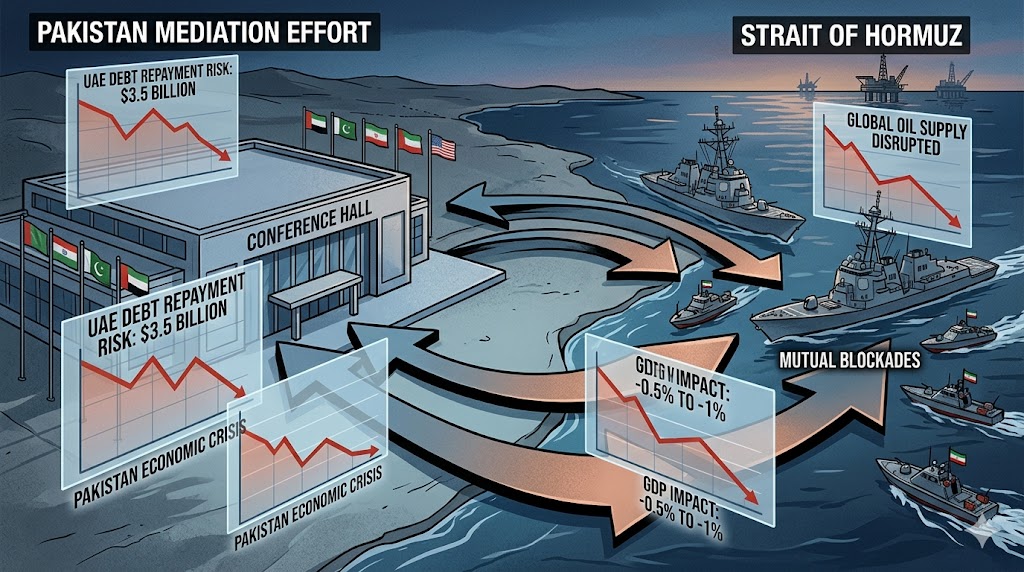
Economic and Security Geopolitics
Pakistan’s Mediation Role and Economic Motivations
Pakistan has positioned itself as a neutral facilitator, leveraging relationships with both Washington and Tehran. Its military and civilian leadership, including Prime Minister Shehbaz Sharif and Army Chief Asim Munir, have hosted talks in Islamabad and proposed frameworks for de-escalation. Iranian Foreign Minister Araghchi’s recent visit involved consultations with Pakistani officials, though direct US-Iran engagement did not materialize in the latest round.
Pakistan’s motivations are not purely altruistic. The nation grapples with a deep economic crisis characterized by high external debt, low reserves (around $16 billion recently), and dependence on Gulf financial support. The unexpected repayment demand from the UAE—covering loans and deposits—has strained finances at a sensitive time. Rising oil import costs due to the Hormuz disruptions add further burden, potentially increasing the import bill by hundreds of millions.
By actively mediating, Pakistan seeks to demonstrate diplomatic value, possibly earning goodwill or renewed financial support from Gulf states and the West. A prolonged war would exacerbate its challenges: higher energy prices, risks to remittances, and potential security spillovers along borders. Islamabad thus has a strong incentive to push for peace talks, even as it balances relations with major powers.
Araghchi’s upcoming or planned engagements, including with Russia, indicate Iran’s strategy of diversifying diplomatic channels. Meanwhile, the US maintains pressure through the blockade while leaving the door open for direct communication.
Challenges to Peace and Potential Pathways Forward
Several factors complicate resolution:
Trust deficit: Both sides accuse the other of bad faith—Iran views the US blockade as a ceasefire violation, while the US sees Iranian restrictions as unacceptable.
Domestic politics: Hardline positions in both capitals limit flexibility.
Regional dynamics: Involvement of Israel, proxies, and other Gulf actors adds layers.
Despite setbacks, possibilities for progress exist. Trump’s extension of the ceasefire and invitation for Iran to “call” suggests openness to dialogue. Pakistan continues behind-the-scenes efforts. International actors, including the UK, France, and others, have discussed defensive missions or sanctions related to shipping safety.
A breakthrough would likely require compromises on the strait’s management (no unilateral tolls or blockades) and phased steps on nuclear issues, sanctions relief, and verification mechanisms. Educational observers note that such conflicts often resolve through incremental diplomacy when economic pain becomes mutually unsustainable.
Broader Implications for Regional Stability and Global Energy Security
The US-Iran standoff underscores the fragility of global energy security. The Strait of Hormuz remains a strategic vulnerability; any sustained disruption affects not just oil but liquefied natural gas markets and broader trade.
For neighboring countries, including Pakistan, the stakes are immediate. Economic spillover can fuel inflation, currency pressures, and social unrest. From India’s perspective (as a major energy importer), stability in the region supports reliable supply chains.
Longer-term, the episode highlights the need for diversified energy sources, improved maritime security frameworks, and resilient diplomatic channels. Pakistan’s role illustrates how middle powers can influence outcomes when great powers reach impasses, driven partly by self-preservation amid economic hardship.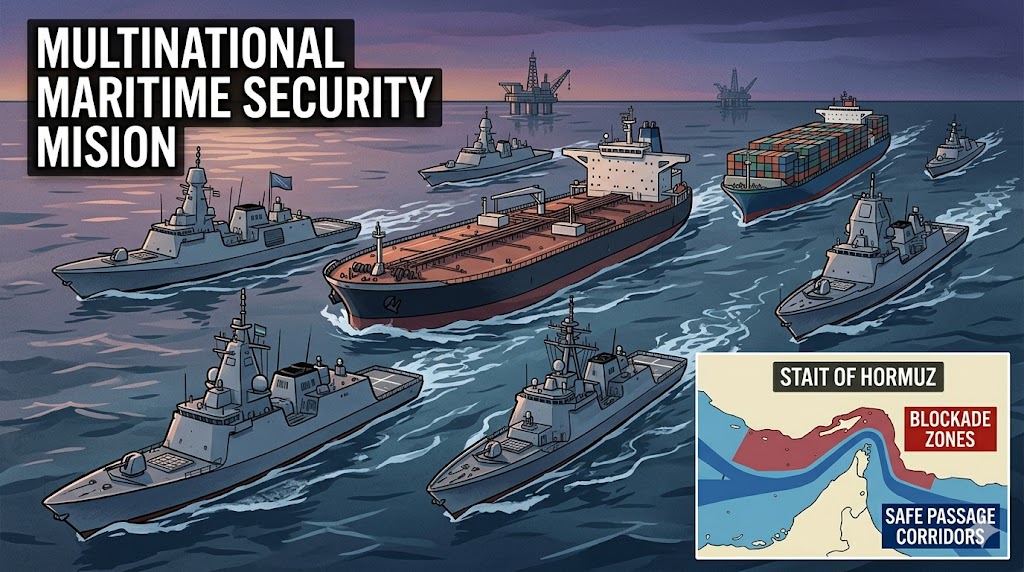
Defensive Missions and Multinational Presence
Conclusion: Fragile Ceasefire and the Road Ahead
As late April 2026 draws to a close, the US-Iran conflict persists in a state of “no war, no peace,” with mutual blockades in the Strait of Hormuz preventing normal shipping and exerting economic pressure on all parties. President Trump’s stance—that Iran can initiate contact directly—contrasts with Tehran’s insistence on lifting the US blockade as a precondition for meaningful talks. Pakistan’s vigorous mediation efforts reflect its acute economic vulnerabilities, including heavy debt obligations to the UAE and exposure to oil price shocks.
While recent Islamabad talks have not yielded a breakthrough, the extended ceasefire and ongoing contacts provide a narrow window for de-escalation. Global GDP and stock markets remain sensitive to developments, as prolonged disruption threatens energy stability and growth prospects.
The situation serves as a reminder of how intertwined geopolitics, energy security, and economics have become. For students of international relations and economics, it offers a real-time case study in crisis management, the limits of unilateral pressure, and the value of third-party mediation. Resolution will require pragmatism from all sides, balancing security concerns with the urgent need to restore stable maritime flows through one of the world’s most vital waterways.
Watchful observers hope that diplomatic creativity—potentially facilitated by Pakistan and others—can transform the current stalemate into a sustainable agreement, averting further economic and human costs.