2026 US Midterms: Pivotal Test for Trump's Presidency
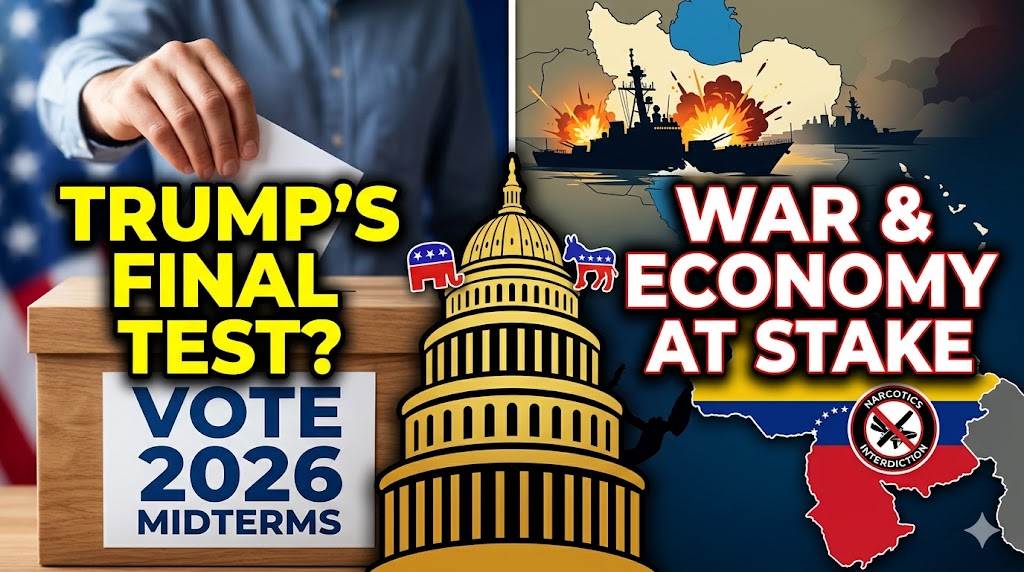
As the United States approaches the November 2026 midterm elections, the political landscape is charged with anticipation and uncertainty. These elections, occurring midway through President Donald Trump's second non-consecutive term, will determine control of Congress for the final two years of his presidency. Far from a routine vote, the 2026 midterms represent a critical referendum on Trump's leadership, policy agenda, and ability to govern effectively.
Historically, midterm elections serve as a check on the sitting president's power. The party holding the White House typically loses seats in Congress, a pattern observed across decades. In Trump's case, with narrow Republican majorities currently in place following the 2024 victory, any shift toward Democratic control could dramatically reshape the remainder of his term. This is not merely a domestic matter; outcomes will influence America's stance on ongoing international conflicts, trade policies, and alliances worldwide.
The elections come at a time of domestic challenges, including perceptions of the economy and cost of living, alongside global tensions. Recent developments, such as U.S. involvement in the Iran conflict that escalated in early 2026 with airstrikes and naval actions, add layers of complexity. Voters will weigh Trump's "America First" promises against realities on the ground, from energy prices affected by Middle East instability to broader questions of military engagement. For the world, these midterms could signal whether Trump's assertive foreign policy continues unchecked or faces significant congressional oversight.
In this analysis, we examine the structure and history of U.S. midterm elections, current political dynamics, potential scenarios for congressional control, and the profound implications for U.S. domestic governance and international relations.
Understanding U.S. Midterm Elections: Structure and Historical Context
Midterm elections in the United States occur every two years, in the middle of a president's four-year term. All 435 seats in the House of Representatives are contested, along with approximately one-third of the 100 Senate seats (usually 33 or 34). Additionally, 36 gubernatorial races and numerous state legislative contests take place, influencing redistricting and local power.
Unlike presidential elections, midterms do not directly choose the executive but serve as a barometer of public sentiment toward the administration. Voter turnout is generally lower than in presidential years, though it has risen in recent cycles due to heightened polarization. The House, with its two-year terms, is more sensitive to short-term shifts in public opinion, while the Senate's staggered six-year terms provide greater stability.
Historical data reveals a consistent trend: the president's party loses an average of about 28 House seats and 4 Senate seats since World War II. Notable examples include the 2010 "shellacking" of Democrats under Barack Obama, with losses of 63 House seats, and the 2018 midterms under Trump, where Democrats gained 41 House seats. In 2022, under Joe Biden, Democrats performed better than expected, losing only nine House seats while gaining one in the Senate.
This "midterm penalty" stems from several factors: disappointment among the president's base of promises remain unfulfilled, mobilization of opposition voters, and the absence of the presidential candidate on the ballot. For Trump in 2026, early polls suggest Democrats hold a generic ballot advantage of 3 to 6 points, raising the prospect of significant Republican losses, particularly in the House.
The 2026 cycle is especially noteworthy because Trump, ineligible for a third term under the 22nd Amendment, will be a lame duck after these elections. The post-midterm period could mark the twilight of his direct influence, shifting focus toward potential 2028 successors and legacy-building.
Current Political Scenario and Predictions for 2026
As of April 2026, President Trump's approval ratings hovered in the low to mid-40s, with disapproval often exceeding 50 percent in aggregated polls. Challenges include public frustration over the cost of living, despite campaign promises, and mixed perceptions of his handling of the economy and foreign engagements. Republicans entered the term with slim majorities, making them vulnerable to even modest swings.
Forecasts indicate Democrats are heavy favorites to flip the House, with projections suggesting a gain of 10 to 20 seats or more, depending on national mood and economic conditions. The Senate map is more favorable to Republicans in terms of seats defended, but Democratic gains in key races could still shift control. Prediction markets and models assign Democrats around an 80-90 percent chance of taking the House and a competitive but possible shot at the Senate.
Key issues shaping voter sentiment include inflation and affordability, immigration, and foreign policy. Trump's aggressive approach—evident in actions against Venezuelan leadership in late 2025 and the escalation into conflict with Iran in February 2026—has drawn both praise from supporters for decisive leadership and criticism for deviating from isolationist "America First" rhetoric. Rising energy prices linked to Middle East tensions have particularly concerned Midwest swing-state voters, where independents could prove decisive.
Republican strategy centers on tying candidates closely to Trump's agenda, with the president himself campaigning vigorously as if on the ballot. Democrats, conversely, aim to frame the vote as a check on executive overreach, promising oversight on spending, investigations into administration policies, and a focus on domestic priorities like healthcare and economic relief.
Analysts note fractures within the Republican coalition, with some MAGA hardliners expressing unease over foreign entanglements, while moderates worry about electoral backlash. If economic indicators worsen or conflicts drag on without clear victories, Republican losses could exceed historical averages.
Implications for Trump's Presidency and Congressional control
The 2026 midterms will largely determine whether Trump enjoys a unified Republican government or faces divided control for his final two years. A Republican hold on both chambers would allow continued advancement of priorities such as tax reforms, deregulation, border security measures, and assertive foreign policy without significant obstruction.
Conversely, a Democratic House—widely anticipated—would shift dynamics dramatically. Democrats could block or force compromises on legislation, control the budget process (including debt ceiling debates), and launch aggressive oversight hearings. Investigations into administration actions, from foreign policy decisions to domestic initiatives, would likely dominate headlines, potentially leading to impeachment proceedings if evidence of misconduct emerges. Symbolically, Democratic control would elevate figures like Hakeem Jeffries, providing a national platform to contrast with Republican leadership.
Even partial losses could hamstring Trump's ability to pass ambitious bills, forcing reliance on executive actions that courts or future administrations might challenge. For a president known for bold moves, this "gridlock" scenario would test his negotiating skills and could accelerate perceptions of a declining influence as the 2028 cycle begins immediately after November 2026.
Republican lawmakers in vulnerable districts already show signs of caution, with some retiring early amid tough reelection prospects. The elections thus serve as a verdict not only on Trump but on the durability of the post-2024 Republican coalition.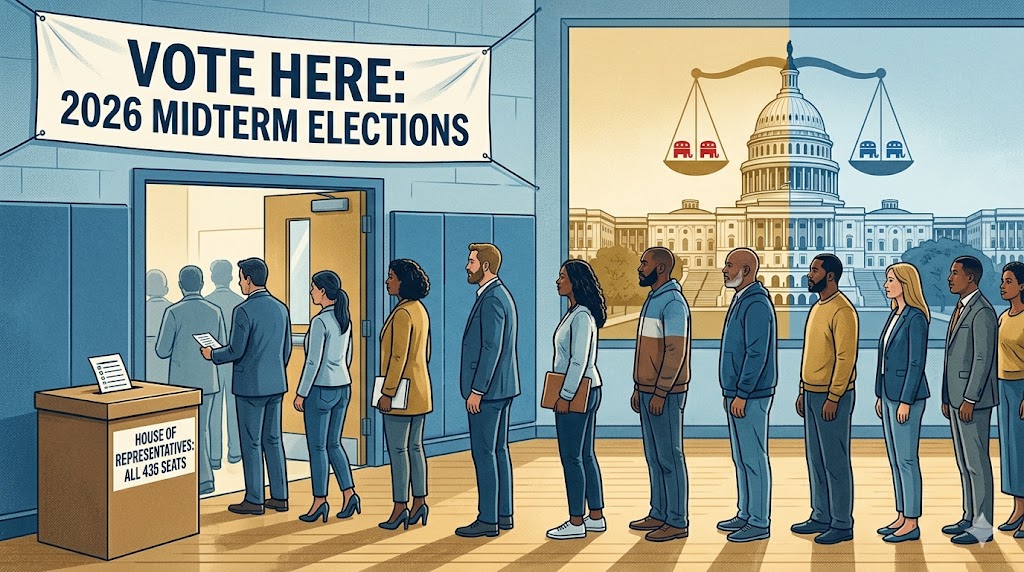
The Gateway of Midterm Voting
Global Ramifications: Foreign Policy and Ongoing Conflicts
The 2026 midterms carry significant weight beyond U.S. borders. Congressional control directly influences America's international posture, particularly amid active conflicts. In early 2026, U.S. and Israeli actions escalated into direct confrontation with Iran, involving airstrikes on military sites, naval blockades in the Persian Gulf and Strait of Hormuz, and responses from Iranian forces and proxies. A temporary ceasefire brokered in April remains fragile, with dual blockades and risks of renewed escalation affecting global energy markets.
A Democratic-controlled House could scrutinize these military engagements more closely, questioning costs, strategic objectives, and adherence to congressional war powers. Funding for operations might face delays or conditions, pushing the administration toward greater transparency or de-escalation. In swing states sensitive to gas prices and military casualties, prolonged involvement could alienate voters who expected reduced overseas commitments.
Other flashpoints, including U.S. actions in Venezuela aimed at removing Nicolás Maduro and addressing narcotics trafficking, add to the mix. Foreign policy has historically played a secondary role in midterms, but when linked to domestic economic pain—like higher fuel costs from Hormuz disruptions—it gains salience. Allies and adversaries alike watch closely: a weakened Trump agenda might embolden rivals or encourage partners to hedge bets.
If Republicans retain control, Trump's preferred unilateral and transactional style could persist, potentially accelerating deals or pressures on trade partners and adversaries. A divided government, however, might foster more cautious or multilateral approaches, as congressional pushback forces compromise. The elections thus represent a hinge point for U.S. global leadership—whether assertive dominance continues or yields to greater domestic constraints.
Broader implications include effects on alliances (NATO, Indo-Pacific partners), responses to China and Russia, and stability in regions like the Middle East and Latin America. World leaders gauge whether post-midterm America will remain predictable or enter a period of intensified internal debate.
Importance in the Current Scenario: Domestic and International Interplay
In today's polarized environment, the 2026 midterms encapsulate deeper questions about American governance. They test the resilience of democratic institutions against executive ambition and assess whether voters prioritize continuity or correction. Economic discontent, cultural divides, and war fatigue converge, making the vote a potential turning point.
For Trump personally, success or failure in maintaining congressional majorities will shape his legacy. Strong performance could solidify his transformation of the Republican Party; significant losses might accelerate internal challenges and diminish his post-presidency clout. The elections also preview 2028 dynamics, with potential contenders positioning themselves amid shifting party fortunes.
Globally, the outcome influences conflict trajectories. In the Iran context, a more restrained U.S. Congress could pressure diplomatic off-ramps, affecting oil supplies, regional security, and humanitarian conditions. Similarly, approaches to other hotspots—from Ukraine support to counter-narcotics efforts—may adjust based on legislative backing.
Ultimately, these midterms underscore the interconnectedness of U.S. domestic politics and world affairs. They highlight how voter choices in congressional races reverberate far beyond Washington, shaping not only America's future but the international order.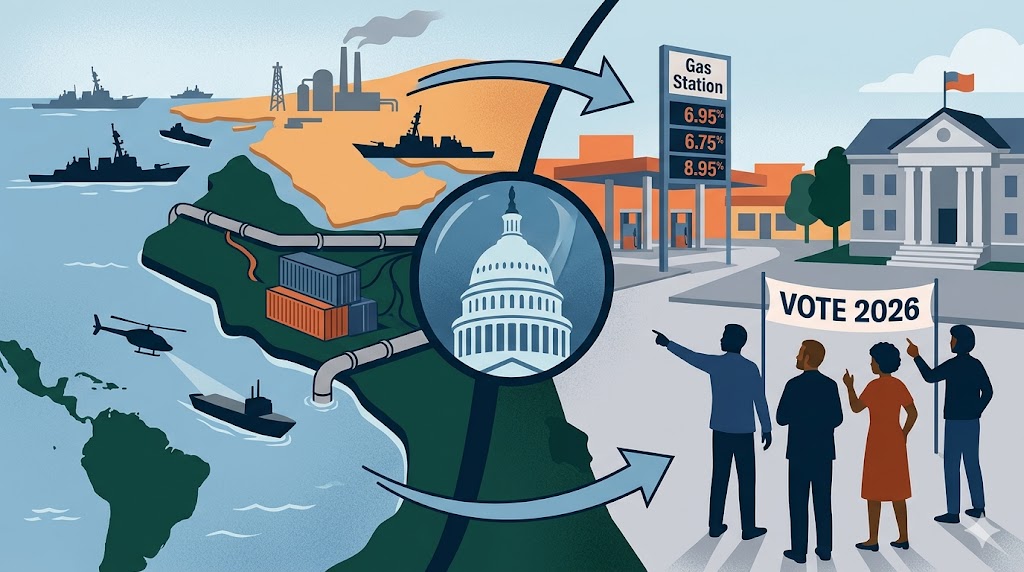
The Foreign Policy Feedback Loop
Conclusion: A Defining Moment for American Politics and Global Influence
The 2026 U.S. midterm elections stand as a crucial juncture in the Trump era. They will decide whether the president retains the legislative tools to advance his vision or confronts a Congress poised for oversight and opposition. Historical patterns favor Democratic gains, particularly in the House, but outcomes hinge on economic performance, conflict developments, and turnout.
For the United States, the results will chart the course for governance in a divided polity. For the world, they offer signals on the sustainability of current foreign policy trajectories amid wars and tensions that began intensifying in early 2026. Whether Republicans hold firm or Democrats regain ground, the elections promise to influence everything from domestic legislation to international stability.
As campaigns intensify, voters face choices with lasting consequences. The 2026 midterms are more than a midterm vote—they are a referendum on leadership in turbulent times, with ripples that will extend well into the future of U.S. politics and its role on the global stage.