US-Iran War: Escalation, Humanitarian Toll & Global Impact
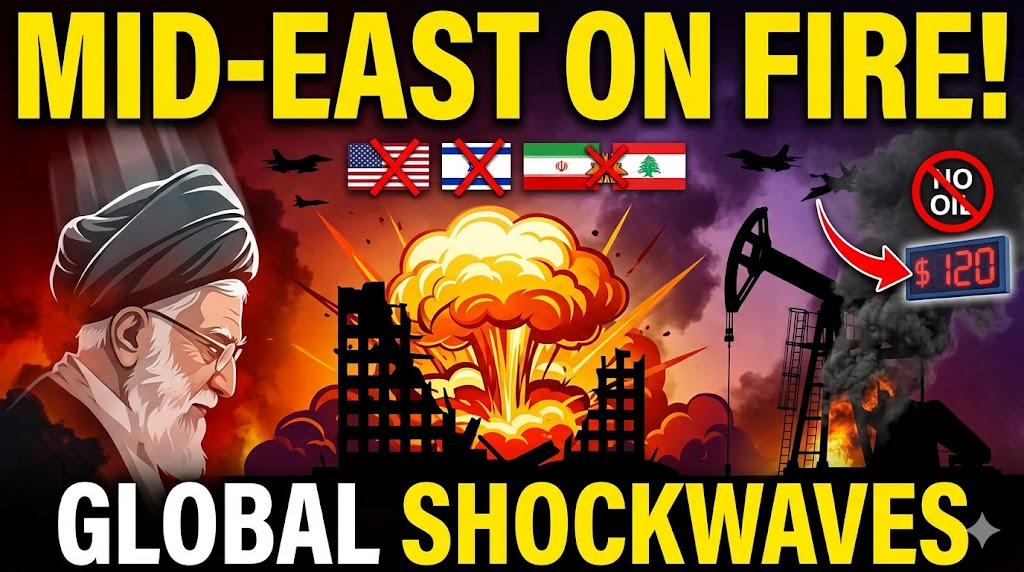
The conflict that erupted on February 28, 2026, marked a dramatic escalation in longstanding tensions across the Middle East. Joint US and Israeli military operations, dubbed Operation Epic Fury, targeted Iranian nuclear facilities, missile sites, and leadership compounds in a sweeping series of nearly 900 strikes within the first 12 hours. What began as a focused campaign to neutralize perceived nuclear threats quickly drew in Hezbollah forces in Lebanon and sent shockwaves through global energy markets.
By late April 2026, the region stands on a knife-edge. Temporary ceasefires between the US and Iran, and separately between Israel and Lebanon, have been extended—most recently by three weeks for the Israel-Lebanon truce—but violations and mutual accusations continue to fuel high tensions. The assassination of Iran’s Supreme Leader Ayatollah Ali Khamenei in the initial strikes became a pivotal moment, galvanizing Iranian retaliation while creating leadership uncertainty that complicated de-escalation efforts.
This article examines the multifaceted impacts of the war, from devastating humanitarian costs and infrastructure damage to severe disruptions in oil and liquefied petroleum gas (LPG) supplies. It also analyzes the United Nations’ stance, the broader economic consequences for nations worldwide, and whether this confrontation signals the prelude to a larger global conflict.
Background and Triggers of the Conflict
Tensions between Iran, Israel, and the United States had simmered for decades, fueled by Iran’s nuclear program, regional proxy conflicts, and direct confrontations involving Hezbollah. Earlier exchanges, including Israeli strikes in 2024 and joint US-Israeli actions in 2025, had already weakened Iranian defenses. The 2026 offensive represented a significant intensification, with the US and Israel citing imminent nuclear risks and the need for regime change as justification.
The killing of Khamenei, along with several top IRGC commanders and officials, decapitated much of Iran’s senior leadership in the opening phase. Iranian responses were swift and widespread: hundreds of missiles and thousands of drones targeted Israeli cities, US bases, and Gulf Arab states. Hezbollah, Iran’s key ally in Lebanon, resumed hostilities against Israel, leading to heavy Israeli airstrikes that reached deep into Beirut and southern Lebanon.
As fighting intensified, Iran effectively disrupted shipping through the Strait of Hormuz—a critical chokepoint for roughly 20% of global oil trade—triggering immediate supply concerns. By early April, fragile ceasefires emerged, brokered in part through Pakistani and Chinese diplomatic channels, yet the situation in Lebanon remained volatile, with Israel conducting intensified operations even after US-Iran agreements.
Khamenei’s Death and Its Role in Escalation
The death of Supreme Leader Ali Khamenei on the first day of strikes was not only a symbolic blow but also a catalyst for heightened Iranian resolve. It removed a central figure who had shaped Iran’s foreign policy for decades, leaving a power vacuum that successors struggled to fill amid ongoing attacks. Reports indicate Mojtaba Khamenei was positioned as a potential successor, but internal divisions and the pressures of war complicated governance.
Iranian retaliation intensified in the weeks following, with missile barrages—including controversial use of cluster munitions—aimed at population centers and infrastructure. This cycle of strikes and counterstrikes prolonged the conflict, making early diplomatic off-ramps more difficult. The leadership loss also irritated proxy dynamics; Hezbollah framed its renewed campaign in Lebanon as solidarity against aggression, further entangling the two theaters of war.
Analysts note that while the assassination aimed to weaken command structures, it instead unified factions around resistance in the short term, complicating US and Israeli calculations for a swift resolution.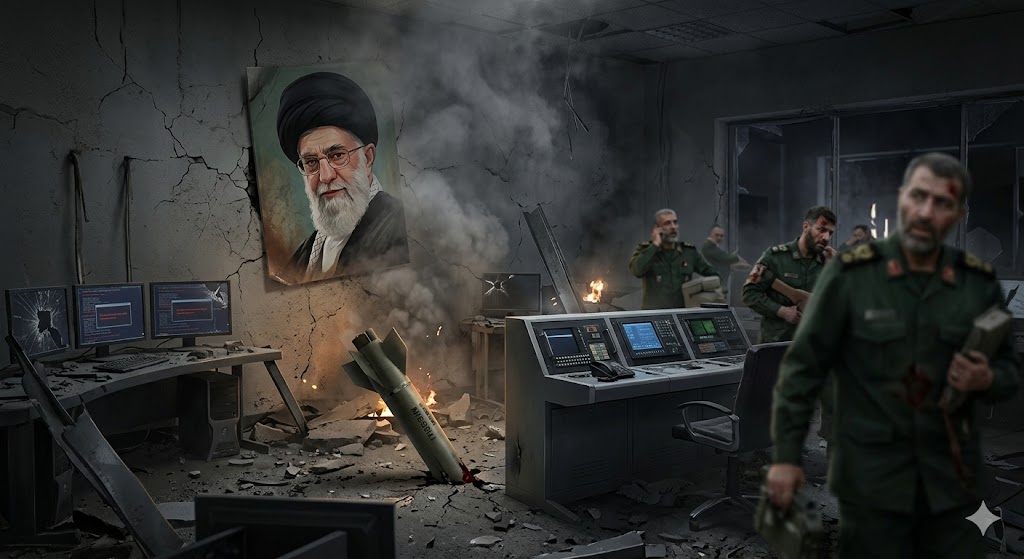
Inside a devastated Iranian command center following Operation Epic Fury strikes in early 2026. Smoke and dust fill the air as personnel navigate twisted metal and shattered electronics.
Humanitarian Crisis: Civilian Deaths and Suffering
The human cost has been staggering. In Iran, nearly 3,400 deaths were reported by mid-April, including civilians killed in strikes on residential areas and a girls’ school in Minab that claimed around 170 lives, many of them children. Lebanon saw over 2,400 fatalities, with more than one-sixth of its population displaced. Israel reported dozens of deaths, while Gulf states suffered additional losses from Iranian retaliatory attacks.
Women and children bore a disproportionate burden. UN reports highlighted hundreds of women and girls killed across the region, alongside attacks on schools, hospitals, and residential neighborhoods. In Lebanon, Israeli strikes on April 8 alone killed over 180 people in a single day, including journalists and civilians in Beirut suburbs. Aid workers and healthcare facilities faced repeated incidents, exacerbating the crisis.
Missile exchanges caused widespread destruction: Iranian projectiles struck civilian areas in Israel, while Israeli operations in Lebanon led to evacuation orders affecting over a million people. Cluster munitions and unguided rockets raised serious concerns under international humanitarian law, with both sides accused of endangering non-combatants. Millions remain displaced, facing shortages of food, water, and medical care as infrastructure crumbles.
UN Perspective and International Response
The United Nations has consistently called for restraint and diplomacy. Emergency Security Council sessions condemned attacks on civilians and infrastructure, with Resolution 2817 (adopted March 11, 2026) deploring Iranian strikes on Gulf states while urging compliance with international law. UN experts denounced aggression against Iran and Lebanon, warning of a devastating regional spillover.
Secretary-General statements emphasized the grave risks posed by continued Israeli actions in Lebanon to broader ceasefires. Humanitarian agencies documented attacks on healthcare, displacement crises, and the urgent need for aid corridors. While the UN facilitated some dialogue, divisions among permanent members limited stronger enforcement, reflecting broader geopolitical splits.
From a legal standpoint, experts debated proportionality, targeting of civilian objects, and navigation rights in the Strait of Hormuz. The organization pushed for inclusive talks but faced challenges as direct US-Iran negotiations in Islamabad yielded limited progress.
Oil, LPG, and Broader Economic Crises
The war triggered the largest disruption to global energy markets in history. The partial closure of the Strait of Hormuz, combined with strikes on oil facilities in Iran and Gulf states, caused Brent crude prices to surge over 55%, briefly approaching $120 per barrel. LPG supplies tightened sharply, contributing to fuel shortages in Asia and Europe.
Gulf oil production dropped dramatically, with force majeure declarations on exports. Refiners scrambled for alternative sources, driving up costs for transportation, manufacturing, and households. Fertilizer production, heavily reliant on regional gas, faced setbacks that threatened global food security. Aviation and shipping costs rose, compounding inflationary pressures already present in many economies.
Developing nations, particularly in Asia and Africa, felt the pinch hardest through higher import bills and currency strains. Even oil exporters outside the immediate conflict zone saw mixed effects—higher prices brought revenue but also global slowdown risks. Stock markets dipped, safe-haven assets like gold rallied, and central banks confronted the dilemma of stagflation: rising prices alongside slowing growth.
Impacts on Infrastructure, Politics, and Regional Development
Beyond energy, missile and drone attacks damaged ports, desalination plants, power grids, and transportation networks. In Lebanon, repeated Israeli operations reversed development gains, while Iran faced setbacks to its military and civilian infrastructure. Political landscapes shifted: Israel’s domestic debates intensified over ceasefire terms, Iran grappled with succession and internal cohesion, and Gulf states strengthened security ties with the US.
Countries invested heavily in defense and diplomacy. The US diverted resources from other priorities, raising questions about strategic overextension. Lebanon and regional neighbors saw years of reconstruction needs ahead. Proxy dynamics evolved, with risks of new militant alignments.
Is This a Signal of World War 3?
While the conflict has drawn in multiple actors and disrupted global systems, most analysts assess the risk of full-scale World War 3 as elevated but not inevitable. Direct involvement remains limited to core parties, with major powers like China and Russia offering diplomatic or rhetorical support rather than military intervention. However, prolonged fighting, accidents involving third parties, or miscalculations in the Strait of Hormuz could broaden the theater.
The war highlights vulnerabilities in the international order: strained alliances, depleted munitions stockpiles, and the speed of escalation in an era of advanced missiles and drones. It serves as a stark reminder that regional conflicts can rapidly impose worldwide costs, testing the resilience of global institutions.
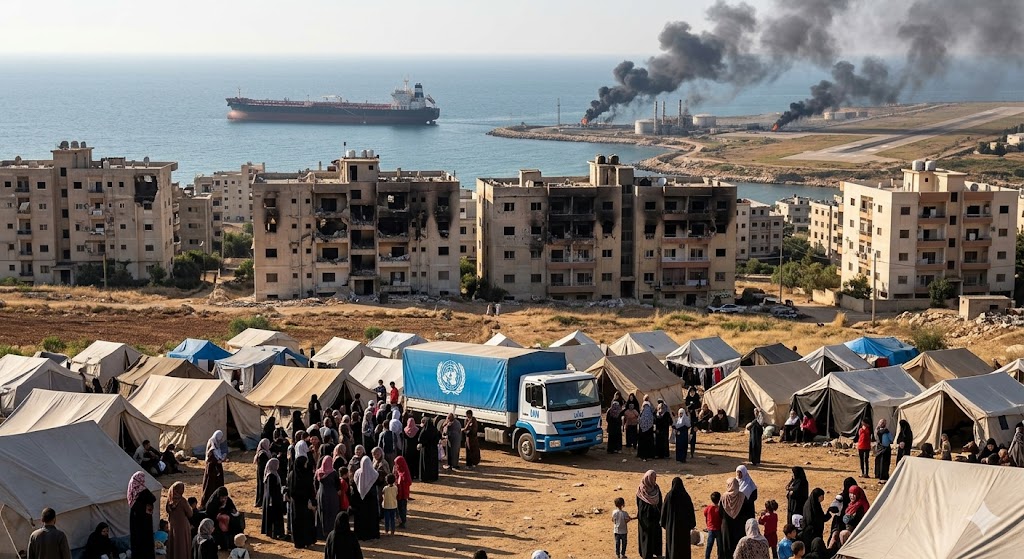
The Humanitarian Toll and Regional Disruption
Conclusion: A Fragile Path Forward
As April 2026 draws to a close, the US-Iran-Israel-Lebanon war has already reshaped the Middle East and sent ripples across the planet. Ceasefires offer a momentary breathing space, yet underlying grievances, leadership transitions, and economic hardships suggest a long road to stability. The humanitarian tragedy—thousands dead, millions displaced—demands urgent attention, while energy shocks underscore the interconnectedness of modern economies.
Sustainable peace will require inclusive diplomacy, respect for international norms, and concerted efforts to rebuild shattered infrastructure and trust. Without genuine de-escalation, the dangers of wider conflict and deeper global instability will persist. The coming weeks and months will determine whether this chapter closes or expands into an even more perilous era.