Nepal's Crisis: From Protests to Political Turmoil in 2026
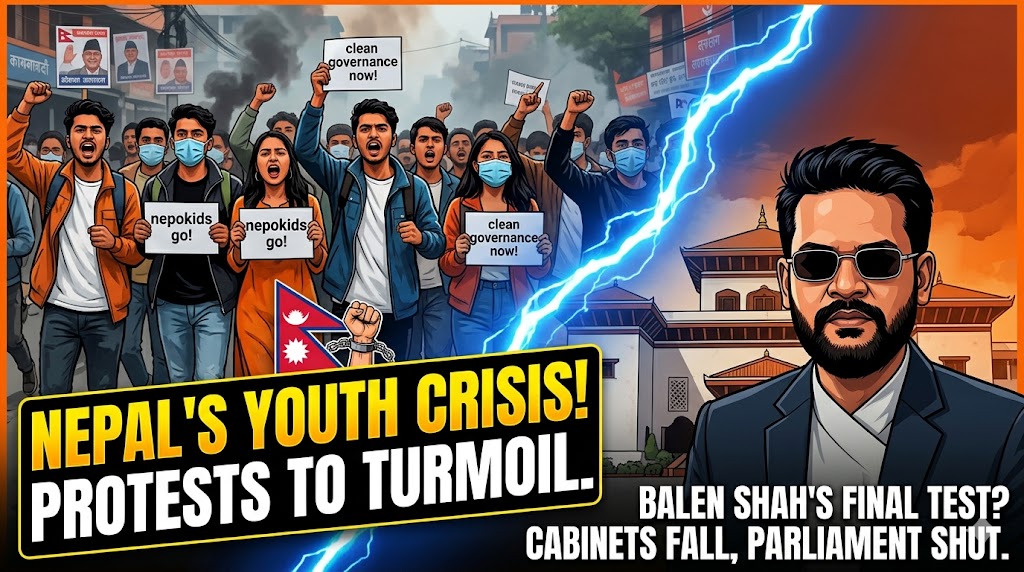
As of late April 2026, Nepal finds itself grappling with fresh waves of political instability despite a historic youth-led electoral mandate earlier in the year. The government of Prime Minister Balendra Shah (popularly known as Balen Shah), sworn in after a landslide victory in the March 2026 general elections, has already faced significant setbacks. Within just 26 days of taking office, two cabinet ministers have exited amid allegations of financial irregularities and nepotism, testing the credibility of an administration that rose on promises of clean governance and anti-corruption reforms.
This turmoil traces its roots to the dramatic events of September 2025, when Nepal's youth—frustrated by systemic corruption, nepotism, unemployment, and government overreach—took to the streets in unprecedented numbers. What began as protests against a social media ban quickly escalated into a broader movement that resulted in violence, loss of life, the burning of public buildings including parliament, and the eventual collapse of the previous government under K.P. Sharma Oli.
The 2025 Gen Z uprising and its aftermath highlight deep-seated grievances among Nepal's young population. Educated yet facing limited opportunities at home, many have channeled their anger into demands for accountability. Yet, the rapid unraveling of the new cabinet raises questions about whether this generational shift can deliver lasting change or if entrenched political habits will persist. For neighboring India, these developments carry strategic weight, as instability in Nepal can ripple across open borders, affect hydropower cooperation, and influence regional security dynamics in the Himalayas.
This article explores the youth crisis that shook Nepal in 2025, the rise of Balen Shah's government, ongoing controversies surrounding cabinet resignations and parliament suspension, and the broader implications for political accountability and regional stability.
In September 2025, Nepal witnessed one of its most significant youth-led movements in recent history. Triggered by the government's decision to ban over two dozen social media platforms—widely seen as an attempt to suppress criticism of politicians' lavish lifestyles amid widespread economic hardship—the protests quickly broadened. Young Nepalis, many in school and college uniforms, expressed outrage over chronic corruption, nepotism ("nepokids" culture), high youth unemployment, inflation, and a perceived disconnect between political elites and ordinary citizens.
What started as peaceful demonstrations in Kathmandu and other cities turned violent on September 8, 2025. Protesters stormed the parliament complex, leading to clashes with security forces. Police response escalated dramatically, with reports of live ammunition and rubber bullets resulting in at least 76 deaths overall, including 19 on the deadliest day. Public buildings, including parliament and politicians' residences, were set ablaze in scenes of raw anger.
Social media played a pivotal role, even as platforms faced restrictions. Discord groups and viral videos helped coordinate actions and amplify voices. Symbols like the Jolly Roger flag from the anime One Piece—representing liberation from oppressive systems—become emblems of the movement. The fury was not just against specific policies but against a political system long dominated by established parties like the Nepali Congress and CPN (UML), which many youths viewed as corrupt and ineffective.
The protests forced Prime Minister K.P. Sharma Oli to resign, leading to the dissolution of parliament and the appointment of an interim government under former Chief Justice Sushila Karki. The military stepped in temporarily to restore order amid curfews and airport closures. This "Gen Z Revolution" marked a rare instance where youth power directly toppled a sitting government, paving the way for early elections in March 2026.
The movement underscored a generational divide. Educated young Nepalis, exposed to global ideas through the internet, demanded transparency, inclusive governance, and economic opportunities rather than endless political maneuvering. Many had grown furious watching family members migrate for low-wage jobs abroad while politicians' relatives enjoyed privileges. The protests, though costly in human terms, injected fresh energy into Nepal's democracy and set the stage for a new political force.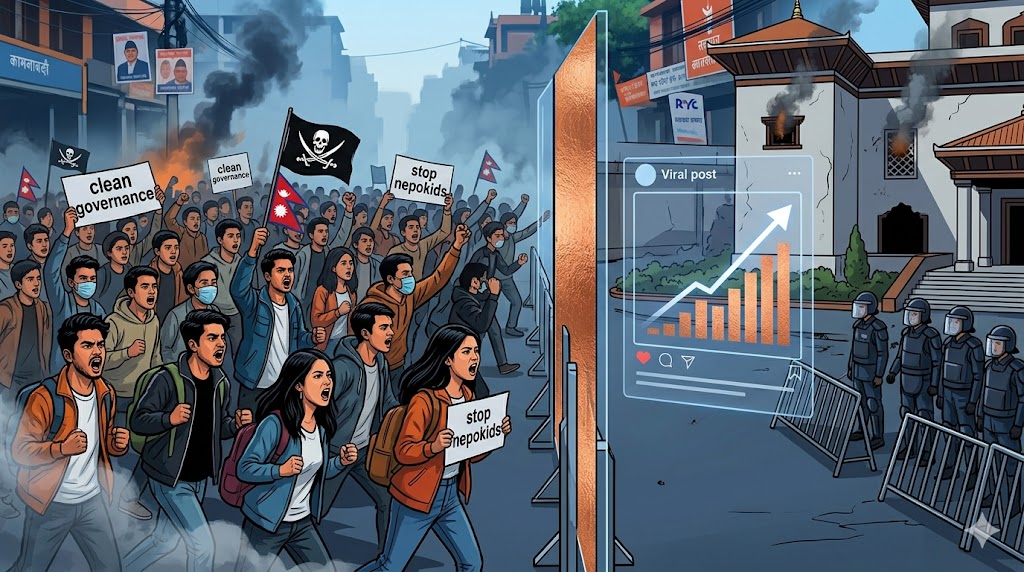
The Gen Z Uprising: A dynamic illustration of the 2025 youth crisis in Kathmandu. Determined young Nepalis, many in modern clothes, fill the streets.
Rise of Balen Shah and the 2026 Electoral Mandate
The March 2026 snap elections delivered a stunning victory to the Rastriya Swatantra Party (RSP), a relatively new outfit led by Balendra Shah, a 35-year-old former rapper and former mayor of Kathmandu. RSP secured a landslide, winning around 182 of 275 seats in the House of Representatives, falling just short of a supermajority. This outcome reflected widespread disillusionment with traditional parties and hope in youth-centric leadership.
Balen Shah, known for his anti-corruption stance and direct communication style, positioned his government as a break from the past. His cabinet emphasized transparency and good governance, resonating with the aspirations that fueled the 2025 protests. Many young lawmakers entered parliament, signaling a potential shift toward more accountable politics.
However, the honeymoon period proved short. Within weeks, cracks appeared. Labour Minister Dipak Kumar Sah was removed early over allegations of misusing his position to appoint his wife to a health insurance board. Then, on April 22, 2026, Home Minister Sudan Gurung resigned after just 26 days in office, citing questions over his investments and undisclosed shareholdings in companies linked to individuals under money laundering scrutiny. Gurung maintained he stepped down to allow a fair investigation, but the episode damaged the government's "clean image" narrative.
Prime Minister Shah has assumed the charge of the Home Ministry in the interim, but the rapid exits have raised doubts about ministerial vetting and the sustainability of the new administration.
Recent Political Instability: Cabinet Resignations and Parliament Suspension
The resignations have plunged Nepal into renewed controversy. Critics argue that the government, born from anti-corruption protests, now faces its own test of accountability. Opposition parties, including Nepali Congress and CPN (UML), have demanded thorough probes, while some within RSP itself pushed for action.
Compounding the crisis, President Ramchandra Paudel suspended the session of both houses of the Federal Parliament—originally scheduled for April 30, 2026—citing "special reasons" on the recommendation of the cabinet. The move, described by opposition leaders as "unprecedented and surprising," has fueled speculation about internal government challenges and efforts to manage fallout from the ministerial exits without immediate parliamentary scrutiny.
These developments highlight ongoing issues of political accountability in Nepal. Traditional coalition politics, marked by frequent government changes and horse-trading, have long plagued the nation. The youth movement sought to disrupt this cycle, yet early signs suggest that building a robust, transparent system remains challenging. Public discourse on social media and streets reflects a mix of disappointment and calls for continued vigilance, with many youths monitoring whether the new leadership will uphold its promises or succumb to old patterns.
As of late April 2026, citizens have responded through protests, online campaigns, and demands for investigations. Some express cautious optimism that these early setbacks could forge stronger accountability mechanisms, while others worry about renewed instability affecting daily life, tourism, and economic recovery.
Nepal's Importance from India's Perspective
Nepal holds significant strategic value for India due to its geographical position in the Himalayas, open borders, and shared cultural and economic ties. Any disturbance in Nepal can have direct repercussions for its southern neighbor. The 2015 constitutional crisis and subsequent blockade episode demonstrated how political volatility can strain bilateral relations, affecting trade, fuel supplies, and border management.
In the current context, prolonged instability could disrupt ongoing hydropower cooperation, where Nepal exports electricity to India and joint projects promise greater energy integration. Open borders facilitate movement of people and goods, but also raise concerns over security, migration, and cross-border issues during times of unrest.
Youth-driven changes in Nepal add another layer. A stable, development-focused government under Balen Shah could align with India's interests in regional connectivity and economic partnerships. However, assertive nationalism—evident in past debates over maps and cultural issues—might introduce friction on sensitive topics like border disputes (Kalapani, Lipulekh). India closely watches these shifts, balancing support for democratic processes with strategic caution amid competition with China for influence in the Himalayas.
Disturbances in Nepal, such as widespread protests or governance vacuums, risk creating security challenges along the border, impacting India's northeastern states and broader Indo-Pacific calculations. Economic ripple effects, including disruptions to trade routes and tourism, further underscore the interconnectedness. A stable Nepal benefits both nations by fostering reliable partnerships in energy, infrastructure, and people-to-people ties.
Broader Controversies and the Path Ahead
Nepal has long been no stranger to political controversies, with frequent government collapses, coalition breakdowns, and accusations of external interference. The 2025-2026 period stands out for the direct role of youth in reshaping the landscape, yet it also reveals the difficulty of translating protest energy into sustained governance reforms.
Issues like youth unemployment, brain drain (with many migrating to the Gulf or elsewhere), and resource management continue to fuel discontent. The recent cabinet turmoil and parliament suspension risk eroding public trust if not addressed transparently. At the same time, they offer an opportunity for the government to demonstrate commitment to accountability—perhaps through swift investigations and stronger vetting processes.
For Nepal's youth, the journey from streets to parliament has been remarkable but incomplete. Many remain engaged, using digital platforms to hold leaders accountable. The coming months will test whether this generational momentum can overcome structural challenges like economic fragility and political fragmentation.
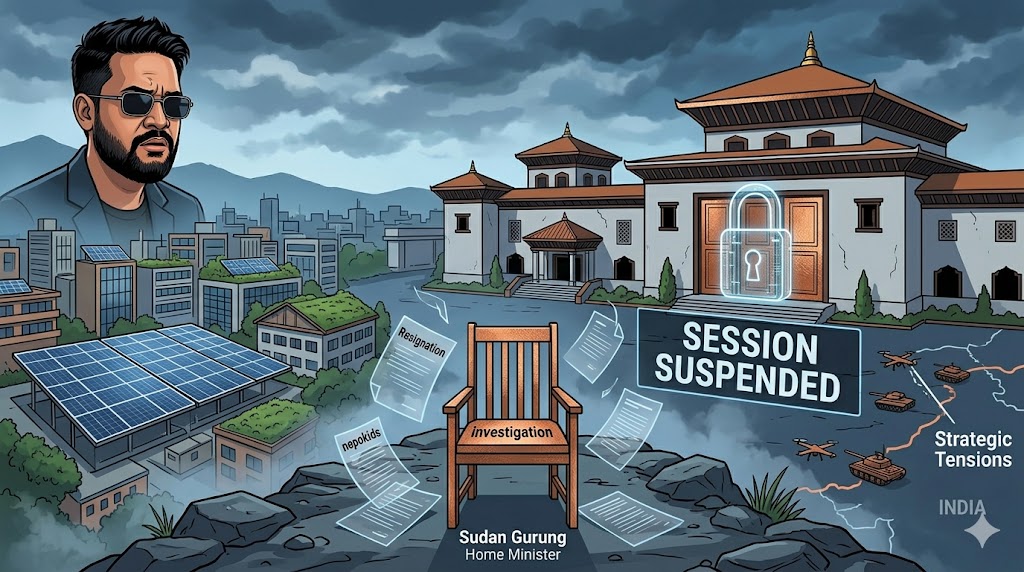
Governance Under Siege: A conceptual illustration of Nepal's 2026 political crisis. Prime Minister Balen Shah faces early challenges.
Conclusion: Lessons in Resilience and Accountability
Nepal's youth crisis of 2025, marked by passionate protests and tragic violence, catalyzed a political transformation that brought Balen Shah to power in 2026. Yet the swift cabinet resignations and suspension of parliament sessions underscore the fragility of this new chapter. As citizens demand greater transparency and the government navigates early tests, the nation stands at a crossroads between hope for reform and risks of renewed instability.
From India's viewpoint, a stable and prosperous Nepal is essential for regional harmony, border security, and economic cooperation. Disturbances in Kathmandu have the potential to affect neighboring countries through shared geography and interdependence, making constructive bilateral engagement vital.
Ultimately, Nepal's story reflects the broader global trends of youth asserting agency in politics. Whether the current controversies strengthen accountability or deepen divisions will shape the country's trajectory for years to come. As events unfold in late April 2026 and beyond, sustained public vigilance and pragmatic leadership will be key to turning generational fury into enduring positive change.