Japan: The Master of Innovation Amid Nature's Fury
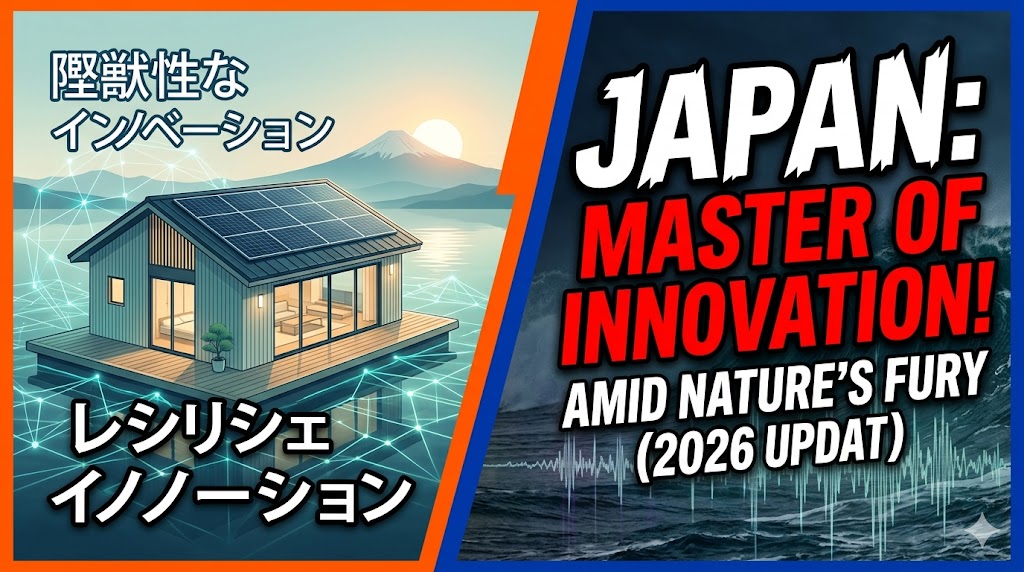
Japan has long earned global admiration as a powerhouse of technological advancement and creative problem-solving. From bullet trains and advanced robotics to cutting-edge materials science, the nation consistently demonstrates mastery in turning challenges into opportunities for progress. In 2026, this reputation remains strong, with Tokyo emerging as a key tech destination and government initiatives like the Seventh Science and Technology Basic Plan committing record investments—up to 60 trillion yen in public R&D—to strategic fields such as AI, semiconductors, quantum technology, and dual-use innovations.
Yet Japan's innovation journey is deeply intertwined with its unique geographical realities. Situated on the volatile Pacific Ring of Fire, the country faces frequent earthquakes, tsunamis, and other natural hazards. These threats have not hindered progress; instead, they have fueled a culture of resilience and forward-thinking engineering. Recent seismic events in April 2026, including a magnitude 7.7 quake off northern Japan followed by aftershocks and minor tsunami waves, serve as stark reminders of vulnerability while highlighting how technology evolves in response.
This article examines Japan's position as a global innovation leader, the role of continuous research and development, the influence of its oceanic and seismic geography, and the ways natural disasters signal the need for sustainable advancement. It also explores housing innovations like floating homes, political shifts in governance, and Japan's trajectory toward greater technological influence among world superpowers.
Japan's Innovation Ecosystem: From Robotics to AI and Beyond
Japan's reputation as a technology master stems from decades of strategic investment in research and development. Companies like Sony, Toyota, and Fanuc have pioneered industrial robotics, while initiatives such as the Moonshot R&D Program aim for ambitious 2050 goals, including AI robots that autonomously learn, adapt, and collaborate with humans. By 2026, Japan targets a significant share of the global physical AI market, leveraging its strengths in hardware manufacturing and precision engineering.
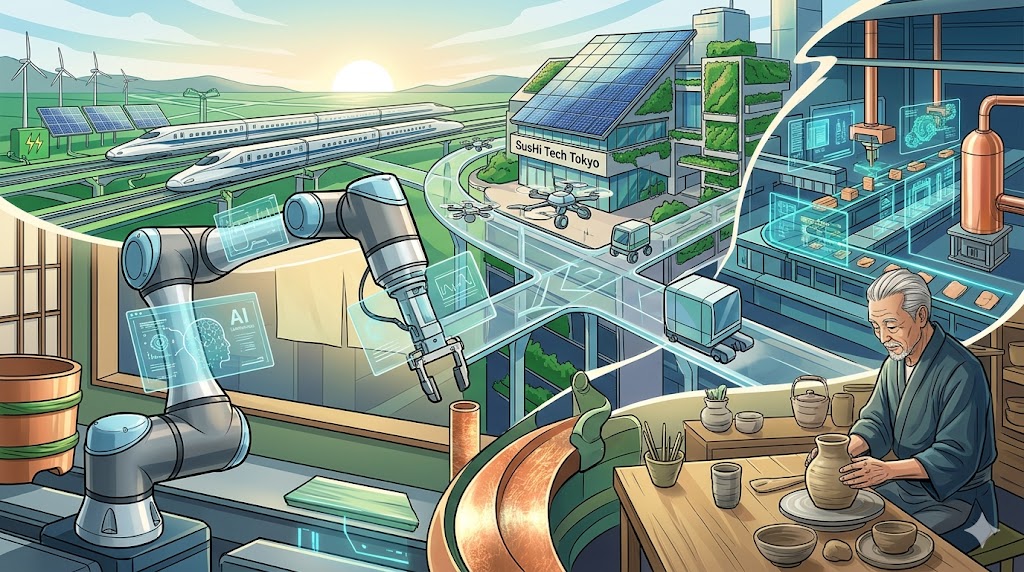
Events like SusHi Tech Tokyo 2026 showcase integrated ecosystems where startups blend AI, content creation (such as manga and anime), and autonomy technologies. Quantum Innovation 2026 and nano tech events further underscore leadership in emerging fields. Government policies emphasize 17 strategic technology areas, with substantial funding for semiconductors and green innovations to address economic security and sustainability.
Corporate innovation thrives alongside public efforts. Japanese firms invest heavily in simulation tools, digital twins, and integration platforms, moving beyond traditional hardware excellence toward software and AI orchestration. This holistic approach positions Japan not just as a producer but as a shaper of future industries, from autonomous systems to sustainable manufacturing.
The drive for innovation extends to everyday applications. Advanced materials improve product durability, while robotics address labor shortages in an aging society. These efforts reflect a national commitment to turning demographic and resource constraints into catalysts for creativity.
Geographical and Political Context Shaping Technological Development
Japan's geography profoundly influences its technological priorities. As an archipelago nation surrounded by the Pacific Ocean, it benefits from maritime trade routes but contends with limited land resources and exposure to extreme weather and seismic activity. The country's position on tectonic plate boundaries makes it one of the most earthquake-prone regions globally, prompting innovations that prioritize safety and adaptability.
Politically, Japan has navigated shifts that support technological ambition. The Liberal Democratic Party (LDP), long dominant, faced challenges in 2024-2025 elections, losing its outright majority and seeing coalition adjustments. In October 2025, Sanae Takaichi became the LDP president and Japan's first female prime minister, leading a coalition with the Japan Innovation Party (Ishin). This arrangement marked a period of realignment, with a conservative nationalist tilt emphasizing defense, economic security, and technological self-reliance.
By early 2026, Takaichi's government secured a supermajority in snap elections, enabling passage of ambitious budgets focused on innovation and security. Policies promote dual-use technologies, linking civilian R&D with national defense needs amid regional tensions. This political evolution reflects a broader consensus: technology is central to Japan's future prosperity and strategic autonomy.
The oceanic setting further drives innovation in marine and disaster-resilient technologies. Floating structures and advanced coastal engineering address both resource needs and hazard mitigation, demonstrating how geography inspires rather than limits progress.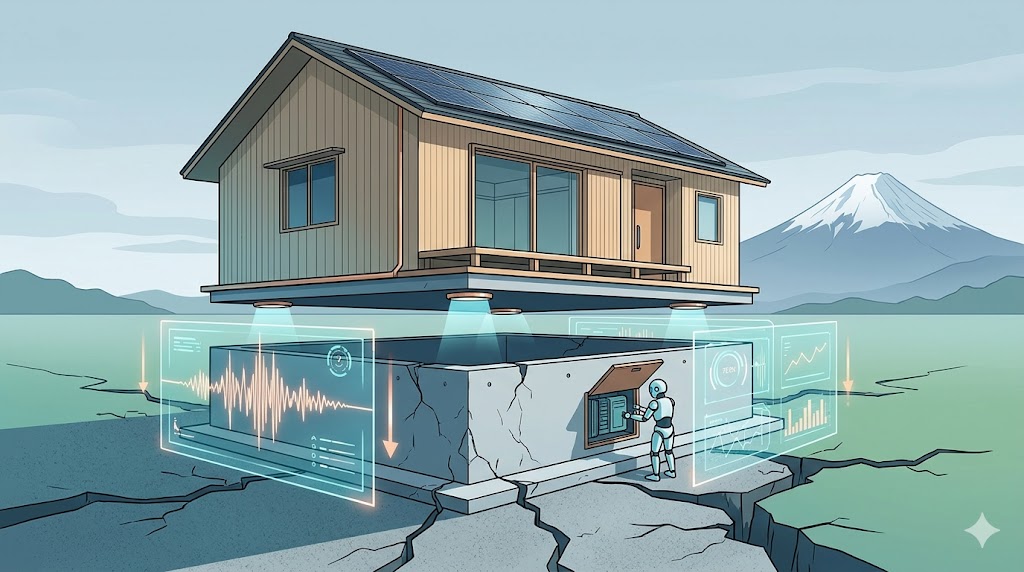
This modern Japanese home features "Air Danshin" levitation technology, using air pressure sensors to lift the structure centimeters off its foundation during a magnitude 7.7 earthquake (like the recent April 2026 event).
Housing Innovation: Floating Homes and Earthquake Resilience
One of the most striking examples of Japan's ingenuity is in housing technology designed for seismic threats. Companies like Air Danshin Systems have developed "floating homes" that use seismic sensors to detect tremors and activate air-pressure or hydraulic systems. Within seconds, the house lifts a few centimeters off its foundation, isolating it from violent ground shaking and reducing structural damage.
This "Air Danshin" or levitating technology decouples the building from seismic forces rather than merely reinforcing against them. Tested in smaller quakes, it represents a paradigm shift from traditional earthquake-proofing. Researchers are also exploring magnetic levitation variants for even smoother response.
Such innovations respond directly to Japan's reality: frequent earthquakes demand solutions that protect lives without compromising livability. In 2026, these technologies gain attention as practical responses to ongoing seismic risks, offering blueprints for other vulnerable regions worldwide. They exemplify how Japan integrates advanced sensors, materials, and engineering to harmonize human habitats with a dynamic natural environment.
Recent Earthquakes and Tsunamis: Signals for Sustainable Development
Recent events underscore the urgency of innovation. In April 2026, a magnitude 7.7 earthquake struck off northern Japan near Iwate Prefecture, triggering tsunami advisories with waves up to 80 cm observed in some ports. Subsequent aftershocks, including a 6.1-6.2 magnitude event in Hokkaido, kept authorities on alert, with heightened risks of further activity noted.
These incidents, while causing limited immediate damage thanks to robust preparedness, echo the devastating 2011 Tohoku disaster. They serve as powerful signals: unchecked "development" that overexploits resources or relies on outdated infrastructure can amplify vulnerabilities. Japan's technology, while advanced, sometimes builds on frameworks refined since the mid-2010s rather than fully incorporating 2026-era breakthroughs in real-time monitoring or adaptive materials.
Natural disasters highlight tensions between rapid technological growth and environmental stewardship. Intensive urbanization, resource extraction, and energy demands can strain ecosystems already stressed by climate change. Tsunamis and earthquakes remind policymakers and innovators that true progress requires balancing human ambition with nature's limits—pushing for greener technologies, circular economies, and resilient designs that minimize ecological footprints.
In response, Japan accelerates R&D in sustainable practices. The Seventh Basic Plan emphasizes foundational science alongside strategic fields, aiming to link innovation with long-term societal and environmental well-being. Recent quakes reinforce the message: development must evolve in harmony with geography, not in defiance of it.
Political Shifts and Governance in a Tech-Driven Era
Japan's political landscape in 2026 reflects adaptation to new realities. The LDP's shift toward conservative leadership under Prime Minister Takaichi prioritizes economic security, defense spending, and technological sovereignty. Coalition dynamics with Ishin introduce reformist elements focused on efficiency and innovation, though stability remains fragile amid opposition strength.
This evolution influences technology policy. Greater emphasis on dual-use R&D and preventing technology outflows aligns with broader geopolitical strategies, particularly regarding supply chain resilience and regional security. Political terminal points—such as coalition negotiations and budget battles—test the government's ability to sustain long-term investments amid fiscal pressures.
Despite challenges, cross-party recognition persists: Japan's future depends on technological leadership. Policies supporting human resource development, industry-academia collaboration, and international partnerships aim to elevate the nation among global superpowers. Snap elections and realignments demonstrate democracy's responsiveness, ensuring governance evolves alongside innovation needs.
Japan's Path to Technological Superpower Status
Through sustained R&D, Japan is positioning itself as a leader in the next wave of global technologies. Commitments to AI, quantum computing, robotics, and green innovations, backed by massive public-private investments, signal ambition to capture substantial market shares by 2040-2050.
Challenges remain, including an aging population, software-hardware balance debates, and competition from other powers. Yet Japan's integrated approach—combining precision manufacturing, cultural creativity (as seen in content-tech fusions), and disaster-driven resilience—provides unique advantages.
By addressing geographical vulnerabilities through innovation, Japan not only mitigates risks but also exports solutions worldwide. Floating homes, advanced robotics for hazardous environments, and sustainable energy systems exemplify this contribution. As political stability consolidates around tech-forward policies, Japan edges closer to a role as a defining technological superpower, influencing standards in AI ethics, disaster resilience, and harmonious human-machine coexistence.
AI Orchestration and Superpower Ambition
Conclusion: Innovation Rooted in Resilience
Japan's story is one of masterful innovation forged in the crucible of geographical and natural challenges. Continuous research and development, from earthquake-resistant floating homes to visionary 2050 AI robot goals, demonstrate a commitment to progress that respects rather than ignores nature's warnings. Recent tsunamis and earthquakes in 2026 serve as timely signals, urging even greater integration of sustainability into technological advancement.
Political shifts, including the rise of new leadership and coalition adaptations, underscore a flexible governance model capable of supporting long-term ambitions. As Japan navigates these dynamics, its technological prowess continues to elevate its global standing, offering lessons in resilience, creativity, and forward-thinking for the world.
In an era of rapid change, Japan reminds us that true mastery lies not in dominating nature but in innovating alongside it—building a future where technology enhances human life while honoring the fragile beauty of our planet.