Digital Marketing in 2026: Trends, Careers & Business Impact
In today's fast-paced world, digital marketing has emerged as the cornerstone of business success. As we navigate through 2026, the digital landscape continues to evolve at an unprecedented rate, transforming how brands connect with audiences and drive revenue. Gone are the days when traditional advertising methods like billboards and newspaper ads dominated the scene. Today, digital marketing offers precise targeting, real-time analytics, and measurable results that traditional approaches simply cannot match.
The rise of smartphones, social media, and artificial intelligence has propelled digital marketing into the mainstream. With over 5.66 billion active social media users globally—nearly 69% of the world's population—businesses are increasingly investing in online channels to reach customers where they spend most of their time. This shift isn't just a trend; it's a fundamental change in consumer behavior. People now research products, read reviews, and make purchases online, often starting their journey with a simple search.
What makes digital marketing particularly appealing in 2026 is its accessibility and scalability. Whether you're a small business owner in a local market or a multinational corporation, digital strategies level the playing field. Professionals are building lucrative careers, entrepreneurs are generating substantial income, and businesses are reaping higher returns on investment. This article delves into the popularity of digital marketing, career prospects, technological advancements, its benefits for finance and marketing teams, and why more people are choosing it over conventional courses and methods.
Digital marketing's surge in popularity stems from the sheer volume of online activity. In 2026, internet users exceed 5.4 billion, and digital ad spending is projected to surpass $710 billion globally. Social commerce alone is expected to hit $2.1 trillion, highlighting the massive economic shift toward online platforms.
Consumers have permanently moved online. Over 80% of buyers conduct research digitally before purchasing, and 93% of online experiences begin with a search engine. Short-form video dominates content consumption, accounting for a significant portion of internet traffic, while platforms like Instagram, TikTok, and emerging community-driven networks foster authentic engagement.
Businesses recognize this reality. Traditional marketing often involves high costs with limited measurability—think TV commercials or print ads where tracking ROI is guesswork. In contrast, digital marketing provides instant insights through tools like Google Analytics and platform dashboards. Marketers can see exactly which campaigns drive clicks, conversions, and sales, allowing for quick adjustments and optimization.
The COVID-19 pandemic accelerated this transition, but in 2026, it was sustained by technological maturity and changing habits. People prefer personalized experiences, and digital channels deliver them efficiently. Hyper-personalization, powered by data, makes customers feel seen and valued, boosting loyalty and repeat business. Brands that ignore this digital array risk becoming irrelevant in a hyper-connected world.
Moreover, digital marketing democratizes access. Freelancers and entrepreneurs can launch campaigns with minimal investment, reaching global audiences without physical stores or large teams. This has led to a boom in side hustles and full-time careers, making it one of the most dynamic fields today.
Building a Career in Digital Marketing: Opportunities and Earning Potential
For many, digital marketing isn't just a job—it's a pathway to financial independence and professional growth. In 2026, the demand for skilled digital marketers continues to outpace supply, with employment opportunities projected to grow significantly faster than average occupations.
Entry-level roles like social media coordinators or content creators offer starting salaries around $50,000–$70,000 annually, depending on location and experience. Mid-level positions, such as digital marketing managers, command $100,000–$130,000 or more, while senior roles like Director of Digital Strategy or Head of Growth can exceed $200,000 in total compensation, including bonuses and equity. Specialized skills in AI, SEO, or paid advertising often come with premium pay.
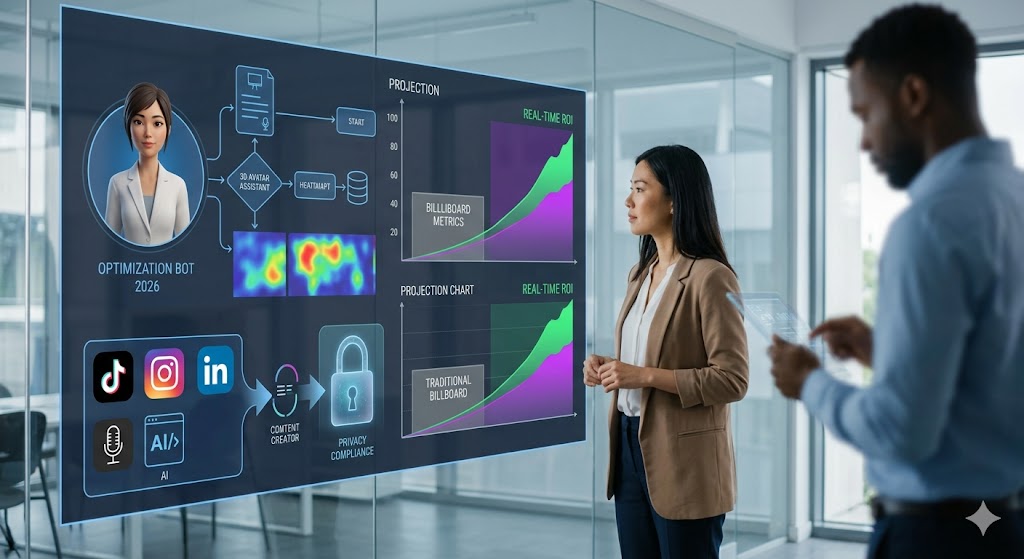
A visualization of a 2026 integrated marketing workflow: A professional analyzes real-time ROI on a holographic display, where predictive AI modeling integrates data from social channels, content creation, and secure data compliance to outperform traditional methods.
Professionals make money in various ways:
In-House Roles: Companies across industries hire digital marketers to handle branding, lead generation, and customer engagement. Finance and e-commerce sectors particularly value data-driven experts who optimize campaigns for maximum ROI.
Freelancing and Agencies: Many start as freelancers on platforms offering services like SEO audits, content strategy, or ad management. Experienced freelancers earn six figures by serving multiple clients remotely.
Affiliate Marketing and Influencer Partnerships: Promoting products through blogs, social media, or email lists generates commission-based income. Successful affiliates build passive revenue streams.
Consulting and Training: Experts create and sell online courses, toolkits, or agency services, capitalizing on the growing interest in digital skills.
Entrepreneurship: Launching digital products, e-commerce stores, or SaaS tools marketed through digital channels.
Careers in this field offer flexibility—remote work is common, and continuous learning keeps professionals relevant. Specializations in AI-driven personalization, generative engine optimization (GEO), or community building are particularly lucrative as brands seek experts who understand 2026's nuances.
The barrier to entry is lower than many traditional professions. While a degree helps, practical skills gained through certifications, bootcamps, or hands-on projects often matter more. Many transition from unrelated fields, attracted by the creative and analytical blend that digital marketing provides.
How People Are Making Money with Digital Marketing
Beyond salaries, digital marketing enables diverse income models. Freelancers might charge $50–$200 per hour for strategy sessions or campaign management. Agencies scale by hiring teams and serving clients globally, with retainers ranging from $2,000 to $20,000 monthly.
Content creators monetize through sponsorships, ad revenue, and product sales. A well-executed YouTube or TikTok strategy can generate thousands in passive income. Businesses use digital marketing to reduce customer acquisition costs dramatically—sometimes achieving returns of $36–$42 for every dollar spent on email campaigns, one of the highest-ROI channels.
Entrepreneurs build personal brands, offering coaching or digital products like marketing toolkits and templates. The key to success lies in results: delivering measurable growth in traffic, leads, or sales for clients or one's own ventures.
In 2026, AI tools amplify earning potential by automating routine tasks, freeing professionals to focus on high-value strategy. Those who master integration of AI with human creativity stand out and command higher fees.
The High-Tech Evolution of Digital Marketing
Digital marketing has become one of the most advanced fields, integrating cutting-edge technologies that redefine possibilities. In 2026, AI is no longer experimental—it's foundational.
AI and Automation: Marketers use AI for content creation, predictive analytics, and hyper-personalization. AI agents handle workflows, from generating ad variations to optimizing bids in real-time. Approximately 80% of marketers incorporate AI daily for efficiency, leading to better campaigns and reduced manual effort.
Data-Driven Insights: Advanced analytics and customer data platforms (CDPs) enable precise targeting while respecting privacy. First-party data strategies are crucial amid changing regulations.
Emerging Trends:
Generative Engine Optimization (GEO): Optimizing content for AI summaries and conversational search.
Short-Form Video and AR/VR: Immersive experiences boost engagement and conversions.
Retail Media Networks and Shoppable Content: Blending commerce with entertainment.
Authentic, Community-Focused Marketing: Moving beyond polished ads to genuine interactions on niche platforms.
These technologies make digital marketing highly effective for scaling operations. What once required large teams now runs with smarter automation, delivering personalized experiences at mass scale.
For marketing and finance professionals, this evolution is transformative. Finance teams appreciate the transparency—every dollar spent can be tracked to revenue impact. Marketing leaders use insights to justify budgets and demonstrate clear value, shifting from gut-feel decisions to data-backed strategies.
Digitalization of Marketing: Benefits for Businesses
The digitalization of marketing represents a complete overhaul from broadcast-style promotion to interactive, two-way communication. Businesses benefit immensely:
Cost Efficiency: Digital campaigns often cost less than traditional ones while reaching more people. Small businesses can compete with giants through targeted ads and organic content.
Measurable ROI: Tools provide detailed reports on engagement, conversions, and attribution. This helps finance teams allocate resources wisely and marketing professionals refine tactics.
Global Reach with Local Precision:Target audiences by demographics, interests, behaviors, or location—ideal for both B2B and B2C.
Faster Iteration: Test, learn, and pivot quickly based on performance data, unlike rigid traditional campaigns.
Enhanced Customer Relationships: Personalized emails, chatbots, and social interactions build loyalty and retention, with omnichannel strategies yielding up to 89% retention rates.
In finance, digital marketing supports lead generation for services like loans or investments, using compliant, data-driven approaches. For marketers, it offers creative freedom combined with analytical rigor, making the profession more strategic and impactful.
Compared to traditional marketing, digital approaches excel in targeting accuracy, speed, and accountability. While traditional methods still play a role in brand awareness for certain demographics, the bulk of budgets in 2026 flows to digital for superior results.
Why People Are Shifting from Traditional Courses to Digital Marketing Skills
Many individuals are rethinking education investments. Traditional courses in fields like general management or offline advertising often feel outdated in a rapidly changing economy. They can be time-consuming and expensive, with less direct applicability to current job markets.
In contrast, digital marketing skills offer immediate value. People invest in targeted online certifications, short courses, or self-paced learning on platforms covering SEO, PPC, social media, and AI tools. These programs are affordable, flexible, and focused on practical outcomes—skills you can apply right away to start earning.
The "valuable currency" of time is better spent mastering in-demand digital competencies rather than broad, theoretical knowledge. Bootcamps and mentorships provide hands-on experience, portfolios, and networking opportunities that accelerate careers. As the field advances with AI and automation, continuous upskilling becomes essential, but the returns justify the investment.
Professionals report higher job satisfaction due to the blend of creativity, technology, and business impact. In 2026, those who embrace digital learning pathways position themselves ahead in a competitive landscape.
Advanced Aspects Making Digital Marketing Indispensable in 2026
Digital marketing stands out as one of the most sophisticated disciplines today. It combines psychology, technology, data science, and creativity. Agentic AI, privacy-first personalization, and ethical data use are pushing boundaries.
Businesses adopting these advancements see compounded growth. Content that resonates emotionally while being optimized for AI search engines performs exceptionally well. Video ads generated or enhanced by AI maintain quality while scaling production.
For individuals, this means exciting challenges: strategizing omnichannel campaigns, analyzing complex datasets, and innovating with new tools. The field's evolution ensures it remains relevant and rewarding.
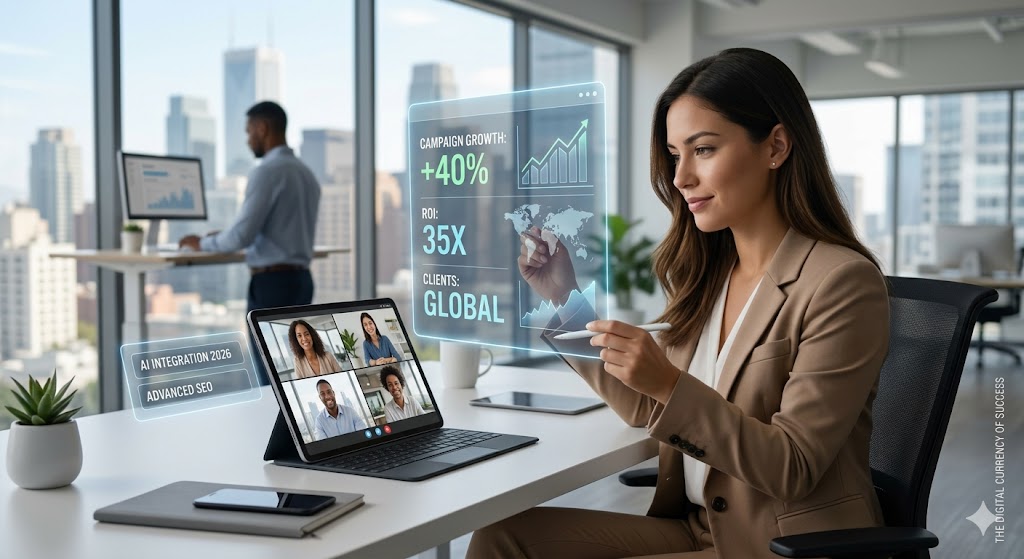
Remote-work success in 2026: A confident professional monitors global campaign growth and exceptional ROI from a flexible workspace, demonstrating how advanced digital marketing skills are the new currency for career freedom and business growth.
Conclusion
As we progress through 2026, digital marketing's dominance is undeniable. Its popularity stems from aligning perfectly with modern consumer habits, offering unparalleled measurability, and leveraging powerful technologies like AI for smarter outcomes. Professionals are forging rewarding careers and generating income through diverse avenues, while businesses achieve efficient growth, better customer engagement, and stronger financial results.
The shift away from traditional methods and courses reflects a pragmatic focus on skills that deliver real-world value. Digital marketing isn't just useful—it's essential for thriving in the digital era.
Whether you're a business leader, aspiring marketer, or entrepreneur, investing time in understanding and mastering digital strategies will pay dividends. The future belongs to those who adapt, innovate, and connect authentically in the online world. Start exploring today to unlock the vast potential that digital marketing holds in 2026 and beyond.