"AI Robotics in China: 2026 Trends & Innovations"
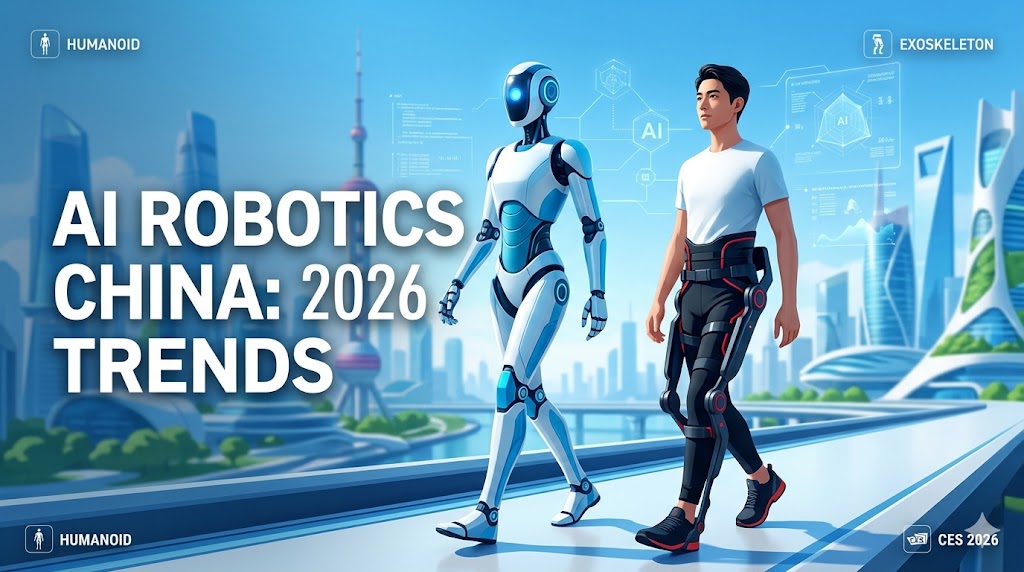
The world of robotics stands on the brink of transformation as we move deeper into 2026. What once seemed like distant science fiction—machines walking alongside humans, assisting with daily tasks, or performing delicate operations with precision—has rapidly become reality. Nowhere is this shift more evident than in China, where aggressive investment, government support, and a vibrant ecosystem of startups have propelled the country to the forefront of AI robotics and automation technology.
From affordable humanoid companions entering family homes to sophisticated exoskeleton technology that enhances human mobility, Chinese firms are driving disruptive technology that promises to reshape industries, healthcare, and everyday life. Events like CES 2026 have spotlighted these advancements, with wearable robotics and adaptive systems stealing the show. Companies such as Noetix Robotics and TARS Robotics exemplify the momentum, blending cutting-edge gait assistance technology with embodied artificial intelligence.
This article explores the key trends in robotics 2026, focusing on China's pivotal role. We'll examine breakthroughs in humanoid development, exoskeletons for adaptive walking technology, and the broader implications for the future of robotics. Whether you're interested in robotics news, DIY projects, or global competition, the story unfolding in China offers compelling insights into how future technology is being built today.
The Rise of Chinese Robotics: A National Priority
China's commitment to robotics extends far beyond individual companies. The nation's 15th Five-Year Plan (2026–2030) explicitly prioritizes "embodied intelligence"—the fusion of AI with physical robots—as a strategic emerging industry. This policy framework supports everything from manufacturing upgrades to elderly care and national security applications.
In 2025 alone, China accounted for over 80% of global humanoid robot installations, with industrial robot deployments continuing to lead worldwide. Domestic production lines for critical components like joints and controllers have accelerated, reducing reliance on imports and enabling faster iteration. Cities like Beijing, Shanghai, and Shenzhen have established robot training bases that generate vast datasets for training AI robotics systems in real-world scenarios.
This ecosystem has fostered intense competition and rapid innovation. Over 150 humanoid robot startups operate across the country, backed by substantial funding rounds and state-guided investments. The result? A surge in practical applications, from factory automation to consumer products, that outpaces many Western counterparts in speed and scale.
Chinese drone technology also complements this growth, with synchronized swarms and AI-coordinated systems appearing in public spectacles and industrial uses. Together, these elements position China as a leader in robotics development, influencing global supply chains for sensors, actuators, and software.
Spotlight on Noetix Robotics: Democratizing Humanoids
One of the most talked-about players in AI robotics China is Noetix Robotics (also known as 松延动力), a Beijing-based company founded in 2023. Specializing in humanoid robots, Noetix has quickly gained attention for its focus on affordability and practical deployment.
Their standout product, the Bumi humanoid, targets the consumer market with a child-sized design priced around 9,998 RMB (roughly $1,400 USD). Standing at about 94 cm tall and weighing lightly, Bumi features bipedal walking, flexible dance movements, and an open programming interface suitable for education and family use. Its swappable battery offers 1-2 hours of runtime, making it accessible for home or classroom settings.
Noetix achieved this low price point through vertical integration—designing custom control boards, motor drivers, and optimizing hardware-software performance in-house. Following strong pre-sales on platforms like JD.com, the company secured significant funding, including a B-round exceeding 1 billion RMB in early 2026. Other models like the agile N2 demonstrate advanced mobility, including continuous backflips, highlighting progress in motion control algorithms.
Noetix's approach signals a broader trend: moving humanoids from expensive research prototypes to mass-market tools. With features like bionic heads (e.g., Hobbs series) for immersive interaction, these robots blend robotics and AI in China to support companionship, learning, and light assistance tasks.
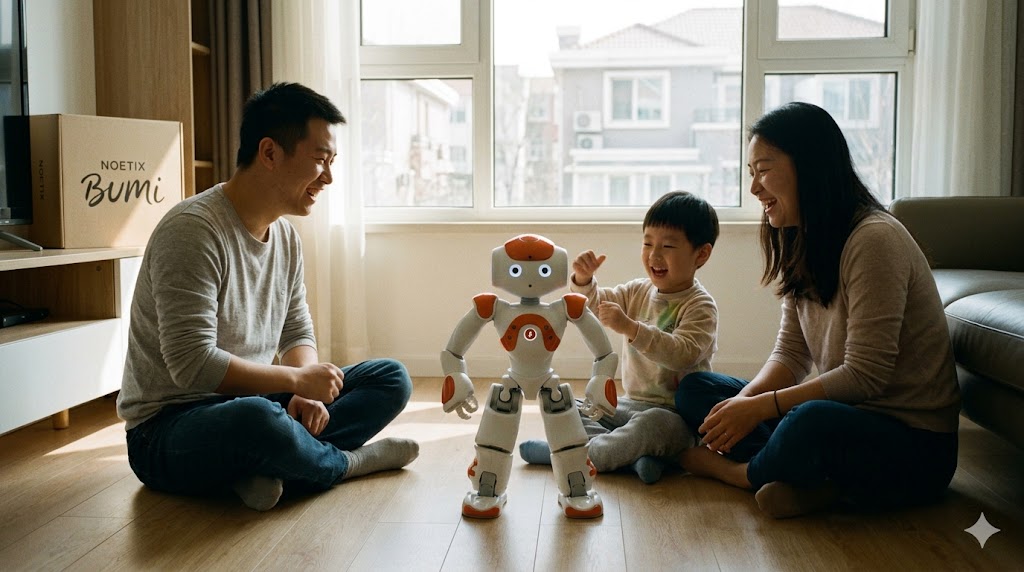
Democratizing Humanoids (The Bumi Concept)
TARS Robotics: Mastering Dexterity and Embodied AI
While Noetix focuses on accessible humanoids, TARS Robotics (Shanghai-based, founded February 2025) pushes boundaries in fine-motor skills. In late 2025, TARS demonstrated a humanoid performing hand embroidery—a task requiring sub-millimeter precision, needle threading, and handling of soft, deformable materials. This "world-first" feat addressed a long-standing automation bottleneck in flexible manufacturing, such as wire harness assembly.
TARS employs a "Data-AI-Physics" trinity approach: collecting real-world data, training embodied AI models, and executing physically with high fidelity. Their T- and A-Series platforms integrate advanced perception and control, enabling two-handed coordination for delicate operations. Backed by over $240 million in early funding, TARS has moved from concept to deployment at remarkable speed, with plans for industrial and potentially service applications.
These breakthroughs in dexterity underscore AI robotics trends toward generalizable skills. Robots are no longer limited to repetitive, structured tasks; they are learning to adapt to unstructured environments, much like humans. TARS' open-source elements (planned for certain models) could accelerate community-driven DIY robotics projects and collaborative research.
Exoskeleton Technology and Gait Assistance: Enhancing Human Mobility
Beyond full humanoids, exoskeleton technology has emerged as a practical bridge in adaptive walking technology. At CES 2026, several Chinese and international innovations highlighted lightweight, AI-powered wearables designed for daily use, rehabilitation, and outdoor activities.
Companies like RoboCT unveiled the GoGo series—a 2.3 kg per side assistive exoskeleton with multi-mode support (walking, standing, stair navigation). AI algorithms adapt in real-time to user gait patterns, aiding post-stroke recovery, Parkinson's stability, or general fatigue reduction. Similar systems from ULS Robotics (VIATRIX) and Hypershell emphasize personalized assistance, learning individual cadences for smoother, less tiring movement.
Gait assistance technology in these devices often incorporates sensors, IMUs, and machine learning to provide "assist-as-needed" torque at hips, knees, or ankles. This reduces metabolic cost, improves balance, and promotes natural gait variability—key for rehabilitation and elderly care. Consumer-oriented models, sometimes called "e-bikes for walking," target hikers, workers, or those with mild mobility limitations.
In China, exoskeletons extend to specialized uses, including mine rescue and underwater applications that cut oxygen consumption. Integration with future technology China includes cloud connectivity for performance tracking and progressive training algorithms that evolve with the user.
These developments align with global robotics 2026 priorities: human augmentation rather than replacement. By supporting adaptive walking technology, exoskeletons enhance quality of life while collecting data that feeds back into broader embodied AI models.
CES 2026 Highlights: Global Stage for Robotics Innovation
CES 2026 in Las Vegas served as a vibrant showcase for CES 2026 technology, with robotics and wearables drawing significant crowds. Chinese firms featured prominently alongside international players, demonstrating everything from dancing humanoids to AI-adaptive exoskeletons.
Key themes included real-time gait adaptation, modular designs, and seamless human-robot interaction. Innovations like Dephy Sidekick (ankle-powered assist) and Ascentiz modular systems illustrated how disruptive technology is making exoskeletons more wearable and affordable. Chinese exoskeletons emphasized lightweight construction and automotive-grade components for durability in varied terrains.
The event underscored convergence: automation technology meeting consumer needs. Attendees tested devices that reduce walking effort, with AI ensuring synchronization to individual biomechanics. This hands-on exposure highlighted the shift from medical-only applications to everyday augmentation.
Broader AI Robotics Trends for 2026 and Beyond
Several interconnected trends define AI robotics trends heading into the latter half of the decade:
1. Embodied Intelligence and Data-Driven Learning: Robots trained in simulated and real environments (via dedicated bases in China) gain versatility. Foundation models enable transfer learning—skills like embroidery translate to assembly tasks.
2. Affordability and Scalability: Price drops, as seen with Noetix's Bumi, open consumer markets. Mass production targets for companies like UBTech aim for tens of thousands of units.
3. Human-Robot Collaboration: Cobots and exoskeletons prioritize safety and intuitive control, blending with automation technology in factories and homes.
4. Integration with Other Tech: Links to 5G/6G, drones, and IoT create ecosystems for coordinated operations, from warehouse logistics to search-and-rescue.
5. Sustainability and Ethics: Focus on energy-efficient designs and standardized safety protocols, with China contributing to international norms.
Challenges remain, including talent shortages, standardization, and ethical questions around job displacement. Yet, the pace of robotics development suggests these hurdles are being addressed through policy and innovation.
For enthusiasts, DIY robotics projects benefit from open interfaces in devices like Noetix models or TARS' planned resources. Hobbyists can experiment with motion control, computer vision, and basic gait algorithms using accessible hardware.
The Future of Robotics: Opportunities and Global Impact
Looking ahead, the future of robotics appears collaborative rather than competitive in isolation. China's leadership in volume and speed complements global strengths in foundational research. Cross-border partnerships could accelerate breakthroughs in healthcare (rehabilitation exoskeletons), manufacturing (dexterous humanoids), and services (elderly assistance).
Chinese robotics will likely influence standards for gait assistance technology and humanoid safety. As production scales, costs will fall further, making advanced systems available worldwide. This democratization could transform aging societies, boost productivity, and open new creative avenues—from art-performing robots to personalized mobility aids.
In education and research, increased access to platforms encourages the next generation of engineers. Robotics and AI in China serve as both inspiration and case study for balanced innovation ecosystems.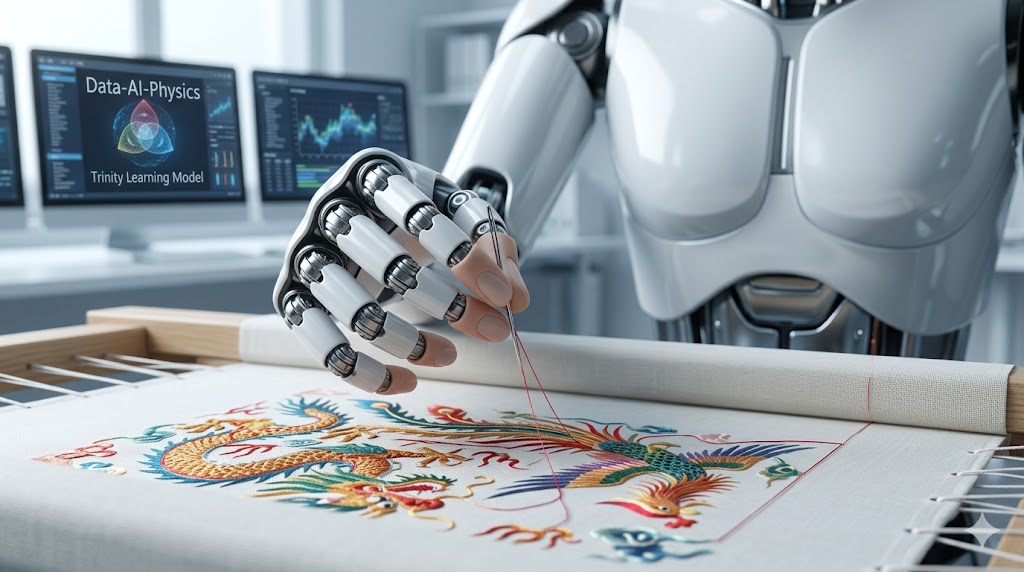
The Dexterity Breakthrough (Embroidery)
Conclusion
The convergence of AI robotics, exoskeleton technology, and national ambition has positioned China at the heart of robotics 202 advancements. Companies like Noetix Robotics and TARS Robotics, alongside CES 2026 showcases, illustrate how disruptive technology moves from labs to real-world impact—enhancing mobility through adaptive walking technology, enabling precision tasks, and redefining human capabilities.
As automation technology evolves, it promises greater independence for individuals and efficiency for industries. The future technology China narrative is one of rapid, pragmatic progress that invites global engagement. Staying informed through robotics news and exploring future of robotics developments will be essential for anyone navigating this exciting era.
Whether through policy support, entrepreneurial drive, or technological ingenuity, the story of AI robotics continues to unfold with optimism and purpose. The machines of tomorrow are being built today—and they are walking, learning, and assisting in ways that once seemed impossible.