Deepfake AI: SC Alerts on Rising Cyber Frauds in India
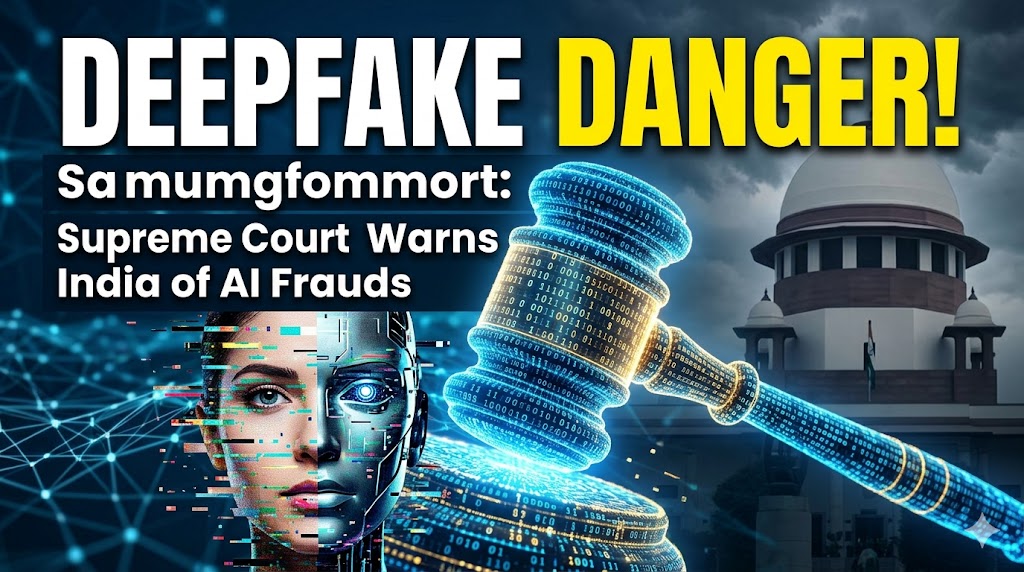
In an era where technology evolves faster than regulation, deepfake AI has emerged as one of the most potent threats to trust, privacy, and financial security in India. What began as a novelty for creating entertaining videos has rapidly transformed into a sophisticated tool for fraudsters. From voice-cloned calls impersonating family members to hyper-realistic videos mimicking police officers demanding “digital arrest,” deepfake AI is fueling a surge in cybercrimes that cost Indians thousands of crores annually.
The Indian Supreme Court has taken decisive notice of this escalating crisis. Through landmark observations and directives in late 2025 and early 2026, the apex court has highlighted the intersection of deepfake AI with cyber security and online fraud. It has urged stronger institutional responses while implicitly calling on citizens to exercise greater vigilance. This article examines the mechanics of deepfake AI, the alarming rise in related frauds, recent real-world examples including e-commerce platforms like Flipkart being exploited in cybercrime narratives, the Supreme Court’s proactive interventions involving celebrities and officials, and actionable steps every Indian must take to safeguard themselves.
Understanding Deepfake AI: What It Is and How It Works
Deepfake AI refers to artificial intelligence-generated synthetic media—videos, images, or audio—that convincingly alters or fabricates a person’s likeness, voice, or actions. Powered primarily by Generative Adversarial Networks (GANs), the technology pits two neural networks against each other: one creates fake content while the other detects flaws, resulting in increasingly realistic outputs.
Creating a deepfake AI video once required powerful computers and technical expertise. Today, accessible tools and free deepfake apps have democratized the process, enabling even novices to produce convincing fakes in minutes. A deepfake voice scam, for instance, might clone a relative’s speech pattern from just a few seconds of social media audio. Real-time deepfake technology now allows live impersonations during video calls, blurring the line between reality and fabrication.
The implications extend far beyond entertainment. Deepfake AI examples include non-consensual explicit content targeting women, political misinformation, and—most dangerously—financial fraud. In India, where digital payments via UPI have exploded, deepfake AI videos and voice clones are weaponized to bypass biometric safeguards and human intuition alike.
The Explosive Rise of Deepfake Scams and Online Frauds in India
India’s digital economy, while a global success story, has become fertile ground for cybercriminals. According to multiple 2025-2026 reports, nearly 47% of Indian adults have either fallen victim to or know someone affected by AI voice-cloning or deepfake scams—nearly double the global average. Indians encounter an average of four deepfakes daily, per McAfee’s 2026 State of the Scamiverse report. Deepfake files have surged dramatically, with projections indicating millions of new instances annually.
Cybercrime statistics paint a grim picture. The National Cybercrime Reporting Portal logged millions of incidents between 2021 and mid-2025, with a 500%+ increase in reported cases over the period. NCRB data shows cybercrime cases rising from around 65,893 in 2022 to over 86,420 in 2023, a trend that has accelerated with deepfake AI integration. “Digital arrest” scams—where fraudsters use deepfake AI to pose as law enforcement—alone siphoned off more than ₹3,000 crore by late 2025, disproportionately affecting elderly citizens.
Online fraud is rapidly arising among audiences due to widespread smartphone penetration, low digital literacy in segments of the population, and the psychological manipulation enabled by deepfake AI. Scammers exploit trust in authority figures, family bonds, or celebrity endorsements. Free deepfake apps and local deepfake tools have lowered barriers, while transnational syndicates operate from overseas, routing calls through compromised Indian SIMs.
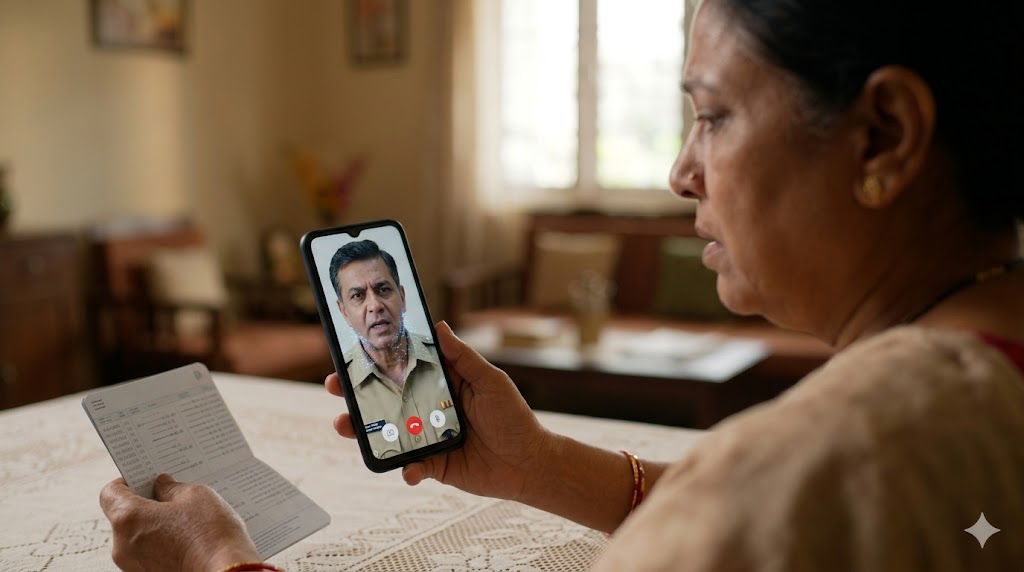
A senior citizen in India being targeted by a 'digital arrest' scam via a real-time deepfake video call, illustrating the deceptive capabilities of AI-generated impersonation.)
One of the most disturbing trends involves deepfake AI in “digital arrest” scams. Fraudsters create videos and calls impersonating CBI, police, or court officials, claiming victims are under investigation for money laundering or terrorism. Victims are coerced into transferring funds or sharing OTPs under the threat of immediate “arrest.” The Supreme Court itself noted these as amounting to “absolute robbery or dacoity.”
In recent months, high-profile cases involving celebrities have underscored the misuse. Actors like NTR Jr., R. Madhavan, Shilpa Shetty, Aishwarya Rai Bachchan, and others approached courts in Delhi and Mumbai seeking urgent injunctions against AI-generated deepfakes, voice clones, and unauthorized digital merchandise. These cases highlight how deepfake AI violates personality rights and privacy, often leading to reputational harm or financial scams using celebrity likenesses.
Officials and public figures have not been spared. Deepfake videos impersonating stock exchange executives or government officers have circulated, potentially misleading investors. The Supreme Court has flagged deepfakes even in matrimonial disputes, where fabricated evidence is used to “throw mud” on spouses.
Regarding e-commerce, platforms like Flipkart have frequently been “tagged” in cybercrime narratives. Fraudsters impersonate Flipkart customer support or delivery agents via deepfake calls or spoofed interfaces to extract personal data or payments. While not directly implicated as perpetrators, the surge in complaints linking Flipkart-branded scams reflects broader online fraud trends targeting trusted brands. The Supreme Court’s broader scrutiny of systemic banking and digital payment vulnerabilities indirectly addresses such platform-adjacent crimes, where mule accounts and quick fund transfers enable deepfake-enabled fraud.
These incidents demonstrate how deepfake AI amplifies traditional cyber threats, turning everyday digital interactions into high-risk encounters.
The Supreme Court’s Proactive Stance on Cyber Security and Crime
The Indian Supreme Court has emerged as a bulwark against this unchecked rise of deepfake AI-driven crime. In November 2025, a bench led by Chief Justice Surya Kant observed the massive scale of digital arrest scams and directed the CBI to lead pan-India investigations with a “free hand,” including under the Prevention of Corruption Act for mule account cases. The Court mandated collaboration with Interpol, tighter telecom controls on SIM issuance, and directed notices to the Union Government, RBI, and major banks in January 2026 regarding regulatory failures.
Crucially, the apex court has declined to micromanage deepfake regulation through comprehensive new guidelines in one PIL but has instead strengthened enforcement mechanisms. It empowered the CBI to override typical state consent requirements for swift action—a rare step underscoring the national emergency posed by deepfake AI. By terming these frauds as organized dacoity, the Court has signaled zero tolerance and pushed for AI tools within banking to detect anomalies proactively.
This judicial intervention builds on the Court’s long-standing emphasis on privacy as a fundamental right under Article 21, as established in the Puttaswamy judgment. It also addresses gaps in the Information Technology Act, 2000, and newer laws like the Bharatiya Nyaya Sanhita, which criminalize identity theft and impersonation but lack specific deepfake provisions.
How the Supreme Court Urges Indian Citizens to Exercise Caution
While the Supreme Court’s directives primarily target institutions, they carry a clear message for citizens: personal vigilance is indispensable. By exposing the scale of losses and systemic lapses, the Court implicitly calls for greater awareness. Citizens must recognize that no call, video, or message from an “authority figure” should be taken at face value without verification.
The apex court’s focus on digital arrest scams and celebrity cases serves as a wake-up call. It emphasizes that cyber security is a shared responsibility—government and judiciary provide the framework, but individuals must adopt safe practices to thwart deepfake AI exploitation. In an age of real-time deepfake technology, skepticism is the first line of defense.
Practical Prevention Tips: Building Deepfake Awareness
To combat deepfake AI threats effectively:
Verify Before Trusting: Always cross-check suspicious calls or videos through official channels. Hang up and dial back using known numbers.
Protect Personal Data: Limit sharing voice samples or clear photos on public platforms. Use privacy settings rigorously.
Enable Multi-Factor Security: Beyond OTPs, activate biometric locks and app-based authenticators where possible.
Report Promptly: Use the National Cybercrime Reporting Portal (cybercrime.gov.in) or 1930 helpline immediately.
Educate Family: Elderly relatives are prime targets; conduct regular discussions on deepfake scams.
Avoid Unknown Links/Apps: Steer clear of free deepfake apps or unverified AI tools that could be backdoors for malware.
Stay Informed: Follow official advisories from CERT-In and MeitY on emerging deepfake ethics and detection tools.
Businesses, including e-commerce giants, must enhance AI-driven fraud detection to complement judicial efforts.
Ethical and Legal Challenges Ahead
Deepfake AI raises profound ethical questions: balancing innovation with harm, free speech with misinformation control, and technological access with security. India’s legal framework, while evolving through judicial interpretation, still lacks a dedicated deepfake statute. The Supreme Court’s interventions provide interim relief, but long-term solutions require legislative clarity alongside technological countermeasures like watermarking and detection AI.
As deepfake awareness grows, so must ethical guidelines for developers and platforms. The Court’s emphasis on transnational cooperation highlights that cybercrime knows no borders—neither should our response.
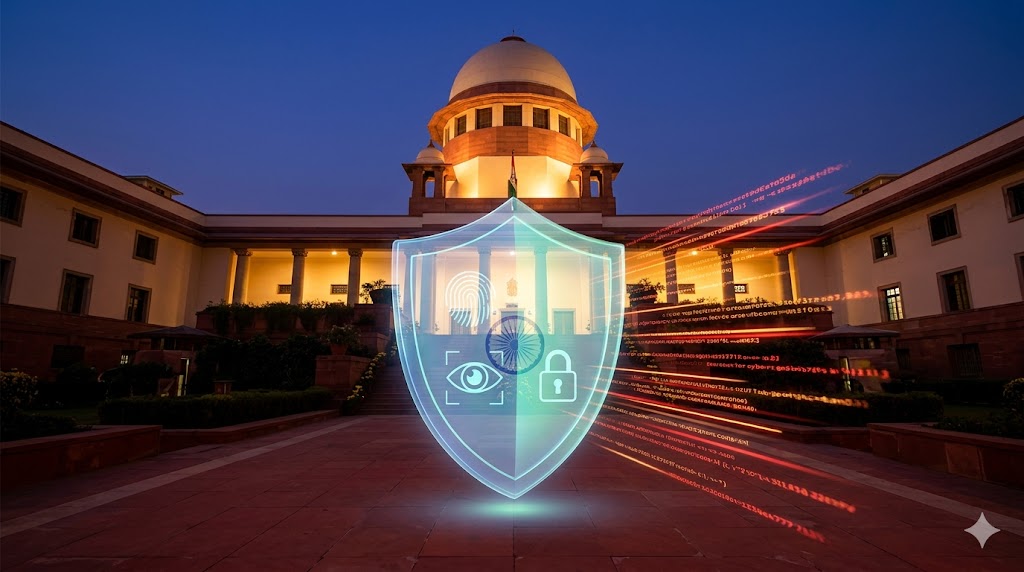
A symbolic representation of the Supreme Court of India building at dusk, protected by a digital shield. The shield deflects incoming cyber threats, signifying judicial intervention and the protection of citizens' privacy rights against deepfake AI and online fraud.)
Conclusion
Deepfake AI represents a paradigm shift in cyber threats, one that the Indian Supreme Court has confronted head-on through bold directives on cyber security and crime. From empowering CBI investigations into digital arrest scams to addressing celebrity and official impersonations, the apex court has underscored the urgency of collective action. Yet, as online frauds continue arising among audiences—exemplified by cases tagging trusted platforms like Flipkart—the onus ultimately falls on informed, cautious citizens.
By heeding the Supreme Court’s implicit call for vigilance, adopting preventive habits, and supporting stronger institutional frameworks, India can mitigate the risks of deepfake AI. The battle is far from over, but with proactive judicial leadership and public awareness, the nation can safeguard its digital future. Stay alert, verify relentlessly, and report without hesitation—your caution today protects not just your finances but the very fabric of trust in our connected society.