Oman Sultan Hosts Iran Talks: Mediation Efforts Amid wars
International Affairs• April 26, 2026• Global Edition
In the complex web of Middle Eastern diplomacy, the Sultanate of Oman continues to play a pivotal role as a trusted mediator. Recent meetings hosted by His Majesty Sultan Haitham bin Tariq Al Said underscore Muscat’s commitment to dialogue and de-escalation, particularly in the ongoing US-Iran tensions.
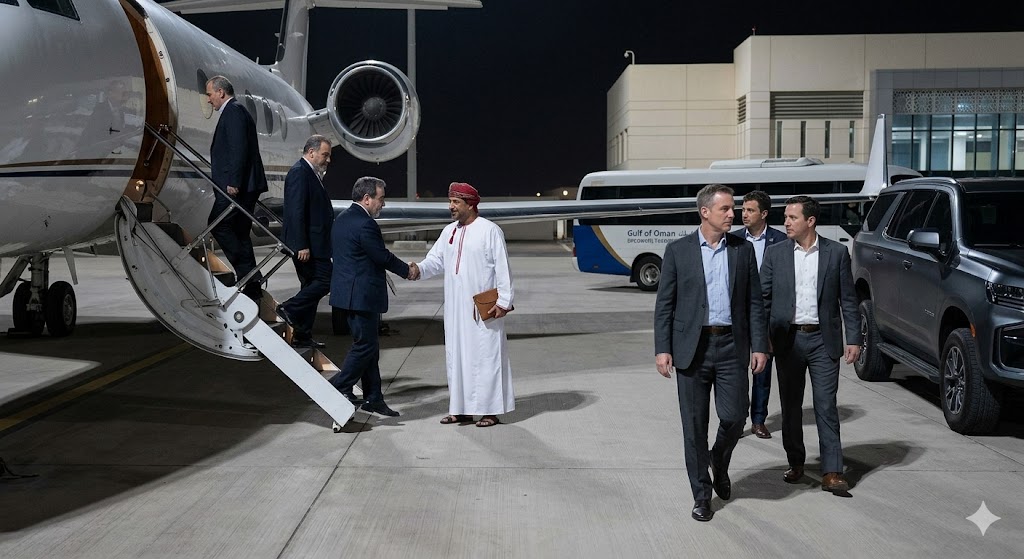
On April 25-26, 2026, Sultan Haitham received Iran’s Foreign Minister Abbas Araghchi in Muscat. The two leaders engaged in in-depth conversations covering the current regional situation, mediation efforts, and steps toward ending conflicts that have destabilized the broader area. These discussions reflect Oman’s longstanding policy of neutrality and its efforts to foster sustainable political solutions amid volatile developments.
This latest engagement builds on earlier high-level visits, including Ali Larijani’s trip to Oman in February 2026 and the Sultan’s own state visit to Moscow for talks with Russian President Vladimir Putin. As global powers navigate fragile ceasefires and stalled negotiations, Oman’s quiet diplomacy offers a steady channel for communication when direct talks prove challenging.
Oman has earned international respect for its “friend to all, enemy to none” foreign policy, a principle rooted in its Ibadi Islamic heritage and pragmatic approach to regional affairs. Under the late Sultan Qaboos bin Said and now Sultan Haitham bin Tariq, Muscat has facilitated backchannel communications between adversaries, including historic contributions to the 2015 JCPOA nuclear framework.
In the context of the 2026 US-Iran conflict, Oman has repeatedly hosted indirect talks. Foreign Minister Badr Al-Busaidi has played a central role in shuttling messages between American envoys such as Steve Witkoff and Iranian representatives. These efforts aim to bridge deep mistrust and explore pathways for a balanced agreement on nuclear issues, regional security, and de-escalation.
Sultan Haitham’s leadership has maintained this tradition. His meetings emphasize the importance of dialogue over confrontation, stressing that sustainable peace requires addressing root causes while respecting the sovereignty and security concerns of all parties involved.
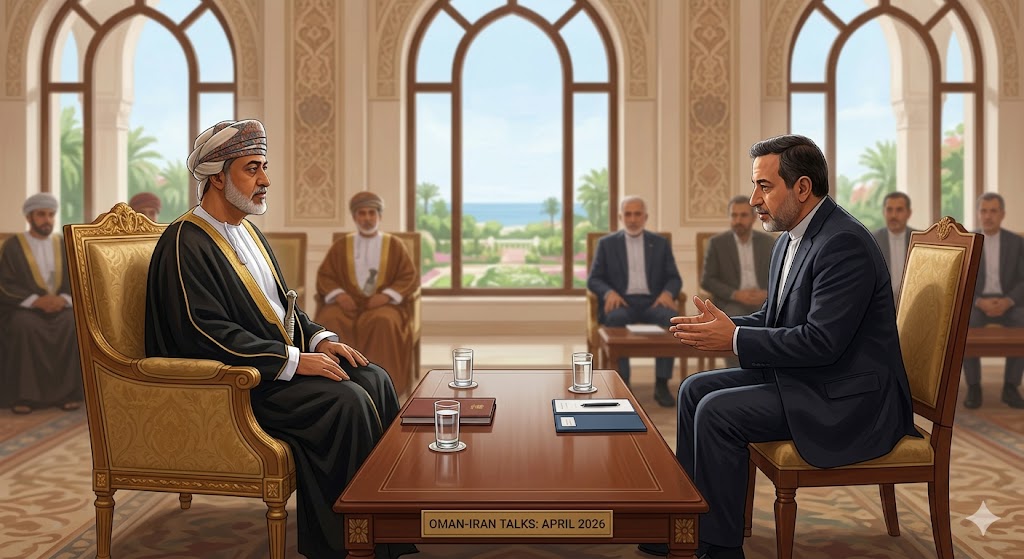
Sultan Haitham bin Tariq hosting Iranian Foreign Minister Abbas Araghchi at Al Barakah Palace in Muscat in April 2026. The two are engaged in earnest conversation regarding regional developments and mediation efforts.
The Recent Meeting: Sultan Haitham and Abbas Araghchi
The audience at Al Barakah Palace between Sultan Haitham and Iranian Foreign Minister Abbas Araghchi focused on several key themes. According to Oman News Agency, the discussions reviewed “developments in the regional situation, mediation efforts, and endeavours aimed at ending conflicts.”
Both sides exchanged views on the fragile ceasefire between the United States and Iran. Araghchi reportedly conveyed Iran’s position on the need for genuine diplomatic engagement without external pressure or military threats. The Iranian minister highlighted Tehran’s readiness to return to negotiations if Washington demonstrates seriousness and reciprocity.
Sultan Haitham, in turn, reaffirmed Oman’s commitment to neutrality and its willingness to continue facilitating talks. He emphasized the importance of a “sustainable political solution” that prevents further escalation and promotes stability across the Gulf and wider region. The conversation touched on humanitarian concerns, economic impacts of prolonged tensions, and the broader implications for global energy security.
Sources close to the discussions noted a constructive tone, with both parties acknowledging the human and economic costs of recent conflicts. They explored future perspectives, including potential confidence-building measures and the role of regional actors in supporting long-term agreements.
Earlier Engagements: Ali Larijani’s Visit and Broader Context
The April meeting follows a pattern of high-level Iranian visits to Muscat. In February 2026, Ali Larijani, Secretary of Iran’s Supreme National Security Council and a close adviser to Iranian leadership, met Sultan Haitham shortly after indirect US-Iran talks in Oman.
During that audience, Larijani and the Sultan discussed ways to achieve a “balanced and just” agreement between Iran and the United States. They stressed the value of returning to dialogue to bridge differences and advance regional and global peace. Larijani conveyed greetings from President Masoud Pezeshkian and explored avenues for continued cooperation.
These interactions illustrate Oman’s value as a discreet venue where sensitive issues can be addressed away from intense media scrutiny. Muscat’s approach allows parties to test ideas, relay messages, and gauge seriousness without immediate public commitments.
Oman’s Parallel Diplomacy: The Putin Meeting in Moscow
Sultan Haitham’s diplomatic calendar has also included significant outreach beyond the Gulf. In April 2025 (with ongoing relevance into 2026), he undertook a landmark state visit to Russia, marking the first in-person meeting with President Vladimir Putin.
Held at the Kremlin, the talks covered bilateral cooperation in trade, investment, culture, and energy. Both leaders witnessed the signing of agreements and memoranda of understanding. Regional and international issues featured prominently, including the situation in the Middle East.
The Sultan praised the outcomes as opening new vistas for partnership. Discussions likely touched on Russia’s perspectives on Iran-related matters, given Moscow’s longstanding ties with Tehran. Oman’s engagement with Russia complements its mediation role, providing additional channels for understanding diverse viewpoints on sustainable security arrangements.
Trump’s Engagement and US-Iran Mediation Dynamics
Oman has also maintained communication with the United States. President Donald Trump has held phone discussions with Sultan Haitham regarding Iran talks. These calls have addressed the prospects for resuming negotiations and the importance of de-escalation.
Omani officials have conveyed messages between Washington and Tehran, even as direct or indirect formats face setbacks, such as the recent cancellation of envoy visits to Pakistan. Despite challenges, Muscat continues to advocate for patience and creative solutions, warning against actions that could derail fragile ceasefires.
Analysts note that Oman’s mediation style—quiet, persistent, and trust-based—contrasts with more public or pressure-oriented approaches. This method has historically allowed incremental progress even in highly charged environments.
Regional Developments and Future Perspectives
The conversations between Sultan Haitham and Iranian officials reflect broader concerns about regional stability. Both sides discussed the interconnected nature of conflicts involving Gaza, Lebanon, and the Gulf, emphasizing that lasting peace requires holistic approaches rather than isolated fixes.
Key topics included:
Sustainable Political Solutions: Moving beyond temporary ceasefires toward frameworks that address nuclear concerns, missile programs, proxy activities, and economic cooperation.
Humanitarian and Economic Impacts: The toll on civilians and the need to protect shipping lanes, energy infrastructure, and access to aid.
Future Cooperation: Potential areas for Iran-Oman collaboration in trade, maritime security, and environmental initiatives in the Gulf.
Oman consistently highlights the risks of escalation and the benefits of diplomacy. Sultan Haitham has reiterated that dialogue remains the only viable path to spare the region further turmoil.
From Iran’s perspective, these meetings provide an opportunity to articulate positions directly to a respected neutral party. For Oman, they reinforce its stature as an indispensable facilitator in a polarized landscape.
Challenges and Opportunities in Oman’s Mediation Role
Despite successes, Oman faces hurdles. Deep mistrust between the US and Iran, external influences from other regional players, and domestic political considerations in multiple capitals can slow progress. Recent events, including stalled talks in other venues, demonstrate how quickly momentum can shift.
Nevertheless, opportunities exist. A renewed focus on technical-level discussions, confidence-building gestures, and multilateral support could help revive negotiations. Oman’s ability to host discreet meetings and relay messages without bias positions it uniquely to contribute to any breakthrough.
International observers appreciate Muscat’s consistency. Unlike some mediators, Oman avoids grandstanding and prioritizes practical outcomes that serve mutual interests.
Implications for Bilateral and Regional Relations
The ongoing engagements strengthen Oman-Iran ties, which have remained stable even during periods of heightened tension elsewhere. Trade, cultural exchanges, and people-to-people contacts continue to grow, providing a foundation for diplomatic efforts.
For the wider Gulf and Middle East, Oman’s role offers a model of pragmatic engagement. As global powers reassess strategies amid shifting alliances, neutral voices like Sultan Haitham’s become increasingly valuable.
The Sultan’s meetings also send a signal to the international community: sustained diplomacy, though slow, remains preferable to cycles of confrontation that risk broader instability.
Oman’s Discreet Mediation
Looking Ahead: Pathways to Sustainable Peace
As April 2026 draws to a close, the path forward depends on the willingness of all parties to engage constructively. Oman stands ready to support renewed talks, whether in Muscat or through backchannels.
Future perspectives discussed in recent meetings likely include phased agreements, verification mechanisms, and economic incentives to encourage compliance. Success will require addressing not only immediate security concerns but also longer-term issues of trust and regional integration.
Sultan Haitham bin Tariq’s leadership continues to embody Oman’s vision of a stable, prosperous region grounded in dialogue and mutual respect. In a time of uncertainty, these quiet efforts represent hope for de-escalation and a more peaceful future.
The coming weeks will test whether the conversations in Muscat can translate into tangible progress. For now, Oman’s mediation provides a vital bridge, keeping channels open when other avenues appear blocked.
Frequently Asked Questions
What is the primary significance of Oman Sultan Hosts Iran Talks: Mediation Efforts Amid wars?
In the complex web of Middle Eastern diplomacy, the Sultanate of Oman continues to play a pivotal role as a trusted mediator. Recent meetings hosted by His Majesty Sultan Haitham bin Tariq Al Said underscore Muscat’s commitment to dialogue and de-escalation, particularly in the ongoing US-Iran tensions.On April 25-26, 2026, Sultan Haitham received Iran’s Foreign Minister Abbas Araghchi in Muscat.
How does this development impact International Affairs?
The two leaders engaged in in-depth conversations covering the current regional situation, mediation efforts, and steps toward ending conflicts that have destabilized the broader area. These discussions reflect Oman’s longstanding policy of neutrality and its efforts to foster sustainable political solutions amid volatile developments.This latest engagement builds on earlier high-level visits, including Ali Larijani’s trip to Oman in February 2026 and the Sultan’s own state visit to Moscow for talks with Russian President Vladimir Putin.
What are the key future projections to monitor?
As global powers navigate fragile ceasefires and stalled negotiations, Oman’s quiet diplomacy offers a steady channel for communication when direct talks prove challenging.Background: Oman’s Tradition of Neutral MediationOman has earned international respect for its “friend to all, enemy to none” foreign policy, a principle rooted in its Ibadi Islamic heritage and pragmatic approach to regional affairs.