White House Shooting: Security Breach at 2026 Dinner
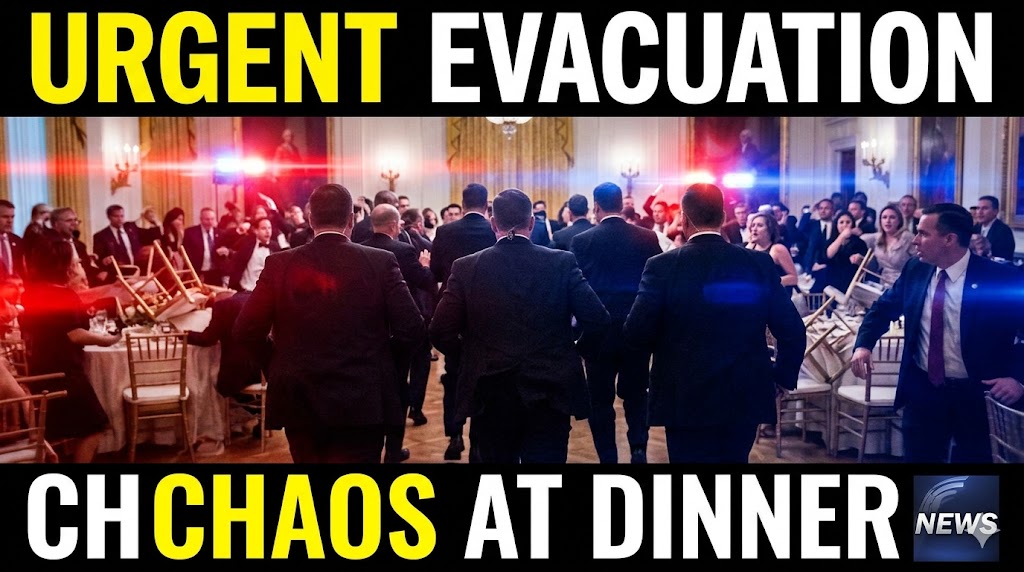
On the evening of April 25, 2026, what was intended as a high-profile gathering of journalists, politicians, and dignitaries at the White House Correspondents' Dinner turned into a scene of chaos and alarm. Gunshots echoed near the security checkpoint of the Washington Hilton, prompting the swift evacuation of President Donald Trump, First Lady Melania Trump, Vice President JD Vance, and several senior administration officials.
The incident, now widely referred to as the White House dinner shooting, has sent ripples through the nation and beyond. A suspect armed with guns and knives was quickly subdued and taken into custody, with authorities describing him as a lone actor. No injuries were reported among the protected officials or guests, thanks to the rapid response of the U.S. Secret Service and local law enforcement.
This event has sparked intense debate about security protocols at one of America's most symbolic venues. Even the most powerful figures in the United States found themselves momentarily vulnerable in the heart of Washington, D.C. The episode underscores a troubling reality: if top leaders—including the President, Vice President, First Lady, and key Cabinet members—can face such a threat during a major public event, questions arise about broader national security.
In the hours following the chaos, President Trump addressed the nation from the White House in a packed press briefing. Flanked by Vice President Vance, First Lady Melania Trump, and other officials, he praised law enforcement while highlighting the need for stronger protections. The incident, though contained, has raised profound concerns about whether even the symbols of American power are truly secure.
Timeline of the White House Dinner Incident
The White House Correspondents' Dinner is an annual tradition that brings together the press corps, government leaders, and celebrities in a night of speeches and camaraderie. In 2026, with President Trump back in office, the event carried added significance amid ongoing global tensions, including U.S. involvement in international matters.
According to multiple reports, the disruption began around 8:30 p.m. ET when loud bangs—later confirmed as gunshots—were heard near the main magnetometer screening area outside the ballroom. Attendees inside the ballroom, including journalists and dignitaries, immediately took cover under tables as Secret Service agents rushed in with weapons drawn.
Video footage captured the tense moments: President Trump being escorted off the stage by protective detail, followed closely by Vice President JD Vance and other officials. First Lady Melania Trump was also swiftly moved to safety. Guests described a scene of confusion, with many unsure whether the sounds signaled a full-scale attack or an isolated breach.
The suspect, identified in early reports as a 31-year-old teacher from Torrance, California, allegedly attempted to charge through security while armed with multiple weapons. He reportedly fired shots during the confrontation with officers before being apprehended. Law enforcement officials, including D.C. Mayor Muriel Bowser and Metropolitan Police, confirmed the individual acted alone and is now in custody facing serious charges.
Within minutes, the entire ballroom was evacuated in an orderly yet urgent manner. President Trump later shared CCTV footage on social media showing the suspect's attempt to breach the checkpoint and the decisive response by security forces.
Less than two hours after the incident, Trump returned to the White House and held an impromptu press briefing. Speaking calmly but firmly, he recounted the event, calling the shooter a "wack job" and emphasizing that the quick action of the Secret Service prevented a potential tragedy. He noted that he, the First Lady, Vice President Vance, and Cabinet members such as Secretary of State Marco Rubio and others were all unharmed.
Key Figures Present and Their Safety
The presence of America's top leadership made the White House dinner shooting particularly alarming. President Donald Trump and First Lady Melania Trump were seated prominently on stage. Vice President JD Vance was also in attendance, along with several Cabinet secretaries and high-ranking officials.
Reports indicate that none of the protected individuals had prior awareness of the specific threat. The First Lady, known for her composure in public settings, was escorted away alongside the President. Vice President Vance was seen being assisted off the stage in footage that quickly circulated online.
This lack of forewarning for such senior figures—including those responsible for national security and foreign policy—has fueled discussions about intelligence gaps or vulnerabilities in event planning. In a country that prides itself on protecting its leaders, the incident serves as a stark reminder that threats can emerge even in heavily secured environments.
Trump himself addressed this in his briefing, stating that while the response was exemplary, the event highlighted ongoing challenges. He drew parallels to past security concerns and reiterated his commitment to ensuring the safety of all Americans, starting with those in the highest offices.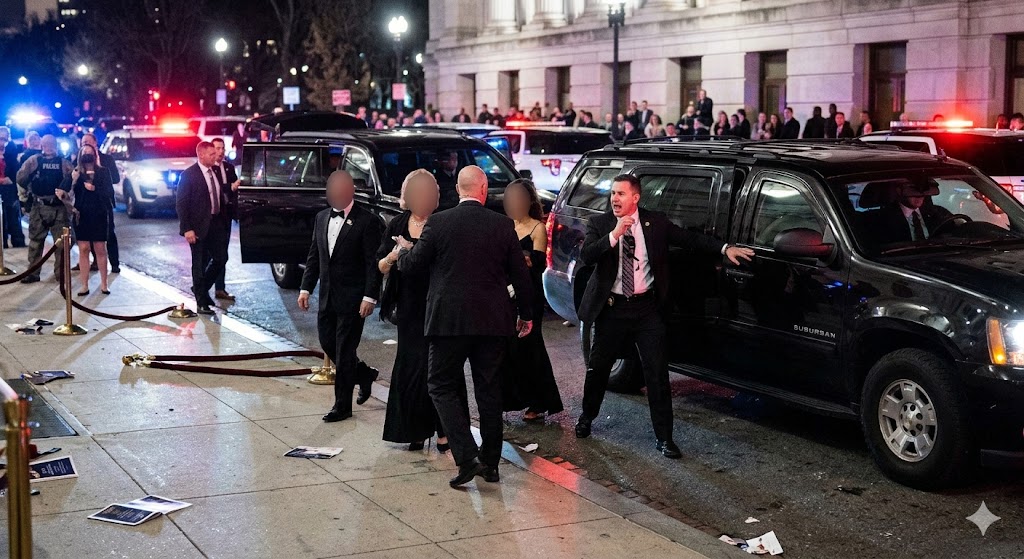
Emergency Evacuation Underway: Security details urgently hustle key figures, including indistinct VIPs in evening wear, into armored SUVs following an incident at a major formal gathering in Washington D.C. Flashing police lights illuminate the chaotic scene as the motorcade prepares to depart.
The White House Press Briefing: Transparency in Crisis
True to his style, President Trump did not shy away from the media following the chaos. He convened a White House press briefing late on April 25, turning what could have been a night of celebration into a moment of national reflection.
Standing alongside Vice President JD Vance, First Lady Melania Trump, and key advisors, Trump provided a detailed account. He commended the Secret Service for their bravery, noting they acted faster than in previous incidents. "They did a fantastic job," he said, while also calling for reviews of security at major venues like the Washington Hilton.
The briefing room was filled with reporters, many of whom had been at the dinner themselves. Trump fielded questions on motive, potential links to broader geopolitical issues (such as U.S. actions abroad), and implications for future events. He dismissed immediate connections to external conflicts but stressed that investigators would leave no stone unturned.
This transparent approach—holding a live update shortly after evacuation—contrasted with more guarded responses in past crises. It allowed the public to see leadership in action, even as the incident raised uncomfortable questions about vulnerability at the highest levels.
Implications for National Security and Presidential Safety
The White House dinner incident goes beyond a single breach. It prompts deeper reflection on whether the United States, often regarded as the world's most powerful nation, can fully secure its leaders and major gatherings.
Critics and observers have pointed out that if a determined individual could approach a checkpoint at an event attended by the President, Vice President, First Lady, and numerous Cabinet members, it signals potential weaknesses in perimeter security, intelligence sharing, or crowd screening protocols.
President Trump has long advocated for robust law enforcement and border measures. In his post-incident statements, he linked the event to broader themes of law and order, suggesting it reinforces the need for continued vigilance. Some reports indicate he mentioned plans for enhancing White House facilities, including security upgrades.
For the First Lady and Vice President Vance, the event was a personal reminder of risks inherent in public service. Melania Trump has historically maintained a relatively low profile compared to predecessors, focusing on initiatives close to her heart. Her presence at the dinner and safe evacuation highlight both the demands and dangers of the role.
Vice President Vance, a key figure in the administration, was also directly affected. His quick removal from the stage alongside the President underscores the coordinated protection extended to the executive branch.
Security experts note that while no system is foolproof, this incident could lead to policy reviews. Enhanced screening at large events, better coordination between federal and local agencies, and perhaps technological upgrades in detection could emerge as recommendations.
Moreover, the event occurs against a backdrop of heightened political polarization. Whether the shooter's motives were ideological, personal, or unrelated remains under investigation. Authorities have emphasized he appears to have acted alone, reducing immediate fears of a larger plot but not eliminating concerns about copycat risks or lone-wolf threats.
Public and International Reactions
News of the White House shooting spread rapidly across social media and global outlets. Many Americans expressed relief that no one was injured, while others voiced frustration over perceived security lapses.
International observers watched closely. Allies and adversaries alike noted the resilience shown by U.S. leadership in responding swiftly and transparently. Some foreign media framed the incident as a test of American stability during a period of domestic and international challenges.
Within the U.S., bipartisan statements condemned the violence. Calls for unity in supporting law enforcement and protecting democratic institutions echoed from both sides of the aisle, even as debates over gun policy and mental health screening resurfaced.
President Trump's social media posts, including the released CCTV footage, helped shape the narrative, showing the suspect's failed breach and the effective intervention by officers.
What This Means for America's Future Security Posture
The 2026 White House Correspondents' Dinner shooting, though resolved without casualties among dignitaries, leaves lasting lessons. It demonstrates that even in the seat of American power—during a convocation of major press, political figures, and administration leaders—threats can materialize suddenly.
The fact that high-level officials like the Finance-related Cabinet members, Home (Homeland) Security equivalents, the Vice President, and the First Lady were present and unaware of the specific danger until it unfolded illustrates the unpredictable nature of such risks.
This incident could catalyze improvements in how major events are secured. It may also influence discussions on protecting not just the President but the entire executive team and their families.
Trump has vowed that such events will not deter his agenda or future public engagements. In his briefing, he expressed determination to continue serving and making the country stronger, stating a desire to "live because I want to make this country great."
As investigations continue into the shooter's background, motives, and any potential warnings that might have been missed, the nation watches. The swift containment offers reassurance in the capabilities of protective services, yet the vulnerability exposed demands attention.
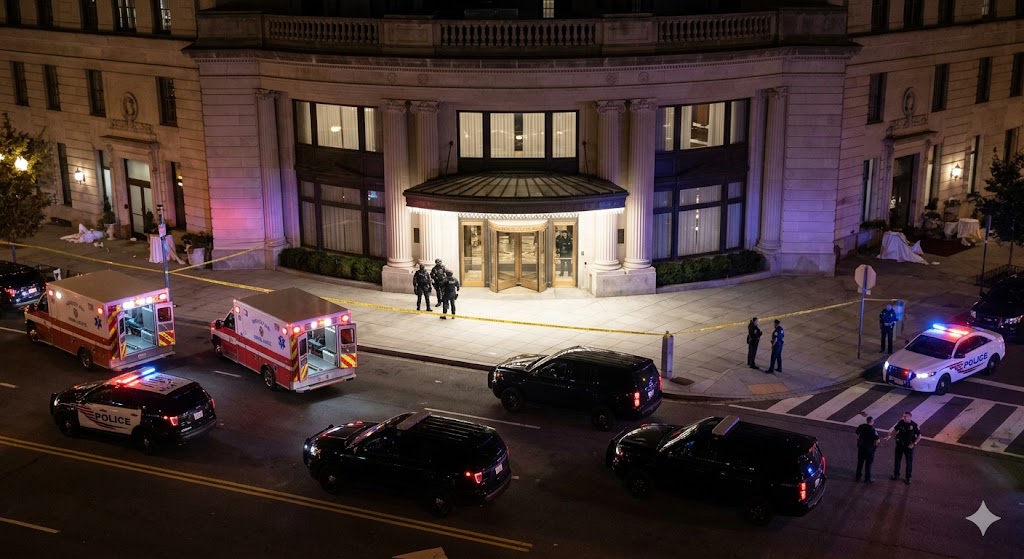
Scene of the Incident: A wide exterior shot of the large event venue in Washington D.C., now cordoned off with police tape. Numerous emergency vehicles and tactical officers dominate the foreground, indicating a significant security response after a disruption at a formal event inside.
The White House dinner incident of April 25, 2026, will be remembered as a moment when chaos intruded on tradition. President Trump, First Lady Melania Trump, Vice President JD Vance, and their colleagues emerged safe, thanks to professional security efforts. The suspect remains in custody, and a full probe is underway.
Yet the event serves as a sobering reminder: no nation, regardless of its power and resources, can take security for granted. The images of leaders being evacuated and the subsequent White House press briefing highlight both the fragility of safety in public life and the strength of institutions that respond under pressure.
Moving forward, this episode may strengthen resolve to enhance protections without compromising the openness that defines American democracy. As the country processes the White House shooting, the focus remains on learning from it—ensuring that future gatherings, whether dinners or briefings, uphold the highest standards of safety for all involved.
In the end, the resilience displayed by leadership and law enforcement reinforces a core truth: while threats persist, America's commitment to security and democratic norms endures. Continued vigilance, thorough investigation, and measured reforms will be essential to safeguarding the nation's most important figures and symbols in an uncertain world.