International Affairs• April 24, 2026• Global Edition
A Fragile Calm in the Middle East
As of April 24, 2026, the Middle East stands at a critical juncture marked by cautious hope and persistent uncertainty. President Donald Trump revealed that Israel and Lebanon have agreed to extend a temporary ceasefire by three weeks following productive talks at the White House. This development comes against the backdrop of a broader US-Iran conflict that erupted earlier in 2026, involving intense airstrikes, retaliatory attacks, and significant damage to infrastructure across the region.
The announcement, made on April 23, builds upon an initial 10-day truce between Israel and Lebanon that took effect in mid-April. While the Israel-Lebanon agreement focuses on halting hostilities involving Iran-backed Hezbollah, it intersects with separate but related US-Iran ceasefire efforts. Pakistan has played a pivotal mediating role in the US-Iran track, helping secure an initial two-week truce in early April that has since seen extensions.
These moves reflect a complex diplomatic landscape where short-term pauses aim to create space for longer-term negotiations, even as military posturing and economic pressures continue. The US maintains a naval blockade on Iranian ports, a point of contention that Iran views as a violation, while global energy markets watch closely due to risks around the Strait of Hormuz.
Background of the 2026 US-Iran Conflict
The current tensions trace back to late February 2026 when the United States and Israel launched coordinated airstrikes on Iranian targets under Operation Epic Fury. These strikes targeted military infrastructure, missile sites, nuclear-related facilities, and high-level leadership, resulting in the reported death of Supreme Leader Ali Khamenei and other senior officials.
Iran responded with a wave of missile and drone attacks aimed at Israel, US bases in the Gulf, and allied nations. The conflict quickly escalated, disrupting the Strait of Hormuz—a vital chokepoint for global oil shipments—and causing damage to energy infrastructure in several countries. Civilian casualties mounted on multiple sides, with reports of strikes hitting residential areas, hospitals, and bridges in Iran.
By early April, both sides faced mounting pressure from economic fallout, including spikes in oil prices and disruptions to international shipping. Pakistan stepped in as a key mediator, facilitating talks that led to a two-week ceasefire announced around April 8. Under the initial terms, Iran was expected to help reopen the Strait of Hormuz, while the US signaled willingness to discuss de-escalation.
However, implementation proved challenging. Iran accused the US of maintaining an effective siege through the naval blockade, while Washington expressed frustration over Iran's internal divisions and reluctance to present a unified negotiating position. Several rounds of indirect talks, including planned sessions in Islamabad, faced setbacks.
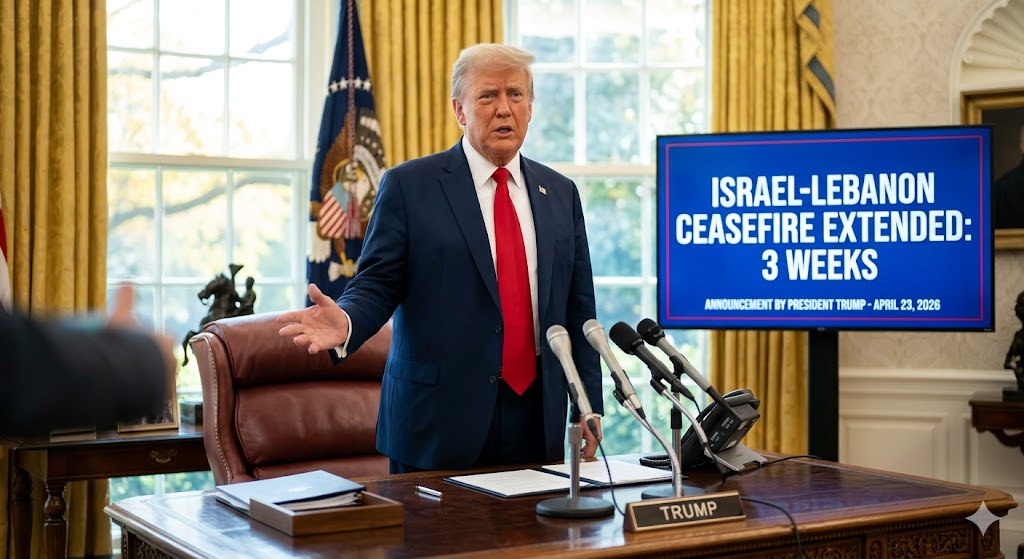
President Trump in the Oval Office on April 23, 2026, delivering the official announcement that Israel and Lebanon have agreed to a three-week extension of their ceasefire.
Trump's Announcement on Israel-Lebanon Ceasefire
On April 23, 2026, President Trump shared positive updates from White House meetings involving envoys from Israel and Lebanon. He stated that the two sides had agreed to extend their ceasefire by three additional weeks, describing the discussions as going "very well."
The initial 10-day truce, which began in mid-April, aimed to pause intense fighting between Israeli forces and Hezbollah militants operating in Lebanon. Although formally between Israel and the Lebanese state, the agreement sought to curb Hezbollah activities, which Iran has long supported as part of its regional "Axis of Resistance."
Trump emphasized that the United States would work with Lebanon to strengthen its ability to protect itself from Hezbollah influence. He also hinted at the possibility of future direct meetings between Israeli and Lebanese leaders at the White House. This extension provides breathing room amid broader regional efforts to stabilize the situation and prevent spillover into full-scale renewed conflict.
The move aligns with the US strategy to address interconnected flashpoints—Lebanon, Iran, and proxy groups—through phased diplomacy rather than simultaneous escalation.
Status of US-Iran Ceasefire and Negotiations
Parallel to the Israel-Lebanon track, the US-Iran ceasefire has seen its own extensions. Initially set for two weeks in early April, President Trump announced further extensions in late April, citing a request from Pakistani leadership, including Prime Minister Shehbaz Sharif and Field Marshal Asim Munir.
In a Truth Social post, Trump explained that the extension would continue until Iranian leaders could present a "unified proposal" to end the conflict permanently. He noted Iran's government appeared "seriously fractured," justifying the pause to allow internal alignment. However, the US has insisted on maintaining its naval blockade of Iranian ports during this period, a measure Iran has condemned as an act of war and a barrier to meaningful talks.
Iranian officials have expressed skepticism, with some dismissing extensions as meaningless while the blockade persists. Tehran has also reported seizing commercial ships in the Strait of Hormuz in recent days, signaling continued assertiveness despite the truce. Meanwhile, US Central Command has redirected vessels and maintained readiness.
Talks mediated by Pakistan have encountered hurdles, including canceled high-level visits and disagreements over core issues such as Iran's nuclear program, sanctions relief, reparations, and security guarantees. As of April 24, no firm date has been set for the next direct or indirect round, though both sides appear to recognize the high costs of renewed fighting.
Role of Pakistan in Mediation Efforts
Pakistan has emerged as a crucial diplomatic bridge in the US-Iran negotiations. Pakistani leaders have actively engaged both Washington and Tehran, hosting proposed talks in Islamabad and advocating for extensions to prevent collapse.
Prime Minister Shehbaz Sharif publicly thanked President Trump for accepting Pakistan's request to extend the ceasefire, expressing hope for a comprehensive peace deal. This mediation reflects Pakistan's strategic interests in regional stability, given its borders with Iran and longstanding ties in the Muslim world.
The involvement of a non-Western mediator has added a layer of neutrality perceived as helpful by some parties, though challenges remain in bridging deep-seated mistrust accumulated over decades of hostility.
Impact on Regional Infrastructure and Global Economy
The 2026 conflict has inflicted considerable damage on infrastructure. In Iran, airstrikes targeted power plants, bridges, missile production sites, steel factories, and research facilities. Retaliatory actions affected energy assets in Gulf countries, with reports of strikes on oil and gas infrastructure leading to production halts and higher global fuel costs.
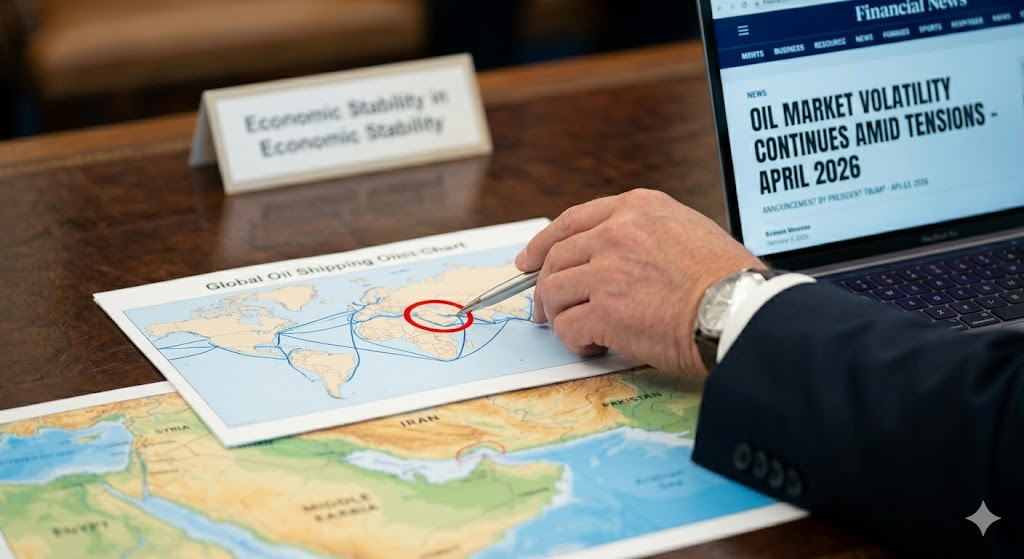
The Strait of Hormuz disruptions have ripple effects worldwide, contributing to volatility in energy markets. Shipping companies have rerouted vessels, while insurance premiums for the region have surged.
Civilian infrastructure, including hospitals and telecommunications, has also suffered in multiple countries, raising humanitarian concerns. Reconstruction efforts will likely require billions of dollars and years of work, underscoring the long-term consequences of even limited warfare.
Several obstacles cloud the path forward. Deep divisions within Iran's leadership complicate unified decision-making. Mutual accusations of ceasefire violations—such as ship seizures or continued blockages—erode trust. Proxy dynamics involving Hezbollah add complexity, as the Israel-Lebanon extension explicitly seeks to weaken such influences.
On the positive side, both the US and Iran appear wary of full resumption of hostilities given the economic and human toll. Trump's approach combines pressure through military readiness with diplomatic openings, while Iran has signaled openness to negotiations under certain conditions.
International actors, including the United Nations, have welcomed extensions as steps toward de-escalation. Observers note that any sustainable agreement would likely need to address Iran's nuclear ambitions, regional security architecture, and economic recovery.
Experts caution that fragile truces can collapse quickly without concrete confidence-building measures, such as phased sanctions relief or verifiable military stand-downs.
Diplomatic and Economic Implications: The Strait of Hormuz Risks
The April 23 announcement of a three-week extension to the Israel-Lebanon ceasefire, alongside ongoing adjustments to the US-Iran truce, represents a tentative step away from immediate escalation. Mediated in part by Pakistan and driven by US diplomacy under President Trump, these efforts highlight the interconnected nature of Middle East conflicts.
As negotiations continue, the coming weeks will test the commitment of all parties to dialogue over confrontation. Success could pave the way for broader regional de-escalation, reduced economic strain, and improved humanitarian conditions. Failure, however, risks reigniting a conflict with potentially devastating wider consequences.
The situation remains fluid, with diplomats working behind the scenes even as military forces stay on high alert. For now, the extended pauses offer a narrow window for reason to prevail in one of the world's most volatile regions.
Frequently Asked Questions
What is the primary significance of Trump Announces 3-Week Israel-Lebanon Ceasefire Extension?
A Fragile Calm in the Middle EastAs of April 24, 2026, the Middle East stands at a critical juncture marked by cautious hope and persistent uncertainty. President Donald Trump revealed that Israel and Lebanon have agreed to extend a temporary ceasefire by three weeks following productive talks at the White House.
How does this development impact International Affairs?
This development comes against the backdrop of a broader US-Iran conflict that erupted earlier in 2026, involving intense airstrikes, retaliatory attacks, and significant damage to infrastructure across the region.The announcement, made on April 23, builds upon an initial 10-day truce between Israel and Lebanon that took effect in mid-April. While the Israel-Lebanon agreement focuses on halting hostilities involving Iran-backed Hezbollah, it intersects with separate but related US-Iran ceasefire efforts.
What are the key future projections to monitor?
Pakistan has played a pivotal mediating role in the US-Iran track, helping secure an initial two-week truce in early April that has since seen extensions.These moves reflect a complex diplomatic landscape where short-term pauses aim to create space for longer-term negotiations, even as military posturing and economic pressures continue.