Inflation remains one of the most persistent challenges for investors seeking to preserve and grow their wealth. As prices for everyday goods and services rise, the purchasing power of money declines over time. In early 2026, India's consumer price inflation has hovered around 3.4% in recent months, reflecting moderate pressures from food and energy costs amid global uncertainties.
For many individuals, especially beginners in personal finance, understanding inflation investments is essential. When inflation outpaces the returns on your savings or fixed-income assets, your real wealth erodes even if the nominal value appears stable. This article explores the effects of inflation on investments, offers practical high inflation investment strategies, and highlights the best options to beat inflation in the current environment.
Whether you are budgeting for inflation in your daily finances or building a long-term portfolio, the goal is the same: protect your capital and aim for returns that exceed the rate of price increases. Let's dive into how inflation works against traditional investments and what steps you can take to stay ahead.
Understanding How Inflation Affects Investments
Inflation directly influences different asset classes in varied ways. At its core, it reduces the real return on investments—the return after adjusting for the loss in purchasing power.
Fixed-income investments, such as traditional bonds, certificates of deposit (CDs), and regular savings accounts, are particularly vulnerable. These instruments pay a fixed interest rate. If inflation rises to 4% while your bond yields only 3%, you experience a negative real return of -1%. Bond prices may also fall as central banks raise interest rates to combat inflation, further impacting portfolio values.
Stocks, on the other hand, present a more nuanced picture. In the short term, high inflation can pressure corporate margins through increased input costs and reduce investor confidence, sometimes leading to market volatility. However, over the long term, equities have historically outperformed inflation. Companies with strong pricing power—those able to pass on higher costs to consumers—tend to fare better. Sectors like consumer staples, energy, and healthcare often demonstrate resilience.
Foreign direct investment (FDI) also feels the effects, though the relationship is complex. Moderate inflation may not deter inflows significantly, but prolonged high inflation can signal economic instability, currency depreciation, and reduced attractiveness for international investors. In some analyses, short-term inflation has even shown a mild positive correlation with FDI under certain growth conditions, but sustained price instability generally weighs on long-term capital commitments.
For beginners, the key takeaway is clear: cash sitting idle in low-yield accounts loses value fastest during inflationary periods. This reality underscores the need for a thoughtful high inflation investment strategy that balances growth potential with risk management.
Why You Need Inflation Hedge Investments in Your Portfolio
Building a portfolio resilient to rising prices involves shifting toward assets that tend to maintain or increase in value as inflation climbs. These inflation proof investments or inflation hedge investments often include real assets and instruments explicitly designed to adjust with price levels.
Common inflation hedge investments include:
Commodities such as gold, silver, copper, and oil.
Real estate and Real Estate Investment Trusts (REITs).
Inflation-linked bonds like Treasury Inflation-Protected Securities (TIPS) or equivalent instruments.
Equities in companies with durable competitive advantages.
Gold, for instance, has long served as a classic store of value. During periods of uncertainty and rising prices, demand for the yellow metal often increases, helping preserve purchasing power. Real estate benefits similarly because property values and rental income tend to rise alongside inflation.
In 2026, with ongoing global supply chain dynamics and energy transitions, commodities like copper—vital for electrification and infrastructure—have gained attention as potential hedges. Diversified blue-chip stocks in sectors with pricing power, such as consumer goods or defense, also provide a buffer.
Cryptocurrencies, particularly Bitcoin, are sometimes viewed as "digital gold" due to their fixed supply, though they carry higher volatility and may not suit conservative investors.
The most effective approach combines several of these elements rather than relying on any single asset. Diversification helps mitigate risks while positioning your portfolio to benefit from inflationary trends.
The Hidden Erosion: A visualization of how domestic purchasing power silently declines when inflation outpaces savings (represented by the projected graph on the coin jar), emphasizing the need for active investment strategies.
Best Investments to Beat Inflation in 2026
Here are some of the strongest options for inflation investing this year, suitable for both beginners and experienced investors:
1. Equities and Equity Mutual Funds
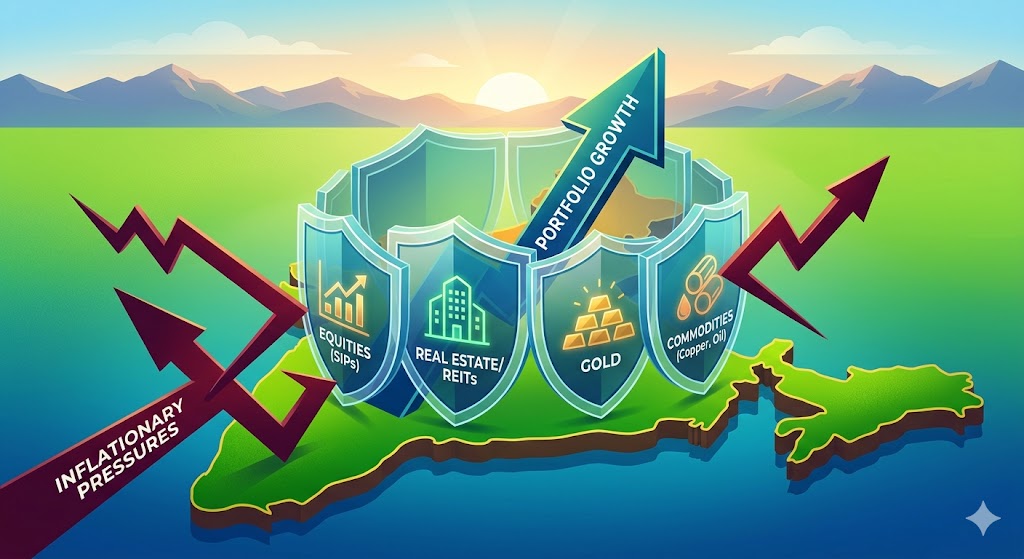
Stocks have historically delivered average annual returns well above long-term inflation rates. Focus on companies with strong fundamentals, dividend growth, and the ability to raise prices without losing customers. Systematic Investment Plans (SIPs) in equity mutual funds or index funds offer an accessible entry point for beginners, allowing rupee-cost averaging to smooth out volatility.
2. Real Estate and REITs
Property investments allow rents and asset values to adjust upward with inflation. REITs provide exposure without the need to manage physical properties, offering liquidity and dividend income. In many markets, real estate remains one of the most reliable long-term hedges.
3. Gold and Precious Metals
Physical gold, gold ETFs, or sovereign gold bonds in India serve as effective inflation hedges. Experts often recommend allocating 5-10% of a portfolio to gold for diversification.
4. Inflation-Indexed Bonds and TIPS
These securities adjust principal and interest payments based on inflation metrics, directly protecting against erosion of purchasing power. They provide a more predictable real return compared to conventional bonds.
5. Commodities and Sector-Specific Stocks
Energy, materials, and agriculture-related investments can benefit when prices rise. Copper producers, for example, have been highlighted for their role in green energy transitions amid potential inflationary pressures.
6. High-Yield Savings and Short-Term Instruments (with Caution)
While not true hedges, high-yield accounts and short-term CDs or Treasury bills can offer better nominal returns in a rising-rate environment. However, they should form only a temporary parking spot for cash, as they rarely outpace inflation over extended periods.
For Indian investors, options like Public Provident Fund (PPF), National Savings Certificates, or equity-linked savings schemes can complement these, though their inflation-beating potential varies with prevailing rates.
High Inflation Investment Strategy: A Step-by-Step Guide for Beginners
Developing a robust strategy requires discipline and a long-term perspective. Follow these practical steps:
Assess Your Current Portfolio: Calculate your real returns by subtracting the inflation rate from nominal gains. Identify assets likely to underperform, such as long-duration fixed-rate bonds.
Set Clear Goals and Risk Tolerance: Beginners should start with a mix of 60-70% equities or equity funds, 10-20% fixed income (including inflation-linked options), and 10-15% in commodities or real assets. Adjust based on age and comfort with volatility.
Emphasize Diversification: Spread investments across asset classes, sectors, and geographies. International exposure can provide additional currency and economic hedges.
Incorporate Regular Rebalancing: Review your portfolio annually or when inflation trends shift significantly. Reinvest dividends and gains into underweighted inflation-resistant areas.
Focus on Quality Over Speculation: Prioritize companies with pricing power, strong balance sheets, and consistent earnings growth. Avoid chasing high-risk trends during volatile periods.
Budgeting for Inflation in Personal Finance: Track your expenses and build an emergency fund covering 6-12 months in a high-yield account. Factor expected inflation into retirement projections—many planners recommend 4-6% annual inflation for long-term calculations in India.
Stay Informed but Avoid Timing the Market: Monitor interest rate decisions by the Reserve Bank of India and global central banks. Reacting to short-term news often leads to poor decisions; consistent investing through SIPs or systematic plans usually yields better results.
Remember that no strategy eliminates all risk. Even the best inflation hedge investments can experience short-term drawdowns. Patience and compounding remain powerful allies.
Potential Risks and Considerations
While pursuing returns that beat inflation, be mindful of associated risks. Equities and commodities can be volatile. Real estate involves liquidity constraints and maintenance costs. Cryptocurrencies, though popular in updates and discussions, demand caution due to extreme price swings.
Tax implications also matter. In India, long-term capital gains on equities and certain debt instruments enjoy favorable treatment, but consult a financial advisor for personalized advice. Currency fluctuations can affect foreign investments or commodities priced in dollars.
For those concerned about effects of inflation on investment ICICI or similar banking products, note that bank fixed deposits and recurring deposits often lag behind inflation unless rates rise sharply. Blending them with equity exposure through mutual funds offered by such institutions can improve outcomes.
Diversification: The Multi-Layered Defense
Conclusion: Building Resilience Through Thoughtful Inflation Investing
Inflation is an inevitable part of economic cycles, but it need not erode your financial future. By understanding how does inflation affect investments and actively incorporating best investments to beat inflation, you can safeguard your purchasing power and work toward meaningful wealth creation.
In 2026, a balanced approach focusing on equities, real assets, gold, and inflation-adjusted instruments offers a practical path forward. Start small if you are new to investing—open a demat account, begin a modest SIP, or allocate a portion of savings to gold. Over time, these steps compound into significant protection.
Personal finance basics like budgeting, emergency funds, and continuous learning remain foundational. Whether exploring cryptocurrency updates or traditional routes, the principle stays consistent: invest with purpose, diversify wisely, and keep inflation in perspective.
By taking proactive steps today, you position yourself not just to survive inflationary periods but to thrive through them. Consult a certified financial planner to tailor these ideas to your specific situation, goals, and risk profile.
Frequently Asked Questions
What is the primary significance of Inflation-Proof Investments: Smart Strategies for 2026?
Inflation and Its Impact on Personal FinanceInflation remains one of the most persistent challenges for investors seeking to preserve and grow their wealth. As prices for everyday goods and services rise, the purchasing power of money declines over time.
How does this development impact Current Affairs?
In early 2026, India's consumer price inflation has hovered around 3.4% in recent months, reflecting moderate pressures from food and energy costs amid global uncertainties.For many individuals, especially beginners in personal finance, understanding inflation investments is essential. When inflation outpaces the returns on your savings or fixed-income assets, your real wealth erodes even if the nominal value appears stable.
What are the key future projections to monitor?
This article explores the effects of inflation on investments, offers practical high inflation investment strategies, and highlights the best options to beat inflation in the current environment.Whether you are budgeting for inflation in your daily finances or building a long-term portfolio, the goal is the same: protect your capital and aim for returns that exceed the rate of price increases.