AAP Rajya Sabha Exodus: Mass Resignations in politics
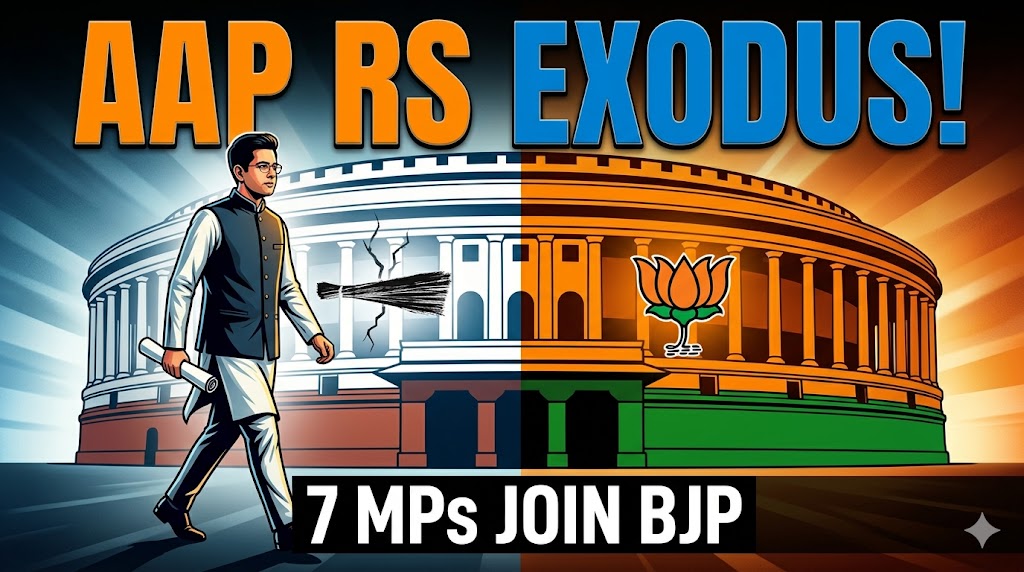
In a stunning political development on April 24, 2026, Raghav Chadha, a prominent Rajya Sabha member from the Aam Aadmi Party (AAP), announced his resignation along with six other party MPs. The group declared their intention to merge with the Bharatiya Janata Party (BJP), citing deep ideological differences and a perceived deviation from AAP's founding principles. This move, backed by more than two-thirds of AAP's Rajya Sabha strength, has sent shockwaves through Indian politics, highlighting the fragility of newer parties and the fluid nature of alliances in the world's largest democracy.
The resignations come amid a broader pattern of internal unrest within AAP, including reported exits or tensions involving figures like Manish Sisodia, Bhagwant Mann's sharp reactions, and earlier leadership reshuffles. While not every speculated resignation has materialized into a formal split, the Rajya Sabha exodus represents one of the most significant blows to Arvind Kejriwal's party since its rise as a disruptive force in Indian politics.
This article examines the events, underlying causes, and wider implications for political party dynamics, member loyalty, and the evolving culture of Indian politics.
The Trigger: Raghav Chadha's Rift and the Mass Resignation
Raghav Chadha, once seen as a close confidant and articulate face of AAP, had recently faced demotion from his position as deputy leader in the Rajya Sabha. Reports suggest this move, along with internal leadership changes, fueled growing discontent. In a press conference on April 24, Chadha, flanked by Sandeep Pathak and Ashok Mittal, made a bold announcement.
He stated that seven AAP Rajya Sabha MPs — including himself, Sandeep Pathak, Ashok Mittal, Harbhajan Singh, Rajinder Gupta, Vikram Sahney, and Swati Maliwal — had decided to exercise constitutional provisions for a merger. With AAP holding around 10 seats in the Upper House (many from Punjab and Delhi), this two-thirds majority allows the faction to merge without attracting anti-defection penalties under the Tenth Schedule of the Indian Constitution.
Chadha's statement was pointed: "The Aam Aadmi Party, which I nurtured with my blood and sweat... has now completely deviated from its principles, values, and core morals. The party is no longer working for the country or in the national interest, but for personal gain." He described himself as "the right man in the wrong party" and praised aspects of national leadership under Prime Minister Narendra Modi in subsequent remarks.
The group formally submitted documents to the Rajya Sabha Chairman, signaling a structured shift rather than individual defections. AAP leaders, including Punjab Chief Minister Bhagwant Mann, responded strongly, labeling the move a "betrayal" and accusing the BJP of engineering "Operation Lotus" to weaken opposition parties.
This is not an isolated incident. AAP has faced questions over leadership centralization, with reports of tensions involving senior leaders and state units. The timing — shortly after Chadha's removal from a key parliamentary role — points to accumulated grievances over decision-making, party direction, and alleged sidelining of voices.
Broader AAP Turmoil: A Pattern of Resignations and Reshuffles
AAP's challenges extend beyond the Rajya Sabha. Over the years, the party has witnessed exits and internal conflicts. Early splits involved figures like Yogendra Yadav and Prashant Bhushan, who left citing concerns over authoritarian tendencies. More recent murmurs include leadership changes, controversies surrounding Atishi, and questions around figures like Alka Lamba or Gurpreet Ghuggi in state contexts.
While not all names in circulation (such as Manish Sisodia or Bhagwant Mann) have formally resigned as of now, the party has undergone visible restructuring. Reports of deputy leader changes in Parliament, PAC (Political Affairs Committee) adjustments, and state-level frictions reflect ongoing efforts to consolidate control amid electoral pressures and governance challenges in Delhi and Punjab.
The Rajya Sabha split amplifies these issues. With a significant chunk of its Upper House representation moving to the BJP, AAP's national parliamentary footprint shrinks dramatically. This comes at a time when the party is navigating its role in national opposition politics, often aligning with INDIA bloc partners while maintaining a distinct "alternative politics" identity.
Critics argue that rapid growth, reliance on a few central figures, and the transition from a movement to a governing party have exposed structural weaknesses. Supporters, however, point to external pressures, including legal cases and alleged poaching by the ruling dispensation.
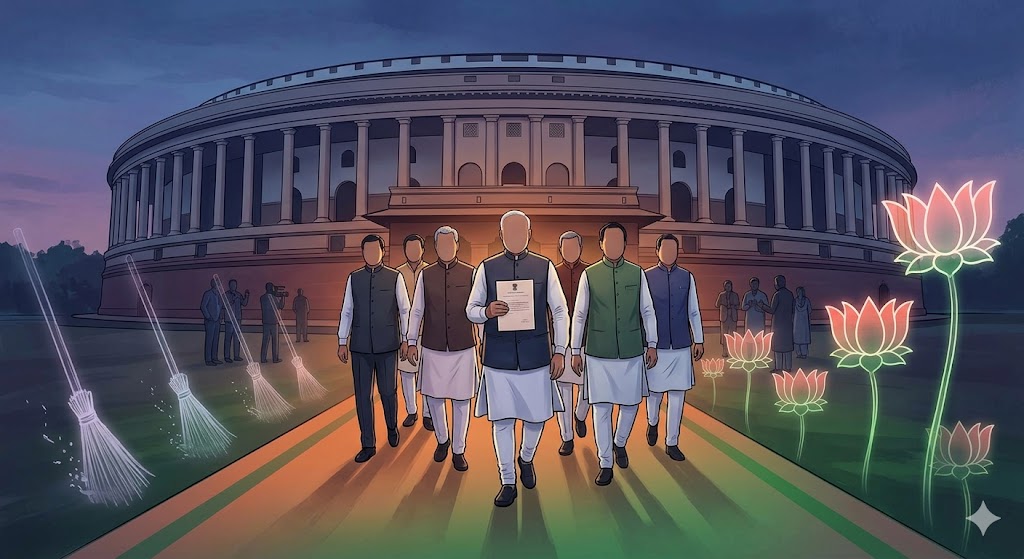
The formal transition: Representatives of the defecting AAP faction merge into the BJP, leaving the 'Broom' symbol behind for the 'Lotus' on the steps of the Rajya Sabha
The Mechanics of the Merger and Legal Implications
The defectors invoked Article 75 and the anti-defection law's exception for mergers. When two-thirds of a party's legislators in a House agree, they can merge with another party without disqualification. Here, the seven MPs represent a clear majority of AAP's Rajya Sabha contingent.
This legal route minimizes immediate seat losses but raises questions about party discipline and voter mandate. AAP has indicated it may challenge aspects of the move, potentially seeking disqualification or arguing against the validity of the "merger." The Rajya Sabha Chairman will play a decisive role in accepting the changes.
For the BJP, this boosts its numbers in the Upper House, strengthening its position on legislation and debates without the messiness of by-elections. It also sends a message of expanding influence into opposition strongholds, particularly Punjab.
Impact on Political Dynamics in India
This development carries far-reaching consequences:
1. Weaken of Regional and Opposition Forces: AAP positioned itself as a fresh alternative to the Congress-BJP duopoly. A major split undermines its credibility as a stable national player and could affect its performance in future state or national polls. Punjab, where AAP holds power, faces particular scrutiny, with Chief Minister Mann calling the defectors "traitors."
2. Strengthening of BJP's Dominance: The influx adds experienced voices to the BJP's parliamentary bench. It reinforces narratives of opposition disarray and the ruling party's ability to attract talent. In a polarized polity, such shifts can tilt numerical balances in key forums like Parliament.
3. Ripple Effects on Alliances: The INDIA bloc, already navigating internal differences, must reassess strategies. Other regional parties may watch closely, wary of similar internal vulnerabilities or poaching attempts.
4. Electoral and Governance Repercussions: For AAP, reduced parliamentary strength limits its ability to influence national discourse or hold the government accountable. In Delhi and Punjab, it may accelerate internal reforms or defensive consolidation. Long-term, it questions the sustainability of personality-driven parties versus cadre-based organizations.
On a national scale, this episode underscores how defections continue to shape Indian politics despite anti-defection laws. While the law deters individual jumps, group mergers remain a viable route, often blurring lines between ideological shifts and strategic calculations.
Insights into India's Political Culture
Indian political culture has long been characterized by fluidity. From the post-Independence Congress dominance to the rise of regional satraps and coalition eras, loyalty has often been transactional — tied to winnability, patronage, ideology, or survival.
The AAP story reflects both continuity and change. Born from the anti-corruption Anna Hazare movement, it promised "politics with a difference" — transparency, volunteerism, and people-centric governance. Its early success in Delhi tapped into urban disillusionment with established parties.
Yet, as parties mature, internal contradictions emerge: the tension between centralized leadership (necessary for quick decisions) and democratic functioning; the challenge of retaining idealistic cadre amid power and resources; and the pull of national ambitions versus regional roots.
Resignations like this highlight recurring themes:
Centralization vs. Dissent: Many parties struggle when strong leaders consolidate power, leading to exits by those feeling marginalized.
Ideological Drift: Newer parties often face accusations of compromising founding ideals for electoral pragmatism.
Poaching and "Operation Lotus" Narratives: The BJP's growth strategy has included welcoming leaders from other parties, framed by opponents as engineered splits and by supporters as natural realignments toward "development" and "nationalism."
Voter Perception: Frequent defections erode trust. Citizens increasingly view politics as a game of power rather than principle, contributing to cynicism even as turnout remains high.
This culture of shifting loyalties is not new — history is replete with examples across parties. However, in the social media age, such events amplify instantly, shaping narratives and influencing public opinion faster than ever.
Ultimately, it raises deeper questions: Can parties institutionalize beyond charismatic founders? How do anti-defection laws balance stability with democratic choice? And in a diverse, federal India, will fluid dynamics foster healthier competition or deepen fragmentation?
Looking Ahead: Challenges and Opportunities
For AAP, the immediate task is damage control — reassuring remaining cadres, reinforcing governance delivery in held territories, and possibly accelerating leadership reforms. The party must decide whether to double down on its core "aam aadmi" messaging or broaden alliances.
The BJP gains a tactical edge but must integrate the new members smoothly, addressing any policy or stylistic differences.
For Indian politics as a whole, this serves as a reminder of its dynamic nature. Parties that adapt — building robust internal structures, encouraging healthy dissent, and delivering on promises — are likely to endure. Those that don't risk further fragmentation.
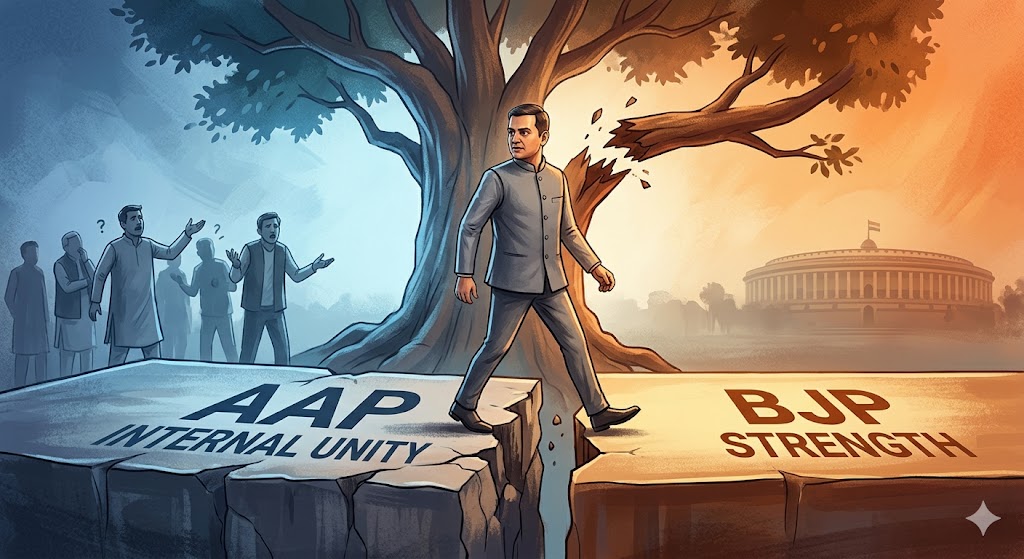
The Emotional Fracture: shifting and resignation
As India heads toward future electoral cycles, events like the April 24, 2026, AAP split will be studied as case studies in political resilience, realignment, and the enduring quest for stable yet responsive governance.
The true test lies not in one defection but in how parties evolve their internal cultures to retain talent while staying true to their mandates. In the end, Indian democracy's strength lies in its ability to absorb shocks and reinvent — even when members choose to move on.
AAP Rajya Sabha resignation, Raghav Chadha joins BJP, AAP leaders resign 2026, AAP BJP merger, Raghav Chadha AAP split, Indian political dynamics, AAP internal crisis, opposition parties India, anti-defection law merger, Manish Sisodia AAP, Bhagwant Mann reaction, Swati Maliwal BJP, political culture India, party restructuring AAP.