Industrial Revolution: History, Causes, and Global Impact
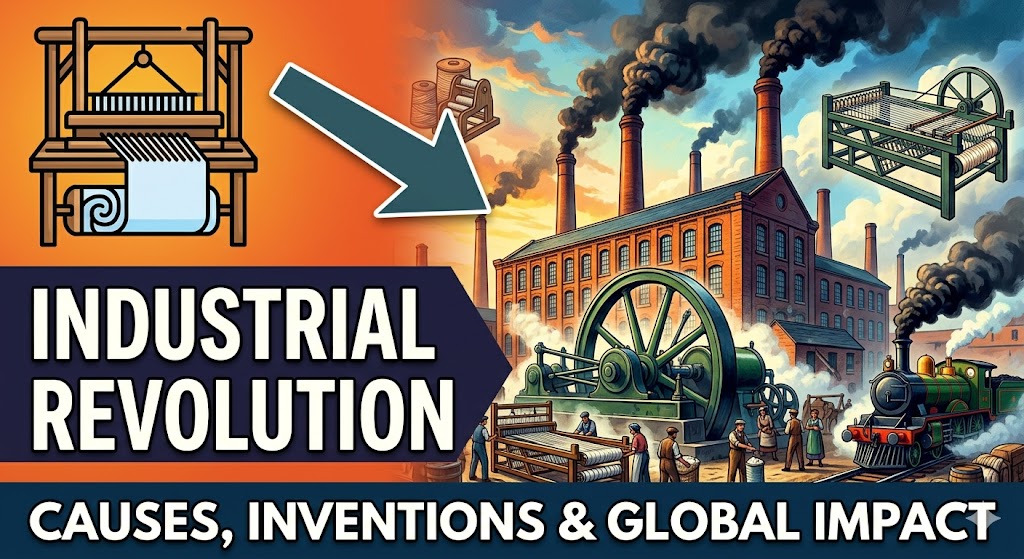
The Industrial Revolution stands as one of the most transformative periods in human history. It marked a fundamental shift from agrarian, handcraft-based economies to machine-driven industrial societies. Beginning in Great Britain in the mid-18th century, this era of rapid technological, economic, and social change reshaped how people lived, worked, and interacted with the world.
For students studying the history of the Industrial Revolution in class 8, class 9, class 10, or class 11, or those preparing for UPSC world history, understanding this period is essential. It explains the roots of modern capitalism, urbanization, and global inequalities. Resources like simple history overviews, Heimler's History videos for AP World History, or detailed accounts from History Channel and History Hit provide accessible ways to explore the topic.
Whether you are searching for industrial revolution US history, the second industrial revolution, or its broader global context, this article offers a clear, comprehensive examination of its origins, developments, and lasting legacy.
The Industrial Revolution refers to the process of transition from small-scale, manual production to large-scale, mechanized manufacturing. It involved new machines, power sources like steam, and the rise of the factory system. Historians often divide it into two main phases: the First Industrial Revolution (roughly 1760–1840), centered in Britain, and the Second Industrial Revolution (late 19th to early 20th century), which spread to Europe, the United States, and beyond.
This revolution was not a sudden event but a gradual accumulation of innovations that accelerated economic growth and altered societies profoundly. It replaced traditional cottage industries and agricultural labor with centralized factories, railroads, and mass production techniques. The term itself gained popularity through the work of English historian Arnold Toynbee in the late 19th century.
Causes of the Industrial Revolution
Several interconnected factors enabled the Industrial Revolution to begin in Britain. Abundant natural resources, particularly coal and iron, provided the raw materials and fuel needed for new technologies. Britain's stable political system, strong property rights, and growing capital from trade and colonial expansion created a favorable environment for investment.
The Agricultural Revolution preceded its improved farming techniques, such as crop rotation and the seed drill, leading to higher food production and a surplus population available for factory work. Improved transportation, including canals and later railroads, facilitated the movement of goods.
Other contributing elements included a large domestic market, access to raw materials from colonies, and a culture of innovation supported by scientific advancements. In contrast to other nations, Britain had fewer internal trade barriers and a growing entrepreneurial class willing to take risks.
For world history industrial revolution UPSC preparation, these causes highlight how geographic, economic, and institutional factors converged in one place before spreading elsewhere.
Key Inventions and Technological Advances
The First Industrial Revolution was driven by breakthroughs in textiles, iron production, and power generation. James Hargreaves invented the spinning jenny in 1764, allowing one worker to spin multiple threads. Richard Arkwright developed the water frame, and Samuel Crompton created the spinning mule, revolutionizing yarn production.
James Watt's improvements to the steam engine in the 1760s provided a reliable power source independent of water, enabling factories to be built away from rivers. This innovation powered textile mills, ironworks, and later transportation.
In iron manufacturing, the puddling process and coke smelting reduced reliance on charcoal and increased output. The development of machine tools allowed for greater precision in manufacturing parts.
The cotton gin, invented by Eli Whitney in 1793 in the United States, dramatically increased cotton processing efficiency, though it also intensified slavery in the American South.
These inventions shifted production from homes to factories, where workers operated machines under strict schedules. Simple history explanations often emphasize how these changes boosted productivity exponentially.
The Spread of Industrialization
While the Industrial Revolution started in Britain, it soon spread to other parts of Europe and North America. Belgium became the first continental European country to industrialize, followed by France and Germany. Governments played a larger role in later adopters, providing tariffs, subsidies, and infrastructure support.
In the United States, industrialization gained momentum after the War of 1812. Samuel Slater, often called the "Father of the American Industrial Revolution," established the first successful water-powered textile mill in Pawtucket, Rhode Island, in 1793, bringing British technology across the Atlantic.
By the mid-19th century, the US was rapidly expanding its textile and iron industries. The completion of the first transcontinental railroad in 1869 symbolized growing connectivity.
Industrial revolution US history highlights how abundant resources, immigration, and innovation propelled America from an agrarian nation to an industrial powerhouse.
The Second Industrial Revolution in US History
The Second Industrial Revolution, often dated from the 1870s to around 1914, introduced new industries and technologies such as steel production, electricity, chemicals, and the internal combustion engine. In the United States, this period transformed the economy and society more dramatically than the first phase.
Key developments included the Bessemer process for cheap steel production, which enabled skyscrapers, bridges, and stronger railroads. Thomas Edison's incandescent light bulb and electrical systems illuminated factories and cities. Alexander Graham Bell's telephone revolutionized communication.
Henry Ford's assembly line, introduced in 1913 for automobile production, exemplified mass production techniques that lowered costs and made consumer goods accessible to a broader population. Petroleum and electricity replaced steam as dominant energy sources in many sectors.
This era saw massive urbanization, with millions moving from farms to cities. It also produced industrial giants like Andrew Carnegie in steel and John D. Rockefeller in oil, alongside the rise of big business and managerial capitalism.
Industrial revolution US history during this period underscores America's emergence as a global economic leader, producing one-third of the world's industrial output by 1913.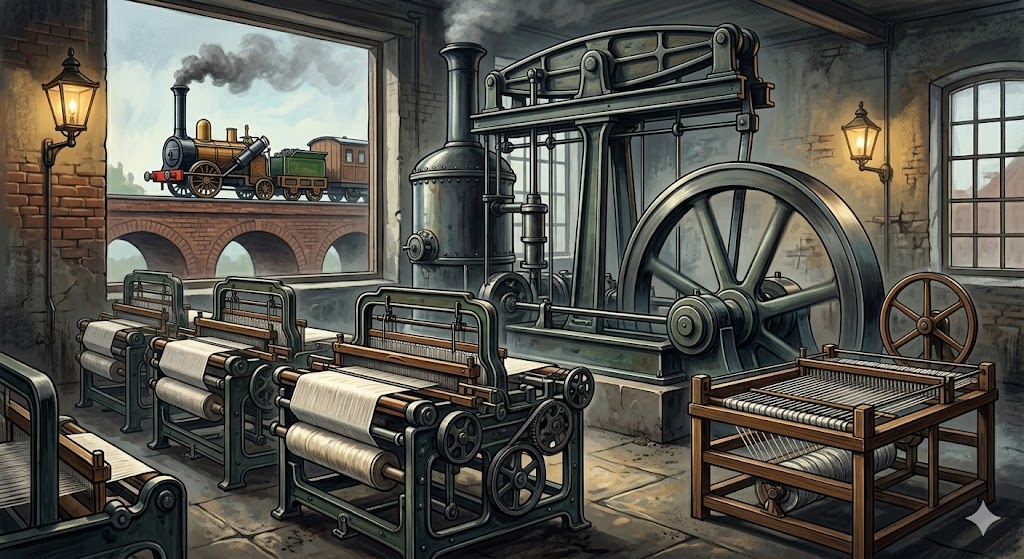
The Industrial revolution phases and development
Social and Economic Impacts
The Industrial Revolution brought unprecedented economic growth and wealth creation, but it also caused significant social upheaval. Urbanization accelerated as people flocked to factory towns for work, leading to overcrowded slums, poor sanitation, and public health challenges.
Working conditions in early factories were often harsh, with long hours, low wages, and dangerous machinery. Child labor was common, prompting later reforms and the rise of trade unions. The Luddites, skilled workers who destroyed machines in protest, represented early resistance to technological change.
On the positive side, overall living standards eventually rose. The middle class expanded, and new opportunities emerged in management, engineering, and commerce. Advances in medicine and nutrition later improved life expectancy.
Women entered the workforce in larger numbers, particularly in textiles, though gender roles remained unequal. The revolution also fueled imperialism, as industrialized nations sought raw materials and markets abroad.
For students in history industrial revolution class 9 ICSE or similar curricula, these impacts illustrate the dual nature of progress—economic advancement alongside social costs.
The Industrial Revolution in School Curricula
In Indian education systems, the topic appears across various standards:
Class 8 History (ICSE/CBSE): Often covers the rise of the Industrial Revolution and its link to imperialism, including the domestic system versus factory system.
Class 9 and 10: Focus on causes, key inventions, social changes, and effects on India, such as the decline of traditional industries.
Class 11 World History: Explores the Industrial Revolution in a global context, including its role in shaping modern economies.
UPSC aspirants study it under world history for its relevance to capitalism, socialism, and colonial impacts. Resources like NCERT summaries or targeted videos help simplify complex timelines and concepts.
Heimler's History videos provide excellent overviews for AP World History students, breaking down why Britain led and how industrialization spread to places like Japan and Russia.
Legacy and Relevance Today
The Industrial Revolution laid the foundations for the modern world. It accelerated globalization, technological progress, and economic interdependence. Many contemporary challenges—urban planning, labor rights, environmental concerns, and inequality—trace their roots to this era.
The shift to fossil fuels during the revolution contributes to today's climate issues, prompting discussions about sustainable industrialization. Innovations in automation and digital technology are sometimes called a "Fourth Industrial Revolution," echoing earlier transformations.
Understanding this history helps explain current geopolitical dynamics, as nations continue to compete through industrial and technological capabilities.
Conclusion
The Industrial Revolution transformed humanity from rural, agrarian societies into urban, industrial ones, setting the stage for the contemporary global economy. From its beginnings in Britain's textile mills and steam engines to the steel and electricity-driven advances in the United States and beyond, it reshaped every aspect of life.
For learners exploring history of the Industrial Revolution through class notes, simple explanations, or in-depth documentaries from History Hit and the History Channel, the story remains compelling. Its lessons on innovation, adaptation, and the human cost of progress continue to resonate.
As we navigate rapid technological changes today, reflecting on this pivotal era reminds us that progress brings both opportunities and responsibilities. The Industrial Revolution did not merely change how goods were made—it fundamentally altered the trajectory of human civilization.