Chhatrapati Shivaji Maharaj: Warrior King & his Swarajya
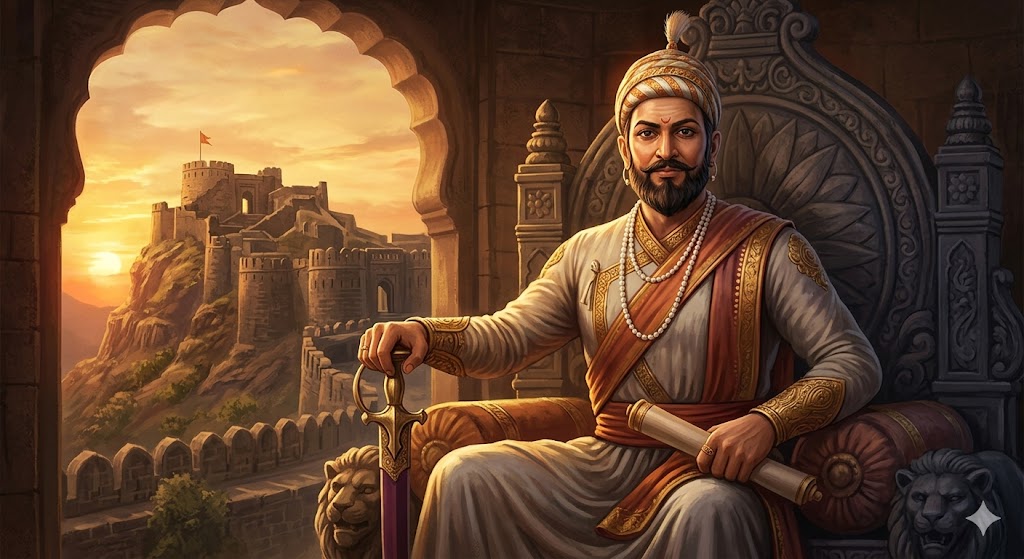
Chhatrapati Shivaji Maharaj stands as one of the most revered figures in Indian history. A visionary leader, brilliant strategist, and compassionate ruler, he carved out an independent Maratha kingdom in the 17th century amidst powerful Mughal and Sultanate empires. Known widely as Shivaji Maharaj, Raja Shivaji, or simply Shivaji, his life embodies courage, innovation, and a deep commitment to justice and self-rule, or Swarajya.
From humble beginnings at Shivneri Fort to his coronation as Chhatrapati in 1674, Shivaji Maharaj transformed a small jagir into a formidable empire that challenged imperial dominance. His story continues to inspire millions through Shivaji Maharaj songs, videos, reels, tales, and modern adaptations like the Raja Shivaji movie trailer and teaser. Whether you seek facts about Shivaji, his battles, leadership qualities, or legacy, this article offers a detailed, respectful exploration of his remarkable journey.
Shivaji Jayanti, celebrated annually on February 19 (with tithi-based observances varying by the Hindu calendar), honors his birth and enduring ideals of valor and patriotism.
Birth and Origin of Shivaji Maharaj
Chhatrapati Shivaji Maharaj was born on February 19, 1630, at the hill fort of Shivneri, near Junnar in present-day Pune district, Maharashtra. He belonged to the Bhonsle clan of the Maratha community. His father, Shahaji Bhonsle, was a skilled general who served the Ahmadnagar Sultanate and later the Bijapur Sultanate. His mother, Jijabai, played a pivotal role in shaping his character, instilling values of pride, devotion to Hindu dharma, and a strong sense of justice.
Growing up in turbulent times under Muslim-ruled sultanates, young Shivaji witnessed religious persecution and administrative oppression. Influenced deeply by his mother and later mentored by spiritual figures like Guru Samarth Ramdas, he developed an early resolve to establish Hindavi Swarajya – self-rule for Hindus and all people free from foreign rule.
Shivaji spent his formative years in the rugged Sahyadri mountains, learning guerrilla warfare tactics suited to the terrain. By his teenage years, he had already begun capturing forts, starting with Torna in 1646 at the age of 16. This marked the beginning of his lifelong mission to reclaim and fortify the Deccan region.
His origin in the Bhonsle family, with claimed ancestral links to Rajput lineages, combined with his upbringing in Maharashtra’s hilly forts, equipped him with both martial skills and a deep cultural identity.
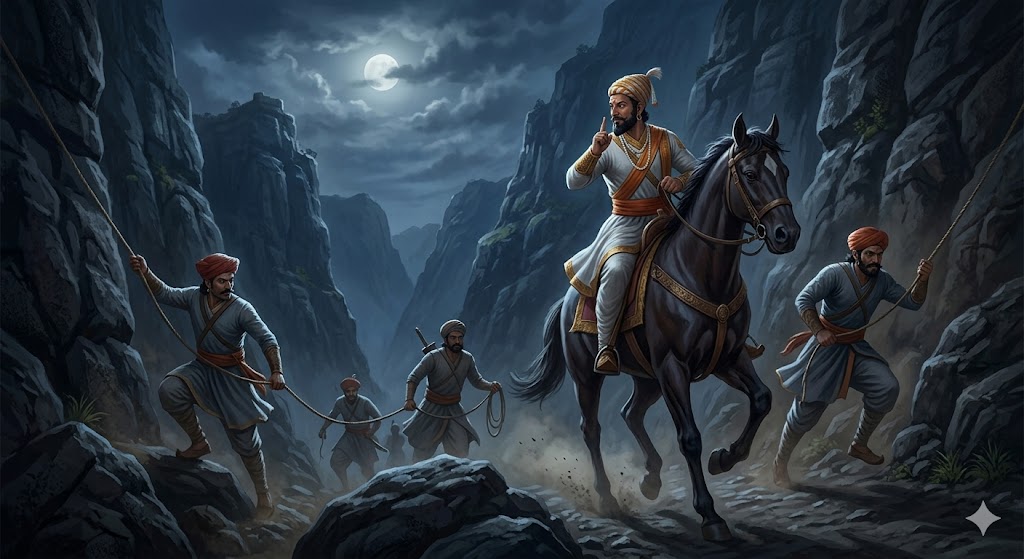
This image illustrates the intense military aspect of Shivaji Maharaj's life, specifically highlighting his mastery of guerrilla warfare ("Ganimi Kava") in the difficult terrain of the Sahyadri mountains.
Major Battles and Military Valor of Shivaji Maharaj
Shivaji Maharaj’s military career is legendary for its strategic brilliance and innovative tactics. He mastered guerrilla warfare, known as Ganimi Kava, using speed, surprise, and knowledge of the terrain to outmaneuver larger armies.
One of his most iconic victories came in the Battle of Pratapgad in 1659. Facing a massive Bijapur force led by Afzal Khan, Shivaji employed clever diplomacy and personal valor. In a historic meeting, he killed Afzal Khan in self-defense and routed the enemy army, significantly expanding his territory.
Other key battles include:
Battle of Pavan Khind (1660): A heroic rearguard action where Baji Prabhu Deshpande and a small band of soldiers sacrificed their lives to allow Shivaji safe passage.
Sack of Surat (1664 and 1670): Bold raids on the wealthy Mughal port city that demonstrated his ability to strike deep into enemy territory and fund his campaigns.
Battle of Purandar (1665): A challenging confrontation with Mughal general Jai Singh I, leading to a temporary treaty where Shivaji ceded some forts but later recovered them.
Battle of Sinhagad (1670): A daring night assault that recaptured the fort and boosted Maratha morale.
Battle of Salher (1672): A major open-field victory against Mughal forces, proving Maratha capabilities beyond guerrilla tactics.
Shivaji also built a formidable navy, one of the first indigenous maritime forces in the region, to counter European and coastal threats. His battles against the Mughals, Bijapur, and others showcased not just bravery but exceptional leadership and adaptability. Shivaji valor remains a symbol of resistance and tactical genius.
Leadership Qualities and Administrative Vision
Shivaji Maharaj was more than a warrior; he was a visionary administrator. He established a progressive system of governance based on justice, merit, and welfare. His Ashta Pradhan council of eight ministers ensured efficient administration, with roles covering finance, military, foreign affairs, and justice.
He promoted religious tolerance, protecting places of worship across communities while defending Hindu traditions. Women were respected in his kingdom, and he strictly prohibited the ill-treatment of prisoners or civilians. His leadership emphasized discipline, loyalty, and service to the people.
Facts about Shivaji highlight his innovative mind: he introduced revenue systems like Chauth and Sardeshmukhi, built over 300 forts, and fostered a sense of unity among diverse Maratha groups. His emphasis on naval power and intelligence networks set new standards in Indian warfare.
Modern discussions often explore Shivaji leadership lessons – setting ambitious goals, servant leadership, strategic patience, and inspiring loyalty through personal examples.
Kindness, Compassion, and Human Values
While known for his battlefield prowess, Shivaji Maharaj was equally remembered for his kindness and ethical conduct. He treated defeated enemies with dignity, often pardoning them and integrating capable individuals into his service.
A notable episode involves stories of his generosity toward women and civilians. Historical accounts describe how he ensured the safety and honor of captured women, a stark contrast to the norms of the era. Tales of his interactions reflect a ruler who valued humanity even in conflict.
References to "Anasuya vs Shivaji" or "Shivaji and Anasuya" appear in some folk narratives and contemporary discussions, often highlighting themes of respect and moral conduct in his interactions. Shivaji consistently upheld principles of justice and chivalry.
He showed compassion toward his subjects by implementing fair taxation and supporting agriculture and trade. His kindness extended to promoting education and culture, laying the foundation for a just society. These qualities humanize the great king, showing that true power lies in restraint and empathy.
Shivaji Maharaj Stories, Tales, and Cultural Depictions
The life of Shivaji Maharaj has inspired countless Shivaji tales, stories, and Shivaji Maharaj books. Classic works like Shriman Yogi by Ranjit Desai and historical accounts by Jadunath Sarkar bring his adventures to life. Popular Shivaji Maharaj songs and reels celebrate his valor, while videos and documentaries explore his strategies.
In popular culture, films and series such as Raja Shivaji (with its trailer and teaser generating excitement) portray his epic journey. Shivaji raje status, wallpapers, and motivational content flood social media, keeping his memory alive among younger generations.
From childhood stories of capturing forts to legends of his escapes and victories, these narratives emphasize themes of patriotism, cleverness, and unwavering resolve.
Legacy of Chhatrapati Shivaji Maharaj
Shivaji Maharaj passed away on April 3, 1680, at Raigad Fort, but his legacy endured. He founded the Maratha Empire, which later expanded significantly under his successors and challenged Mughal authority across India.
His ideals of Swarajya influenced Indian nationalism, with leaders like Bal Gangadhar Tilak invoking his name during the freedom struggle. Shivaji Maharaj idol and statues adorn forts and public spaces, symbolizing pride and resilience.
Today, his legacy includes military innovations, administrative reforms, and a spirit of unity and self-reliance. Shivaji Maharaj history teaches that determination and ethical leadership can overcome overwhelming odds. His emphasis on protecting dharma while respecting diversity remains relevant in modern times.
Shivaji Jayanti celebrations feature processions, cultural programs, and reflections on his contributions, ensuring his message of valor and justice continues across generations.
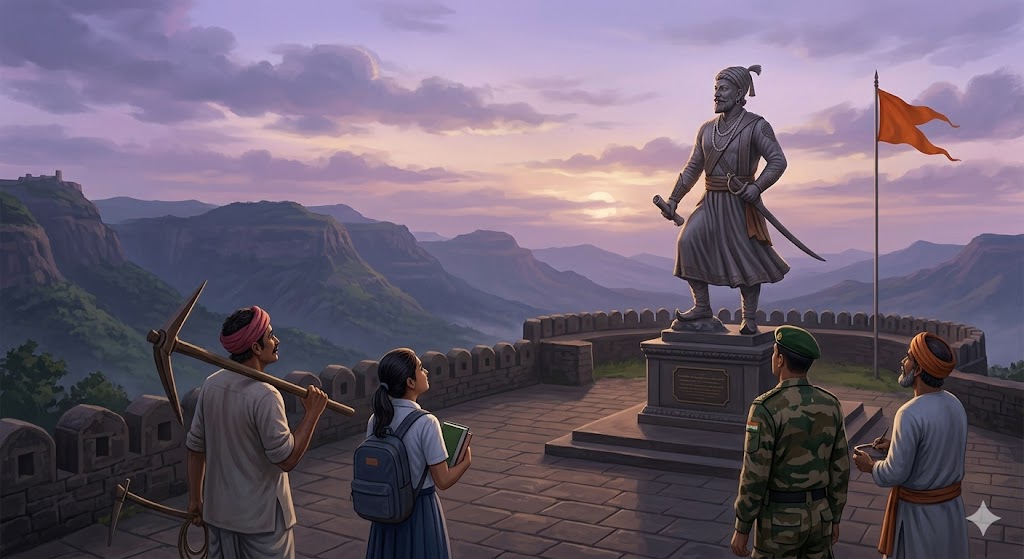
This image shifts focus from war to governance and the enduring impact of Shivaji Maharaj’s ideals. It visualizes the Ashta Pradhan (Council of Eight) and the concept of Swarajya.
Conclusion: Timeless Inspiration from Shivaji Maharaj
Chhatrapati Shivaji Maharaj’s life—from his birth at Shivneri to his battles, leadership, kindness, and lasting legacy—offers profound lessons in courage, strategy, and humanity. As Raja Shivaji or Shivaji Maharaj, he remains a beacon for those who value freedom and righteousness.
In an era of empires and conquest, he built not just a kingdom but a vision of self-rule rooted in justice. Whether through Shivaji Maharaj songs that stir the soul, stories that captivate the young, or historical facts that educate, his spirit lives on.
As we reflect on Shivaji legacy, let us draw inspiration to uphold values of integrity, resilience, and service. Shivaji Maharaj continues to guide us toward a world where courage serves the greater good.