.
I. Introduction:
The Geopolitical Fault Lines of 2026
The date February 28, 2026, will be recorded in history as the moment the "shadow war" between the West and the Islamic Republic of Iran finally stepped into the blinding light of total kinetic confrontation. What began as a lightning strike—dubbed Operation Epic Fury by the United States and Operation Roaring Lion by Israel—has evolved into a month-long regional conflagration.
As we cross the 31st day of the 2026 Iran War, the conflict has ceased to be a localized military operation. It has morphed into a systemic rupture that is testing the resilience of the global economy, threatening the structural integrity of the Gulf countries, and forcing a violent realignment among the world's superpower countries. This article provides a definitive analysis of the current scenario, the unprecedented LPG crisis, and the long-term socio-economic scars being carved into the international landscape.
II. The Current Scenario: 31 Days of "Horizontal Escalation
The initial 12 hours of the war saw an unprecedented display of Western air power. Over 900 sorties were flown, targeting the core of Iran’s strategic depth: nuclear enrichment facilities at Natanz and Fordow, ballistic missile silos in the Zagros Mountains, and the IRGC command-and-control apparatus in Tehran. The most shocking outcome of this "Day Zero" was the confirmed death of Supreme Leader Ayatollah Ali Khamenei and several high-ranking members of the Assembly of Experts.
The Shift to Asymmetric Warfare
However, the Western expectation of a swift regime collapse did not materialize. Under the transitional leadership of Mojtaba Khamenei, Iran implemented a doctrine of "horizontal escalation." Unable to match the US and Israel in traditional air superiority, Iran turned the Persian Gulf into a tactical graveyard.
As of March 30, 2026, the Strait of Hormuz is effectively a closed gate. Iranian naval mines, anti-ship cruise missiles, and "swarm" drone tactics have rendered commercial shipping impossible without massive military escorts. This maritime blockade is the primary engine of the current global turmoil.
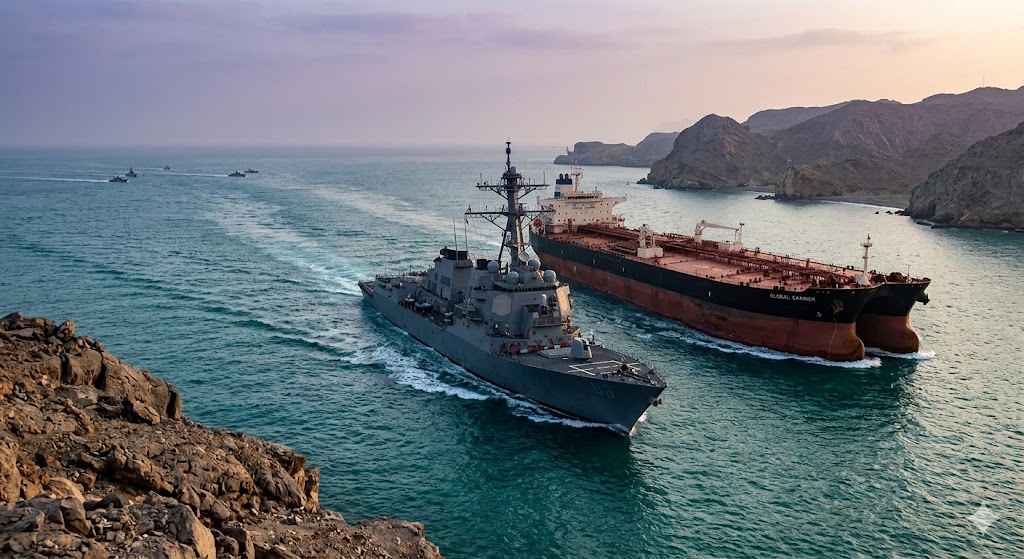 Choke point TENSIONS: An unmarked generic destroyer escorts a commercial tanker through the narrow, hazy Strait of Hormuz at sunset, symbolizing the military standoff paralyzing 20% of global oil transit.
III. The 31-Day War Impact on the Whole World Economy
The 2026 Iran War has delivered a shock to the global economy that eclipses the 1973 oil embargo. Within 31 days, the delicate machinery of international trade has ground to a halt in several key sectors.
1. The Oil Market Paralysis
Oil is the lifeblood of modern civilization, and the Strait of Hormuz is its most vital artery. With 20% of global oil transit currently blocked, Brent Crude prices have abandoned all previous resistance levels. After starting the year at $75, prices hit $120 within the first week of March and have recently touched $150 per barrel.
The "Fear Premium" has been replaced by a "Scarcity Reality." For the global economy, this means that transportation costs for every good—from electronics to grain—have increased by an average of 40% globally in just one month.
2. The Financial Markets and "Stagflation 2.0"
Global stock exchanges from New York to Tokyo have seen a "flight to safety." However, unlike previous crises, gold and Bitcoin have not been the only beneficiaries; energy futures and military-industrial stocks are the only sectors showing growth. The International Monetary Fund (IMF) has already slashed 2026 global growth forecasts by 1.5%, warning of a global recession that could last until 2028.
IV. The LPG Crisis: The Human Face of Energy Scarcity
While crude oil dominates the financial news, the LPG issue has become the primary driver of social unrest. Liquefied Petroleum Gas (LPG) is more than a commodity; it is a fundamental survival tool for over three billion people in the Global South.
The Breakdown of the Propane Supply Chain
The Middle East, specifically the Persian Gulf, provides nearly 40% of the world's traded LPG. Unlike oil, which can be stored in large strategic reserves, LPG supply chains are "lean" and rely on constant maritime movement.
Price Explosion: In the last 31 days, the spot price of LPG has increased by 160%.
Social Unrest: In nations like India, Pakistan, and Bangladesh, the inability to afford cooking gas has led to widespread "kitchen protests."
Impact on the Global South: The Indian Case Study
India, which imports 90% of its LPG from the Gulf, is facing a domestic catastrophe. The government has had to implement a "War-Time Rationing" system. Households are now restricted to one cylinder every 30 days, while the commercial sector—restaurants and small industries—has seen its supply cut by 70%. This LPG issue is not just an economic statistic; it is a threat to the political stability of the world's most populous nation.
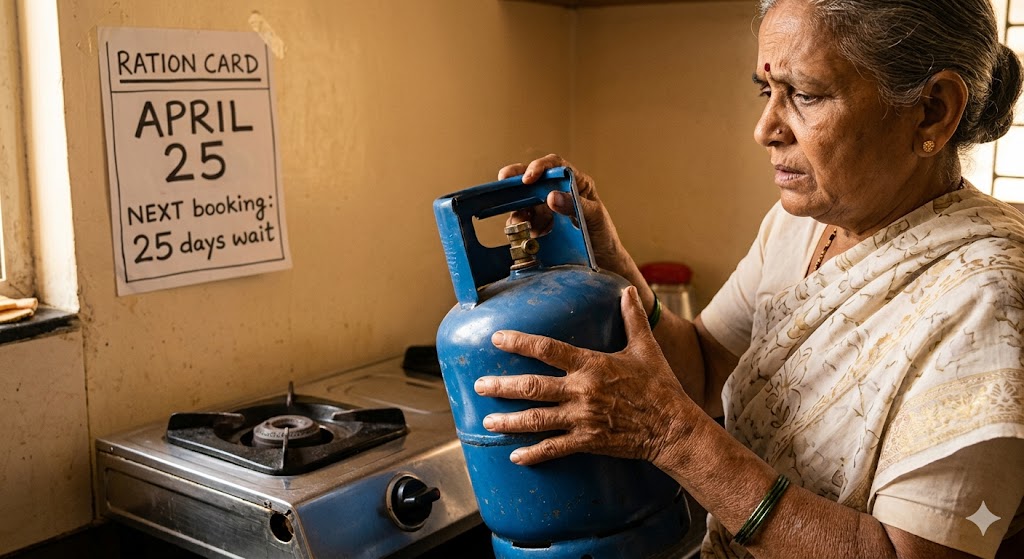 The LPG Crisis at Home
V Impact on Gulf Countries: A Shattered Narrative
For the last two decades, the Gulf countries (Saudi Arabia, UAE, Qatar, Kuwait, Oman, and Bahrain) have marketed themselves as a global oasis of stability, luxury, and futuristic development. The 2026 Iran War has shattered this narrative in 31 days.
1. Infrastructure Vulnerability
Iran’s retaliatory strikes have focused on "economic decapitation."
The UAE: The targeting of the Jebel Ali port and the Ruwais refinery has caused a complete halt in the UAE’s non-oil trade.
Qatar: An Iranian strike on the Ras Laffan LNG complex on March 18 wiped out 17% of the nation's export capacity. Engineers estimate that repairs will take 3 to 5 years.
Saudi Arabia: While the Kingdom has utilized its East-West pipeline to Yanbu on the Red Sea, Iranian-backed Houthi rebels have targeted Red Sea shipping, creating a "double-ended" blockade.
2. The Exodus of Capital and Talent
The Gulf’s "Vision" projects—from Neom to the expansion of Dubai—depend on foreign investment and expatriate talent. The sight of missiles over the Burj Khalifa has triggered a mass exodus. International schools are empty, and corporate headquarters are being relocated to Singapore and London. The Gulf countries are facing a structural collapse of their economic model that may be irreversible.
VI. How Superpower Countries Reacted: The New Cold War
The reaction of the superpower countries has revealed a world divided into two distinct blocs, with the 2026 Iran War serving as the catalyst for a formal "Global Schism."
1. The United States: "Markets and Munitions"
President Donald Trump has doubled down on the military campaign, framing it as a necessary "cleansing" of the Middle East. However, the US is trapped between its military goals and the domestic pressure of gas prices. Washington has released 400 million barrels from its Strategic Petroleum Reserve (SPR), but this is a temporary bandage on a gaping wound.
2. China: The Strategic Pivot
China, the world’s largest energy importer, has been the most vocal critic of the war. Beijing has officially called for an "International Maritime Safety Zone" in the Gulf, lead by a coalition of non-Western powers. Behind the scenes, China is accelerating its energy interdependence with Russia, effectively building an "energy fortress" that excludes the US dollar.
3. Russia: The Beneficiary of Chaos
Ironically, Russia has seen its fiscal deficit vanish overnight. With oil at $150, Moscow’s war chest for its European operations has been replenished. While officially calling for peace, Russia has reportedly provided Iran with satellite intelligence to target US naval assets, ensuring that the US remains bogged down in a "forever war" in the desert.
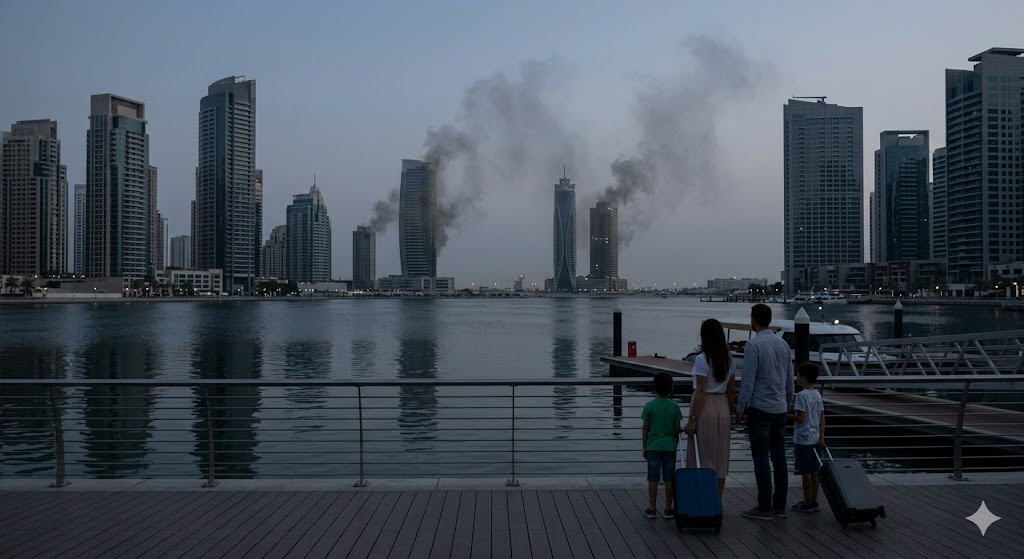 Shockwaves in the Capital Oasis
VII. The Technological Dimension: Cyber and Drones
The "2026 Iran War" is the first conflict where cyber-attacks have caused more economic damage than physical bombs. In the second week of the war, a coordinated cyber-strike—attributed to Iran’s "Cyber Army"—temporarily disabled the London Stock Exchange and several major European power grids. This "total war" approach means that no country is truly "safe" from the conflict, regardless of its distance from the Persian Gulf.
VIII. Conclusion: The Long Shadow of a 31-Day War
As the 31-day mark passes, the "2026 Iran War" stands as a grim testament to the fragility of our interconnected world. 'The global economy' is no longer just in a slump; it is undergoing a painful transformation. The Gulf countries must now grapple with the reality that their geographic location is both their greatest asset and their greatest liability.
The LPG issue will continue to fuel populist movements across the globe, and the superpower countries will continue to use the Middle East as a chessboard for their own grand strategies. Whether a ceasefire is reached tomorrow or the war drags into a second month, the world of February 27, 2026, is gone forever.
