Vladimir Putin: Rise, party & Russia's Transformation
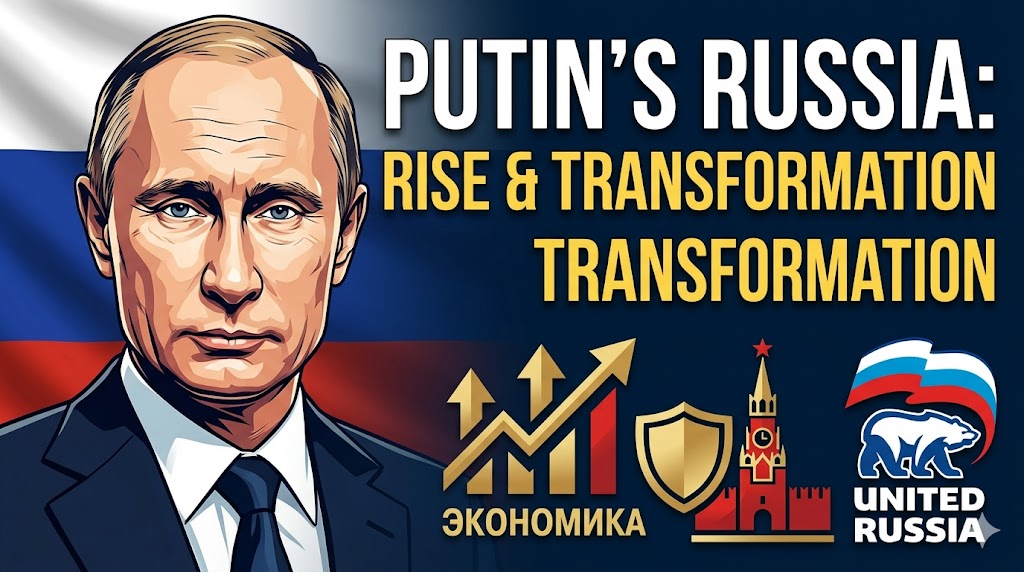
Vladimir Vladimirovich Putin stands as one of the most consequential figures in contemporary global politics. Born in 1952 in Leningrad, he has dominated Russian public life for over a quarter-century, serving as president from 2000 to 2008 and again since 2012, with an intervening period as prime minister. His leadership has profoundly influenced Russia's trajectory, moving the country from the economic turmoil and political instability of the 1990s toward greater centralization, economic recovery, and assertive international positioning.
Putin's career intertwines personal discipline forged in the KGB with strategic political maneuvering. He has consistently emphasized state sovereignty, national unity, and pragmatic governance. Central to his political machinery is the United Russia party, which has served as the dominant force in the Duma, enabling key reforms and policy continuity.
This article examines Putin's early life, rapid ascent, association with United Russia, and the multifaceted ways he has shaped modern Russia. It offers a balanced perspective on his contributions to stability and development alongside the structural changes that have defined his era.
Vladimir Putin was born on October 7, 1952, in Leningrad (now St. Petersburg), the youngest of three children in a working-class family. His father worked in a factory, and the family endured the hardships of postwar Soviet life, including the lingering scars of the Leningrad siege during World War II.
From a young age, Putin displayed determination and a keen interest in order. He practiced martial arts, particularly sambo and judo, which instilled values of resilience and strategy. In 1975, he graduated with a law degree from Leningrad State University, where his tutor was Anatoly Sobchak, a future reformist mayor who would later play a pivotal role in Putin's political entry.
Immediately after graduation, Putin joined the KGB, the Soviet Union's premier security and intelligence agency. He served for 16 years, including a posting in Dresden, East Germany, from 1985 to 1990. Rising to the rank of lieutenant colonel, Putin gained experience in foreign intelligence, language skills (including German), and operational discipline. The collapse of the Soviet Union in 1991 prompted his resignation from active KGB service, marking a transition from intelligence work to civilian administration.
This background equipped Putin with a pragmatic worldview, emphasis on state security, and aversion to chaos—qualities that would define his later leadership style.
Entry into Politics: St. Petersburg and the Path to Moscow
Putin's political career began in his hometown. In 1990, he joined the Leningrad City Council administration as an advisor on international affairs to Mayor Anatoly Sobchak. His efficiency and loyalty quickly earned him promotions. By 1994, he served as first deputy mayor, handling external relations and economic matters during Russia's turbulent post-Soviet transition.
In 1996, after the Sobchak's electoral defeat, Putin moved to Moscow and joined the presidential administration under Boris Yeltsin. He held various roles, including deputy chief of the presidential staff and head of the Federal Security Service (FSB), the KGB's domestic successor, in 1998.
Yeltsin's administration faced mounting challenges: economic crisis, oligarch influence, and declining public trust. In August 1999, Yeltsin appointed Putin as prime minister. The move surprised many, as Putin was relatively unknown nationally. However, his handling of the Second Chechen War and projection of calm resolve boosted his popularity. When Yeltsin resigned on December 31, 1999, Putin became acting president, setting the stage for his formal election in March 2000 with over 50% of the vote.
This swift rise reflected Putin's ability to project stability amid the uncertainties of the Yeltsin era.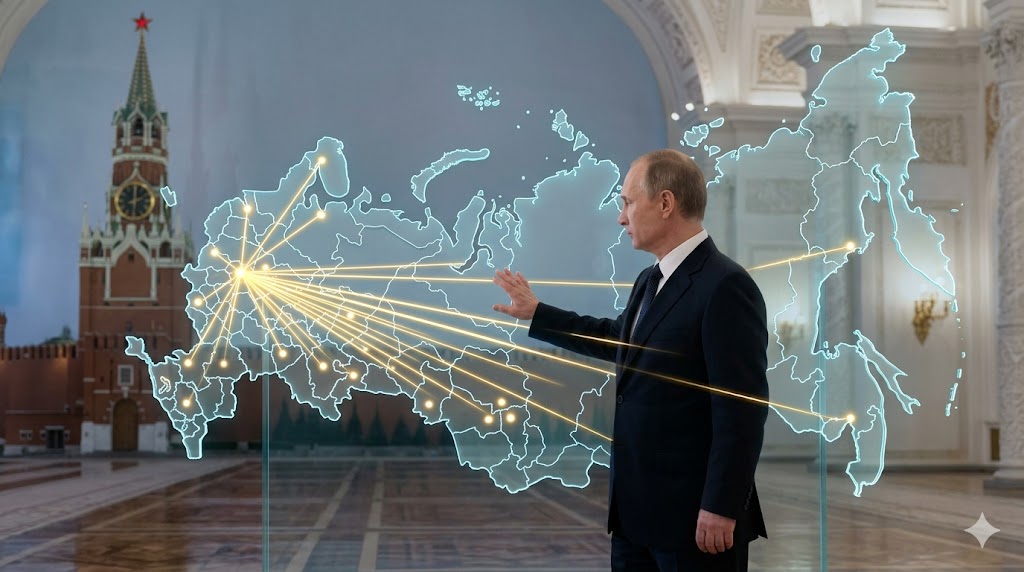
Establishing the Vertical of Power. A conceptual scene depicting Vladimir Putin in the early 2000s within the Kremlin, symbolically unifying the vast Russian Federation map through golden lines of centralization radiating from Moscow, signifying the end of 1990s fragmentation.
Political Career Milestones: Presidency, Prime Ministership, and Continuity
Putin's first two presidential terms (2000–2008) focused on restoring state authority. He centralized power by reforming federal relations, dividing the country into seven districts overseen by presidential representatives, and reducing regional autonomy that had created legal inconsistencies.
He pursued economic reforms, including a simplified tax code with a flat 13% income tax, which improved collection rates and contributed to budget surpluses, especially as global oil prices rose. These measures, combined with prudent fiscal management, helped Russia recover from the 1998 financial crisis and achieve average annual GDP growth of around 7% in the early 2000s.
In 2008, facing constitutional term limits, Putin stepped aside as president but remained influential as prime minister under Dmitry Medvedev. This "tandem" arrangement maintained policy continuity. Putin returned to the presidency in 2012 after constitutional adjustments extended terms to six years. He secured re-election in 2018 and again in 2024 with strong majorities, with reforms allowing potential service until 2036.
Throughout, Putin has prioritised sovereignty, economic modernization, and national security. His leadership style blends administrative efficiency with appeals to Russian patriotism and historical pride.
United Russia Party: The Political Vehicle of Putin Era
United Russia emerged as the cornerstone of Putin's political architecture. Formed in 2001 through the merger of the Unity and Fatherland parties, it evolved into Russia's dominant "party of power."
Initially, Putin operated somewhat independently but aligned closely with the party. He headed its electoral list in 2007, leading to a landslide victory that secured a constitutional majority in the Duma. This dominance enabled passage of landmark legislation on taxes, judiciary, labor, and property rights.
United Russia has consistently supported Putin's initiatives, from economic stabilization to social programs and foreign policy assertions. While Putin has not always held formal leadership positions within the party (serving as an independent at times), he functions as its de facto guiding force. The party maintains extensive regional networks, ensuring alignment between federal policies and local implementation.
Critics describe it as a vehicle for consolidating executive power rather than a traditional ideological party with internal debate. Supporters view it as essential for political stability, preventing fragmentation seen in the 1990s. United Russia's supermajorities have facilitated long-term planning in infrastructure, defense, and national projects.
How Putin Developed Modern Russia: Economic, Social, and Strategic Transformations
Under Putin, Russia has undergone significant changes aimed at rebuilding state capacity and global influence.
Economic Development: Early reforms tamed hyperinflation and oligarchic excesses while leveraging energy resources. Oil and gas revenues funded debt repayment, infrastructure, and reserves. Later initiatives focused on diversification, import substitution, and technological self-reliance, particularly after sanctions. By the mid-2020s, Russia emphasized domestic production, AI, and infrastructure projects despite external pressures. GDP growth, though varying with global energy markets and geopolitical events, reflected resilience through fiscal prudence and state-directed investment.
Political and Administrative Reforms: Putin strengthened vertical power structures, curbed regional separatism, and reformed the judiciary and bureaucracy for greater efficiency. Efforts reduced the number of parties and streamlined governance, creating conditions for consistent policymaking.
Social and National Policies: Investments in public sector wages, pensions, and demography addressed post-Soviet declines. Putin has promoted patriotic education, highlighting Soviet achievements alongside pre-revolutionary heritage, fostering a sense of continuity and pride.
Foreign and Security Posture: Russia reasserted itself on the world stage, modernizing its military and pursuing multipolar diplomacy. Energy exports remained a strategic tool, while partnerships with non-Western nations expanded.
These developments transformed Russia from the chaotic 1990s into a more consolidated state, though challenges such as demographic pressures, inequality, and external sanctions persist. Putin's approach prioritizes sovereignty and long-term resilience over rapid liberalization.
Challenges, Criticisms, and Enduring Legacy
Putin's long tenure has invited both acclaim and critique. Supporters credit him with restoring order, elevating living standards in the 2000s, and safeguarding national interests amid global shifts. Many Russians appreciate the contrast with the instability of the immediate post-Soviet period.
Observers note concerns over centralization of power, constraints on political pluralism, and media environment. Economic diversification remains incomplete, and external relations have grown complex. Nevertheless, Putin's ability to maintain high approval ratings and navigate crises underscores his political acumen.
As of 2026, with over 26 years of influence, his era represents the longest continuous leadership in post-Tsarist Russia after Stalin. Discussions about succession and future direction continue, yet the institutions and policies shaped under his watch provide a framework for continuity.
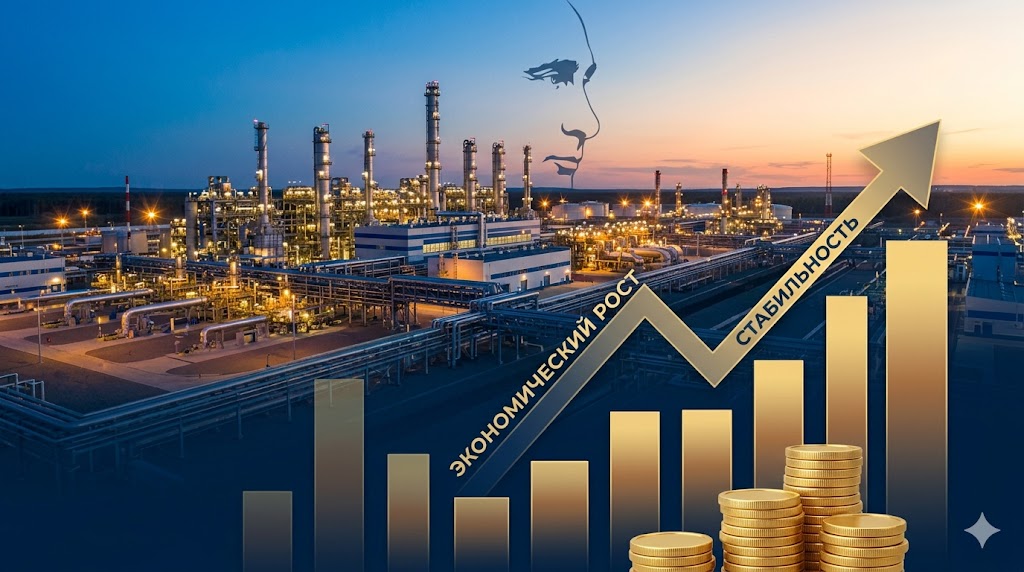
Economic Rebirth and Stability. A conceptual photographic illustration merging a vast, modern energy export terminal at twilight with rising economic graphics and Cyrillic text ('ЭКОНОМИЧЕСКИЙ РОСТ'), symbolizing the leveraging of natural resources to achieve national stability and growth during the Putin presidency.
Conclusion
Vladimir Putin's journey from a Leningrad youth and KGB officer to Russia's paramount leader illustrates a remarkable blend of personal discipline, strategic timing, and state-centric vision. Through alliances like the United Russia party and pragmatic reforms, he has steered Russia toward greater stability, economic recovery in key periods, and renewed international assertiveness.
While debates persist about the balance between central authority and democratic development, Putin's impact on modern Russia is undeniable. He has sought to rebuild a strong, sovereign state capable of navigating 21st-century challenges. As Russia continues evolving, the foundations laid during his leadership will likely influence its path for years to come.