The History of Ice Hockey & The National hockey league

The history of ice hockey is a captivating tale of innovation, resilience, and cultural fusion that transformed a simple winter pastime into one of the world's most dynamic professional sports. From frozen ponds in 19th-century Canada to the high-speed arenas of the modern National Hockey League (NHL), this sport has evolved dramatically while retaining its core spirit of speed, skill, and physicality. Whether you're searching for the history of ice hockey, NHL history, or insights into hockey milestones and statistics, this comprehensive guide traces every pivotal chapter. It covers origins, the formation of the NHL, rule changes, iconic teams like Boston hockey franchises, and even lesser-known aspects such as black history in the game. By the end, you'll appreciate why ice hockey history continues to inspire generations of players and fans worldwide.
The origins of ice hockey stretch back centuries, drawing from ancient stick-and-ball games played across Europe and North America. Historians trace early influences to shinty in Scotland, hurling in Ireland, and bandy in England—games that involved curved sticks and a ball or object propelled toward goals. These were brought to Canada by British immigrants and soldiers in the early 1800s.
A key chapter in ice hockey history involves Indigenous contributions. The Mi'kmaq people of Nova Scotia played a version using hurleys (sticks) and a square wooden block on frozen surfaces as early as the early 19th century. This game, sometimes called "ice hurley," blended with European influences to shape what we recognize today. By the mid-1800s, informal games known as "shinny" or "shinty on ice" were common on Canadian ponds and rivers, often with dozens of players per side and minimal rules.
The true turning point came in the 1860s when a puck replaced the ball for better control on ice, first noted in Kingston Harbour, Ontario. This shift marked the transition from chaotic field-like play to a more structured winter sport, laying the foundation for organized ice hockey history.
Early Development and the First Organized Games
Ice hockey history accelerated in Montreal, widely regarded as the birthplace of the modern game. On March 3, 1875, James Creighton organized the first recorded indoor game at Victoria Skating Rink between McGill University students. This match featured nine players per side, borrowed field hockey rules, and—crucially—a flat wooden puck to keep play contained. Reports described a fast-paced, sometimes rough contest that thrilled spectators but also sent some fleeing from flying sticks and pucks.
By 1877, the McGill University Hockey Club had codified early rules, limiting teams to nine players and introducing basic structure. Amateur leagues formed in the 1880s, with the Amateur Hockey Association of Canada emerging in 1885. These developments professionalized the sport, setting the stage for the history of the NHL. The term "hockey" itself likely derives from the French "hoquet," meaning shepherd's crook, while "rink" came from curling terminology.
The Stanley Cup and the Rise of Professional Hockey
No discussion of ice hockey history is complete without the Stanley Cup, the oldest professional sports trophy in North America. Commissioned in 1892 by Lord Stanley, Governor General of Canada, as the "Dominion Hockey Challenge Cup," it was first awarded in 1893 to the Montreal Amateur Athletic Association. Initially for amateur champions, it soon became the ultimate prize in professional play.
Professional ice hockey emerged around 1900, with leagues like the International Professional Hockey League forming in 1904. The Eastern Canada Amateur Hockey Association turned professional in 1908, and stars like Cyclone Taylor and Newsy Lalonde drew crowds. This era bridged amateur roots to the structured professional framework that would define NHL history.
The Formation of the National Hockey League
The history of the NHL began on November 26, 1917, in Montreal. Following disputes in the National Hockey Association (NHA), owners of the Montreal Canadiens, Montreal Wanderers, Ottawa Senators, and a temporary Toronto team suspended the NHA and created the NHL as its successor. The first games occurred on December 19, 1917.
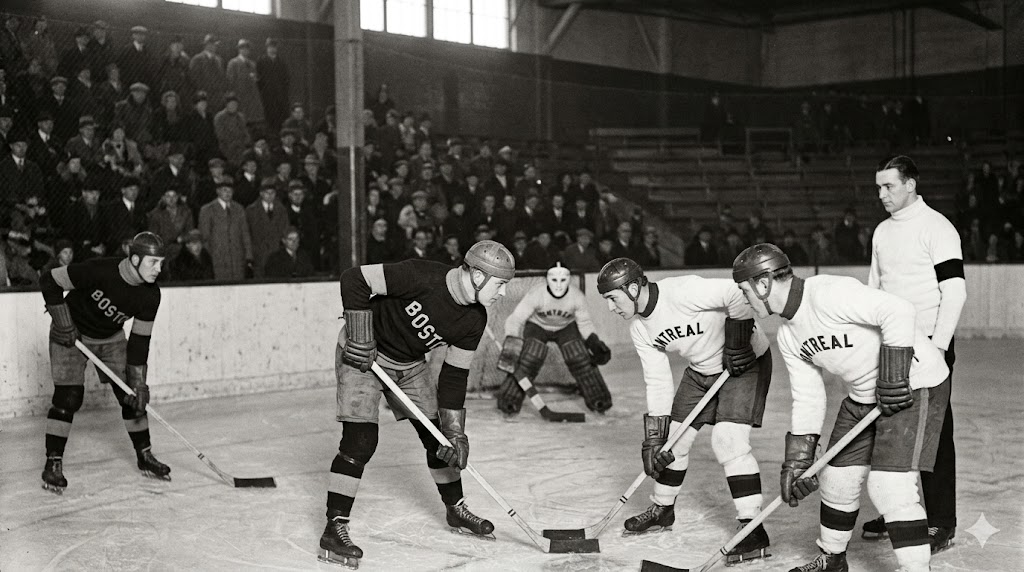
Early NHL history was turbulent. The Montreal Wanderers folded after a 1918 fire, and the league operated with just three teams at times. Expansion into the United States started in 1924 with the Boston Bruins—the first American franchise and a cornerstone of Boston hockey. By 1926, the NHL had ten teams across Canada and the U.S., solidifying its status as North America's premier league.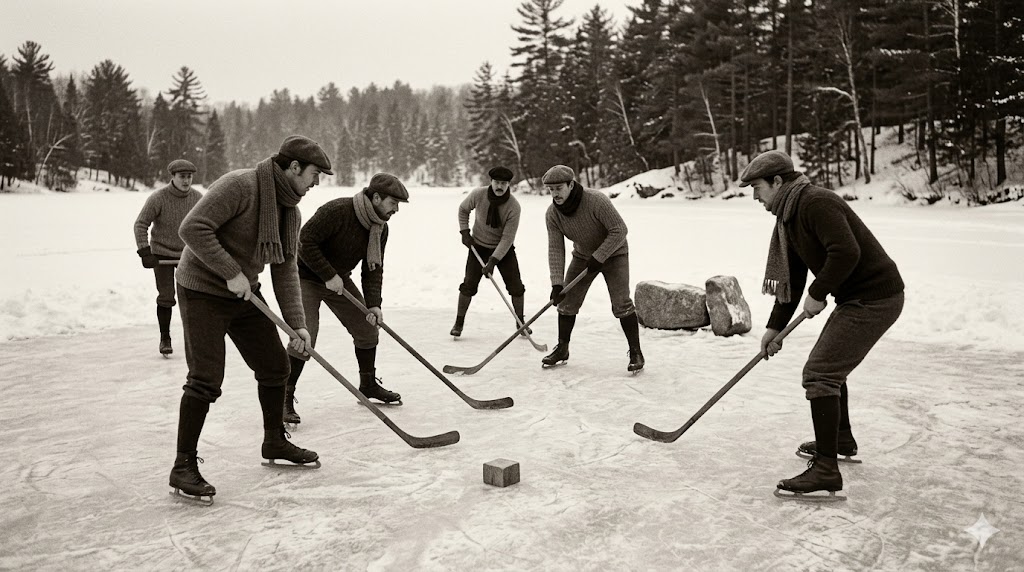
The Origins (19th Century Canada)
The Original Six Era: Stability and Rivalry (1942–1967)
World War II brought stability to NHL history with the "Original Six" era: Boston Bruins, Chicago Black Hawks, Detroit Red Wings, Montreal Canadiens, New York Rangers, and Toronto Maple Leafs. This quarter-century period featured intense rivalries, legendary players like Maurice "Rocket" Richard, Gordie Howe, and Bobby Orr's predecessors, and six-team parity that produced some of hockey's most memorable moments.
Teams like the Canadiens dominated with dynasties, while the Bruins embodied gritty Boston hockey. The era ended as the league sought growth amid rising popularity.
NHL Expansion and the Modern Era
NHL history entered a new phase with the 1967 expansion, doubling to 12 teams and adding franchises in Los Angeles, Pittsburgh, and elsewhere. Further waves in the 1970s, 1990s, and 2010s brought the league to 32 teams today, including Sun Belt markets that expanded hockey's reach. The 1979 merger with the World Hockey Association added talent like Wayne Gretzky, accelerating the league's global profile.
Today, the NHL thrives with international stars, advanced analytics in hockey statistics, and a focus on player safety—continuing the evolution seen throughout ice hockey history.
Evolution of the Rules of Hockey
The rules of hockey have transformed dramatically, reflecting safety, speed, and fairness. Early games allowed forward passing only after 1929, and goalies could not drop to the ice until 1917-18. The shift from seven to six players per side occurred in 1911-12, while blue lines and zones standardized play by 1918-19.
Modern rules emphasize penalties for head hits and fighting's decline, with innovations like video review and hybrid icing. These changes in the history of ice hockey ensure the sport remains thrilling yet safer for professionals and amateurs alike.
Hockey Milestones and Iconic Statistics
Hockey milestones define NHL history. Wayne Gretzky's 2,857 career points remain untouchable, while Gordie Howe's 801 goals and longevity set standards. Alex Ovechkin chases records, and milestones like 500 goals or 1,000 points mark elite careers.
Team achievements include the Montreal Canadiens' 24 Stanley Cups. Hockey statistics reveal trends: average goals per game have fluctuated, with the high-scoring 1980s contrasting today's defense-focused play. These numbers tell the story of adaptation across decades.
The Hockey Hall of Fame: Honoring Legends
Established in 1943 in Kingston, Ontario, and relocated to Toronto in 1958 (with its current home opening in 1993), the Hockey Hall of Fame preserves ice hockey history. It inducts players, builders, and officials, housing the Stanley Cup and artifacts that celebrate milestones from the first indoor game to modern triumphs.
Inductees like Gretzky, Orr, and Richard embody excellence, making the Hall a pilgrimage site for fans exploring hockey stories.
Unforgettable Hockey Stories and Legends
Ice hockey history brims with dramatic narratives. The 1972 Summit Series pitted Canada against the Soviet Union in a Cold War clash that captivated nations. In the NHL, the "Broad Street Bullies" Philadelphia Flyers of the 1970s blended skill with toughness, while the 2011 Boston Bruins' Stanley Cup run showcased resilience in Boston hockey lore.
Crazy hockey stories include underdog triumphs and personal feats of perseverance. These tales—passed through generations—add color to the history of the NHL, reminding us of the human drama behind every face-off.
Black History in Hockey: Breaking Barriers
Black history forms an inspiring chapter in ice hockey history. On January 18, 1958, Willie O'Ree debuted with the Boston Bruins, becoming the first Black player in the NHL. Despite facing racism and playing with impaired vision, O'Ree scored his first goal in 1961 and paved the way for future generations. Inducted into the Hockey Hall of Fame, his legacy underscores diversity's role in enriching the sport.
Boston Hockey: A Storied Franchise in NHL History
Boston hockey exemplifies NHL passion. The Bruins, entering in 1924 as the first U.S. team, have secured six Stanley Cups, including the 1970 and 1972 triumphs led by Bobby Orr and Phil Esposito. The "Big Bad Bruins" era of the 1970s and the 2011 championship highlight physicality and skill. As one of the Original Six, Boston's franchise remains central to the history of the NHL.
Foundation of the NHL & Expansion
Hockey or Ice Hockey? Clarifying the Distinctions
Many wonder about "hockey or ice hockey?" Field hockey, played on grass or turf with a ball, predates the ice version and originated in England in the mid-19th century with roots in ancient games. Ice hockey, however, is the North American winter adaptation emphasizing skating, checking, and a puck. Globally, "hockey" often means field hockey, but in Canada and the U.S., it refers to ice hockey—highlighting regional nuances in the broader history of hockey.
Conclusion: The Enduring Legacy of Ice Hockey History
The history of ice hockey is more than dates and trophies—it's a narrative of community, innovation, and global appeal. From Montreal's 1875 rink to today's 32-team NHL, the sport has grown while honoring its roots. Whether through hockey milestones, the rules of hockey, or inspiring stories, ice hockey history continues to unite fans. As the NHL evolves, one truth remains: this game captures the heart of winter and the human spirit.