Reliance Industries Legacy: History , Growth and Legacy
A Vision That Built an Empire
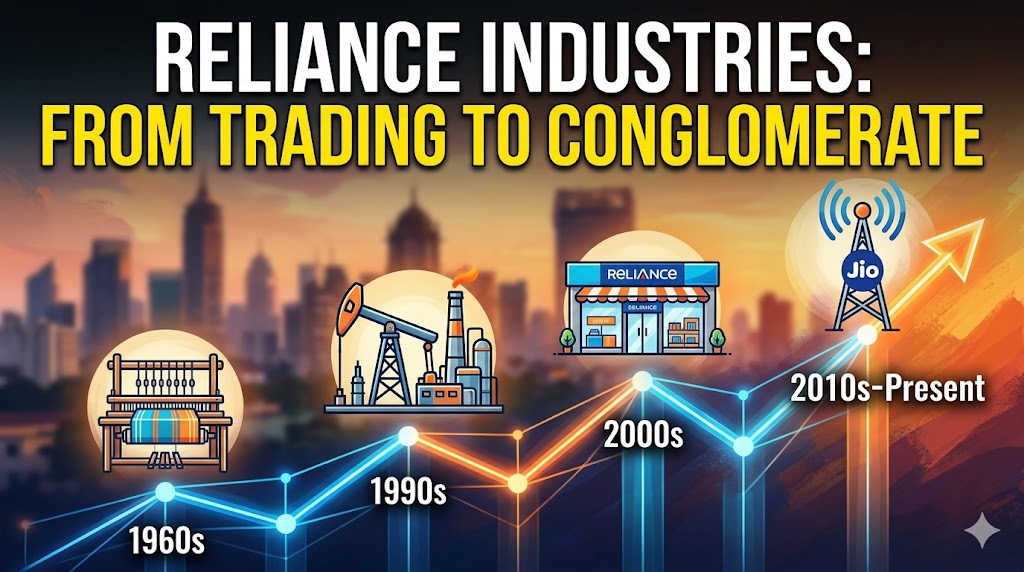
Few Indian companies embody the spirit of ambition, resilience, and national transformation quite like Reliance Industries. From its modest origins as a small trading firm in 1958 to becoming one of the country's most valuable conglomerates today, the Reliance company story is one of relentless innovation and customer-first thinking. Under the founding vision of Dhirubhai Ambani and the continued leadership of Mukesh Ambani, Reliance Industries has grown into a powerhouse spanning energy, petrochemicals, telecommunications, retail, and beyond.
Today, Reliance Industries touches the lives of hundreds of millions of Indians every day. Whether through affordable high-speed internet via Reliance Jio, everyday essentials at Reliance Fresh and Reliance Smart stores, or cutting-edge electronics at Reliance Digital, the company delivers immense value and services to customers across urban and rural India. Its market capitalization hovers around ₹18 trillion, making it a cornerstone of the Indian economy and a global Fortune 500 player.
This article delves deep into the Reliance company history—its humble beginnings, strategic diversification, landmark achievements, and enduring legacy. We explore how Dhirubhai Ambani's dream of wealth creation for all Indians turned into reality, how Reliance Jio revolutionized connectivity, and how the Reliance company continues to drive growth while creating jobs, boosting GDP, and serving customers with unmatched dedication. By examining the efforts, challenges, and profits that shaped Reliance Industries, we uncover why it stands as a true icon of Indian enterprise.
The Founding Years: Dhirubhai Ambani's Bold Start (1958–1970s)
The Reliance company story begins in 1958 when Dhirubhai Ambani returned to India after working in Yemen. With just a small capital—legend has it around ₹15,000—he and his cousin Champaklal Damani set up Reliance Commercial Corporation in a tiny office in Mumbai's Masjid Bunder area. Initially focused on importing polyester yarn and exporting spices, the business thrived on Dhirubhai's sharp instincts for opportunity and quality.
By 1965, the partnership ended, and Dhirubhai struck out on his own. In 1966, he established the first textile mill in Naroda, Gujarat, under Reliance Textile Industries. The brand "Vimal" quickly became synonymous with premium fabrics, earning a reputation for durability and style that resonated with middle-class families. Dhirubhai's philosophy—"Think Big. Think Differently. Think Fast. Think Ahead. Aim for the Best."—guided every decision. He believed in vertical integration, controlling everything from raw materials to finished products to reduce costs and improve quality.
This era laid the foundation for the Reliance company as we know it. Dhirubhai's emphasis on scale and efficiency turned a small trading outfit into a manufacturing force. By the mid-1970s, Reliance Industries had expanded its textile operations significantly, employing thousands and exporting fabrics worldwide. The Reliance company history during these years highlights not just business acumen but a deep commitment to India's self-reliance, especially in the post-independence era when imports dominated markets.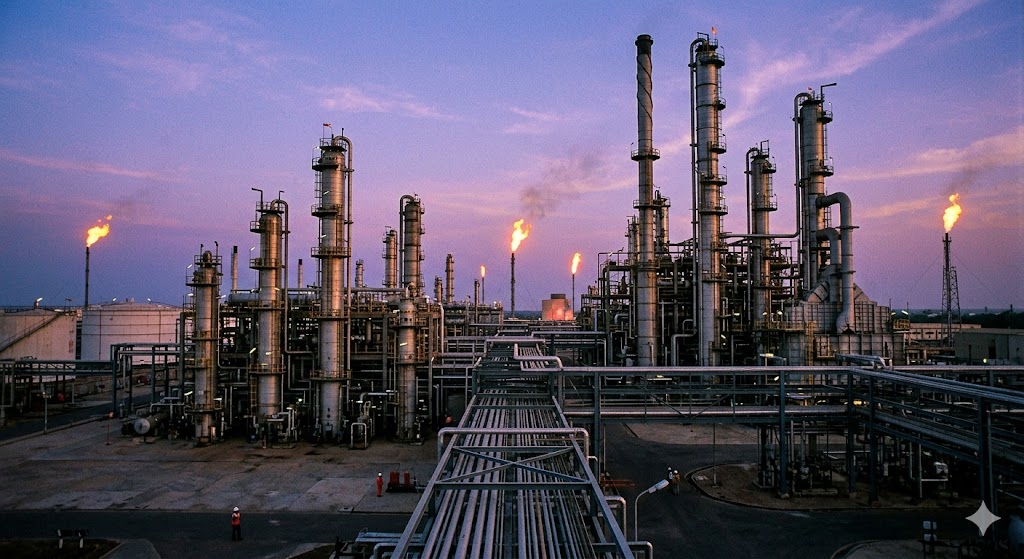
The sprawling Jamnagar refinery complex at dusk, commissioned in 2000, which established Reliance Industries as a global energy leader.
The IPO Revolution and Early Expansion (1977–1980s)
In 1977, Reliance Industries made history with its initial public offering (IPO) as Reliance Textile Industries. The issue was oversubscribed seven times, drawing in small investors from across India and ushering in what became known as the "equity cult." Dhirubhai Ambani democratized share ownership, proving that ordinary citizens could own a stake in a growing company. This move created immense shareholder value and set the stage for Reliance stock's long-term appeal, including later bonus issues and splits that rewarded loyal investors.
The 1980s marked aggressive backward integration. Reliance Industries set up its first petrochemicals and polyester filament yarn plant in Patalganga in record time. By 1991, the Hazira complex further strengthened its position as one of the world's largest integrated polyester producers. These investments reduced dependency on imports and created jobs in manufacturing hubs like Gujarat. Reliance oil and gas ambitions began taking shape too, with early forays into related sectors.
During this period, the Reliance company focused on operational excellence. Customers benefited from affordable, high-quality textiles and yarns that powered India's garment industry. Profits grew steadily, funding further expansion while dividends and share growth delivered strong returns. Reliance Industries' efforts in this decade transformed it from a textile player into a diversified industrial giant, contributing significantly to India's industrial output.
Diversification into Energy and Refining: The Jamnagar Milestone (1990s–2000s)
The turn of the millennium brought Reliance Industries' most ambitious project yet: the world's largest grassroots refinery at Jamnagar, commissioned in 2000 after just 36 months of construction. This integrated complex, spanning petrochemicals and refining, positioned the Reliance company as a global energy leader. It processed crude oil into fuels and materials, reducing India's import bill and creating thousands of direct and indirect jobs.
In 2002, Reliance Industries unlocked vast natural gas reserves in the Krishna Godavari basin's KG D6 block—the largest deep-sea discovery by any Indian private firm at the time. Production began in 2009, making it one of the fastest greenfield developments globally. These moves into Reliance oil and gas and Reliance refinery operations strengthened energy security and fueled downstream industries.
Under Mukesh Ambani's leadership following Dhirubhai's passing in 2002, Reliance Industries entered the Fortune Global 500 in 2004 as the first Indian private company. The Reliance company history here reflects bold capital allocation and risk-taking. Customers indirectly benefited through lower fuel costs and reliable supply chains for everyday products. Reliance stock soared as earnings grew, rewarding millions of shareholders who had invested during the IPO era.
The Telecom Revolution: How Reliance Jio Changed India Forever (2010s–Present)
No chapter in Reliance Industries' story captures its customer-centric innovation better than Reliance Jio. Launched commercially in 2016 after years of preparation, Reliance Jio disrupted the telecom sector with an all-new 4G network built from scratch. Mukesh Ambani's vision was simple yet revolutionary: make voice calls free and data affordable for every Indian.
The impact was immediate and profound. Reliance Jio offered free data and voice for initial months, then ultra-low tariffs that forced competitors to slash prices. Within months, India jumped from 155th to number one in global mobile data consumption. Today, Reliance Jio serves over 515 million subscribers, with monthly data usage exceeding 40 GB per user. ARPU has grown steadily while churn remains low, proving the model's sustainability.
Reliance Jio extended services beyond connectivity. It powered digital inclusion in rural areas, enabling education, telemedicine, and e-commerce. Fixed broadband, 5G rollout in 2022, and partnerships with global tech giants like Meta and Google further amplified its reach. For customers, Reliance Jio means seamless streaming, online learning, and business opportunities—truly immense services that bridged the digital divide.
This segment now contributes significantly to Reliance Industries' revenue and EBITDA growth. Reliance Jio listing impact discussions often highlight how it created a new digital economy, generating jobs in network rollout and content creation while boosting GDP through increased productivity.
Transforming Retail and Daily Life: Reliance Fresh, Smart, and Digital
Reliance Industries entered organized retail in 2006 with Reliance Fresh, quickly scaling to become India's largest retailer by revenue. Today, the network exceeds 19,000 stores, including Reliance Smart for groceries, Reliance Digital for electronics, and Reliance Trends for fashion. Reliance Fresh delivers fresh produce, dairy, and staples directly from farm to table, ensuring quality and affordability.
Customers appreciate the convenience—one-stop shopping with competitive prices, loyalty programs, and online integration via JioMart. Reliance Digital offers the latest gadgets, appliances, and after-sales service through ResQ centers. These formats employ hundreds of thousands and support millions in the supply chain, from farmers to small manufacturers.
Reliance retail's multi-format approach—hypermarkets, convenience stores, and e-commerce—caters to diverse needs. It has democratized access to premium products in tier-2 and tier-3 cities, enhancing lifestyles while creating economic opportunities. Profits from this vertical have been reinvested into expansion, underscoring the Reliance company's commitment to sustainable growth and customer satisfaction.
Sustainability, CSR, and Vantara: Giving back to society
Reliance Industries has always balanced profit with purpose. The Reliance Foundation, established in 2010 under Nita Ambani, drives initiatives in education, healthcare, and rural development. During COVID-19, the company set up hospitals, produced medical oxygen, and distributed millions of meals.
A standout effort is Reliance Vantara, Anant Ambani's visionary wildlife rescue and rehabilitation center in Jamnagar. Spanning thousands of acres, it has rescued over a million animals, focusing on care, revival, and rewilding. Reliance Vantara exemplifies the Reliance company's environmental stewardship, aligning with net-zero carbon goals by 2035 and a $10 billion new energy business launched in 2021. The Dhirubhai Ambani Green Energy Giga Complex is among the world's largest renewable facilities.
These initiatives enhance customer trust and contribute to national development, from skill training to cultural centers like the Nita Mukesh Ambani Cultural Centre.
Financial Performance, Stock Journey, and Shareholder Value
Reliance Industries has delivered consistent growth. Recent quarters show robust EBITDA and PAT increases, driven by oil-to-chemicals (over 50% revenue), digital services, and retail. Reliance stock has rewarded investors through dividends, bonuses, and appreciation. AGM events, earnings releases, and analyst targets reflect strong governance.
Challenges like market volatility or segment headwinds are met with diversification. Reliance earnings impact broader indices, while Reliance share performance underscores its blue-chip status. Profit sharing through equity and dividends has created wealth for millions, fulfilling Dhirubhai's dream.
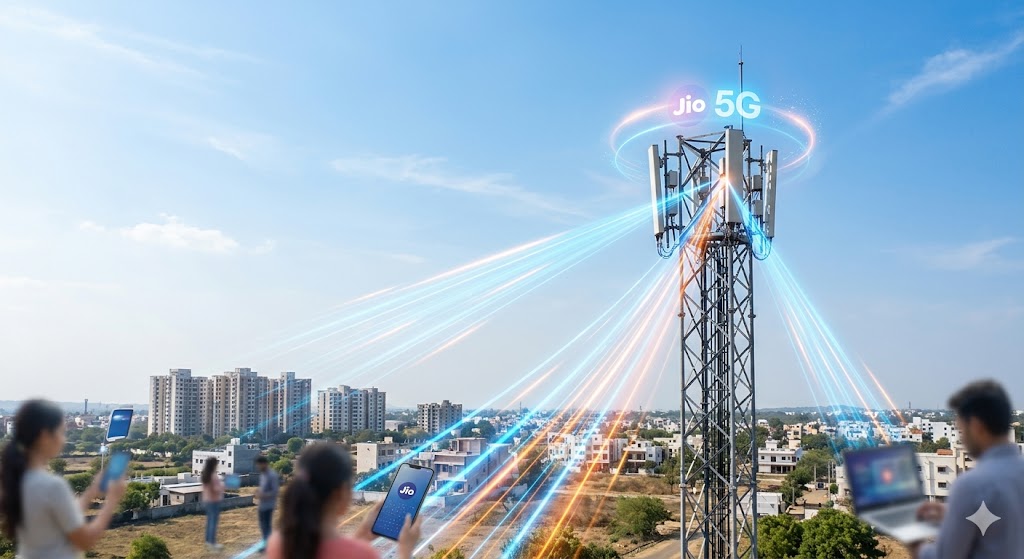
: A modern telecommunications tower supporting the Reliance Jio 5G network, symbolizing the digital revolution and ubiquitous connectivity that bridged India's digital divide.
Leadership Transition and Future Outlook
Mukesh Ambani, with children Akash, Isha, and Anant joining the board in 2023, ensures continuity. The next generation drives digital, retail, and green energy initiatives. Reliance Industries aims for net-zero by 2035, AI integration, and global partnerships.
Conclusion: A Legacy That Inspires Generations
The Reliance company journey—from a 350-square-foot trading room to a ₹18-trillion empire—proves that vision, execution, and customer focus can transform nations. Reliance Industries has created jobs for over 400,000 directly, empowered millions indirectly, and delivered immense services through Reliance Jio, retail formats, and energy solutions. Its history of efforts, from textiles to 5G, continues to shape India's progress.
As Reliance stock evolves and new projects unfold, the legacy endures: building for India, with India, and by India. For investors, customers, and the nation, Reliance Industries remains a beacon of possibility.