India Warns Iran of Consequences After Hormuz Attack
International Affairs• April 19, 2026• Global Edition
In a sharp escalation of maritime tensions, India has issued a firm warning to Iran, stating that there will be consequences following an attack on two Indian-flagged vessels in the Strait of Hormuz. The incident, which occurred on April 18, 2026, has thrust bilateral relations into the spotlight at a time when the region grapples with the fallout of the broader 2026 Iran conflict. New Delhi's measured yet resolute response underscores its commitment to protecting its economic interests and its nationals while navigating a complex web of historical partnerships.
This article delves into the details of the Hormuz incident, India's diplomatic stance, and the multifaceted relationship between India and Iran. From ancient civilizational bonds to modern strategic collaborations in energy and connectivity, the ties between the two nations have endured sanctions, wars, and shifting global alliances. As of 2026, however, events in the Strait of Hormuz test the resilience of this partnership like never before.
The April 18 Incident: Gunfire in the Strait of Hormuz
On April 18, 2026, reports emerged of Iranian Revolutionary Guard Corps (IRGC) gunboats firing on at least two Indian-flagged ships attempting to transit the Strait of Hormuz. According to maritime tracking data and official confirmations from India's Ministry of External Affairs (MEA), the vessels—including a supertanker carrying crude oil and another merchant ship—faced unprovoked gunfire. No casualties were reported, but both ships were forced to reverse course, disrupting critical energy supply lines.
The timing was significant. Iran had recently reimposed restrictions on the strait in response to a U.S. naval blockade of its ports, even as a fragile ceasefire from early April held in parts of the 2026 Iran war. The United Kingdom Maritime Trade Operations (UKMTO) corroborated accounts of IRGC vessels approaching without radio warnings and opening fire. For India, which relies heavily on the strait for a substantial portion of its oil imports, this was not merely a maritime mishap but a direct threat to national energy security.
Eyewitness accounts from ship captains, shared through industry channels, described tense moments as vessels navigated the narrow chokepoint. One tanker reportedly carried over two million barrels of Iraqi oil destined for Indian refineries. The episode highlights the strait's vulnerability: roughly 20% of global oil trade passes through these waters, making any disruption a global concern.
India's Swift and Serious Response
India wasted no time in addressing the provocation. On April 18 itself, the MEA summoned Iranian Ambassador Mohammad Fathali to South Block in New Delhi. Foreign Secretary Vikram Misri conveyed India's "deep concern" over the shooting incident involving the two Indian-flagged ships. Officials emphasized the need for Iran to immediately resume facilitating safe passage for India-bound vessels.
Media reports, including those from WION and Hindustan Times, quoted Indian authorities stating explicitly that "there will be consequences" if such actions continued. This marked a notable shift in tone from routine diplomatic protests, reflecting the seriousness with which New Delhi views threats to its shipping and citizens. India has also reiterated calls for unimpeded freedom of navigation through the Strait of Hormuz, a position it articulated even while welcoming the earlier U.S.-Iran ceasefire.
In parallel, the government updated its advisory for Indian nationals in Iran. Building on earlier alerts issued in early April 2026—when around 9,000 Indians were urged to "expeditiously exit" amid escalating U.S.-Israel strikes—fresh guidance stressed caution. Citizens were advised to avoid military installations, remain indoors where possible, and coordinate movements strictly through the embassy.
This response balances firmness with pragmatism. India has not escalated to military posturing but has made clear through diplomatic channels that repeated incidents will not be tolerated. Tehran, for its part, has sought to reassure New Delhi, with Iran's representative in India describing bilateral ties as "very strong" and expressing hope for a swift resolution.
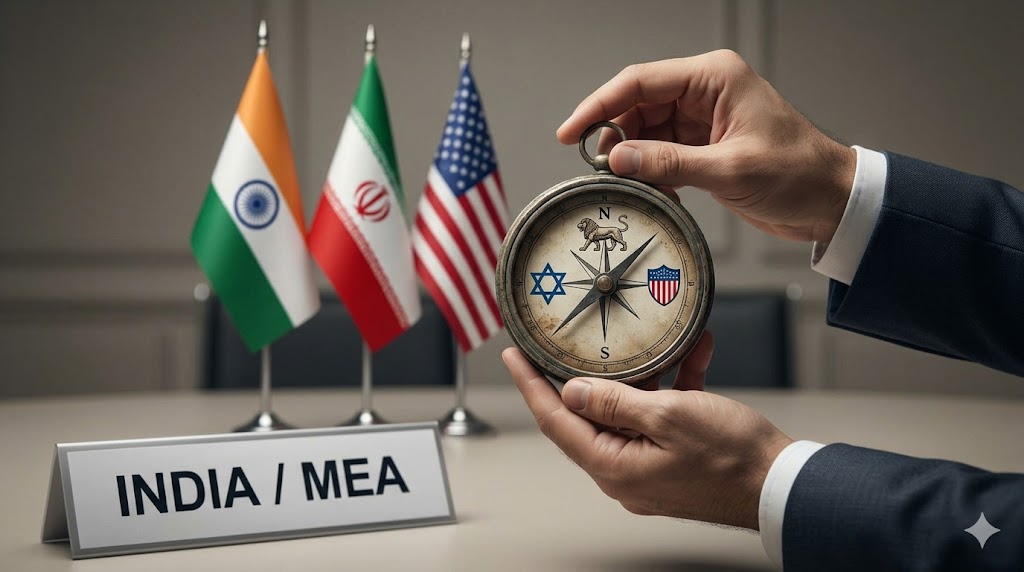
: A conceptual close-up visualizing 'India Iran relations 2026' and 'India warns Iran' concept. India balances its strategic priorities: an ancient Persian lion icon coexists on a compass face with minimalist icons for Israel and the US, illustrating New Delhi's complex multi-alignment policy
The tanker attack did not occur in isolation. It unfolded against the backdrop of the 2026 Iran war, which began in late February when U.S. and Israeli forces conducted airstrikes on Iranian targets. India has maintained strict neutrality throughout, repeatedly calling for de-escalation, dialogue, and respect for sovereignty. Prime Minister Narendra Modi engaged with Iranian President Masoud Pezeshkian in March 2026, stressing the importance of safe energy transit.
A temporary ceasefire announced around April 8 offered brief respite, yet Iran accused the U.S. of continued blockades and re-closed the Strait of Hormuz. This move directly impacted global oil flows and Indian imports. India's MEA has consistently urged all parties to prioritize stability, recognizing that prolonged closure could exacerbate domestic fuel prices and inflation.
The incident also prompted India to engage with other stakeholders, including Gulf Cooperation Council nations, to safeguard its diaspora and economic stakes in West Asia. With over eight million Indian expatriates in the region, any spillover from the conflict carries human and remittance-related risks.
Political Relations: From Ancient Bonds to Strategic Partnership
India-Iran political ties trace back millennia, rooted in shared cultural and civilizational heritage. Persian influences permeate Indian art, language, and architecture, while diplomatic relations were formalized in 1950 with the Treaty of Friendship. During the Cold War, differences emerged—India's non-aligned stance contrasted with Iran's Western alignment—but economic necessities kept channels open.
The turning point came in the early 2000s. The Tehran Declaration (2001) and New Delhi Declaration (2003) elevated ties to a strategic partnership, covering defense, energy, and regional security. India maintained neutrality during the Iran-Iraq War (1980-1988) and continued oil imports despite international pressures.
By 2026, political engagement remains robust despite challenges. Recent high-level talks, including the 20th Joint Commission Meeting in 2025, focused on West Asian security. India has co-sponsored UN resolutions condemning certain Iranian actions while avoiding blanket criticism of Tehran, preserving room for dialogue. This multi-alignment reflects India's foreign policy doctrine: engage all sides without exclusive commitments.
Geopolitical Dimensions: Balancing Autonomy in a Volatile Region
Geopolitically, Iran holds immense value for India as a gateway to Central Asia and Afghanistan. The Chabahar Port project exemplifies this. Under a 10-year agreement signed in 2024, India operates the Shahid Beheshti terminal, providing an alternative route that bypasses Pakistan. Even amid U.S. sanctions, India secured waivers and invested over $120 million in equipment by early 2026.
The International North-South Transport Corridor (INSTC) further cements this link, enabling faster trade between India, Iran, Russia, and Europe. In 2026, despite the war, India pushed for its operational continuity, viewing it as vital for diversified supply chains.
However, the Hormuz incident exposes vulnerabilities. India's growing defense and technology partnership with Israel and the U.S. has occasionally strained Tehran relations. Yet New Delhi has resisted full alignment, prioritizing strategic autonomy. As one analyst noted in The Diplomat, this balancing act carries costs but allows India to safeguard interests across competing blocs.
The 2026 war tested this approach. While BRICS partners Russia, China, and Brazil condemned the strikes, India opted for quiet diplomacy. It welcomed the ceasefire and sent medical aid contingents to Iran, signaling goodwill without alienating Washington or Jerusalem.
Economic Relations: Energy, Trade, and Connectivity Till 2026
Economically, the partnership has been anchored in energy. Iran historically ranked among India's top three oil suppliers, providing discounted crude that bolstered refining margins. Sanctions reduced volumes, but India adapted through rupee-based trade mechanisms and continued imports where feasible.
By 2026, bilateral trade encompasses pharmaceuticals, machinery, and agricultural goods alongside energy. Chabahar has handled millions of tons of cargo, boosting India's connectivity ambitions under the "Act East" and neighborhood-first policies.
The Union Budget 2026 reflected pragmatic adjustments—no fresh financial commitments beyond existing obligations—yet operational cooperation persists. Iran has expressed eagerness to expand Chabahar collaboration, viewing India as a reliable partner less swayed by Western pressures.
These ties deliver mutual benefits: India gains alternative access routes and energy diversity; Iran secures investment and a counterbalance to isolation. The Hormuz attacks, however, risk undermining investor confidence in these projects.
Impact of the Current Crisis on Bilateral Ties
The April 18 incident has introduced fresh strains but also opportunities for reset. India's warning of consequences signals zero tolerance for threats to its assets, yet diplomatic channels remain open. Tehran's prompt reassurance about "strong ties" indicates a desire to contain fallout.
For India, the episode reinforces the need for diversified energy sources and enhanced naval presence in the Indian Ocean. It also highlights domestic challenges: rising fuel costs could fuel inflation, affecting millions.
Broader implications extend to global stability. Disruptions in Hormuz amplify food and energy inflation worldwide, with developing nations like India bearing disproportionate burdens. India's call for unimpeded navigation aligns with its role as a voice of the Global South.
India's Foreign Policy in West Asia: A Model of Pragmatism
India's approach exemplifies pragmatic multi-alignment. Close strategic partnerships with Israel (elevated during Modi's 2025 visit) coexist with enduring Iranian engagement. This has allowed technology transfers in defense while maintaining energy flows.
In the 2026 context, India has prioritized citizen safety through advisories and evacuation support. It has also engaged Gulf states for regional stability, recognizing shared stakes in countering extremism and securing sea lanes.
Experts argue this neutrality enhances India's credibility as a mediator. As tensions persist, sustained dialogue—perhaps through trilateral formats involving India, Iran, and Gulf partners—could pave the way for de-escalation.
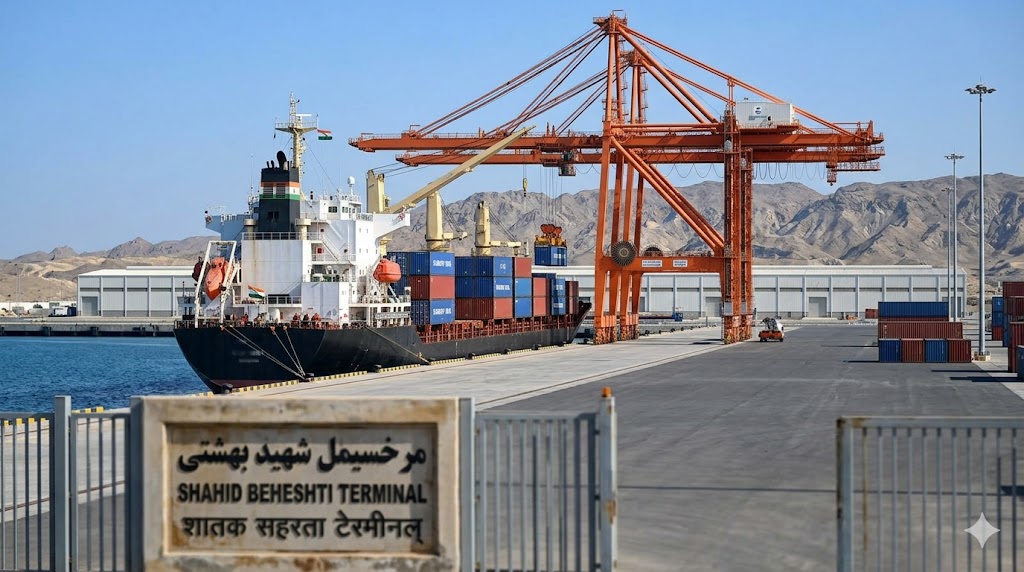
Busy daytime operations at Chabahar Port's Shahid Beheshti Terminal, illustrating 'Chabahar port India' and 'India Iran relations 2026' concept. Indian containers are loaded under cranes, visualizing the key connectivity link bypassing Pakistan.
The Strait of Hormuz attacks of April 18, 2026, have compelled India to draw a firm line, warning Iran of consequences while reaffirming commitment to dialogue. This episode tests but does not sever the deep political, geopolitical, and economic bonds forged over decades.
From civilizational roots to Chabahar's strategic promise and INSTC's connectivity potential, India-Iran relations embody resilience. As the 2026 regional crisis unfolds, both nations stand to gain from renewed assurances on maritime safety and expanded cooperation.
India's measured response—protecting its interests without burning bridges—reflects mature diplomacy. For the partnership to thrive, mutual respect for sovereignty and secure trade routes must remain paramount. In an interconnected world, a stable India-Iran relationship benefits not only the two countries but the wider Indo-Pacific and Eurasian landscape.
As developments evolve, New Delhi will continue monitoring the situation closely, balancing firmness with the pragmatism that has defined its foreign policy for decades. The path ahead demands vigilance, but history suggests the enduring ties between India and Iran can weather this storm.
Frequently Asked Questions
What is the primary significance of India Warns Iran of Consequences After Hormuz Attack?
In a sharp escalation of maritime tensions, India has issued a firm warning to Iran, stating that there will be consequences following an attack on two Indian-flagged vessels in the Strait of Hormuz. The incident, which occurred on April 18, 2026, has thrust bilateral relations into the spotlight at a time when the region grapples with the fallout of the broader 2026 Iran conflict.
How does this development impact International Affairs?
New Delhi's measured yet resolute response underscores its commitment to protecting its economic interests and its nationals while navigating a complex web of historical partnerships.This article delves into the details of the Hormuz incident, India's diplomatic stance, and the multifaceted relationship between India and Iran. From ancient civilizational bonds to modern strategic collaborations in energy and connectivity, the ties between the two nations have endured sanctions, wars, and shifting global alliances.
What are the key future projections to monitor?
As of 2026, however, events in the Strait of Hormuz test the resilience of this partnership like never before.The April 18 Incident: Gunfire in the Strait of HormuzOn April 18, 2026, reports emerged of Iranian Revolutionary Guard Corps (IRGC) gunboats firing on at least two Indian-flagged ships attempting to transit the Strait of Hormuz.