The US-Iran war 2026 has entered a critical phase as of April 19, 2026. What began as coordinated US-Israeli airstrikes on February 28 has evolved into a complex conflict involving direct military action, naval blockades, and high-stakes diplomacy. A temporary two-week ceasefire brokered by Pakistan took effect on April 8, but violations, renewed threats, and ongoing operations in Lebanon have left the region on edge.
Tensions remain high in the US-Israel-Iran war, with both sides accusing the other of undermining the fragile truce. Iran has repeatedly restricted shipping through the Strait of Hormuz, while the United States maintains a naval blockade of Iranian ports. Israel, meanwhile, has pressed its campaign against Hezbollah in Lebanon, insisting that the Iran-linked group poses a separate threat. As April 19 unfolds, diplomatic efforts are intensifying ahead of a new round of talks, but the path to lasting peace appears uncertain.
US Issues Stark Warning: “Blow Down the Whole Country” if No Deal in Next Meeting
President Donald Trump has delivered one of the most direct warnings yet in the **Trump Iran war**. In recent statements, he made clear that failure to reach an agreement in the upcoming negotiations would trigger an overwhelming US response. Trump explicitly threatened to “destroy every bridge and power plant” in Iran and, in stronger terms reported across outlets, warned that without a deal the “entire nation will be blown up.”
The warning comes as the current ceasefire—already strained by Iran’s actions in the Strait of Hormuz—edges closer to its April 22 expiration. US officials emphasize that the core demand remains unchanged: Iran must provide ironclad commitments to abandon its nuclear weapons ambitions and related capabilities. Trump has framed the next meeting as a decisive moment. “If the deal does not happen in the next meeting,” the message is unmistakable: escalation will follow.
This “straight warning” reflects Washington’s frustration after the first round of direct talks collapsed. Vice President JD Vance, who led the US delegation, stated that Iran “chose not to accept our terms” during the 21-hour marathon session. The US position is firm: no nuclear pathway, no sanctions relief without verifiable concessions.
Both Sides Agree to Return to Negotiations in Pakistan Meeting
Despite the breakdown of the initial Islamabad Talks on April 11-12, both the United States and Iran have decided to reconvene. On April 19, President Trump announced that US negotiators will travel to Pakistan on Monday for a fresh round of face-to-face discussions. Pakistan, which successfully mediated the original ceasefire, continues to play a central role as an honest broker.
The Pakistan meeting represents the highest-level direct engagement between Washington and Tehran since the 1979 Islamic Revolution. Iranian officials have described the first session as exploratory, noting they “did not expect a deal at the first meeting.” US counterparts, however, expressed disappointment over the lack of progress on nuclear issues and maritime security.
Pakistan has urged both parties to extend the ceasefire by up to 45 days to allow more time for compromise. Field Marshal Asim Munir and other Pakistani mediators are actively shuttling between capitals, emphasizing that a nuclear deal remains “within arms reach” if goodwill prevails. The decision by both countries to return to the table signals a shared recognition that renewed full-scale fighting would carry catastrophic costs for the entire region.
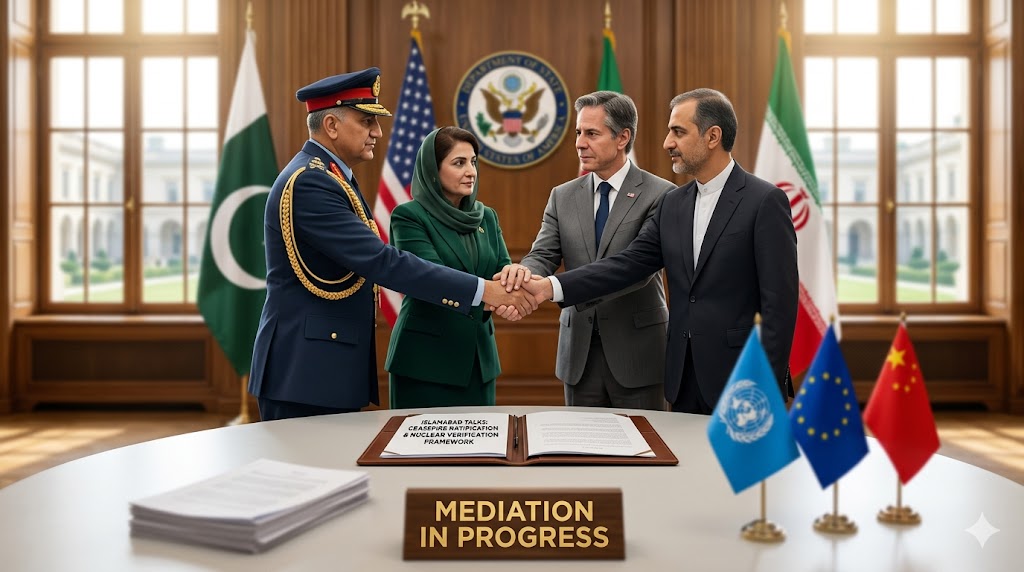
High-stakes diplomacy in Pakistan. Conceptual representatives of the United States and Iran clasp hands firmly over a ratification folder facilitated by Pakistani mediators. Both sides agreed to the meeting on April 19, recognizing that failure could slide the fragile 2026 ceasefire back into open conflict.
Israel’s Continuous Strikes in Lebanon: “The War Is Not Close Yet”
While the US-Iran war ceasefire holds tenuously between Washington, Tehran, and Israel proper, the situation in Lebanon tells a different story. Israeli forces have maintained relentless pressure on Hezbollah positions, conducting major strikes as recently as April 8 and continuing targeted operations in southern Lebanon. Israeli Prime Minister Benjamin Netanyahu has repeatedly stated that the Lebanon front operates on a separate track from the Iran ceasefire.
On April 19, reports confirm ongoing Israeli activity in border towns and Hezbollah strongholds. Lebanese officials and UN observers have condemned the strikes, noting heavy civilian casualties and widespread destruction. Israel maintains that these actions are necessary to neutralize threats from an Iran-backed militia that fired rockets into Israeli territory early in the conflict. Netanyahu’s government insists the broader Israel-Iran war cannot end while Hezbollah retains offensive capabilities.
The message from Jerusalem is clear: “The war is not close yet.” Despite a separate 10-day pause agreed between Israel and Lebanon, Israeli officials have signaled that full withdrawal or de-escalation depends on Hezbollah’s disarmament and Iranian influence being curtailed. This stance has complicated the broader diplomatic picture, as Iran views attacks on its proxy as indirect aggression.
Formal Developments on April 19, 2026: Hormuz Tensions and Diplomatic Momentum
Today, April 19, marks a pivotal point in the Iran war 2026 timeline. Iran’s Revolutionary Guard Corps (IRGC) has once again restricted shipping through the Strait of Hormuz, citing the ongoing US naval blockade as a violation of ceasefire terms. Iranian gunboats have fired warning shots at tankers, and commercial traffic has slowed dramatically. Tehran warns the waterway will remain closed until the “US siege” on its ports is lifted.
In response, the US has reaffirmed its blockade while preparing negotiators for Pakistan. President Trump’s announcement of renewed talks has injected cautious optimism, yet military readiness remains high. US Navy warships continue to patrol key areas, and CENTCOM reports no breaches of the port blockade.
The formal situation is fluid. Ceasefire extensions are under discussion, but neither side appears willing to blink first on core demands. Energy markets are reacting sharply, with oil prices fluctuating on fears of prolonged disruption to global supply routes.
China’s Role in the US-Iran War: Pressure and Energy Calculations
China has emerged as a quiet but significant player in the US Iran war. Beijing has secured discounted Iranian oil amid the conflict, prompting US pressure on China to curb purchases. Washington has warned allies and partners against undermining sanctions or the naval blockade. Chinese officials have called for de-escalation and respect for freedom of navigation, while quietly benefiting from lower energy costs.
Analysts note that a prolonged **Iran energy war** could reshape global supply chains, giving China strategic leverage in a post-conflict Middle East. Beijing’s stance remains officially neutral, but its economic interests are deeply intertwined with the outcome.
Broader Implications and What Lies Ahead
The US-Israel-Iran war has already claimed thousands of lives across Iran, Lebanon, Israel, and beyond. Civilian infrastructure has suffered, displacement is widespread, and the economic toll continues to mount. A successful outcome in the Pakistan talks could pave the way for a broader regional de-escalation, including a durable Israel-Lebanon ceasefire. Failure, however, risks full resumption of hostilities—with unpredictable consequences for global energy security and international stability.
As of April 19, 2026, the world watches closely. Diplomats in Islamabad are preparing venues, military commanders remain on alert, and leaders on all sides weigh the costs of peace against the risks of war. The coming days will determine whether the Iran war 2026 enters a new chapter of reconciliation or slides back into open conflict.
Frequently Asked Questions
What is the primary significance of "US-Iran War 2026: Trump Warning, Pakistan Talks".?
Current Situation in the US-Iran War 2026: A Fragile Ceasefire Under StrainThe US-Iran war 2026 has entered a critical phase as of April 19, 2026. What began as coordinated US-Israeli airstrikes on February 28 has evolved into a complex conflict involving direct military action, naval blockades, and high-stakes diplomacy.
How does this development impact International Affairs?
A temporary two-week ceasefire brokered by Pakistan took effect on April 8, but violations, renewed threats, and ongoing operations in Lebanon have left the region on edge.Tensions remain high in the US-Israel-Iran war, with both sides accusing the other of undermining the fragile truce. Iran has repeatedly restricted shipping through the Strait of Hormuz, while the United States maintains a naval blockade of Iranian ports.
What are the key future projections to monitor?
Israel, meanwhile, has pressed its campaign against Hezbollah in Lebanon, insisting that the Iran-linked group poses a separate threat.