Parshuram Jayanti 2026: The Incarnation Lord Vishnu
Dharma• April 19, 2026• Global Edition
Parshuram Jayanti, also known as Parshuram Janmotsav, marks the birth anniversary of Lord Parshuram, the sixth avatar of Lord Vishnu in the Dashavatara sequence. In 2026, this auspicious occasion falls on Sunday, April 19, coinciding with Vaishakha Shukla Tritiya and Akshaya Tritiya. The tithi begins around 10:49 AM and ends the next morning, making it a powerful day for devotees to seek blessings for courage, righteousness, and spiritual growth.
Observed with reverence across India, especially in regions like Maharashtra, Gujarat, and parts of North India, Parshuram Jayanti reminds us of the eternal battle between dharma and adharma. Temples dedicated to the warrior sage come alive with bhajans, kathas, and special pujas. Many observe fasts, perform charity, and reflect on the lessons of discipline and justice that Lord Parshuram embodies.
In Sanatan Dharma, Lord Vishnu descends whenever righteousness declines and evil forces threaten cosmic balance. Parshuram, born as the son of Sage Jamadagni and Renuka, represents this divine intervention. Unlike many avatars who appear in princely or divine forms, Parshuram was born into a Brahmin family yet wielded the power and fury of a Kshatriya warrior.
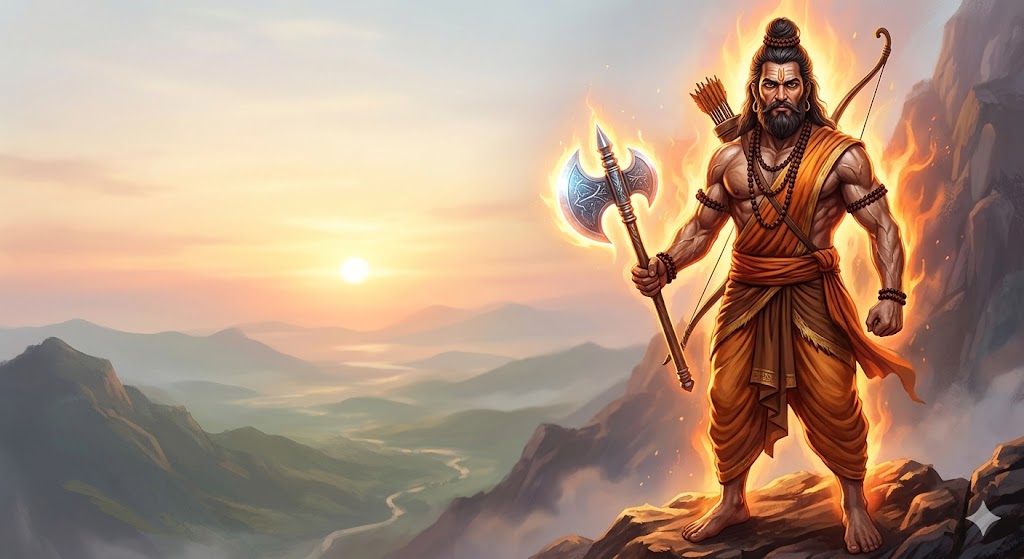
Ancient texts describe him as an Avesha avatar—where Vishnu's divine energy entered a human form to accomplish a specific purpose. His mission was clear: to relieve the Earth (Bhoomi Devi) from the burden of corrupt and oppressive rulers who had abandoned dharma. Armed with a divine axe (Parashu) gifted by Lord Shiva, Parshuram became a symbol of unyielding justice and fierce protection of the virtuous.
Devotees view him as one of the Chiranjeevis (immortals), still believed to reside on Mahendra Mountain, awaiting the time to guide future avatars like Kalki. This immortality underscores his enduring relevance in Hindu tradition—he is not just a historical or mythical figure but a living embodiment of dharma's guardian.
The Famous Encounter: Parshuram, Rama, and the Broken Shiva Dhanush
One of the most captivating episodes involving Lord Parshuram occurs in the Ramayana, during or shortly after Sita's Swayamvara in Mithila. King Janaka had set a seemingly impossible challenge: stringing and breaking the mighty bow of Lord Shiva (Pinaka), which had been in his possession.
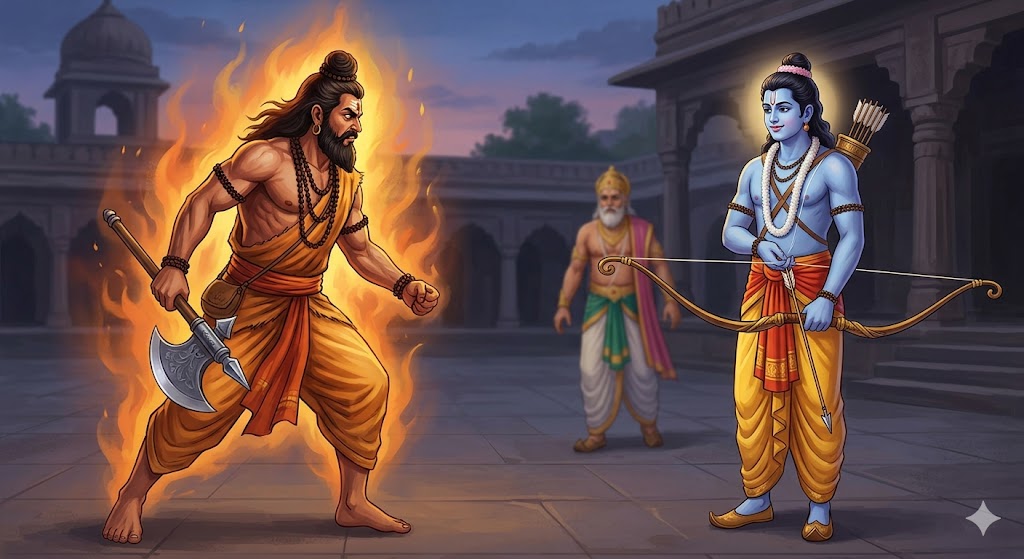
Prince Rama of Ayodhya effortlessly lifted the divine bow, strung it, and snapped it with his immense strength while attempting to draw the string. The sound reverberated like thunder, echoing across the realms. Parshuram, a devoted follower of Shiva and guardian of the bow (which he had given to the kings of Videha), heard this and rushed to the scene in great anger.
Confronting the young Rama, Parshuram demanded to know who had dared break his guru's sacred weapon. His fury was palpable—he challenged Rama's worthiness and even brought forth the equally powerful Sharanga bow of Vishnu to test him further. "If you are truly strong," he thundered, "string this bow and face me in combat."
Lord Rama, ever humble and composed, respectfully addressed Parshuram as a revered elder. He then effortlessly strung the Vishnu bow and fitted an arrow, asking where it should be aimed. At that moment, Parshuram realized the divine truth: the young prince was none other than Vishnu himself in another form. The realization humbled the warrior sage. He bowed before Rama, acknowledging the supremacy of the preserver's newer incarnation, and withdrew peacefully after bestowing blessings. Lakshman, known for his fiery temperament, also played a role in the exchange, adding dramatic tension to the scene.
This encounter beautifully illustrates the harmony among Vishnu's avatars. It shows Parshuram's devotion to Shiva while ultimately submitting to the larger cosmic order. It also highlights themes of humility, recognition of divinity, and the seamless transition of dharma across yugas.
The pivotal Ramayana encounter: A furious Parshuram confronts the calm Lord Rama after the breaking of the Shiva Dhanush. Parshuram realizes Rama's true divinity and withdraws, symbolizing the harmony among Vishnu's avatars across the yugas.
Parshuram's Crusade: Restoring Dharma by Confronting Tyranny
The most defining chapter in Parshuram's life stems from a personal tragedy that escalated into a divine mandate. His father, Sage Jamadagni, possessed the divine cow Kamadhenu, which could fulfill all desires. The arrogant Kshatriya king Kartavirya Arjuna (Sahasrabahu), blessed with a thousand arms, visited the sage's ashram and demanded the cow. When refused, he forcibly took it, destroying the hermitage in the process.
Later, the king's sons murdered Jamadagni in cold blood while he meditated—inflicting 21 wounds on his body. Renuka's cries reached Parshuram, who returned to find his father's severed head and grieving mother. Overwhelmed by rage and grief, Parshuram vowed to eradicate the corrupt Kshatriya lineages that had become symbols of tyranny and adharma.
He wielded his axe relentlessly, circling the Earth 21 times and eliminating 21 generations of oppressive rulers. Legend says he filled five lakes (Samanta Panchaka, near modern-day Kurukshetra) with their blood as an offering. This act was not born of blind hatred but a necessary cosmic correction—to free the Earth from rulers who exploited the weak, disrespected sages, and violated varna dharma.
After fulfilling his vow, Parshuram performed penance and gifted the reclaimed lands to Brahmins, even creating new coastal regions (like parts of Konkan and Kerala, sometimes called Parshurama Kshetra) by pushing back the sea. He then retreated to ascetic life, training worthy disciples while remaining ever-vigilant.
Parshuram as the Greatest Warrior: A Unique Blend of Brahmin Wisdom and Kshatriya Valor
In Hindu scriptures, Parshuram stands unparalleled as a warrior. Trained directly by Lord Shiva, he mastered all forms of combat, weaponry, and strategy. He is credited with teaching legendary figures like Bhishma, Dronacharya, and Karna the intricate arts of war—skills that shaped the Mahabharata era.
Yet, he was born a Brahmin, embodying scholarly wisdom, Vedic knowledge, and spiritual discipline. This fusion makes him a "Brahma-Kshatriya"—a rare archetype who combined the intellect and austerity of a priest with the courage and martial prowess of a warrior. His story challenges rigid caste stereotypes, showing that true dharma transcends birth and depends on actions and duty.
In Indian culture, Parshuram symbolizes Rajput-like glory, fearlessness, and unyielding courage in the face of injustice. At the same time, he upholds Brahminical values of penance, devotion, and protection of knowledge. He is revered by many communities, including certain Brahmin groups who trace spiritual lineage to him, and his legacy inspires those who value both intellectual rigor and physical strength.
His axe represents the sharp discrimination between right and wrong, while his immortality reminds devotees that the fight for dharma never truly ends.
Significance in Sanatan Dharma and Modern Relevance
According to Sanatan Dharma, Parshuram's incarnation holds a major place among Vishnu's descents. While avatars like Rama and Krishna focus on ideal kingship and playful divinity, Parshuram's role is that of the fierce protector—destroying evil to allow good to flourish. He teaches that anger, when channeled through dharma and self-control, can serve a higher purpose.
In today's world, his life offers profound lessons: stand against oppression, honor your gurus and parents, balance worldly duties with spiritual practice, and recognize divinity in its many forms. Festivals like Parshuram Jayanti encourage reflection on personal "tyrannies" we must overcome—ego, greed, or injustice in our own lives.
How to Observe Parshuram Jayanti
On April 19, 2026, devotees typically:
Wake early and take a holy bath.
Visit temples or set up home altars with images of Lord Parshuram holding his axe.
Chant mantras like "Om Parashuramaya Namah" or recite his katha.
Offer prayers for strength and justice.
Perform acts of charity, especially to Brahmins or educational causes.
Listen to Parshuram bhajans and songs that praise his valor and devotion.
Many regions organize processions, cultural programs, and discourses on his teachings. Fasting until evening or consuming satvik food is common.
Conclusion: The Eternal Legacy of Bhagwan Parshuram
Parshuram Janmotsav is more than a birthday celebration—it is a reminder of Vishnu's commitment to preserving the universe through timely intervention. From his birth on Vaishakha Shukla Tritiya to his epic feats, Lord Parshuram inspires millions with his blend of Brahmin wisdom, Kshatriya courage, and unwavering dedication to dharma.
As we mark Parshuram Jayanti 2026, let us draw strength from his example. In a world still grappling with injustice, his story urges us to act with courage, live with discipline, and protect what is sacred. May the blessings of the immortal warrior sage bring peace, prosperity, and righteousness to all.
Lord Parshuram, the sixth avatar of Vishnu, is depicted on Mahendra Mountain, wielding his divine axe (Parashu), the symbol of unyielding justice and the unique fusion of Brahmin wisdom and Kshatriya valor.
Jai Parshuram! Jai Vishnu!
Parshuram Jayanti, Parshuram Jayanti 2026, Lord Parshuram, Parshuram avatar of Vishnu, Parshuram and Rama, Shiva Dhanush, Parshuram killing Kshatriyas, Parshuram Janmotsav, Parshuram warrior sage, Parshuram bhajan (naturally integrated throughout without stuffing).
Frequently Asked Questions
What is the primary significance of Parshuram Jayanti 2026: The Incarnation Lord Vishnu?
Parshuram Jayanti, also known as Parshuram Janmotsav, marks the birth anniversary of Lord Parshuram, the sixth avatar of Lord Vishnu in the Dashavatara sequence. In 2026, this auspicious occasion falls on Sunday, April 19, coinciding with Vaishakha Shukla Tritiya and Akshaya Tritiya.
How does this development impact Dharma?
The tithi begins around 10:49 AM and ends the next morning, making it a powerful day for devotees to seek blessings for courage, righteousness, and spiritual growth.Observed with reverence across India, especially in regions like Maharashtra, Gujarat, and parts of North India, Parshuram Jayanti reminds us of the eternal battle between dharma and adharma. Temples dedicated to the warrior sage come alive with bhajans, kathas, and special pujas.
What are the key future projections to monitor?
Many observe fasts, perform charity, and reflect on the lessons of discipline and justice that Lord Parshuram embodies.Lord Parshuram: The Sixth Incarnation of VishnuIn Sanatan Dharma, Lord Vishnu descends whenever righteousness declines and evil forces threaten cosmic balance.