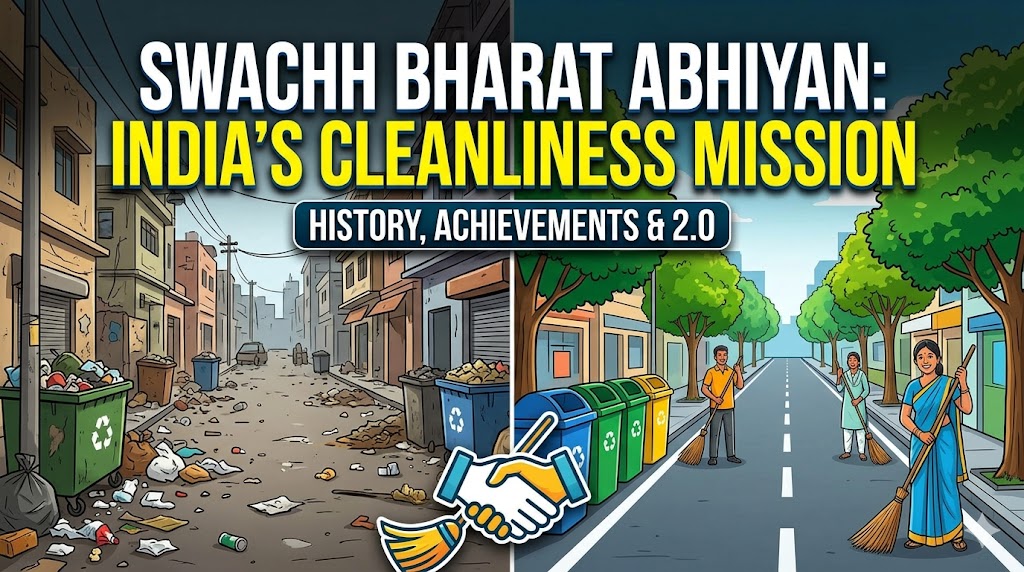
The Swachh Bharat Abhiyan stands as one of the most ambitious and people-driven national campaigns in India's history. Launched with a clear vision to transform the nation into a cleaner, healthier, and more dignified society, the Swachh Bharat Abhiyan has touched the lives of millions. More than a decade after its inception, the Swachh Bharat Abhiyan continues to evolve, adapting to new challenges while building on remarkable successes. This comprehensive guide explores every facet of the Swachh Bharat Abhiyan — from its origins and objectives to its far-reaching impact, ongoing initiatives, and practical ways citizens can contribute through creative activities like poems, essays, crafts, dances, speeches, drawings, and even 3D models.
Whether you are researching the Swachh Bharat Abhiyan for academic purposes, seeking inspiration for school projects, or simply wanting to understand how the Swachh Bharat Abhiyan shapes modern India, this article provides a complete, authoritative overview. The Swachh Bharat Abhiyan is not just a government program; it is a mass movement that calls upon every individual to take ownership of cleanliness.
The Swachh Bharat Abhiyan was officially launched on 2 October 2014 by Prime Minister Narendra Modi at Rajghat in New Delhi. This date held profound significance — it marked the 145th birth anniversary of Mahatma Gandhi, who had long emphasized cleanliness as essential to healthy living. In his stirring address, the Prime Minister described the Swachh Bharat Abhiyan as the best tribute India could offer to Gandhi on his 150th birth anniversary.
Before the Swachh Bharat Abhiyan, earlier efforts such as the Central Rural Sanitation Programme (1986), Total Sanitation Campaign (1999), and Nirmal Bharat Abhiyan (2012) laid important groundwork. However, these programs achieved only limited success, with rural sanitation coverage hovering around 39 percent in 2014. The Swachh Bharat Abhiyan marked a decisive shift by turning sanitation into a national priority and a people's movement.
The Swachh Bharat Abhiyan was structured into two distinct components: Swachh Bharat Mission-Gramin (rural) and Swachh Bharat Mission-Urban (urban). This dual approach ensured that the Swachh Bharat Abhiyan reached every corner of the country, from remote villages to bustling metropolitan cities. The launch of the Swachh Bharat Abhiyan witnessed an unprecedented participation of over three million government employees and citizens who took a collective pledge for cleanliness.
Core Objectives of the Swachh Bharat Abhiyan
At its heart, the Swachh Bharat Abhiyan sought to achieve three interconnected goals. First, the Swachh Bharat Abhiyan aimed to eliminate open defecation entirely by constructing individual household toilets, community sanitary complexes, and school toilets. Second, the Swachh Bharat Abhiyan focused on scientific solid and liquid waste management to create garbage-free communities. Third, and perhaps most importantly, the Swachh Bharat Abhiyan sought to bring about a fundamental behavioral change — making cleanliness a way of life rather than a one-time campaign.
The Swachh Bharat Abhiyan aligned closely with the United Nations Sustainable Development Goal 6.2, which calls for adequate and equitable sanitation for all. Through the Swachh Bharat Abhiyan, India committed to ending open defecation and ensuring universal access to toilets, thereby protecting public health and preserving human dignity, especially for women and children.
Key Components and Initiatives Under Swachh Bharat Abhiyan
The success of the Swachh Bharat Abhiyan lies in its multifaceted strategy. The Swachh Bharat Abhiyan emphasized infrastructure creation alongside awareness generation. Under Phase I (2014–2019), the Swachh Bharat Abhiyan prioritized toilet construction on a massive scale. Over 11 crore individual household toilets were built, along with lakhs of community and public toilets. This infrastructure push was complemented by intensive information, education, and communication (IEC) campaigns.
The Swachh Bharat Abhiyan also introduced innovative programs such as Swachhata Hi Seva, an annual fortnight-long cleanliness drive that mobilizes citizens, students, and organizations. Another highlight of the Swachh Bharat Abhiyan is the Swachh Survekshan, the world’s largest urban cleanliness survey, which ranks cities and motivates local bodies to excel in waste management and sanitation.
In rural areas, the Swachh Bharat Abhiyan promoted community-led total sanitation, encouraging villages to declare themselves Open Defecation Free (ODF) through collective action. In urban settings, the Swachh Bharat Abhiyan focused on door-to-door waste collection, segregation at source, and processing of municipal solid waste.
The Pivotal Role of PM Modi in Swachh Bharat Abhiyan
Prime Minister Narendra Modi has been the driving force behind the Swachh Bharat Abhiyan. From leading the inaugural cleanliness pledge at India Gate to personally participating in shramdaan (voluntary labor) and interacting with sanitation workers, PM Modi has embodied the spirit of the Swachh Bharat Abhiyan. His repeated emphasis that “Swachh Bharat Abhiyan is not just a campaign but a mass movement” has inspired millions.
Under PM Modi’s leadership, the Swachh Bharat Abhiyan received consistent high-level political attention. The Prime Minister has used every platform — Independence Day speeches, Mann Ki Baat radio addresses, and international forums — to champion the Swachh Bharat Abhiyan. This top-down commitment, combined with grassroots participation, distinguishes the Swachh Bharat Abhiyan from previous sanitation drives.
swach Bharat mission
Remarkable Achievements of Swachh Bharat Abhiyan
The Swachh Bharat Abhiyan has delivered transformative results. By 2 October 2019, the Swachh Bharat Abhiyan achieved its Phase I target: India was declared Open Defecation Free, with over six lakh villages and thousands of urban wards attaining ODF status. More than 12 crore toilets have been constructed nationwide as of 2025, benefiting hundreds of millions of citizens.
Independent studies validate the impact of the Swachh Bharat Abhiyan. The World Health Organization estimates that the Swachh Bharat Abhiyan prevented significant diarrheal deaths and improved child nutrition. UNICEF reports highlight enhanced safety and dignity for women, while economic analyses show that households save substantially on healthcare costs thanks to the Swachh Bharat Abhiyan.
Cities like Indore and Surat have emerged as global models of urban cleanliness under the Swachh Bharat Abhiyan, consistently topping Swachh Survekshan rankings through innovative waste management practices.
Swachh Bharat Abhiyan 2.0: Sustaining the Momentum
Recognizing that cleanliness is an ongoing journey, the government launched Swachh Bharat Abhiyan 2.0 (also known as SBM 2.0) in 2021. The Swachh Bharat Abhiyan 2.0 shifts focus from mere infrastructure to sustainability and holistic waste management. Key pillars of Swachh Bharat Abhiyan 2.0 include sustaining ODF status through ODF+ and ODF++ protocols, achieving garbage-free status for all cities and villages, and managing liquid waste through greywater treatment and faecal sludge management.
The Swachh Bharat Abhiyan 2.0 also promotes “Waste to Wealth” initiatives such as GOBARdhan (Galvanizing Organic Bio-Agro Resources Dhan) for converting waste into biogas and compost. With an outlay of over ₹1.4 lakh crore, Swachh Bharat Abhiyan 2.0 aims to make every urban area garbage-free by 2026 while institutionalizing behavioral change across rural India.
Recent campaigns under Swachh Bharat Abhiyan 2.0, including Swachhata Hi Seva 2025, have transformed lakhs of cleanliness target units and remediated millions of tonnes of legacy waste. The Swachh Bharat Abhiyan continues to evolve, ensuring long-term environmental and health benefits.
Societal and Environmental Impact of Swachh Bharat Abhiyan
The Swachh Bharat Abhiyan has profoundly influenced Indian society. Beyond statistics, the Swachh Bharat Abhiyan has fostered community pride and collective responsibility. Children now grow up learning hygiene as a civic duty, while women report feeling safer and more respected due to access to private toilets.
Environmentally, the Swachh Bharat Abhiyan has reduced groundwater contamination, lowered plastic pollution through better segregation, and promoted circular economy practices. The Swachh Bharat Abhiyan has also contributed to India’s global image as a nation committed to sustainable development.
Challenges Faced by Swachh Bharat Abhiyan and the Road Ahead
Despite its successes, the Swachh Bharat Abhiyan faces ongoing challenges. Sustaining behavioral change remains difficult in some areas, where open defecation occasionally reappears. Legacy waste management, plastic pollution, and the need for continuous maintenance of sanitation infrastructure demand persistent effort.
The Swachh Bharat Abhiyan addresses these through capacity building, technological innovation, and stricter enforcement. Future priorities for the Swachh Bharat Abhiyan include achieving full Water+ certification, expanding 3-star garbage-free ratings, and ensuring every citizen internalizes the message of cleanliness.
Creative Ways to Promote Swachh Bharat Abhiyan: Poems, Essays, Crafts, Dance, Speech, Drawing, 3D Models, and Slogans
The Swachh Bharat Abhiyan thrives on public participation, especially among students and youth. Schools and colleges across India organize numerous activities to spread awareness about the Swachh Bharat Abhiyan.
Popular Slogans for Swachh Bharat Abhiyan
- “Ek Kadam Swachhata Ki Ore”
- “Swachh Bharat, Swasth Bharat”
- “Clean India, Green India”
- “Swachh Bharat Abhiyan — Desh Ka Abhiman”
- “Don’t Litter, Make India Better”
Sample Poem on Swachh Bharat Abhiyan (ideal for school recitations)
Clean our streets, clean our homes,
Let’s make India free from dirt and foam.
From villages to cities bright,
Swachh Bharat Abhiyan shows the light.
With brooms in hand and hearts so true,
Together we build a nation new.
No more waste on roads or lanes,
Swachh Bharat Abhiyan breaks all chains.
Gandhiji’s dream, Modi’s call,
Clean India for one and all!
Sample Speech on Swachh Bharat Abhiyan (for students)
“Respected teachers and dear friends, today I stand before you to speak on the Swachh Bharat Abhiyan. Launched by our Prime Minister, the Swachh Bharat Abhiyan is more than a mission — it is a revolution. When we keep our surroundings clean, we protect our health and honor our nation. Let us pledge today to support the Swachh Bharat Abhiyan in every possible way. Jai Hind!”
Essay on Swachh Bharat Abhiyan (short version for school assignments)
The Swachh Bharat Abhiyan is a landmark initiative that has redefined cleanliness in India. By focusing on both infrastructure and mindset, the Swachh Bharat Abhiyan has achieved what previous programs could not. As responsible citizens, it is our duty to carry forward the Swachh Bharat Abhiyan so that future generations inherit a cleaner and greener India.
Crafts, Dance, Drawing, and 3D Models for Swachh Bharat Abhiyan
Students frequently create Swachh Bharat Abhiyan crafts using recycled materials to depict clean villages or cities. Dance performances on Swachh Bharat Abhiyan themes use energetic choreography to convey messages of waste segregation and hygiene. Simple yet powerful Swachh Bharat Abhiyan drawings often feature the national flag alongside brooms and dustbins. For science exhibitions, Swachh Bharat Abhiyan 3D models made from cardboard, waste bottles, and miniature figures illustrate waste management systems, biogas plants, and ODF villages. These hands-on activities make the Swachh Bharat Abhiyan message memorable and engaging.
Swachh Bharat Abhiyan Toilet Awareness
A core pillar of the Swachh Bharat Abhiyan remains toilet construction and usage. The Swachh Bharat Abhiyan toilet drive not only built physical structures but also educated families about the health hazards of open defecation.
How Every Citizen Can Contribute to Swachh Bharat Abhiyan
The true strength of the Swachh Bharat Abhiyan lies in individual action. Simple steps — segregating waste, using dustbins, avoiding single-use plastic, and participating in local cleanliness drives — multiply the impact of the Swachh Bharat Abhiyan. Families can organize Swachh Bharat Abhiyan awareness sessions, while professionals can adopt nearby public spaces under the “Adopt a Park” or similar initiatives.
Conclusion: The Enduring Legacy of Swachh Bharat Abhiyan
More than ten years after its launch, the Swachh Bharat Abhiyan continues to inspire and transform India. The Swachh Bharat Abhiyan has proven that when citizens and government work together, extraordinary change is possible. As the Swachh Bharat Abhiyan moves into its next phase, the commitment to a cleaner, greener, and healthier India remains unwavering.
The Swachh Bharat Abhiyan reminds us that cleanliness is not merely an act but a collective responsibility and a national duty. By actively participating in the Swachh Bharat Abhiyan — whether through daily habits, creative projects, or community service — each one of us becomes part of this historic journey toward a Swachh Bharat.
Frequently Asked Questions
What is the primary significance of Swachh Bharat Abhiyan: India's Cleanliness Mission?
The Swachh Bharat Abhiyan stands as one of the most ambitious and people-driven national campaigns in India's history. Launched with a clear vision to transform the nation into a cleaner, healthier, and more dignified society, the Swachh Bharat Abhiyan has touched the lives of millions.
How does this development impact Current Affairs?
More than a decade after its inception, the Swachh Bharat Abhiyan continues to evolve, adapting to new challenges while building on remarkable successes. This comprehensive guide explores every facet of the Swachh Bharat Abhiyan — from its origins and objectives to its far-reaching impact, ongoing initiatives, and practical ways citizens can contribute through creative activities like poems, essays, crafts, dances, speeches, drawings, and even 3D models.Whether you are researching the Swachh Bharat Abhiyan for academic purposes, seeking inspiration for school projects, or simply wanting to understand how the Swachh Bharat Abhiyan shapes modern India, this article provides a complete, authoritative overview.
What are the key future projections to monitor?
The Swachh Bharat Abhiyan is not just a government program; it is a mass movement that calls upon every individual to take ownership of cleanliness.The History and Launch of Swachh Bharat AbhiyanThe Swachh Bharat Abhiyan was officially launched on 2 October 2014 by Prime Minister Narendra Modi at Rajghat in New Delhi.