The fragile truce in the US-Iran war hangs by a thread as the two-week ceasefire, agreed on April 8, 2026, edges toward its expiration on April 22. What began as a desperate pause in a month-long conflict that has already claimed thousands of lives now stands at a critical crossroads. With U.S. President Donald Trump signaling that failure to reach a deal could trigger renewed military action, and Iranian officials issuing stern warnings over the Strait of Hormuz, the world watches closely. This Iran war 2026 update examines the latest developments, the high-stakes diplomacy at play, and what the coming days could mean for regional stability and global energy markets.
Background: How the US-Iran War Escalated in 2026
The 2026 Iran war did not erupt overnight. Tensions that had simmered for years boiled over on February 28 when U.S. and Israeli forces launched coordinated airstrikes targeting Iranian military sites, nuclear facilities, and key government infrastructure. The operation, which included the assassination of Supreme Leader Ali Khamenei, marked a dramatic escalation in the long-standing standoff over Iran’s nuclear program and its support for regional proxies.
Casualty figures remain fluid but sobering. Estimates from independent monitors place Iranian military and civilian deaths between 3,375 and 7,650, with broader regional tolls—including Lebanon—exceeding 10,000. The United States reported 15 service members killed, while Israel suffered 41 fatalities amid retaliatory strikes. These numbers underscore the human cost of what many analysts now describe as the most significant Middle East conflict since the 1991 Gulf War.
By early April, both sides recognized that continued fighting served no one’s long-term interests. Enter Pakistan’s mediation efforts. On April 8, just hours before Trump’s self-imposed deadline for “decisive action,” Washington and Tehran announced a two-week ceasefire. Iran committed to reopening the Strait of Hormuz for commercial shipping, while the U.S. paused major airstrikes. Yet the agreement was never meant to be permanent—only a breathing space for talks.
Current Status: April 18 Snapshot of the Ceasefire
As of April 18, 2026, the US-Iran ceasefire remains technically in effect, but cracks are visible. Iran has reopened the Strait of Hormuz, allowing commercial vessels to transit after weeks of disruption that sent global oil prices soaring. However, Tehran has explicitly warned that continued U.S. naval blockade of Iranian ports could prompt immediate closure of the waterway once more.
U.S. Central Command confirms the blockade persists. American warships continue to intercept and redirect vessels bound for or departing from Iranian ports. No breaches have been reported in recent days, yet the economic pressure on Iran is unmistakable. Oil exports have plummeted, exacerbating domestic fuel shortages and inflation.
Meanwhile, a separate but linked Israel-Lebanon ceasefire took effect on April 16 for ten days. Brokered with U.S. involvement, this truce has eased fighting between Israeli forces and Hezbollah, Iran’s most powerful proxy. Israeli Prime Minister Benjamin Netanyahu has stated that occupation of southern Lebanon will continue during the pause, signaling Jerusalem’s determination to secure its northern border regardless of the broader US-Iran war outcome.
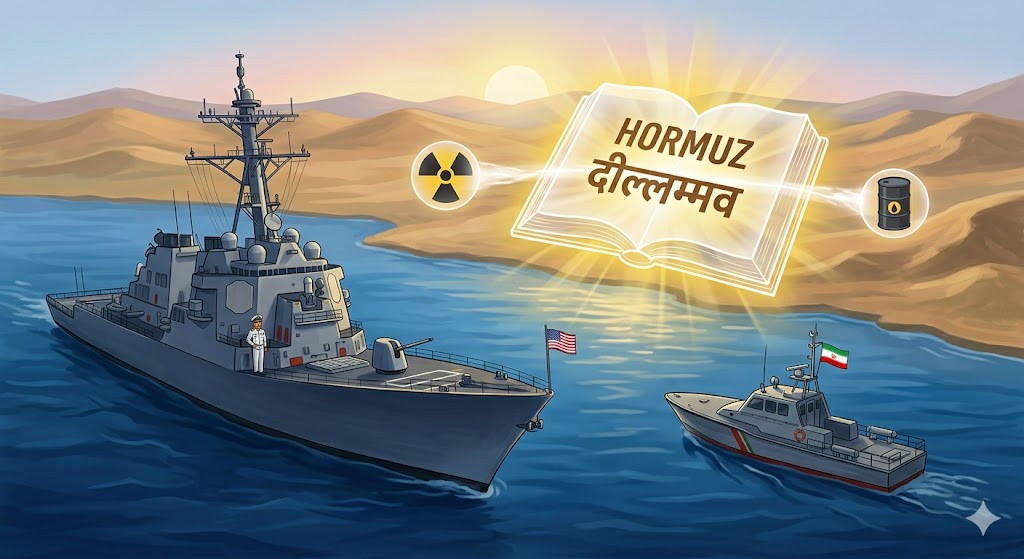
The 'Hormuz Dilemma' visually represented at dawn, linking the status of the Strait to both nuclear proliferation (the open reactor) and global oil transit (the barrel icon).
Trump’s Strategy: “Deal or War Resumes”
President Trump has been characteristically blunt. In recent statements aboard Air Force One and on Truth Social, he described negotiations as “very far along” and claimed Iran has agreed to major nuclear concessions, including the return of enriched uranium stockpiles. Iranian officials have pushed back, insisting talks remain preliminary and rejecting any notion of full surrender of nuclear material.
Trump’s message is clear: if no comprehensive agreement is reached before the April 22 deadline, “the war begins again.” He has repeatedly tied the ceasefire’s extension to verifiable Iranian steps on its nuclear program and reduced support for regional militias. “We cannot allow a nuclear Iran,” the president reiterated last week, a stance that aligns with long-standing U.S. and Israeli policy but now carries the weight of active combat experience.
The administration’s dual-track approach—maintaining the naval blockade while keeping diplomatic channels open—reflects a calculated gamble. By keeping military pressure high, Washington hopes to extract concessions that indirect talks in Islamabad could not deliver earlier this month.
Israel’s Role in the Iran Conflict
Israel has been a full partner in the US-Israel Iran war. The initial February strikes were jointly planned, and Israeli jets conducted follow-up operations deep inside Iranian territory. Even during the current pause, Netanyahu’s government has made clear it will not tolerate any Iranian reconstitution of nuclear or missile capabilities.
The Lebanon ceasefire provides Jerusalem temporary relief from Hezbollah rocket fire, yet Israeli officials remain wary. Intelligence reports suggest Iran continues to funnel resources to its proxies through indirect routes. For Netanyahu, the April 22 ceasefire deadline is not merely an American timeline—it is a strategic window to lock in gains before regional dynamics shift again.
Pakistan’s Quiet Diplomacy and the Path to Extension
Pakistan has emerged as the unlikely but essential mediator. Army Chief visits to Tehran and indirect shuttling between Washington and Iranian representatives have kept lines of communication open. Islamabad’s proposal for a 45-day extension is gaining traction in some circles, though Trump has publicly downplayed any immediate need for prolongation.
Diplomatic sources describe the current phase as “indirect but intensive.” Both sides are said to be discussing a framework that would include IAEA-monitored limits on uranium enrichment, sanctions relief calibrated to compliance, and security guarantees for Gulf shipping lanes. Whether these talks can bridge the gap by April 22 remains the central question.
China’s Position: Warnings and Economic Stakes
Beijing has walked a careful line. While offering veiled criticism of U.S. “jungle law” tactics, China has denied supplying advanced weaponry to Iran. Trump, however, has issued explicit warnings: any Chinese assistance to Iran’s air defenses or military rebuild would trigger “big problems,” including potential sanctions on Chinese banks.
The Iran energy war dimension is critical here. China imports significant volumes of Iranian oil. Disruptions in the Strait of Hormuz directly threaten Beijing’s energy security. As a result, Chinese officials have quietly encouraged both Washington and Tehran to extend the truce, viewing prolonged conflict as detrimental to global trade.
Economic and Energy Implications of the Ceasefire Deadline
The reopening of the Strait of Hormuz has already eased some market jitters. Brent crude prices fell sharply last week after Iranian tankers resumed transit. Yet the U.S. blockade of ports means Iran’s overall export capacity remains crippled. Global supply chains—from Asian refineries to European manufacturers—continue to feel the ripple effects.
Analysts warn that failure to extend the ceasefire could spike oil prices above $120 per barrel within days. Insurance rates for Gulf shipping have already tripled. For economies still recovering from earlier shocks, a return to full-scale US-Iran war hostilities would be catastrophic.
What Happens After April 22? Three Likely Scenarios
Scenario 1: Extension and Framework Agreements
Pakistan’s mediation succeeds. Both sides agree to a 30- to 45-day extension with concrete confidence-building measures. Markets rally; oil prices stabilize. This buys time for detailed nuclear and sanctions negotiations.
Scenario 2: Limited Renewal with Conditions
Trump accepts a short technical extension but maintains the blockade. Iran keeps Hormuz open conditionally. Talks continue under heightened pressure, but the risk of miscalculation rises.
Scenario 3: Ceasefire Collapse
No deal materializes. U.S. strikes resume, possibly targeting energy infrastructure. Iran closes the Strait. Regional proxies activate. The Iran war 2026 enters a more dangerous phase with unpredictable global consequences.
Most analysts currently assign the highest probability to Scenario 1 or 2, citing exhaustion on both sides and the economic pain already inflicted.
Voices from the Region and Beyond
Iranian Parliament Speaker Mohammad Bagher Ghalibaf stated on April 18 that the Strait’s status depends on the blockade’s removal. In Washington, Senate Republicans continue to back Trump’s approach, defeating Democratic attempts to invoke war powers resolutions. European allies urge restraint, while Gulf states quietly support pressure on Tehran but fear uncontrolled escalation.
Think tanks from the Institute for the Study of War to the International Crisis Group emphasize that the current pause represents the best—perhaps only—window for a durable arrangement before domestic politics in both capitals harden further.
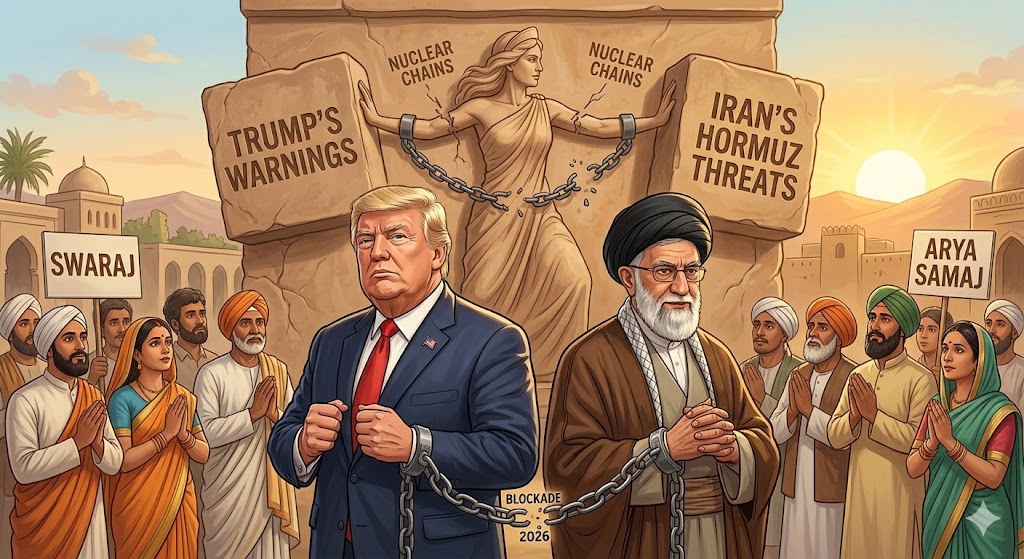
Stylized representations of U.S. and Iranian leaders bound by conflict chains, while 'Peace' in the background breaks the ' chains' of the nuclear threat, symbolizing the deep domestic and strategic pressures facing both nations.
Looking Ahead: Peace Before the Storm?
The phrase “peace before the storm” captures the mood in many capitals. The US-Iran ceasefire has delivered a temporary calm, yet underlying issues—nuclear ambitions, proxy networks, and mutual distrust—remain unresolved. April 22 is not merely a deadline; it is a stress test for 21st-century diplomacy in the Middle East.
Whether leaders in Washington, Tehran, Jerusalem, and Islamabad can summon the political will to extend this fragile truce will shape the region for years. For now, the world holds its breath. Negotiators continue their work behind closed doors, aware that history rarely grants second chances when great-power conflict meets narrow waterways and ancient rivalries.
As the clock ticks toward April 22, one truth stands out: in the US-Iran war, the difference between ceasefire and catastrophe may rest on a single negotiated paragraph—and the courage to choose restraint over retaliation.
Frequently Asked Questions
What is the primary significance of "US-Iran Ceasefire Deadline: April 22, 2026 Update"?
US-Iran Ceasefire Deadline: April 22 UpdateThe fragile truce in the US-Iran war hangs by a thread as the two-week ceasefire, agreed on April 8, 2026, edges toward its expiration on April 22. What began as a desperate pause in a month-long conflict that has already claimed thousands of lives now stands at a critical crossroads.
How does this development impact International Affairs?
With U.S. President Donald Trump signaling that failure to reach a deal could trigger renewed military action, and Iranian officials issuing stern warnings over the Strait of Hormuz, the world watches closely.
What are the key future projections to monitor?
This Iran war 2026 update examines the latest developments, the high-stakes diplomacy at play, and what the coming days could mean for regional stability and global energy markets.Background: How the US-Iran War Escalated in 2026The 2026 Iran war did not erupt overnight.