In a significant breakthrough amid years of tension, Israel and Lebanon have agreed to an Israel Lebanon ceasefire. Announced by US President Donald Trump on April 16, 2026, this Israel Lebanon ceasefire deal establishes a 10-day cessation of hostilities. The truce, which took effect shortly after midnight local time on April 17, aims to create space for broader negotiations toward a permanent security and peace agreement.
This Israel Lebanon ceasefire comes at a critical moment. For decades, the border region has seen cycles of violence, with the latest escalation in early 2026 claiming thousands of lives and displacing over a million people. The Israel Lebanon truce, backed by the United States, marks the first direct high-level engagement between the two countries in decades. It addresses immediate threats while laying groundwork for resolving deeper issues tied to Hezbollah and regional stability.
As details emerge from Washington-mediated talks, many are asking what this Israel Lebanon ceasefire truly achieves. Does it finally solve long-standing security concerns? How does it fit into the broader context of the Israel Lebanon war that has defined relations for so long? This article examines the path to the agreement, its specific terms, the challenges ahead, and what it means for both nations after more than two decades since the last major conflict.
Historical Context: Decades of Conflict Leading to the Latest Israel Lebanon War
The roots of the current Israel Lebanon ceasefire stretch back through a complex history of border disputes, proxy battles, and failed truces. Tensions between Israel and Lebanon date to the mid-20th century, but the modern era intensified with Israel's involvement in Lebanese affairs during the 1980s. A key turning point came in 2000 when Israel withdrew from southern Lebanon after an 18-year occupation. Yet peace remained elusive.
The 2006 Lebanon War stands out as a defining chapter. Triggered by a cross-border raid by Hezbollah that killed Israeli soldiers and captured others, the 34-day conflict saw intense Israeli airstrikes and ground operations against the Iran-backed group. Over 1,200 Lebanese died, mostly civilians, while Israel reported 158 deaths, the majority soldiers. The war ended with UN Resolution 1701, which called for Hezbollah's disarmament south of the Litani River and the deployment of Lebanese and international forces. However, implementation fell short, and low-level violations persisted for years.
By late 2023, fresh escalation erupted as Hezbollah launched rockets into northern Israel in solidarity with Palestinian groups during the Gaza conflict. Israel responded with strikes, eventually leading to a US-brokered ceasefire in November 2024. That truce proved fragile. Israel conducted near-daily operations to prevent Hezbollah rearmament, while the group rebuilt its capabilities. Violations mounted into the thousands, according to UN monitors.
The situation boiled over in March 2026 amid wider regional turmoil involving Iran. Hezbollah resumed major rocket and drone attacks, prompting Israel to launch ground operations in southern Lebanon. The Israel Lebanon war of 2026 quickly intensified, with Israeli forces advancing to create a security buffer zone. Casualties mounted rapidly—over 2,200 reported in Lebanon alone in the latest phase, alongside significant displacement and infrastructure damage. Bridges were destroyed, villages evacuated, and the Litani River became a de facto line of control.
This latest flare-up highlighted unresolved issues from the 2006 war and subsequent agreements. After roughly 20 years since that earlier conflict (often referenced in discussions of long-term stalemate), both sides found themselves in a familiar but deadlier cycle. The Israel Lebanon ceasefire of 2026 thus represents not just a pause in fighting but a potential reset after decades of mutual distrust and repeated failures to enforce lasting security arrangements.
How the Israel Lebanon Ceasefire Deal Came Together
The road to the current Israel Lebanon ceasefire involved intense diplomacy, primarily led by the United States. Direct talks between Israeli and Lebanese officials took place in Washington earlier in the week—the first such face-to-face engagement in decades. These discussions occurred against the backdrop of separate US-Iran negotiations, underscoring how the Israel Lebanon ceasefire fits into a larger regional de-escalation effort.
President Trump played a pivotal role. In separate calls with Israeli Prime Minister Benjamin Netanyahu and Lebanese President Joseph Aoun, he secured commitments to halt offensive operations. Trump announced the Israel Lebanon ceasefire via social media, describing it as a step toward peace and inviting both leaders to the White House for follow-up talks. He emphasized that the truce included Hezbollah, urging the group to comply fully.
Lebanese officials welcomed the move as a response to their long-standing calls for de-escalation. Prime Minister Nawaf Salam highlighted it as fulfilling a core national demand since the war's outset. On the Israeli side, Netanyahu framed the agreement as an opportunity for a "historic deal" with Beirut, though he stressed that core demands—particularly Hezbollah's disarmament—remained non-negotiable.
Hezbollah itself acknowledged the Israel Lebanon truce but stopped short of full endorsement. The group halted its attacks on Israeli targets as the ceasefire began, yet it expressed skepticism, warning that any continued Israeli presence on Lebanese soil could justify resistance. This cautious stance reflects Hezbollah's view of the conflict as existential, tied to its role as a defender against perceived Israeli aggression.
The timing aligned with broader diplomatic momentum. A separate US-Iran ceasefire had recently taken hold, and mediators saw the Israel Lebanon ceasefire as a complementary piece. Pakistan reportedly played a supporting role in related regional talks, further illustrating the interconnected nature of these ceasefires.
A symbolic illustration of US, Israeli, and Lebanese negotiation partners in Washington, reviewing the "CEASEFIRE DEAL" blueprint that initiates the critical 10-day truce.
Detailed Terms of the Israel Lebanon Ceasefire Agreement
At its core, the Israel Lebanon ceasefire establishes a 10-day "cessation of hostilities." This initial period can extend by mutual consent if progress occurs in negotiations and Lebanon demonstrates effective sovereignty over its territory. Key provisions, released through the US State Department, include:
Mutual Non-Aggression Commitment: Both sides agree they are not at war and commit to good-faith negotiations facilitated by the United States. Israel pledges no offensive military operations by land, air, or sea against Lebanese targets. Lebanon, in turn, must take meaningful steps to prevent Hezbollah and other non-state actors from attacking Israel.
Lebanese Sovereignty Emphasis: The deal recognizes Lebanon's security forces as solely responsible for national defense and sovereignty. It references ongoing Lebanese efforts—intensified since 2025—to restrict arms to state forces only, implicitly targeting Hezbollah's military wing.
Israeli Self-Defense Rights: Israel retains the right to respond to any planned, imminent, or ongoing attacks. This clause ensures flexibility while limiting proactive strikes during the truce.
No Immediate Full Withdrawal: Notably, the agreement does not require Israel to pull back from positions in southern Lebanon. Israeli forces maintain a security buffer zone—reportedly up to 10 kilometers deep in some areas—covering a significant portion of territory south of the Litani River. Residents have been warned against returning to certain villages.
Path to Permanent Agreements : The truce explicitly aims to enable comprehensive talks on lasting security, stability, and peace. Issues like displacement, reconstruction, and long-term border arrangements are on the table for future discussions.
These terms strike a delicate balance. They stop the immediate bloodshed of the Israel Lebanon war without forcing either side into politically untenable concessions right away. However, the lack of explicit timelines for Israeli withdrawal or full Hezbollah disarmament leaves room for future friction.
What the Israel Lebanon Ceasefire Solves After Decades of Stalemate
After more than two decades since the 2006 war—and countless smaller incidents in between—this Israel Lebanon ceasefire offers partial but meaningful progress. It does not resolve every grievance, yet it addresses several pressing realities that have plagued the region.
First, it halts active combat. The Israel Lebanon truce has already allowed displaced Lebanese families to begin considering returns home, though many remain cautious due to reports of early violations. Infrastructure repairs, such as bridges linking southern Lebanon to the rest of the country, have started in some areas. For ordinary citizens on both sides of the border, the immediate reduction in rocket fire, airstrikes, and ground clashes brings a desperately needed breathing space.
Second, the deal reopens diplomatic channels long frozen. Direct Israel Lebanon peace talks, now scheduled potentially at the White House, represent a historic shift. Previous efforts relied on indirect mediation or UN resolutions that lacked enforcement teeth. By committing both governments to negotiations, the Israel Lebanon ceasefire creates a framework where issues like border demarcation, water rights, and economic cooperation could finally gain traction.
Third, it spotlights Hezbollah's role in a new light. For years, the group's arsenal and cross-border activities have been the central flashpoint. The agreement pressures Lebanon to assert greater control, aligning with international expectations under past resolutions. While full disarmament remains a long-term goal rather than an immediate requirement, the Israel Lebanon ceasefire deal ties future extensions to Lebanon's demonstrated ability to manage non-state armed groups. This could accelerate internal Lebanese reforms that governments have hesitated to pursue aggressively.
In essence, what is "solved" here is the acute phase of the latest Israel Lebanon war. The deal prevents further escalation into a wider regional catastrophe, especially given concurrent US-Iran dynamics. It buys time—potentially weeks or months if extended—to tackle root causes rather than managing symptoms through repeated temporary halts.
Yet not everything is resolved. Israeli security concerns about rocket threats from Lebanon persist until Hezbollah's capabilities are verifiably curtailed. Lebanese sovereignty feels incomplete while foreign forces occupy parts of the south. Displacement, economic devastation, and humanitarian needs will require sustained international support beyond the initial truce period.
Challenges Ahead: Will the Israel Lebanon Ceasefire Hold?
Skepticism abounds regarding the durability of this Israel Lebanon ceasefire. Past agreements, including the 2024 truce, collapsed under repeated violations—over 10,000 documented by UN observers in one case. Early signs after the current deal's implementation include Lebanese reports of isolated Israeli shelling and machine-gun fire in border villages.
Hezbollah's ambiguous position adds uncertainty. The group has not fully embraced the terms and maintains that Israeli troops must leave before any lasting arrangement. Israeli leaders, conversely, insist on retaining the security zone until threats are neutralized. These incompatible red lines could derail extensions.
Iran's influence looms large. As Hezbollah's primary backer, Tehran has signaled openness to the Israel Lebanon ceasefire as part of broader de-escalation. Yet any perception that the deal weakens its regional allies could prompt indirect challenges.
Domestic politics complicate matters too. In Israel, opposition voices criticize the truce as insufficiently decisive. In Lebanon, sectarian dynamics and public frustration over years of conflict could fuel resistance to concessions.
Despite these hurdles, several factors support cautious optimism. Strong US involvement, including personal engagement from President Trump, provides leverage absent in earlier efforts. The exhaustion on both sides after intense fighting may encourage compromise. And the linkage to potential US-Iran progress creates incentives for all parties to cooperate.
The Role of the US, Trump, and Regional Players in the Israel Lebanon Ceasefire
The United States emerges as the clear architect of this Israel Lebanon ceasefire. Trump's administration not only brokered the initial agreement but framed it as part of a wider vision for Middle East stability. By inviting Netanyahu and Aoun to Washington, the US positions itself as indispensable mediator.
This approach contrasts with previous hands-off periods. It also ties the Israel Lebanon ceasefire to parallel Iran talks, where progress on nuclear issues, sanctions, and maritime security (such as the Strait of Hormuz) could reinforce border calm.
For Iran, the deal offers a face-saving way to reduce proxy pressures without direct confrontation. Lebanon benefits from potential reconstruction aid and international legitimacy for its army. Israel gains breathing room to focus on other threats while keeping defensive options open.
Implications for Lebanon, Israel, and the Broader Middle East
The Israel Lebanon ceasefire carries profound implications. For Lebanon, it could mark the beginning of recovery—economic, social, and political—if followed by genuine state-building. Success might diminish Hezbollah's dominance and foster national unity.
Israel stands to gain enhanced northern security if negotiations yield enforceable disarmament commitments. Yet failure could renew calls for stronger unilateral action.
Regionally, the truce tests whether localized agreements can cascade into broader peace. It influences dynamics with Syria, Gaza, and beyond, demonstrating that diplomacy, however imperfect, can interrupt cycles of violence.
Economically, calm along the border supports trade, energy projects, and tourism revival for both nations. Humanitarily, it enables aid delivery and family reunifications long delayed by the Israel Lebanon war.
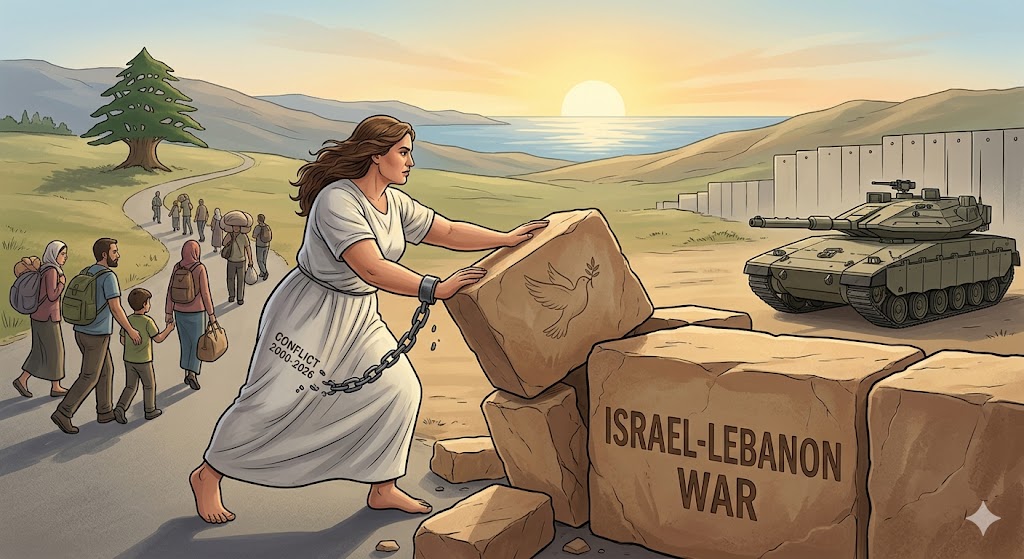
A conceptual illustration of the 10-day ceasefire pausing the 2026 war, featuring 'Peace' breaking the chain of conflict at dawn while displaced citizens begin to return to the border region.
Looking Forward: From Temporary Truce to Enduring Peace
As the initial 10 days unfold, the world watches whether this Israel Lebanon ceasefire evolves into something more permanent. The deal does not magically erase decades of mistrust, but it creates a rare window for dialogue.
Lebanon and Israel now face a choice: seize the moment to address core disputes through the promised talks, or allow old grievances to unravel the progress. The Israel Lebanon ceasefire deal, while limited, proves that even entrenched adversaries can step back from the brink when facilitated by determined international effort.
For residents on both sides who have endured rocket alerts, evacuations, and loss, the truce brings hope—however tentative—that a future without constant fear is possible. The coming weeks will test commitments made in Washington and reveal whether this Israel Lebanon ceasefire truly paves the way for the lasting peace both peoples deserve.
In the end, the Israel Lebanon ceasefire represents more than a pause in fighting. It embodies the hard-won recognition that security for one side depends on stability for the other. With careful stewardship, it could finally break the pattern that has defined the Israel Lebanon relationship for far too long.
Frequently Asked Questions
What is the primary significance of Israel Lebanon April Ceasefire : 10-Day Truce Explained?
Israel Lebanon Ceasefire Deal: Historic 10-Day Truce Opens Door to Lasting PeaceIn a significant breakthrough amid years of tension, Israel and Lebanon have agreed to an Israel Lebanon ceasefire. Announced by US President Donald Trump on April 16, 2026, this Israel Lebanon ceasefire deal establishes a 10-day cessation of hostilities.
How does this development impact International Affairs?
The truce, which took effect shortly after midnight local time on April 17, aims to create space for broader negotiations toward a permanent security and peace agreement.This Israel Lebanon ceasefire comes at a critical moment. For decades, the border region has seen cycles of violence, with the latest escalation in early 2026 claiming thousands of lives and displacing over a million people.
What are the key future projections to monitor?
The Israel Lebanon truce, backed by the United States, marks the first direct high-level engagement between the two countries in decades.