US-Iran War 2026: Hormuz Blockade & Lebanon Update
International Affairs• April 15, 2026• Global Edition
As of April 15, 2026, the US-Iran war remains a defining crisis in the Middle East, with the United States and Israel engaged in coordinated military actions that have reshaped regional security. What began as targeted strikes on February 28, 2026, under Operation Epic Fury has evolved into a complex conflict involving direct US naval operations, persistent Israeli campaigns in Lebanon, and fragile diplomatic overtures.
The US-Iran war 2026 has drawn global attention, particularly with the implementation of a US naval blockade in the Strait of Hormuz and continued Israeli strikes in southern Lebanon despite a temporary ceasefire. This article provides a comprehensive, professional overview of the current situation in the US-Iran war, examining US troop deployments, Iran's attempts to maintain shipping access, Israeli evacuation warnings to Lebanese residents, diplomatic discussions on Iran's nuclear stance, and President Trump's signals toward potential deals. With the US-Iran war update reflecting heightened tensions, the scenario underscores the delicate balance between military pressure and negotiation.
The conflict's roots trace to long-standing concerns over Iran's nuclear program, missile capabilities, and support for proxy groups like Hezbollah. In the US-Iran war today, these issues have converged into active hostilities, with ripple effects on global energy markets and international alliances. As the Iran US war latest news continues to unfold, stakeholders worldwide monitor developments closely.
US Military Buildup and Troop Deployments in the Strait of Hormuz
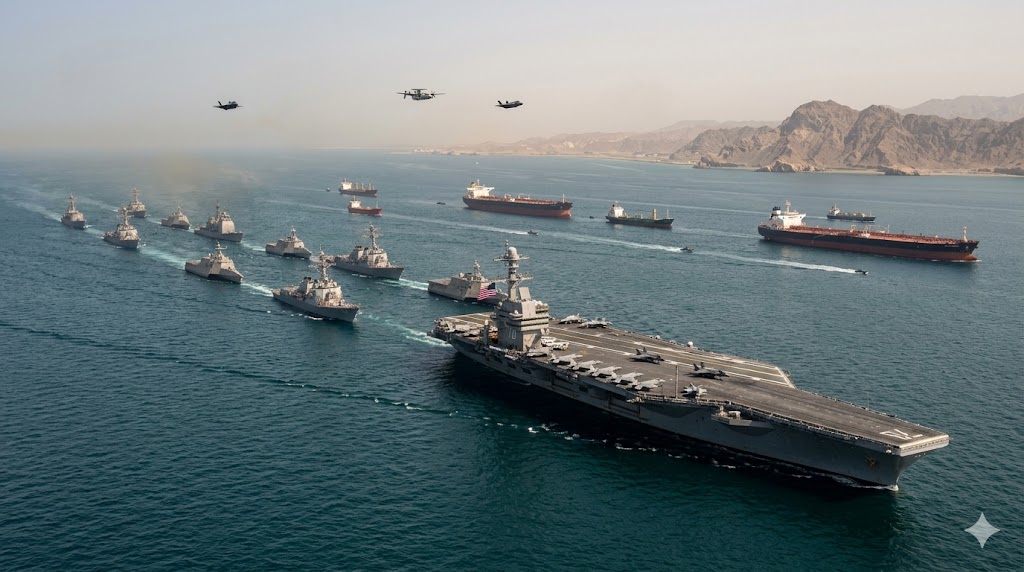
A central element of the current US-Iran war is the significant American military reinforcement in the region. The United States has undertaken its largest troop buildup in the Middle East since the 2003 Iraq invasion, deploying thousands of personnel to enforce a naval blockade. US Central Command (CENTCOM) reports approximately 10,000 sailors, Marines, and airmen involved in operations around the Strait of Hormuz, supported by more than a dozen warships and dozens of aircraft.
In the US-Iran war 2026, this deployment serves to restrict Iranian port access while allowing non-Iranian vessels to transit the vital waterway. The blockade, which took effect on April 13 at 14:00 GMT, aims to curb Iran's oil exports and pressure Tehran into compliance with international demands. Reports confirm that in the first 24 hours, no ships successfully passed the blockade for Iranian ports, with several merchant vessels turning around in compliance.
This escalation in the US Iran war update reflects a strategic shift following failed talks. US commanders emphasize that the operation ensures freedom of navigation for global shipping while targeting Iran's economic leverage. Additional forces continue to arrive, signaling Washington's commitment to sustaining pressure in the ongoing US-Iran war. Analysts note that these troop movements in the Middle East Asia not only address immediate threats but also deter broader regional escalation involving proxies.
The presence of US assets has already influenced oil prices, with Brent crude rising sharply amid fears of prolonged disruption. In the broader context of the US-Iran war, such deployments highlight America's resolve to protect allied interests and maintain strategic choke point.
US Navy warships enforce a complete maritime blockade in the vital Strait of Hormuz during the 2026 conflict. This operation, involving the USS Gerald R. Ford carrier strike group, halts Iranian vessels and oil shipments to strangle Tehran's economy and force a nuclear agreement.
Iran's Persistent Efforts to Navigate Ships Through the Hormuz Strait
Iran has repeatedly asserted its right to open passage in the Strait of Hormuz, framing US actions as violations of international law. In the Iran US war, the Islamic Revolutionary Guard Corps (IRGC) insists the strait remains accessible for civilian traffic, warning that any military interference will meet a "severe" response. Iranian officials, including Navy Commander Admiral Shahram Irani, have dismissed blockade threats as ineffective, while emphasizing sovereign control over the waterway.
Despite these declarations, the US-Iran war latest news indicates limited success for Iranian-linked shipping. CENTCOM statements confirm that Iranian vessels and those bound for Iranian ports have been halted, with the blockade allowing only non-Iranian transit. Iran had earlier closed or imposed tolls on the strait in retaliation for strikes, disrupting global oil flows that account for roughly 20% of seaborne trade.
This standoff in the US Iran war 2026 underscores Iran's strategy of asymmetric resistance. By attempting to maintain shipping routes and challenging the blockade through statements and limited maneuvers, Tehran seeks to portray the US as the aggressor. However, shipping data shows drastically reduced traffic, forcing alternative routes and contributing to an energy crisis. Gulf states, including Saudi Arabia and Qatar, are activating bypass pipelines and alternative fields to mitigate impacts, further isolating Iran's position in the Iran US war.
As the war Iran developments continue, Iran's determination to challenge restrictions in the Hormuz strait remains a flashpoint, with potential for miscalculation heightening risks in the US-Iran war update.
Israeli Evacuation Warnings and Strikes in Southern Lebanon
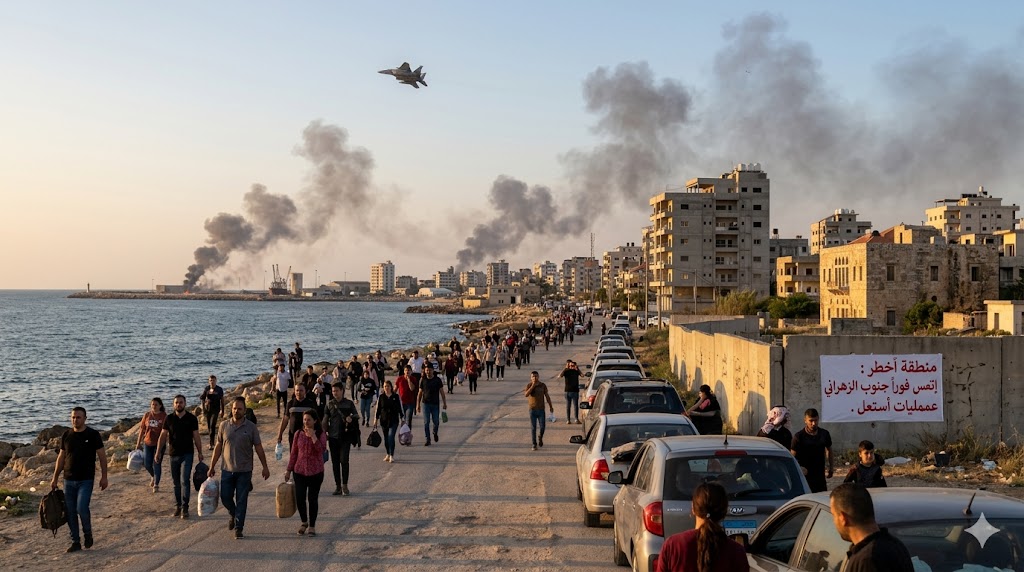
Parallel to the US-Iran war, Israel has intensified operations against Hezbollah in Lebanon, issuing repeated evacuation warnings that have reshaped civilian life in the south. On April 8, 2026, the Israeli military directed residents of Tyre and surrounding areas to move immediately north of the Zahrani River, citing planned strikes on Hezbollah infrastructure. Similar orders have targeted dozens of towns, emphasizing that the ceasefire with Iran does not extend to Lebanese territory.
The Israeli government has made clear that strikes will persist until Hezbollah threats are neutralized. In the Israel US Iran war context, these actions follow Israel's ground operations and air campaigns that have killed hundreds in Lebanon since early March. Warnings explicitly state that failure to evacuate endangers civilians, with maps provided via social media to guide safe relocation.
This morning's developments in the Iran war crisis show Israeli forces maintaining pressure, with reports of strikes near Tyre and Beirut suburbs. The Israeli government shows no signs of halting operations, targeting what it describes as terrorist infrastructure linked to Iran. Despite the two-week US-Iran ceasefire brokered in April, Lebanon remains a separate theater, with Israel launching Operation Eternal Darkness to counter Hezbollah.
Impact on Lebanese Residents and the Unyielding Israeli Campaign
Lebanese residents are bearing the brunt of the ongoing conflict, with evacuation orders displacing hundreds of thousands and strikes causing significant casualties. In southern Lebanon, families in Tyre and areas south of the Zahrani River have heeded warnings, relocating northward amid fears of escalation. Reports from the ground describe scenes of hurried departures, temporary shelters, and grief over loved ones lost in recent bombardments.
This situation illustrates that the Israeli government is not stopping its war efforts. Continuous targeting and strikes in Lebanon demonstrate a firm commitment to degrading Hezbollah capabilities, even as the broader US-Iran war sees pauses. Lebanese officials, including Prime Minister Nawaf Salam, have warned of risks to national stability, while health authorities report rising civilian tolls from the Israel Iran war.
Residents' experiences highlight the human cost in the US Iran Israel war update. Many express frustration that diplomatic truces fail to encompass Lebanon, leaving communities vulnerable. As Iran war news today notes, Hezbollah continues limited responses, but the asymmetry favors sustained Israeli operations. The unyielding nature of these strikes reinforces perceptions of a prolonged campaign, with displacement figures exceeding one million in recent months.
Amid military actions, diplomatic channels have remained active, with foreign ministers and high-level envoys engaging on Iran's nuclear program. Iranian Foreign Minister Abbas Araghchi has been central to negotiations, participating in earlier rounds and the recent Islamabad talks. US demands have included a 20-year moratorium on uranium enrichment, removal of highly enriched stockpiles, and unrestricted navigation through the Strait of Hormuz.
Secretary of State Marco Rubio and other US officials have reiterated the need to dismantle Iran's ability to pursue nuclear weapons, linking it to broader security goals in the US-Iran war. While pre-war talks in 2025 showed some progress on guiding principles, the current Iran US war has complicated matters. Araghchi accused the US of shifting positions, yet both sides express openness to further dialogue on nuclear stands.
These discussions form a critical backdrop to the US Iran war 2026, offering a potential off-ramp from escalation. International observers, including those from the IAEA, monitor nuclear sites damaged in strikes, underscoring the urgency of verifiable agreements.
Trump's Path to Deals and Communication in the Conflict
President Donald Trump has played a pivotal role in shaping the narrative and strategy of the US-Iran war. Following the failure of Islamabad talks on April 12, Trump announced the Hormuz blockade but simultaneously indicated that the US remains open to renewed communication. He described the war as "very close to being over" in recent statements, while threatening decisive action if Iran refuses compliance.
Trump's approach emphasizes clear objectives: destroying missile and nuclear capabilities, securing navigation rights, and curbing proxy support. In the US Iran war trump statement updates, he has signaled pathways for deals, including potential extensions of the ceasefire. "I no longer cared about negotiations" was one remark post-talks failure, yet he has left the door open for future rounds.
This dual track of pressure and pragmatism defines Trump's involvement in the America vs Iran war. By framing military moves as temporary measures to force concessions, he aims to create conditions for a lasting agreement. Observers note that communication channels via intermediaries like Pakistan remain viable, offering hope amid the Iran war crisis.
Beyond Hormuz, the US has reinforced its overall presence in the Middle East Asia as part of the US-Iran war strategy. Additional marines, air assets, and support units have deployed to bases in the Gulf, with allies providing logistical backing. This buildup, the most substantial since 2003, addresses not only the Iran threat but also spillover risks from Lebanon and other proxies.
In the US Iran war updates, these movements ensure operational readiness while signaling deterrence. Costs have mounted, with billions allocated for sustainment, yet officials justify the investment as essential for regional stability.
Smoke billows over a coastal Lebanese town near Tyre following a series of precision airstrikes by Israeli aircraft. This campaign against Hezbollah infrastructure continues parallel to the US-Iran war, with Israel ignoring calls for a ceasefire in this specific theater.
Current Scenario and Outlook for the US-Iran-Israel War
The present landscape in the US-Iran war 2026 is one of fragile ceasefire punctuated by active fronts in Lebanon and naval enforcement in Hormuz. While US-Iran direct hostilities have paused, Israeli operations continue, and the blockade persists. Global reactions vary, with China advocating a constructive role through peace initiatives alongside Pakistan.
Oil markets remain volatile, economies face strain, and humanitarian concerns mount in Lebanon. The Iran US Israel war update suggests that without breakthroughs in nuclear talks or Lebanon-specific ceasefires, tensions could reignite. Trump's administration balances military resolve with diplomatic openings, while Iran maintains defiance tempered by economic pressure.
In summary, the US-Iran war reflects deep-seated rivalries but also pathways for de-escalation. As Iran war latest developments emerge, the coming weeks will test whether troop deployments and warnings yield negotiations or further conflict. The world watches closely as the US-Iran war, Israel Iran war, and related crises shape the future of the Middle East.
Frequently Asked Questions
What is the primary significance of US-Iran War 2026: Hormuz Blockade & Lebanon Update?
As of April 15, 2026, the US-Iran war remains a defining crisis in the Middle East, with the United States and Israel engaged in coordinated military actions that have reshaped regional security. What began as targeted strikes on February 28, 2026, under Operation Epic Fury has evolved into a complex conflict involving direct US naval operations, persistent Israeli campaigns in Lebanon, and fragile diplomatic overtures.The US-Iran war 2026 has drawn global attention, particularly with the implementation of a US naval blockade in the Strait of Hormuz and continued Israeli strikes in southern Lebanon despite a temporary ceasefire.
How does this development impact International Affairs?
This article provides a comprehensive, professional overview of the current situation in the US-Iran war, examining US troop deployments, Iran's attempts to maintain shipping access, Israeli evacuation warnings to Lebanese residents, diplomatic discussions on Iran's nuclear stance, and President Trump's signals toward potential deals. With the US-Iran war update reflecting heightened tensions, the scenario underscores the delicate balance between military pressure and negotiation.The conflict's roots trace to long-standing concerns over Iran's nuclear program, missile capabilities, and support for proxy groups like Hezbollah.
What are the key future projections to monitor?
In the US-Iran war today, these issues have converged into active hostilities, with ripple effects on global energy markets and international alliances.