Baisakhi 2026: Sikh New Year, Khalsa Formation & Harvest
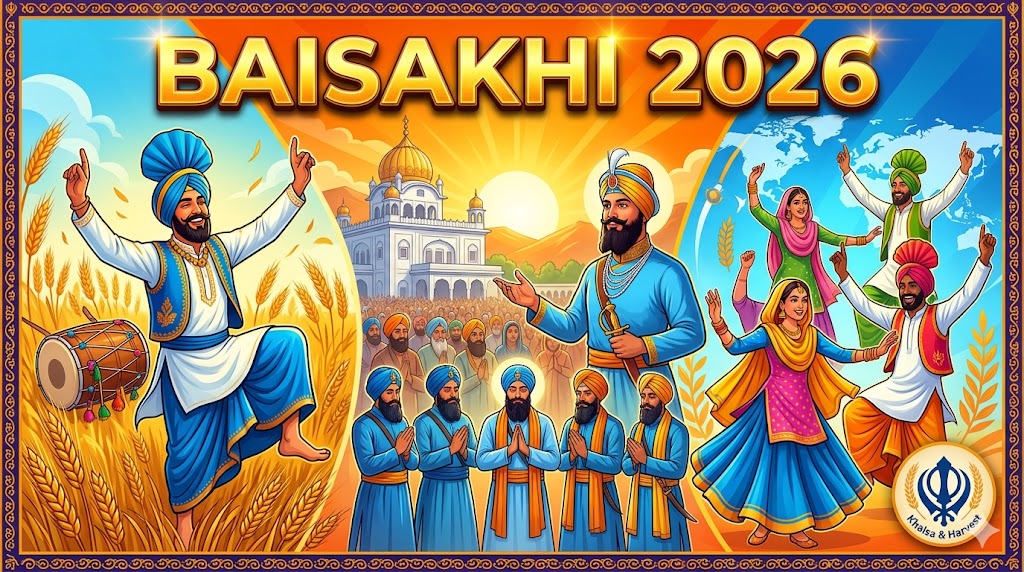
Baisakhi 2026: Sikh New Year, Khalsa Formation & Harvest Festival
Baisakhi stands as one of the most vibrant and meaningful festivals in India, blending rich cultural heritage with deep spiritual roots. Celebrated annually on April 13 or 14, Baisakhi 2026 fell on Tuesday, April 14, marking a special occasion for millions. This festival, also known as Vaisakhi, serves not only as the Punjabi and Sikh New Year but also commemorates the historic formation of the Khalsa by Guru Gobind Singh Ji in 1699. At its heart, Baisakhi celebrates the bountiful harvest of the rabi crops, particularly wheat, symbolizing renewal, gratitude, and community spirit.
In Punjab and beyond, Baisakhi brings people together in joyous celebration, reflecting resilience, equality, and faith. Whether through energetic Bhangra performances, sacred processions, or simple family gatherings, the festival continues to inspire. This article explores the full significance of Baisakhi, its historical importance, the life and teachings of Guru Gobind Singh Ji, and how communities in India and across the world observe this timeless occasion today.
The Historical Roots of Baisakhi: From Harvest Festival to Sikh Milestone
Baisakhi has ancient origins tied to the agricultural cycles of northern India. For centuries, farmers in Punjab have marked the end of the winter harvest season with this spring festival. As the golden fields of wheat ripen under the April sun, families express thanks for the new crop that sustains them through the year. This practical celebration of abundance evolved into a broader cultural event, blending folk traditions with spiritual reflection.
The turning point came in 1699. On Vaisakhi that year, Guru Gobind Singh Ji transformed Baisakhi into a defining moment in Sikh history. At Anandpur Sahib, he called upon his followers to demonstrate unwavering courage and faith. Five devoted Sikhs, later known as the Panj Pyare or Five Beloved Ones, stepped forward one by one. Guru Gobind Singh Ji administered Amrit Sanchar—the sacred initiation ceremony—baptizing them with sweetened water stirred by a double-edged sword. These five became the first members of the Khalsa Panth, a community of the pure dedicated to equality, justice, and service.
This act was revolutionary. It rejected caste divisions, empowered ordinary people, and created a disciplined order ready to defend the oppressed. The formation of the Khalsa on Baisakhi 1699 elevated the festival from a seasonal harvest gathering to Khalsa Sirjana Divas, the day the Sikh community was reborn as a sovereign, fearless brotherhood. Even today, Sikhs worldwide recall this event with pride during Baisakhi observances.
A Brief Life Sketch of Guru Gobind Singh Ji
To fully appreciate Baisakhi’s depth, one must understand the visionary behind the Khalsa. Guru Gobind Singh Ji, the tenth and last human Guru of Sikhism, was born on December 22, 1666, in Patna, Bihar, to Guru Tegh Bahadur Ji and Mata Gujri Ji. He ascended as Guru at the tender age of nine following his father’s martyrdom in 1675, an event that profoundly shaped his mission to protect religious freedom.
Guru Gobind Singh Ji grew into a multifaceted leader—warrior, poet, philosopher, and strategist. He mastered multiple languages, including Punjabi, Sanskrit, Persian, and Arabic, and received rigorous training in weaponry. Facing persecution from Mughal authorities, he established a base at Anandpur Sahib and organized his followers into a cohesive force. His four sons—Ajit Singh, Jujhar Singh, Zorawar Singh, and Fateh Singh—along with his mother, made the ultimate sacrifice for the faith, yet he remained steadfast.
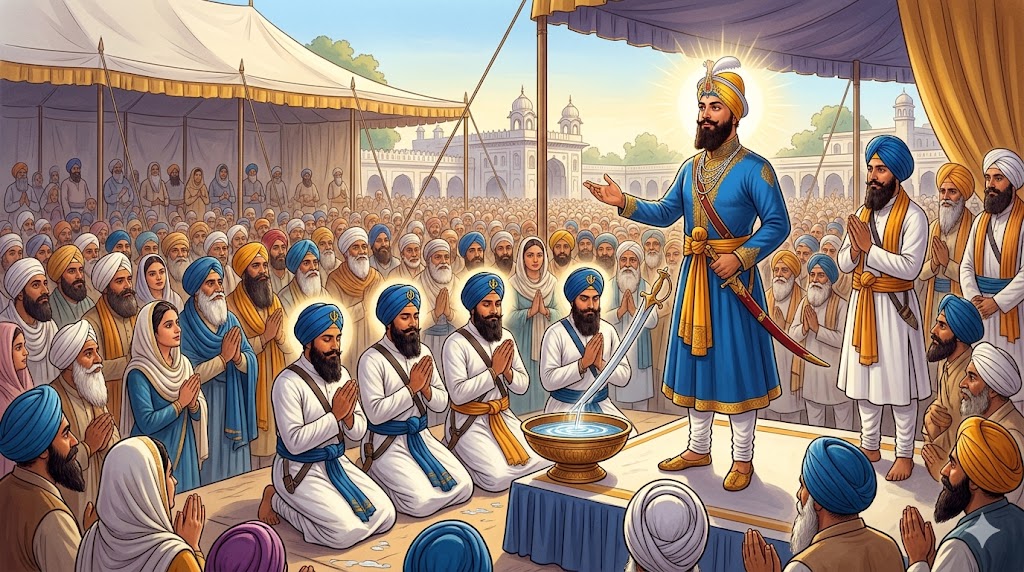
An artistic illustration capturing the historic Vaisakhi of 1699 at Anandpur Sahib, where Guru Gobind Singh Ji (holding a sword) is administering Amrit Sanchar to the first Panj Pyare (Five Beloved Ones), marking the creation of the Khalsa Panth.
In 1699, during that historic Baisakhi, he founded the Khalsa, introducing the Five Ks (Kesh, Kangha, Kara, Kachera, Kirpan) as symbols of commitment and identity. He also completed the compilation of the Guru Granth Sahib in its present form and, before his passing on October 7, 1708, at Nanded, declared the scripture as the eternal Guru. His Zafarnama, a letter of victory addressed to Emperor Aurangzeb, remains a powerful testament to truth, justice, and moral courage.
Guru Gobind Singh Ji’s life was one of tireless dedication. He fought defensive battles, composed inspiring poetry in the Dasam Granth, and established institutions like the langar for communal equality. His legacy endures as a beacon for those facing adversity.
Teachings of Guru Gobind Singh Ji and Their Relevance in Today’s Era
Guru Gobind Singh Ji’s teachings remain remarkably relevant in the 21st century. At their core lies the principle of Ik Onkar—one God for all humanity—emphasizing unity beyond religious or social barriers. He taught that true strength comes from inner spirituality combined with outer courage. “Deh Shiva Bar Mohe Eha” (O Lord Shiva, grant me this boon), one of his famous compositions, prays not for personal comfort but for the resolve to confront injustice without fear.
Equality formed the bedrock of his message. By creating the Khalsa without regard to caste, class, or gender, he challenged discriminatory systems that divided society. In today’s world of social inequality and polarization, this call for inclusivity resonates deeply. The Panj Pyare model promotes collective leadership and accountability, ideas that align with modern democratic values and team-based decision-making.
Service, or seva, was another cornerstone. Whether through langar or battlefield support, Guru Gobind Singh Ji stressed selfless action for the community’s welfare. In an era of individualism, his teachings encourage volunteerism and social responsibility—values seen in global Sikh initiatives aiding disaster relief or education.
He also championed ethical living and environmental respect, viewing creation as a divine gift. His emphasis on honest labor and sharing harvest aligns with sustainable agriculture practices today. For young generations navigating identity crises, the Five Ks serve as reminders of discipline, humility, and readiness to stand for what is right.
In workplaces, schools, and communities worldwide, these principles foster resilience against oppression, promote interfaith dialogue, and build bridges across cultures. Guru Gobind Singh Ji’s vision turns Baisakhi into more than a festival—it becomes an annual reminder to live with purpose and integrity.
Religious Importance of Baisakhi in Sikhism and Punjabi Culture
Within Sikhism, Baisakhi holds profound religious weight. It marks the Sikh New Year according to the Nanakshahi calendar and commemorates the birth of the Khalsa as a spiritual army of saint-soldiers. Devotees visit gurdwaras for special kirtans, Ardas prayers, and the ceremonial hoisting of the Nishan Sahib flag. The Amrit Sanchar ceremony often takes place on this day, welcoming new members into the faith.
For Punjabis, regardless of religion, Baisakhi embodies gratitude to the divine for nature’s bounty. Hindu communities in the region may observe it with ritual baths in sacred rivers and temple visits, while the festival reinforces shared cultural bonds. The emphasis on community harmony, charity, and renewal makes Baisakhi a unifying force across diverse backgrounds.
Vibrant Baisakhi Celebrations in India
In India, particularly Punjab and Haryana, Baisakhi bursts with color and energy. Farmers wake up early to thank the land, often performing traditional rituals before heading to the fields. Villages and cities host grand melas—fairs featuring folk performances, games, and stalls selling sweets and handicrafts.
Bhangra and Giddha dances take center stage. Men in vibrant turbans and women in colorful phulkari dupattas perform energetic routines to the beat of dhol drums, celebrating the harvest’s success. Nagar kirtan processions wind through streets, with devotees singing hymns and distributing prasad. Gurdwaras organize massive langar meals, where thousands share simple, nourishing food prepared with love.
In Delhi, major gurdwaras like Bangla Sahib and Sis Ganj Sahib glow with lights and flowers. Families prepare yellow and orange dishes—meethe chawal, kadhi, and pinni—symbolizing the golden wheat crop. Children learn Baisakhi stories through skits and songs, keeping traditions alive.
Even in non-Sikh households, the festival fosters family reunions and community service projects. Baisakhi thus bridges rural and urban life, reminding everyone of agriculture’s foundational role in India’s economy and culture.
How the World Celebrates Baisakhi Beyond India
The Punjabi and Sikh diaspora have carried Baisakhi traditions across continents, adapting them while preserving their essence. In the United Kingdom, Trafalgar Square in London hosts “Vaisakhi on the Square,” drawing thousands for parades, dances, and cultural showcases. Canada’s Toronto and Vancouver see elaborate nagar kirtans and floats, while the United States features similar events in New York and California.
Australia, New Zealand, and European countries organize gurdwara-based celebrations with langar open to all. These global gatherings highlight Sikh values of inclusivity and service, often partnering with local charities. Younger generations blend traditional Bhangra with contemporary music, creating fusion performances that introduce Baisakhi to new audiences.
Social media amplifies the reach, with hashtags and live streams sharing moments from Anandpur Sahib to distant cities. Through these observances, Baisakhi strengthens cultural identity abroad and promotes cross-community understanding.
Baisakhi and the Joy of Harvest: Agricultural Significance
At its foundation, Baisakhi remains a harvest festival. Punjab’s fertile fields yield the season’s first wheat crop, and farmers celebrate with prayers and thanksgiving. The festival signals the start of a new agricultural cycle and encourages sustainable practices rooted in respect for nature.
This connection to the land adds a layer of humility to the celebrations. Families share the harvest’s fruits, reinforcing values of generosity and cooperation. In an age of rapid urbanization, Baisakhi reminds us of our dependence on farmers and the importance of food security.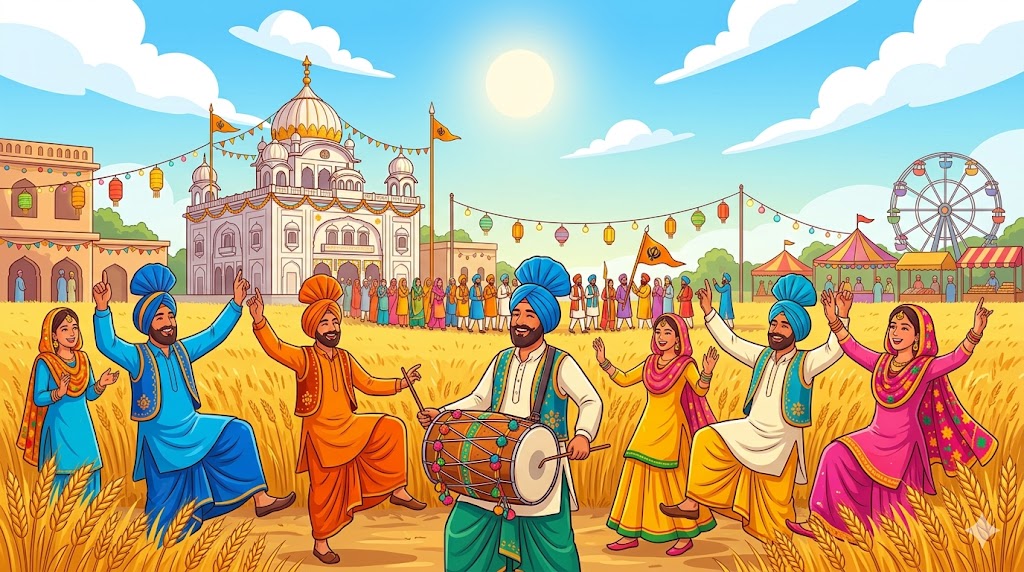
A joyful illustration capturing the dual celebration of Baisakhi: the religious observance and the agricultural harvest festival. In the foreground, men and women in colorful traditional Punjabi attire perform energetic Bhangra and Giddha dances in a golden wheat field.
Conclusion: The Enduring Spirit of Baisakhi
Baisakhi 2026, like every year, offered a powerful reminder of resilience, faith, and community. From the golden fields of Punjab to bustling streets in global cities, the festival unites people in celebration of new beginnings. The formation of the Khalsa by Guru Gobind Singh Ji transformed Baisakhi into a beacon of courage and equality whose lessons continue to guide millions.
As we reflect on its harvest roots, religious depth, and modern expressions, Baisakhi encourages us all to embrace gratitude, stand for justice, and nurture the bonds that sustain society. Whether dancing to Bhangra beats or sharing a langar meal, participants carry forward a legacy of hope and unity that transcends time and borders.
May the spirit of Baisakhi inspire renewed purpose in every heart—today and always.