In a major political development that has ignited intense debate across India, the Centre has proposed a significant expansion of the Lok Sabha. The move aims to increase the number of seats from the current 543 to 850 through a new constitutional amendment. This Lok Sabha seat increase to 850 is closely tied to the long-awaited implementation of the 33 per cent women's reservation in Parliament and state assemblies. However, the proposal has triggered strong protests from South Indian members of Parliament and state leaders, who argue that the accompanying delimitation exercise could disproportionately benefit northern states and undermine the federal balance of power.
The controversy surrounding the Lok Sabha seat increase to 850 highlights deep-seated concerns about representation, population dynamics, and regional equity. As the nation prepares for a special three-day Parliament session starting April 16, 2026, the bill has become a flashpoint between the central government and opposition parties, particularly from southern states. This article examines the background, provisions, and implications of the proposed legislation, while delving into the reasons behind the vocal protests from South India.
Understanding the Current Structure of the Lok Sabha
The Lok Sabha, India's lower house of Parliament, currently comprises 543 elected members. Of these, 530 represent states and 13 represent Union Territories, a framework established after the last major delimitation exercise conducted on the basis of the 2001 Census but frozen since the 1971 population figures under the 42nd and 84th Constitutional Amendments. This freeze was intended to encourage states to adopt effective population control measures without fear of losing parliamentary seats.
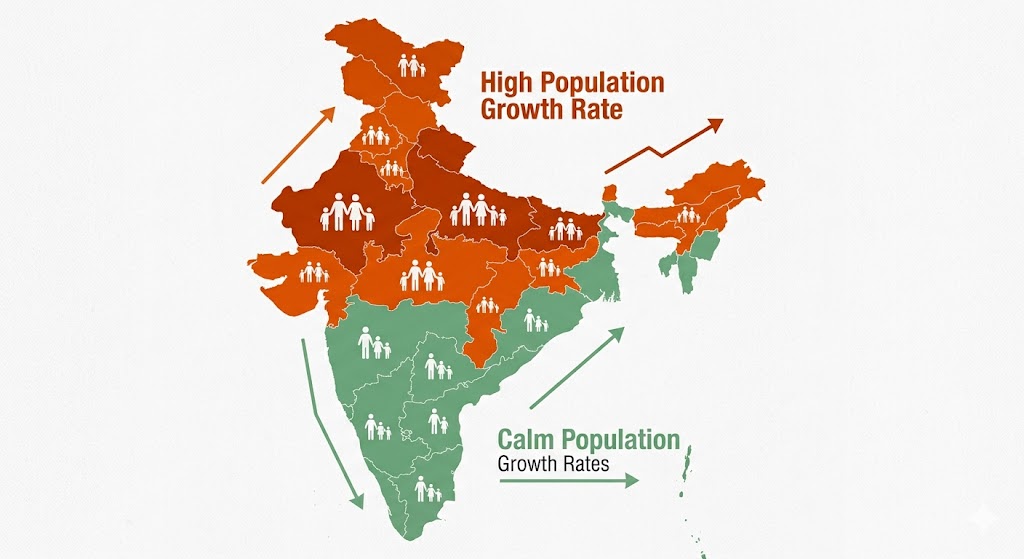
Over the decades, this arrangement has served India well by promoting national unity and incentivizing family planning programs. Southern states such as Tamil Nadu, Kerala, Karnataka, Andhra Pradesh, and Telangana have excelled in population stabilization through education, healthcare, and awareness initiatives. In contrast, several northern states have experienced higher population growth rates. The current Lok Sabha seat distribution reflects this historical policy, but it has also created a growing demand for fresh delimitation to align representation more closely with contemporary demographics.
The proposed Lok Sabha seat increase to 850 seeks to address this by raising the constitutional ceiling. Proponents view it as a necessary step to modernize India's parliamentary democracy. Critics, however, warn that without careful safeguards, it could tilt the scales of political power northward.
Key Provisions of the Proposed Constitutional Amendment Bill
The government has circulated the Constitution (One Hundred and Thirty-First Amendment) Bill, 2026, among Members of Parliament. This landmark legislation aims to amend Article 81 of the Constitution, which deals with the composition of the House of the People. Under the new provisions, the Lok Sabha would consist of not more than 815 members elected from states and up to 35 from Union Territories, bringing the total strength to 850.
The bill also proposes changes to Article 82, which governs the delimitation of constituencies following each Census. Notably, it removes the mandatory linkage to a future Census (previously referenced for 2026) and allows delimitation based on the latest published Census figures. This adjustment paves the way for the exercise to proceed swiftly, potentially using 2011 data as the baseline while the ongoing 2026 Census is still in progress.
Accompanying the amendment are two other key bills: the Delimitation Bill, 2026, and the Union Territories Laws (Amendment) Bill, 2026. Together, these measures form a comprehensive package designed to operationalize the Nari Shakti Vandan Adhiniyam (Women's Reservation Act) of 2023. The Lok Sabha seat increase to 850 is explicitly positioned as a prerequisite to creating additional constituencies where the one-third reservation for women, including those from Scheduled Castes and Scheduled Tribes, can be implemented effectively without reducing existing seats.
Government sources emphasize that this expansion will ensure a smooth rollout of women's reservation by the 2029 general elections. A three-member Delimitation Commission, headed by a serving or retired Supreme Court judge, is also proposed to oversee the redrawing of boundaries in a transparent manner.
Connection to the Women's Reservation Act
The 33 per cent women's reservation law, passed in 2023 after decades of advocacy, remains unimplemented due to the absence of fresh delimitation. The current freeze on seat allocation has complicated efforts to reserve one-third of constituencies for women without disrupting the existing structure. By authorizing a Lok Sabha seat increase to 850, the proposed bill creates the necessary headroom for this reservation to take effect.
Advocates argue that this approach strengthens gender equity in politics while simultaneously updating representation to reflect population realities. The expansion ensures that no state loses seats outright; instead, the total pool grows, allowing for proportional adjustments. However, the timing and methodology have become points of contention, particularly in the context of the South India protest against the Lok Sabha seat increase to 850.
The Delimitation Exercise: Census Debate and Methodology
Delimitation involves redrawing parliamentary and assembly constituencies based on population to ensure equal representation. The last such exercise in 2002-2008 used 2001 Census data but maintained the 1971 freeze for inter-state allocation. The new bill shifts this paradigm by enabling delimitation on more recent figures, sparking debate over which Census to prioritize.
Opposition voices contend that using 2011 data, rather than waiting for the 2026 Census results, may not accurately capture current demographic shifts. Southern leaders fear that a population-based approach will reward states with higher fertility rates, even if those states have lagged in development indicators. This concern lies at the heart of the South India protest, as leaders argue that effective governance and population control in the South should not be penalized through reduced political influence.
Projected increases under a uniform expansion model suggest states could see roughly a 50 per cent rise in seats. For instance, Uttar Pradesh might grow from 80 to around 120 seats, while Tamil Nadu could move from 39 to approximately 59. Yet critics highlight that actual population proportions could widen the gap further, with northern and central states gaining disproportionately in absolute terms.
An infographic map visualizes the sharp demographic contrast driving the debate, with northern states shown in deep orange experiencing high population growth, and southern states in calm green showing stable, lower growth rates.
Southern States' Strong Opposition and Protests
The proposal for a Lok Sabha seat increase to 850 has met with unified resistance from southern political leaders, who view it as a threat to regional equity. Tamil Nadu Chief Minister and DMK president M.K. Stalin has been among the most vocal critics. He has warned of "massive agitations" if the delimitation exercise harms southern interests or disproportionately enhances northern political power. Stalin has accused the Centre of proceeding unilaterally without adequate consultation with states, famously stating that the government should not "turn a calm South into a storm."
Stalin's concerns echo a broader sentiment in the region. Southern states have long prided themselves on progressive policies that stabilized population growth while boosting economic productivity. They contribute significantly to the national GDP and tax revenues but fear their voice in national decision-making could diminish under a purely population-centric formula.
Telangana Chief Minister A. Revanth Reddy has echoed these worries and actively sought southern unity. He has written to fellow Chief Ministers, urging a collective stand against any move that could sideline the South. Reddy has described the proposal as potentially creating "injustice" for women, Scheduled Castes, and Scheduled Tribes in southern states. He argues that a blanket increase without preserving existing proportional gaps between regions would leave the South politically marginalized despite its developmental achievements.
Other southern voices, including leaders from Karnataka, Kerala, and Andhra Pradesh, have expressed similar apprehensions. The South India protest against the delimitation bill underscores fears that the Lok Sabha seat increase to 850, while increasing overall numbers, may erode the relative influence of states that have responsibly managed demographics.
Specific Reactions from South Indian Leaders
The protests have taken both rhetorical and organizational forms. Stalin has called for all-party unity within Tamil Nadu and has questioned the urgency of convening a special Parliament session amid ongoing state elections. He has demanded transparency and consensus, emphasizing that any decision affecting federal structure must involve states as equal partners.
Revanth Reddy has gone further by framing the issue as a potential "conspiracy" to favor certain regions. He has advocated for alternative criteria, such as incorporating GDP contributions or development indices alongside population, to ensure fair delimitation. His call for maintaining the current inter-regional seat gaps reflects a desire to protect southern leverage in coalition politics and national policy formulation.
These leaders represent not just political parties but a regional consensus that transcends party lines. The South India protest has also drawn support from national opposition figures, who argue that true federalism requires protecting the interests of states that have excelled in governance metrics beyond mere population size.
Implications for Federalism and National Representation
The Lok Sabha seat increase to 850 raises profound questions about the future of Indian federalism. Proponents see it as an opportunity to make Parliament more representative of India's evolving demographics while advancing gender justice. A larger House could accommodate diverse voices and reduce the workload on individual MPs.
However, detractors warn of long-term consequences. If northern states gain a commanding majority of additional seats, national politics could increasingly reflect their priorities, potentially marginalizing southern perspectives on issues like economic policy, language, and cultural rights. This shift could strain Centre-state relations and fuel demands for greater state autonomy.
Economically, southern states contribute disproportionately to national revenues through direct and indirect taxes. A relative decline in parliamentary seats could translate into reduced bargaining power for infrastructure projects, industrial incentives, and fiscal devolution. The South India protest against the Lok Sabha seat increase to 850 thus frames the issue as one of justice and sustainability rather than mere numbers.
Government's Perspective and Broader Rationale
The central government maintains that the bill is a forward-looking reform essential for implementing women's reservation and updating democratic representation. By expanding the total number of seats, it ensures no existing MP or constituency is disadvantaged. Officials highlight that the Delimitation Commission will operate independently, with judicial oversight to maintain fairness.
Supporters also point out that population growth cannot be ignored indefinitely. Equitable representation demands periodic adjustments, and the Lok Sabha seat increase to 850 provides a balanced mechanism to achieve this without abrupt disruptions. The linkage to women's reservation underscores a commitment to inclusive democracy, benefiting women across all regions.
Potential Impact on Future Elections and Governance
If passed, the changes could reshape the political landscape ahead of the 2029 Lok Sabha polls. New constituencies would emerge, altering campaign strategies, alliance formations, and voter outreach. Political parties would need to recalibrate their regional priorities, with southern outfits possibly intensifying focus on federalism issues.
Longer-term, the expansion could influence policy debates on everything from fiscal federalism to language policies. The success or failure of the South India protest will likely determine whether additional safeguards, such as weighted representation formulas, are incorporated in future reforms.
Conclusion: Balancing Representation with Regional Equity
The proposed Lok Sabha seat increase to 850 represents a pivotal moment in India's constitutional evolution. While the bill promises to advance women's political empowerment and refresh parliamentary representation, it has also spotlighted enduring tensions between population-based equity and regional developmental achievements.
The South India protest serves as a timely reminder that democratic reforms must respect federal principles and reward good governance. As Parliament convenes to deliberate these amendments, the challenge lies in forging a consensus that strengthens national unity without alienating key contributors to India's progress.
Ultimately, the outcome of this Lok Sabha seat increase debate will shape not only the composition of future Houses but also the very character of Indian federalism. Stakeholders from all regions must engage constructively to ensure that expansion enhances, rather than erodes, the inclusive spirit of the world's largest democracy.
Frequently Asked Questions
What is the primary significance of Lok Sabha Bill Proposes 850 Seats Amid South Protests?
Lok Sabha Bill Proposes 850 Seats Amid South ProtestsIn a major political development that has ignited intense debate across India, the Centre has proposed a significant expansion of the Lok Sabha. The move aims to increase the number of seats from the current 543 to 850 through a new constitutional amendment.
How does this development impact Current Affairs?
This Lok Sabha seat increase to 850 is closely tied to the long-awaited implementation of the 33 per cent women's reservation in Parliament and state assemblies. However, the proposal has triggered strong protests from South Indian members of Parliament and state leaders, who argue that the accompanying delimitation exercise could disproportionately benefit northern states and undermine the federal balance of power.The controversy surrounding the Lok Sabha seat increase to 850 highlights deep-seated concerns about representation, population dynamics, and regional equity.
What are the key future projections to monitor?
As the nation prepares for a special three-day Parliament session starting April 16, 2026, the bill has become a flashpoint between the central government and opposition parties, particularly from southern states.