International Affairs• April 13, 2026• Global Edition
The Middle East stands at a precarious crossroads on April 13, 2026, as the fragile two-week ceasefire in the US-Iran war shows signs of strain. Fresh US military action, combined with persistent Israeli operations in Lebanon and defiant Iranian rhetoric, has reignited fears of broader escalation. At the center of today's developments is President Donald Trump's decision to enforce a naval blockade on the Strait of Hormuz and Iranian ports, a move explicitly aimed at pressuring Tehran over its nuclear ambitions and control of the vital waterway.
What began as targeted strikes in late February has evolved into a complex web of military, diplomatic, and economic confrontations. Iran continues to warn the United States and its allies, while Israel presses operations against Hezbollah strongholds in Lebanon. Global markets are watching closely, with oil prices surging amid uncertainty over one of the world's most critical energy chokepoints. This update examines the key events of the past 24 hours, the broader context, and potential paths forward, drawing on verified reports from the region.
The current conflict traces its roots to February 28, 2026, when US and Israeli forces launched coordinated airstrikes on Iranian military and government targets, including sites linked to the regime's leadership. The operation resulted in significant damage and the reported assassination of Supreme Leader Ali Khamenei, prompting a wave of Iranian retaliatory missile and drone attacks across the region. Thousands of casualties, widespread displacement in Lebanon and Iran, and severe disruptions to global shipping followed.
By early April, mounting pressure led to a US-brokered two-week ceasefire announced around April 7-8. The agreement, which included Israel, aimed to halt direct exchanges of fire and reopen the Strait of Hormuz. Iran had effectively restricted traffic through the strait during the fighting, claiming security needs and imposing tolls that Washington labeled extortion. The ceasefire provided a momentary breathing room, but underlying issues—particularly Iran's nuclear program and regional proxy activities—remained unresolved.
Talks in Islamabad over the weekend of April 11-12, involving US Vice President JD Vance, special envoys, and Iranian officials, sought to transform the pause into a lasting deal. However, after more than 21 hours of negotiations, the discussions collapsed. The primary sticking point: Iran's refusal to abandon its nuclear enrichment activities and accept verifiable limits demanded by the Trump administration.
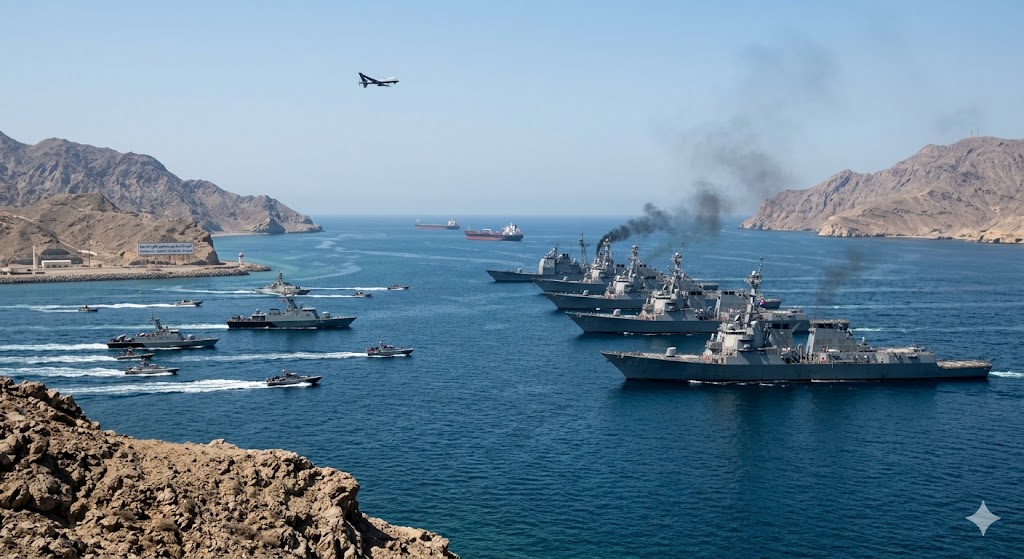
. US Navy warships (right and center) enforce a strict naval blockade, effectively sealing the vital waterway to Iranian traffic on April 13, 2026. Simultaneously, a swarm of Iranian Revolutionary Guard fast attack craft (left) maneuver aggressively nearby, monitoring the US vessels.
Recent Escalations: Israel Strikes in Lebanon
Even as the US-Iran ceasefire took hold, Israel has maintained intense pressure on Hezbollah positions in Lebanon. On April 8, Israeli forces conducted one of the deadliest single-day campaigns in recent Lebanese history, launching over 100 strikes in just minutes. These operations killed more than 300 people, including civilians and militants, and severely damaged infrastructure such as the Qasmieh bridge, the last major link to southern Lebanon.
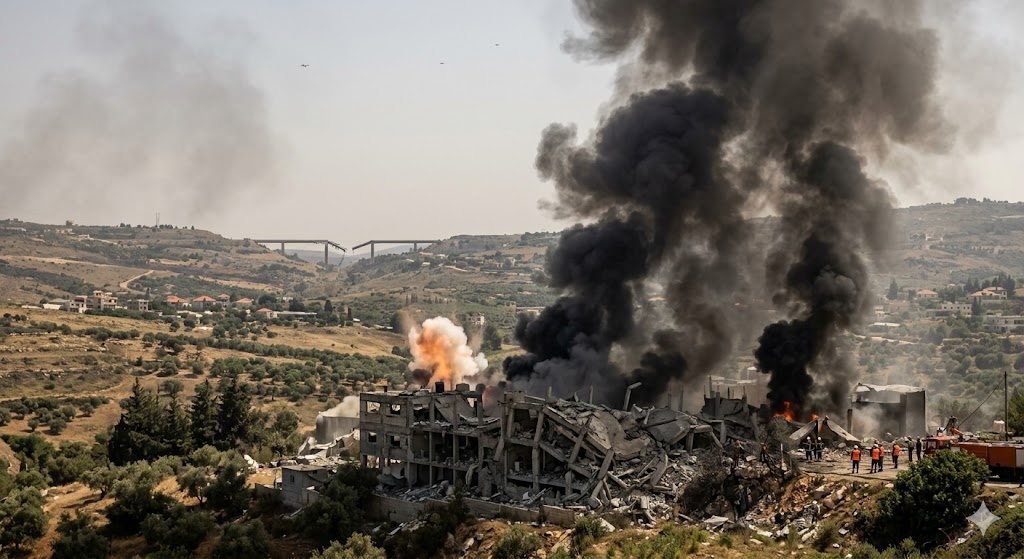
Strikes have continued into mid-April, with additional attacks reported on April 10-11 targeting southern villages, government buildings in Nabatieh, and Hezbollah infrastructure. Lebanese authorities report over 2,000 deaths from Israeli actions since early March. Israel maintains these are defensive measures to neutralize threats from Hezbollah rocket and drone attacks on northern Israeli communities. Iran has repeatedly warned that continued strikes on its ally could derail the broader ceasefire, framing them as a US-enabled violation.
The situation in Lebanon underscores the interconnected nature of the conflicts. Hezbollah's pause in attacks under the ceasefire proved short-lived, and cross-border tensions remain high. This dynamic complicates US efforts to isolate the Iran nuclear issue from wider regional proxy wars.
Trump's Blockade: A New Phase in the US-Iran Standoff
In direct response to the failed Islamabad talks, President Trump announced on April 12 that the US Navy would begin blockading ships entering or leaving Iranian ports and coastal areas, effective April 13 at 10 a.m. Eastern Time. The move targets vessels bound for or departing from Iran, while sparing non-Iranian ports in the region. Trump described the action as necessary to counter Iran's "illegal toll" on the Strait of Hormuz and to prevent nuclear weapon development.
In statements and social media posts, Trump emphasized that Iran "is unwilling to give up its nuclear ambitions" and remains in a "very bad shape," desperate for relief. He framed the blockade as leverage to force Tehran back to meaningful negotiations without conceding on core US demands. CENTCOM confirmed the operation would enforce freedom of navigation, with US forces prepared to interdict vessels and neutralize mines laid by Iran.
This represents a significant escalation in economic warfare. The Strait of Hormuz handles roughly one-fifth of global oil shipments. By choking Iran's export lifeline, the US aims to compel compliance on nuclear issues and secure unrestricted passage. Trump has signaled confidence that Iran will eventually return to talks, stating the regime has "no cards left" on the nuclear front.
Iran's Response: Defiance, Warnings, and Retaliation Threats
Tehran has met the blockade announcement with firm resolve. Iranian military spokespersons and Revolutionary Guard officials declared that "security in the Persian Gulf and the Sea of Oman is either for everyone or for NO ONE." They warned explicitly that "NO PORT in the region will be safe" if Iranian facilities are targeted.
Senior figures, including parliamentarians and former commanders, dismissed the US action as "bluffing" while affirming Iran's readiness to retaliate. One lawmaker stated any US Navy vessels attempting to enforce the blockade would be "sent to the bottom of the sea." Iran has vowed not to fear pressure tactics and to continue defending its sovereignty and regional influence with pride. Officials in Tehran have indicated that further coercion could prompt immediate retaliation, potentially expanding attacks across the Gulf.
This stance echoes earlier warnings issued during the war, where Iran pledged "crushing and broader" responses to aggression. The regime appears determined to project strength, signaling it will not halt enrichment or proxy support under duress. Direct communication channels to Washington remain open in principle, but Iranian sources describe US demands as excessive and unbalanced.
International Reactions: From UK Distance to UN Concerns
Reactions from allies and international bodies have been mixed. UK Prime Minister Keir Starmer stated clearly on April 13 that Britain "is not supporting the blockade" and has no intention of being "dragged in" to the conflict. While the UK continues limited operations such as minesweeping and anti-drone patrols in the region, it emphasizes diplomatic efforts to reopen the strait and avoid further escalation. Starmer's position highlights growing transatlantic differences over Trump's approach.
The United Nations has monitored the crisis closely. Earlier Security Council efforts to pass resolutions on Hormuz security were vetoed by Russia and China, who viewed the drafts as biased. While no new vote occurred on April 13, the UN continues to stress the humanitarian and economic fallout. Disruptions to oil flows threaten global food security and agriculture, as higher energy costs ripple through supply chains. The UN Food and Agriculture Organization and partner agencies are tracking potential impacts on vulnerable populations, urging de-escalation to protect civilian access to essentials.
Other nations, including Gulf states and Asian oil importers, express quiet alarm over potential supply shocks. China has signaled willingness to mediate and is reportedly preparing additional defense support for Iran. European allies urge restraint, prioritizing stability in energy markets.
Future Perspectives: Risks and Possible Outcomes
Looking ahead, several scenarios emerge. The most optimistic involves Iran returning to talks under economic pressure, leading to a negotiated framework on nuclear limits and Hormuz access. Trump has predicted Iran will "come back and give us everything," citing the regime's weakened position after weeks of conflict.
More concerning is the risk of miscalculation. Iranian threats to target regional ports could spark clashes involving US allies, drawing in additional actors. Continued Israeli actions in Lebanon might prompt Hezbollah or Iranian retaliation, collapsing the ceasefire entirely. Oil prices could spike further, exacerbating inflation worldwide and straining economies already recovering from prior shocks.
Longer-term, the blockade tests the limits of US leverage. Success could reshape Middle East dynamics, curbing Iran's nuclear path and proxy network. Failure risks a prolonged stalemate or renewed fighting, with broader implications for global security, refugee flows, and energy independence efforts.
Experts note that while the current ceasefire holds tenuously, the window for diplomacy narrows daily. All parties—US, Iran, Israel, and regional neighbors—face high stakes. The coming days will determine whether pressure yields progress or ignites a wider conflagration.
Continued Israeli Operations in Lebanon. A thick column of black smoke rises from a target near Nabatieh, southern Lebanon, on April 13, 2026, following a precise Israeli airstrike on alleged Hezbollah infrastructure
Conclusion
On April 13, 2026, the US-Iran-Israel conflict enters a new chapter defined by Trump's Strait of Hormuz blockade, Iran's unyielding warnings, and persistent violence in Lebanon. The Trump administration's strategy reflects a belief that decisive action can force concessions on nuclear issues without full-scale war. Iran, for its part, projects defiance and readiness to retaliate, insisting it will not yield under threat.
The international community watches with bated breath. The UK's clear distancing, UN calls for calm, and economic ripple effects underscore the global stakes. As events unfold, one truth remains: sustainable peace requires addressing core disputes—nuclear proliferation, proxy conflicts, and freedom of navigation—through coordinated diplomacy rather than unilateral force.
This situation remains fluid. Updates will continue as new developments emerge from Washington, Tehran, Jerusalem, and Beirut. For now, the world hopes that measured responses prevail over escalation, preserving stability in a region critical to global prosperity.
Frequently Asked Questions
What is the primary significance of "US-Iran-Israel Conflict: April 13 2026 Updates"?
The Middle East stands at a precarious crossroads on April 13, 2026, as the fragile two-week ceasefire in the US-Iran war shows signs of strain. Fresh US military action, combined with persistent Israeli operations in Lebanon and defiant Iranian rhetoric, has reignited fears of broader escalation.
How does this development impact International Affairs?
At the center of today's developments is President Donald Trump's decision to enforce a naval blockade on the Strait of Hormuz and Iranian ports, a move explicitly aimed at pressuring Tehran over its nuclear ambitions and control of the vital waterway.What began as targeted strikes in late February has evolved into a complex web of military, diplomatic, and economic confrontations. Iran continues to warn the United States and its allies, while Israel presses operations against Hezbollah strongholds in Lebanon.
What are the key future projections to monitor?
Global markets are watching closely, with oil prices surging amid uncertainty over one of the world's most critical energy chokepoints.