Sabha Parva of Mahabharata: Turning Point of Dharma
Dharma• April 13, 2026• Global Edition
The Sabha Parva, often called the Book of the Assembly Hall, stands as the second major book in the great Indian epic Mahabharata. In this pivotal section of the Mahabharata Sabha Parva, the narrative shifts from the foundational tales of lineage and survival to the intoxicating heights of power, only to plunge into betrayal, moral collapse, and irreversible consequences. Spanning roughly 81 chapters across ten sub-sections in traditional editions, the Sabha Parva of Mahabharata captures the glory of the Pandavas’ Indraprastha and the catastrophic dice game that stripped them of everything.
This parva does far more than recount events. It lays bare the fragile nature of dharma when ambition overrides wisdom. Before immersing ourselves in the intricate details of the Sabha Parva, it is essential to revisit the Adi Parva—the first book that sets the stage for every conflict, alliance, and tragedy that unfolds in the Sabha Parva of Mahabharata.
The Adi Parva, meaning “Book of the Beginning,” serves as the sprawling prologue to the entire Mahabharata. It opens in the Naimisha Forest where sages gather, and the story unfolds through the narration of Vaishampayana to King Janamejaya. At its core, the Adi Parva traces the Kuru dynasty’s origins, from King Shantanu’s marriage to Ganga and the birth of Bhishma, through Satyavati, Vyasa, and the blind Dhritarashtra and pale Pandu.
The parva meticulously details the miraculous births of the Pandavas and Kauravas. Kunti invokes divine boons to bear Yudhishthira (from Dharma), Bhima (from Vayu), and Arjuna (from Indra), while Madri receives the Ashvins’ twins, Nakula and Sahadeva. Gandhari’s prolonged pregnancy yields the hundred Kauravas, led by the ambitious Duryodhana. Early childhood reveals simmering jealousy: Duryodhana’s failed attempts to drown Bhima, the poisoning, and the lac-house conspiracy engineered by Purochana at Dhritarashtra’s tacit approval.
The Pandavas escape the burning palace with help from Vidura, live incognito in the forest, slay demons like Hidimba and Baka, and finally arrive at Panchala. There, Arjuna wins Draupadi in the swayamvara by piercing the fish’s eye. Kunti’s inadvertent command binds Draupadi in polyandrous marriage to all five brothers—a decision that later fuels insults in the Sabha Parva. The kingdom divides; the Pandavas receive the barren Khandava region, clear it with Krishna and Arjuna’s aid, and build the magnificent Indraprastha. Maya the architect, saved from the forest fire, owes a debt that directly leads into the Sabha Parva.
By the end of Adi Parva, the Pandavas have established a prosperous city, performed a grand Rajasuya-like preparation in spirit, and Arjuna has begun his exile to honor the brothers’ pact with Draupadi. The stage is set: prosperity breeds envy, and the Kauravas, led by Duryodhana, cannot tolerate their cousins’ rising glory. This foundation of rivalry, dharma, and divine intervention flows seamlessly into the Sabha Parva of Mahabharata, where illusion, power, and moral testing collide.
Sabha Parva: The Rise of Indraprastha and the Maya Sabha
The Sabha Parva of Mahabharata opens with Sabhakriya Parva, where gratitude meets architectural brilliance. After the Khandava fire, Arjuna and Krishna spare Maya Danava. In return, the asura architect offers to construct a celestial assembly hall for Yudhishthira at Indraprastha. Over fourteen months, Maya builds the Maya Sabha—an illusory marvel of crystal floors resembling pools, walls adorned with gems, and spaces that defy perception. He presents Bhima with a divine mace and Arjuna with a conch. Krishna departs for Dwaraka after blessing the project.
This hall in the Sabha Parva symbolizes not just royal splendor but the Pandavas’ rightful claim to sovereignty. Yudhishthira enters it with sages and kings in attendance, establishing it as a center of righteous governance. Narada’s visit in Lokapalasabhakhyana Parva elevates the discourse: the celestial messenger describes the divine sabhas of Indra, Yama, Varuna, Kubera, and Brahma, urging Yudhishthira to perform the Rajasuya Yajna to affirm his imperial status.
Draupadi 's humiliation: major turn on the yudh of dharma
Rajasuya Yajna: Conquest, Glory, and the First Cracks
The middle sections of the Sabha Parva—Rajasuyarambha, Jarasandhavadha, Digvijaya, and Rajasuya—detail Yudhishthira’s righteous expansion. Krishna advises eliminating Jarasandha, the powerful Magadha king allied with the Kauravas. Bhima, Arjuna, and Krishna journey to Magadha in disguise; Bhima slays Jarasandha in a wrestling match after Krishna reveals the secret of his invulnerability. Subsequent digvijaya campaigns see the Pandavas conquer all directions under Arjuna, Bhima, Nakula, and Sahadeva.
The grand Rajasuya Yajna follows in the Sabha Parva of Mahabharata. Kings from across Bharatavarsha attend, offering tributes. Sisupala, Krishna’s cousin and critic, hurls insults at the Yadava hero. Krishna beheads him with the Sudarshana Chakra, fulfilling a prophecy and silencing dissent. The yajna concludes successfully, crowning Yudhishthira emperor. Yet, amid the splendor, Duryodhana’s visit to the Maya Sabha plants seeds of destruction.
Duryodhana, already envious, becomes the victim of the hall’s illusions. He mistakes a crystal floor for water and lifts his garments, only to stumble on solid ground; later, he falls into an actual pool. The court laughs. This public humiliation in the Sabha Parva fuels Duryodhana’s rage. Returning to Hastinapura, he confides in Shakuni, Karna, and Dushasana. The dice game is conceived as the perfect trap.
The Dice Game: How a Single Roll Became the Game Changer
The Dyuta Parva within the Sabha Parva marks the epic’s irreversible turning point. Invited under the guise of friendship, Yudhishthira arrives in Hastinapura with his brothers. Dhritarashtra, though reluctant, permits the game at Shakuni’s insistence. Yudhishthira, known for his love of dice yet unskilled, faces Shakuni, master of loaded dice.
In the Sabha Parva of Mahabharata, the stakes escalate dramatically. Yudhishthira first loses treasures, then the kingdom of Indraprastha, followed by his brothers one by one, and finally himself. Drunk on the game’s momentum and bound by kshatriya dharma to honor the invitation, he stakes Draupadi—the queen who had won him the swayamvara and shared in their fortunes. Shakuni declares victory. The Pandavas become slaves.
This moment in the Sabha Parva symbolizes how unchecked desire and flawed adherence to rules can unravel an empire. The Pandavas’ sacrifices—built through years of exile, forest survival, and righteous conquest—crumble not through battlefield defeat but through a rigged gamble orchestrated by Kaurava greed.
Draupadi’s Humiliation: The Catalyst for Women’s Empowerment
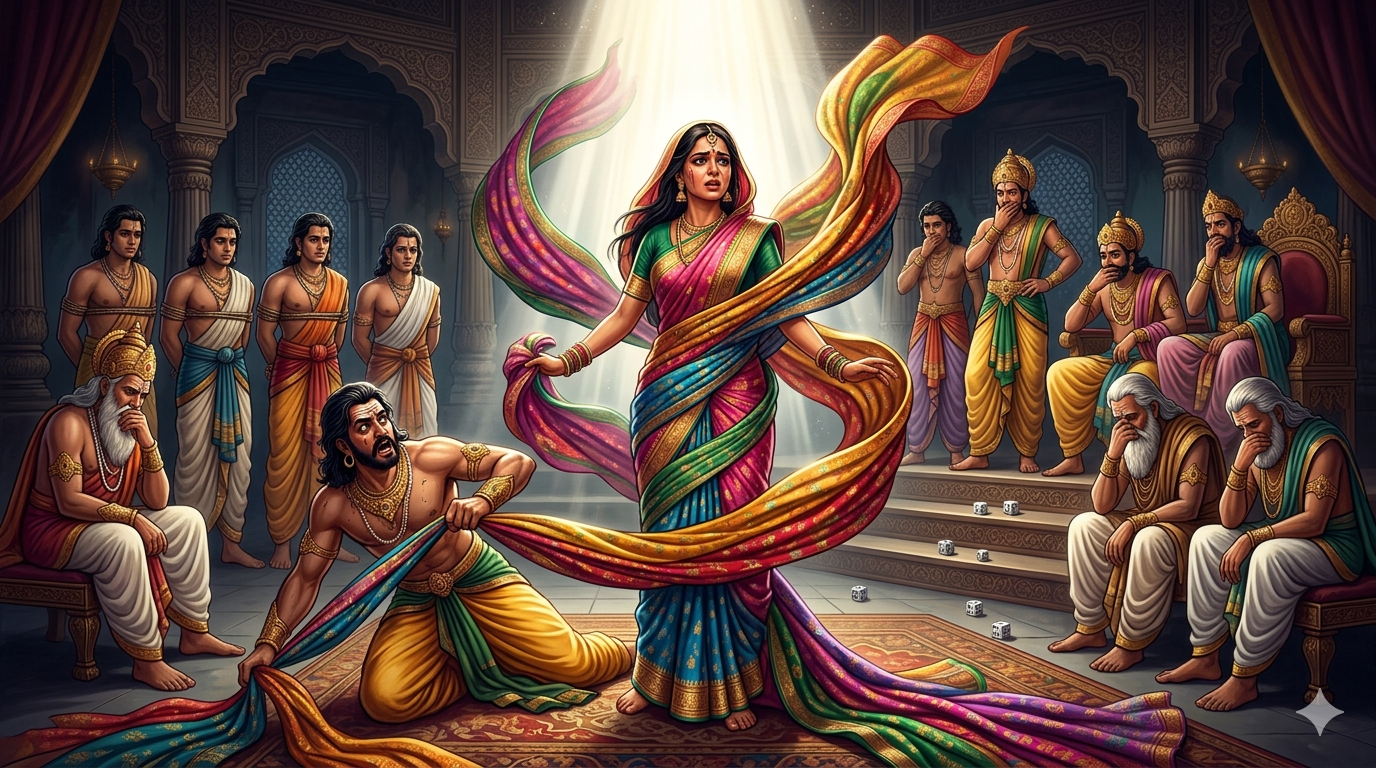
No episode in the Sabha Parva of Mahabharata resonates more powerfully today than Draupadi’s ordeal. Dragged by her hair into the assembly by Dushasana—while in her menstrual period and clad in a single garment—she stands before the elders, kings, and her husbands. Karna brands her a “whore” for her polyandrous marriage. Duryodhana gestures obscenely. Dushasana attempts to disrobe her.
Draupadi’s questions pierce the heart of the Sabha Parva: “Whom did Yudhishthira lose first—himself or me? Can a slave stake his wife?” The assembly falls silent. Vikarna alone protests, but Karna silences him. In her anguish, Draupadi prays to Krishna. The divine intervention unfolds: as Dushasana pulls the saree, layer after layer appears endlessly. The fabric never ends. Exhausted, Dushasana collapses. Krishna’s miracle in the Sabha Parva not only saves Draupadi’s honor but elevates her as the eternal symbol of resilience.
This incident transforms Draupadi from a royal queen into the voice of women empowerment in the Mahabharata Sabha Parva. She refuses passive victimhood. Her fiery intellect and unyielding spirit challenge patriarchal norms and expose the assembly’s moral bankruptcy. Centuries later, her story inspires movements against gender-based violence, reminding society that silence in the face of injustice perpetuates it.
The Silence of the Elders: Moral Cowardice and the Road to War
Perhaps the most haunting aspect of the Sabha Parva is the inaction of revered figures. Bhishma, bound by his vow to the throne, claims helplessness. Drona, teacher to both sides, remains mute. Vidura and others offer counsel too late or too softly. Dhritarashtra, blinded by paternal love, grants two boons only after the damage—restoring the Pandavas temporarily before a second game seals their 13-year exile.
In the Sabha Parva of Mahabharata, this collective silence symbolizes how even the wise can become complicit when power and kinship cloud judgment. Their failure to uphold dharma in the assembly hall directly sows the seeds of the Kurukshetra war. Draupadi vows revenge; the Pandavas depart for the forest with a promise of reckoning. The humiliation they endure in the Sabha Parva becomes the moral justification for the epic battle ahead.
Symbolism in Sabha Parva: Character, Sacrifice, and the Fall of Dharma
The Sabha Parva of Mahabharata richly layers symbolism. The Maya Sabha represents illusion—maya—that deceives even the mighty. The dice game mirrors the unpredictable nature of fate and the dangers of addiction to vice. Yudhishthira’s repeated staking reveals a rigid interpretation of dharma: he honors the game’s rules even as they destroy him. The Pandavas’ willingness to risk everything, including their shared wife, underscores their unity yet highlights human frailty under pressure.
Draupadi’s saree miracle embodies divine grace responding to sincere surrender. The Kauravas’ greed contrasts the Pandavas’ earlier sacrifices, showing how envy erodes empires. Ultimately, the Sabha Parva illustrates that dharma stands on four legs in earlier yugas but wobbles dangerously in Dwapara Yuga—setting the stage for Kali’s full arrival.
Relevance to Today: Echoes of Humiliation and the Call for Courage
The events of the Sabha Parva resonate profoundly in contemporary society. Draupadi’s public shaming mirrors modern instances of gender-based humiliation, online abuse, and systemic silence. The elders’ inaction reflects how institutions and leaders often fail victims to preserve status quo. Yet Draupadi’s defiance offers hope: one voice, rooted in truth and faith, can shift destiny.
In discourses across India—including popular Telugu explanations of Mahabharatam Sabha Parvam—the parva is taught as a mirror to human weaknesses and strengths. It warns that small acts of jealousy and rigged “games” of power can escalate into wars, whether personal or national.
Draupadi' humiliation by kauravs and silence of elders gives the fury of kurukshetra war
Conclusion: Sabha Parva as Eternal Lesson
The Sabha Parva of Mahabharata transforms a tale of royal glory into a profound meditation on power, justice, and redemption. From the majestic Maya Sabha to the heart-wrenching dice game and Draupadi’s miraculous stand, every chapter reinforces that dharma demands vigilance. The Pandavas lose their kingdom not by sword but by silence and sin. Yet from that loss arises the resolve that culminates in the great war.
As readers revisit the Sabha Parva, they confront timeless questions: When does adherence to rules become folly? How do we speak when the powerful stay silent? And how does one woman’s unbowed spirit ignite an entire epic? The answers lie within the pages of this magnificent parva, urging each generation to choose courage over convenience and dharma over delusion.
Frequently Asked Questions
What is the primary significance of Sabha Parva of Mahabharata: Turning Point of Dharma?
The Sabha Parva, often called the Book of the Assembly Hall, stands as the second major book in the great Indian epic Mahabharata. In this pivotal section of the Mahabharata Sabha Parva, the narrative shifts from the foundational tales of lineage and survival to the intoxicating heights of power, only to plunge into betrayal, moral collapse, and irreversible consequences.
How does this development impact Dharma?
Spanning roughly 81 chapters across ten sub-sections in traditional editions, the Sabha Parva of Mahabharata captures the glory of the Pandavas’ Indraprastha and the catastrophic dice game that stripped them of everything.This parva does far more than recount events. It lays bare the fragile nature of dharma when ambition overrides wisdom.
What are the key future projections to monitor?
Before immersing ourselves in the intricate details of the Sabha Parva, it is essential to revisit the Adi Parva—the first book that sets the stage for every conflict, alliance, and tragedy that unfolds in the Sabha Parva of Mahabharata.Briefing of Adi Parva: The Foundation of Rivalry and ResilienceThe Adi Parva, meaning “Book of the Beginning,” serves as the sprawling prologue to the entire Mahabharata.

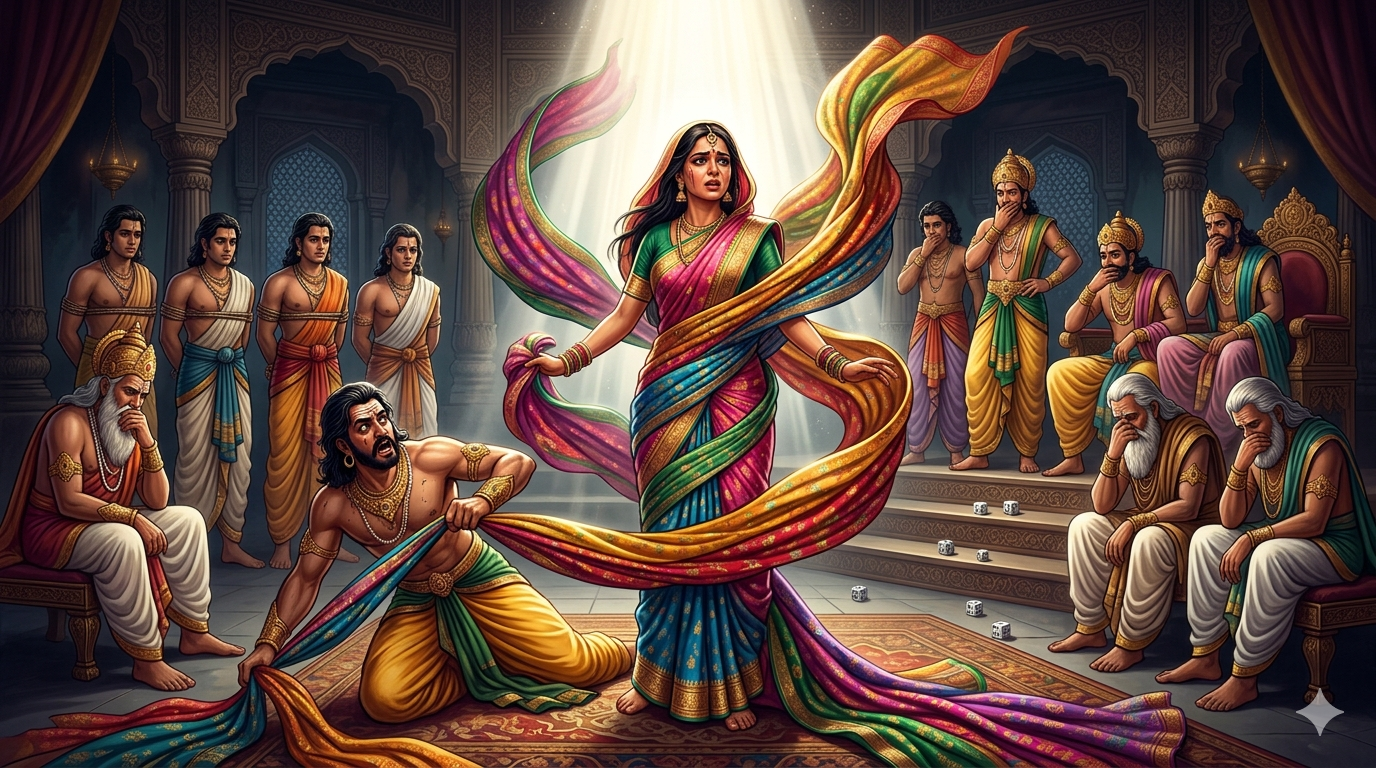 Draupadi' humiliation by kauravs and silence of elders gives the fury of kurukshetra war