The River Ganga stands as the lifeline of India, revered across the nation for its immense geographical expanse, economic contributions, and profound spiritual value. Often regarded as the largest river in India due to its vast drainage basin covering approximately 861,404 square kilometers within the country and supporting over 400 million people, the River Ganga flows for 2,525 kilometers from its Himalayan origins to the Bay of Bengal. This mighty waterway shapes landscapes, sustains economies, and nourishes cultural and religious traditions that have endured for millennia. In this comprehensive article, we delve into every aspect of the River Ganga, from its precise geographical formation to its economic vitality, the beliefs rooted in Hindu dharma regarding its origins, its status as the holiest river, its critical role in the states it traverses, and the famous places that draw millions for tourism and religious activities. Whether you seek facts about the River Ganga or insights into its enduring legacy, this guide offers complete, authoritative information suitable for readers, researchers, and travelers alike.
Geographical Origin and Course of the River Ganga
The geographical journey of the River Ganga begins high in the western Himalayas, embodying the raw power and purity of nature. The River Ganga originates at the Gangotri Glacier in Uttarakhand, specifically from the snout known as Gaumukh at an elevation of about 3,892 meters. Here, the Bhagirathi River emerges from a subglacial meltwater cave, marking the initial stream that will eventually become the full River Ganga. This glacial source ensures a steady flow fed by snowmelt and monsoon rains, contributing to the river's perennial nature despite seasonal variations.
As the Bhagirathi descends through rugged terrain, it merges with the Alaknanda River at Devprayag, a sacred confluence where the River Ganga officially takes its name. The Alaknanda, fed by tributaries like the Mandakini, Nandakini, Pindar, and Dhauliganga, provides the longer hydrological branch, making the combined flow robust and life-sustaining. From Devprayag, the River Ganga enters the plains near Rishikesh and Haridwar, transitioning from turbulent mountain streams to a wide, meandering river that characterizes the fertile Gangetic Plain.
The River Ganga's course spans five primary states in India: Uttarakhand, Uttar Pradesh, Bihar, Jharkhand, and West Bengal. In Uttarakhand, it covers about 110 kilometers, nurturing the Himalayan foothills with its clear waters. Flowing southeast into Uttar Pradesh for roughly 1,450 kilometers, the River Ganga passes through bustling cities and agricultural heartlands. It continues into Bihar for around 445 kilometers, enriching the eastern plains, briefly touches Jharkhand, and finally traverses West Bengal for about 520 kilometers before forming the world's largest delta in the Bay of Bengal, shared with the Brahmaputra River.
Major tributaries enhance the River Ganga's volume and fertility. On the left bank come the Ramganga, Gomti, Ghaghara (one of the largest by discharge), Gandak, Burhi Gandak, Koshi, and Mahananda. Right-bank contributors include the Yamuna (which joins at Prayagraj and adds significant flow), Tamsa, Sone, Punpun, and Damodar. These tributaries create a vast network, expanding the River Ganga's drainage basin to nearly 1,999,000 square kilometers across India, Nepal, China, and Bangladesh. The delta alone spans over 58,000 square kilometers, forming the Sundarbans mangrove ecosystem.
This extensive basin and length of 2,525 kilometers position the River Ganga as India's largest river system by drainage area and population supported, far surpassing others in its capacity to sustain agriculture and human settlements. Its sediment-rich waters deposit fertile alluvial soil across the Gangetic Plain, one of the most productive regions globally. The River Ganga's path also influences climate patterns, with its waters moderating temperatures and supporting biodiversity, including over 140 fish species and the endangered Ganges river dolphin. From glacial heights to the sea, the geographical marvel of the River Ganga defines India's physical and ecological identity.
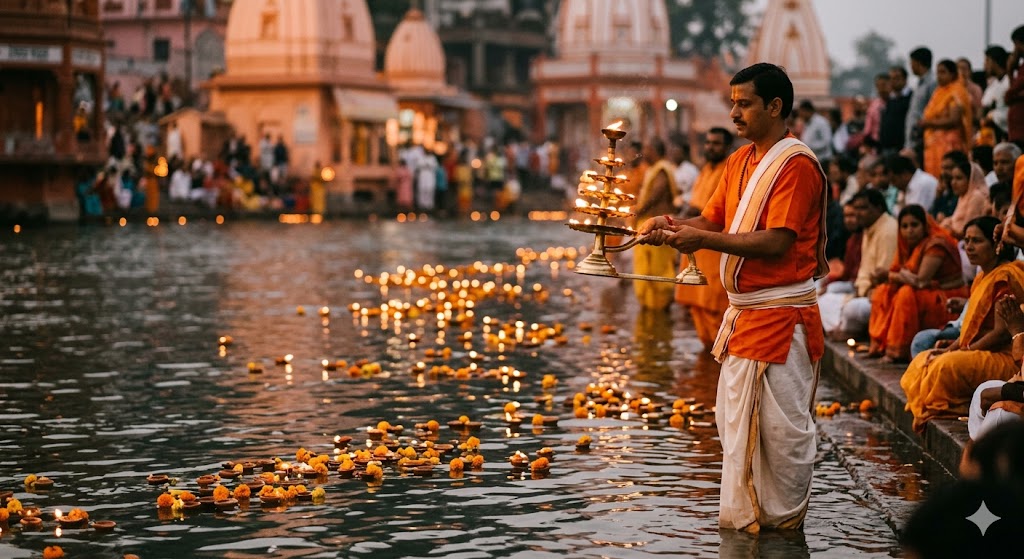
This photograph captures the intense devotional aspect of the Ganga at Haridwar during the evening Aarti ceremony. It focuses on the human connection to the holy river, showing a priest in traditional attire performing rituals with a multi-tiered brass lamp at 'Har Ki Pauri' ghat, while hundreds of small, floating lamps (diyas) illuminate the sacred waters.
The Origin of the River Ganga According to Hindu Dharma Beliefs
According to Hindu dharma and ancient scriptures, the River Ganga holds a divine origin that underscores its sacred role in the lives of devotees. Hindu beliefs describe the River Ganga as descending from the heavens to earth through the devoted efforts of King Bhagiratha, a descendant of the Ikshvaku dynasty. In these revered accounts preserved in texts like the Ramayana and Puranas, Bhagiratha's ancestors faced a curse from Sage Kapila, leaving their souls in limbo. To liberate them and grant salvation, Bhagiratha performed intense penance for thousands of years, seeking the intervention of the gods.
Hindu dharma teaches that Lord Brahma and Lord Vishnu guided Bhagiratha, advising him to invoke Lord Shiva for assistance. The celestial River Ganga, personified as Goddess Ganga and flowing through the heavens, possessed immense force that could devastate the earth upon descent. Lord Shiva, in his compassion as Gangadhara (the bearer of the Ganga), agreed to channel her flow through his matted locks. This act tamed the river's power, allowing it to emerge gently onto the earth at Gangotri. Bhagiratha then led the River Ganga across the plains to the site where his ancestors' ashes lay, fulfilling his duty and redeeming their souls.
In Vaishnava traditions within Hindu dharma, the River Ganga is also known as Vishnupadi, originating from the foot of Lord Vishnu during his Vamana avatar. As the river flows through cosmic realms—Svarga (heaven), Prithvi (earth), and Patala (netherworld)—it is called Tripathaga, symbolizing its journey across the three worlds. Hindu beliefs emphasize that the River Ganga embodies purity itself, absorbing and purifying all impurities it encounters, a quality that makes its waters eternally sacred.
These accounts in Hindu dharma are not mere stories but foundational principles guiding rituals and daily life. Devotees believe that the River Ganga's descent was a boon for humanity, providing a direct path to spiritual cleansing. Temples and ghats along the river commemorate this event, with Gangotri marking the source where Bhagiratha's penance culminated. The beliefs affirm the River Ganga as a living goddess, daughter of heaven, whose waters connect devotees to the divine. This spiritual origin elevates the River Ganga beyond a physical entity, making every drop a symbol of grace, redemption, and eternal life according to Hindu dharma.
Economic Importance of the River Ganga
The economic importance of the River Ganga to India cannot be overstated. As the backbone of the Gangetic Plain, the River Ganga supports agriculture that feeds a significant portion of the nation's population. Its waters irrigate millions of hectares through an extensive canal network, including the historic Upper Ganga Canal originating at Haridwar and the Lower Ganga Canal. These systems, developed over centuries and expanded during British rule, enable the cultivation of rice, wheat, sugarcane, cotton, oilseeds, lentils, potatoes, and jute. The fertile silt deposited by the River Ganga annually renews the soil, contributing to high yields in Uttar Pradesh, Bihar, and West Bengal—regions that together produce a substantial share of India's food grains.
Beyond farming, the River Ganga sustains fisheries that provide livelihoods for thousands. With diverse aquatic life, including major carps like rohu and catla, the river supports commercial and subsistence fishing, bolstering local economies in Bihar and West Bengal. Inland navigation via National Waterway 1 further enhances economic activity, allowing efficient transport of bulk goods such as coal, fertilizers, and agricultural produce from Haldia to Prayagraj and beyond. This waterway reduces road congestion and lowers logistics costs, promoting trade across northern and eastern India.
Hydropower potential along the River Ganga and its tributaries is enormous, with estimates ranging from tens of thousands of megawatts. Projects in the upper reaches harness the river's gradient for electricity generation, powering industries and homes while contributing to India's renewable energy goals. Industrial growth in cities like Kanpur and Kolkata also relies on the River Ganga for water supply, though sustainable practices remain essential to balance development.
The River Ganga's economic contributions extend to tourism and pilgrimage, generating revenue through hospitality, crafts, and services at sacred sites. Overall, the river system supports agriculture that accounts for a large part of regional GDP, provides employment to millions, and facilitates trade and energy production. The economic significance of the River Ganga underscores its role as a vital asset, driving prosperity while demanding careful stewardship for future generations.
The Importance of the River Ganga in India
The River Ganga's importance in India transcends geography and economy, weaving into the nation's social, cultural, and environmental fabric. It sustains daily life for over 400 million people who depend on its waters for drinking, bathing, and sanitation. In rural areas along its banks, the River Ganga serves as a communal hub where festivals, marriages, and life-cycle rituals unfold. Its waters are integral to Hindu practices, from daily ablutions to grand ceremonies, fostering a sense of unity across diverse communities.
Environmentally, the River Ganga maintains ecological balance in the Gangetic Plain, supporting wetlands, forests, and wildlife. The river's flow regulates groundwater recharge and prevents soil erosion, while its delta protects against cyclones. Culturally, the River Ganga inspires art, literature, music, and poetry, symbolizing purity and resilience in Indian heritage.
As a national symbol, the River Ganga represents India's ancient civilization, with historical cities along its banks witnessing empires rise and fall. Its importance lies in binding the country together, from the Himalayas to the sea, promoting interdependence among states. The River Ganga continues to inspire conservation movements and policies aimed at preserving its health, ensuring it remains a source of life and inspiration for all Indians.
Why the River Ganga Is Considered the Holiest River
The River Ganga is considered the holiest river in India because of its unparalleled spiritual power according to Hindu dharma. Devotees believe that bathing in the River Ganga cleanses sins accumulated over lifetimes, granting purity and progress toward moksha, or liberation from the cycle of rebirth. A mere touch or sip of Ganga Jal is thought to purify the soul, and immersing ashes of the deceased in its waters ensures salvation and direct passage to heaven.
This holiness stems from the River Ganga's divine descent and its embodiment of Goddess Ganga, who absorbs impurities without losing her sanctity. Hindu dharma holds that the river's waters remain ever-pure, capable of redeeming even the most burdened souls. Rituals like Ganga Aarti, where lamps and flowers are offered at dusk, honor this sanctity and draw millions in devotion.
The holy status elevates the River Ganga as a tirtha, or pilgrimage site, where faith manifests in daily life and grand events. It fosters compassion, community, and spiritual growth, making the River Ganga central to India's religious identity.
Crucial Role of the River Ganga in the States It Flows Through
The River Ganga is crucial for the states it flows through, providing water, fertility, and cultural anchors. In Uttarakhand, the River Ganga originates and supports eco-tourism, pilgrimage to Gangotri, and hydropower, sustaining the state's economy and identity as the gateway to the Himalayas.
Uttar Pradesh benefits immensely as the River Ganga traverses its length, irrigating vast farmlands in the Doab region and powering industries in Kanpur and Prayagraj. The river aids millions in agriculture and urban water supply, while religious sites boost tourism revenue.
In Bihar, the River Ganga enriches floodplains for rice and wheat cultivation, supports fisheries in Patna, and facilitates transport. It shapes the state's agrarian economy and cultural festivals.
Jharkhand sees limited but vital flow, contributing to local water resources and biodiversity.
West Bengal relies on the River Ganga's distributaries for the Kolkata region, enabling port activities, jute industries, and the Sundarbans economy. The river protects against salinity intrusion and supports dense populations.
Across these states, the River Ganga fosters unity, economic interdependence, and shared heritage.
Famous Places Along the River Ganga for Tourism and Religious Activities
The River Ganga flows past numerous famous places where tourism and religious activities thrive at high demand. Gangotri, the glacial source, attracts pilgrims seeking the river's divine origins, with temples and treks drawing spiritual seekers year-round.
Haridwar, known as the "Gateway to Heaven," hosts the Ganga Aarti at Har Ki Pauri ghat and serves as a major Kumbh Mela site every 12 years. Yoga and meditation centers in nearby Rishikesh blend spiritual tourism with adventure rafting.
Prayagraj (formerly Allahabad) features the Triveni Sangam, the sacred confluence of the Ganga, Yamuna, and mythical Saraswati. It hosts the world's largest religious gathering during Kumbh Mela, where millions bathe for purification.
Varanasi, one of the oldest living cities, offers ghats for bathing, cremations, and evening aartis. Devotees believe dying here grants instant moksha, making it a hub for religious tourism and cultural exploration.
In West Bengal, Kolkata's Hooghly River banks feature riverfront promenades and Durga Puja celebrations, blending urban tourism with devotion.
These sites, along with others like Kanpur and Patna, see surging demand for eco-tours, boat rides, and festivals, generating substantial revenue while preserving traditions. The River Ganga's presence amplifies their appeal, making them must-visit destinations for global travelers and devotees.
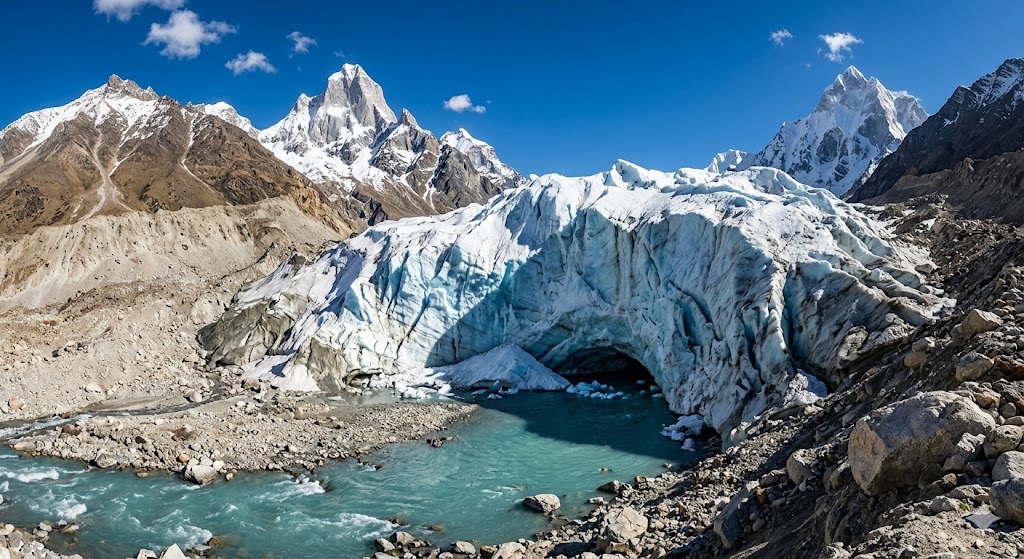
This landscape photograph visualizes the absolute beginning of the River Ganga as described in the article. It shows the pristine, turquoise meltwater of the Bhagirathi River emerging from the Gaumukh ice cave, the snout of the Gangotri Glacier, deep within the formidable snow-covered peaks of the Garhwal Himalayas.
Conclusion: The Enduring Legacy of the River Ganga
The River Ganga remains India's largest and most vital river, a testament to nature's generosity and human faith. From its geographical wonders and economic backbone to its origins in Hindu dharma beliefs, holy essence, state-level importance, and iconic sites for tourism and religion, the River Ganga embodies unity and sustenance. As India progresses, preserving the River Ganga ensures this sacred lifeline continues to nourish generations. Its story inspires reverence and responsibility, securing a prosperous future for the nation it defines.
Frequently Asked Questions
What is the primary significance of "The Ganga River: India's Largest Sacred River".?
River Ganga: India's Largest Sacred RiverThe River Ganga stands as the lifeline of India, revered across the nation for its immense geographical expanse, economic contributions, and profound spiritual value. Often regarded as the largest river in India due to its vast drainage basin covering approximately 861,404 square kilometers within the country and supporting over 400 million people, the River Ganga flows for 2,525 kilometers from its Himalayan origins to the Bay of Bengal.
How does this development impact Current Affairs?
This mighty waterway shapes landscapes, sustains economies, and nourishes cultural and religious traditions that have endured for millennia. In this comprehensive article, we delve into every aspect of the River Ganga, from its precise geographical formation to its economic vitality, the beliefs rooted in Hindu dharma regarding its origins, its status as the holiest river, its critical role in the states it traverses, and the famous places that draw millions for tourism and religious activities.
What are the key future projections to monitor?
Whether you seek facts about the River Ganga or insights into its enduring legacy, this guide offers complete, authoritative information suitable for readers, researchers, and travelers alike.Geographical Origin and Course of the River GangaThe geographical journey of the River Ganga begins high in the western Himalayas, embodying the raw power and purity of nature.