In the timeless epic of Ramayana, few sections resonate as deeply with devotees as Kishkindha Kand. This fourth book of Tulsidas’ Ramcharitmanas marks a turning point where divine purpose meets human-like struggles, forging unbreakable bonds of friendship, devotion, and dharma. As Lord Rama searches for Sita Mata after her abduction, Kishkindha Kand introduces the vanara kingdom and the legendary meeting with Lord Hanuman. It weaves together themes of exile, betrayal, redemption, and selfless service that continue to inspire millions.
Whether you seek the full Kishkindha Kand katha, detailed chaupai explanations, or a complete sampurn kishkindha kand narrative, this kand stands as a beacon of Sanatan Dharma. It teaches that even in the darkest forests of life, bhakti and righteousness light the path forward. In this comprehensive article, we begin with the context before Kishkindha Kand, delve into its complete story, and explore its enduring lessons for humanity.
The Context Before Kishkindha Kand: Setting the Stage
To fully appreciate Kishkindha Kand in Ramcharitmanas, one must glance at the preceding kands. In Bala Kand, we witness the divine birth of Lord Rama and his brothers, their upbringing in Ayodhya, and Rama’s marriage to Sita Mata after breaking Shiva’s bow. Ayodhya Kand brings the heart-wrenching exile of Rama, Lakshmana, and Sita to the forest for fourteen years, fulfilling King Dasharatha’s promise to Kaikeyi.
Then comes Aranya Kand, where the forest exile turns tragic. Ravana, the demon king of Lanka, abducts Sita Mata in a moment of deceit. Rama and Lakshmana, devastated, search relentlessly. They encounter Jatayu, the noble vulture who fights valiantly but falls. Later, they meet the demon Kabandha, whose liberation points them toward the vanara king Sugriva on Rishyamukha mountain.
These events build the emotional and spiritual foundation. By the time Rama and Lakshmana reach the threshold of Kishkindha – the monkey kingdom near present-day Hampi in Karnataka – they are not mere warriors but embodiments of dharma, ready to form alliances that will reshape destiny. Kishkindha Kand picks up precisely here, transforming sorrow into hope through divine intervention.
What Is Kishkindha Kand in Ramcharitmanas?
Kishkindha Kand (also spelled Kishkindha Kanda) is the fourth section of Ramcharitmanas. It unfolds in the lush yet conflict-ridden realm of the vanaras, ruled by the mighty but flawed Bali (Vali). The kand derives its name from the ancient kingdom of Kishkindha, symbolizing a place of strategic alliances and inner awakening.
Unlike earlier kands focused on royal duty or forest hardships, this one emphasizes friendship (mitra dharma), recognition of divinity, and the power of collective effort. Tulsidas infuses it with profound bhakti, especially in Hanuman’s devotion. The narrative moves swiftly from suspicion to sacred vows, from personal vendettas to a larger mission – the search for Sita Mata. It beautifully sets the stage for the subsequent Sundara Kand, where Hanuman’s leap to Lanka becomes legendary.
At its core, Kishkindha Kand Ramayan reminds us that no journey is solitary. Rama’s quest gains momentum through unlikely allies, proving that Sanatan Dharma thrives on unity, humility, and unwavering faith.
The Divine Milan: Lord Rama Meets Lord Hanuman
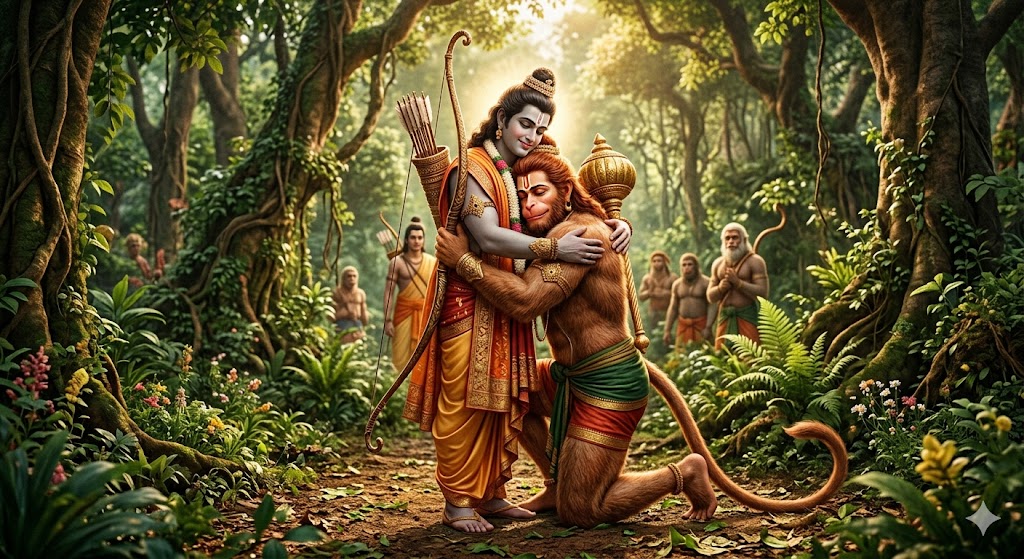
The heart of Kishkindha Kand beats in the sacred milan (meeting) between Lord Rama and Lord Hanuman. As Rama and Lakshmana wander near Rishyamukha mountain, Sugriva – Bali’s exiled brother – spots them and grows suspicious. Fearing they are Bali’s spies, he sends his trusted minister Hanuman, disguised as a humble Brahmin ascetic. Hanuman approaches with utmost humility. In Ramcharitmanas, this encounter is electric with devotion. Rama and Lakshmana introduce themselves as sons of Dasharatha, exiled by paternal command, now searching for Sita who was taken by a demon. They politely ask the “Brahmin” about his own story.
At that moment, Hanuman’s eyes fall upon Rama’s radiant form. He recognizes his Lord instantly. Overwhelmed, he abandons the disguise, falls prostrate at Rama’s feet, and clasps them in pure joy. Tulsidas describes the thrill that runs through Hanuman’s body – words fail him, tears of ecstasy flow. This is no ordinary meeting; it is the union of the Supreme Lord and His greatest devotee.
Rama, ever gracious, lifts Hanuman and blesses him. Hanuman then reveals Sugriva’s plight and carries both brothers on his mighty shoulders to meet the vanara king. The Rama Hanuman milan in Kishkindha Kand is a masterclass in bhakti. Hanuman teaches us that true devotion lies in selfless service and instant recognition of the divine, even when hidden in human form. This moment ignites the alliance that will eventually defeat Ravana.
The Tale of Sugriva and Bali: Exile, Betrayal, and Vengeance
Sugriva pours out his sorrow to Rama. Once, he and his elder brother Bali ruled Kishkindha harmoniously. A misunderstanding during a duel with the demon Dundubhi led Bali to suspect Sugriva of betrayal. Bali, blessed with a boon that doubled his strength in combat, exiled Sugriva and forcibly took his wife Ruma.
Sugriva took refuge on Rishyamukha mountain, protected by a curse that prevented Bali from entering. He lived in fear, surviving with a handful of loyal vanaras including Hanuman and Jambavan. The story highlights the pain of fraternal betrayal – a theme that echoes through Sanatan Dharma as a warning against adharma within families.
Rama listens with compassion. He sees in Sugriva a mirror of his own exile and loss. This shared suffering lays the foundation for their bond.
Sugriva's great armies deployed and Hanuman leaps: mission lanka
The Sacred Alliance and Oath of Friendship
In a solemn ritual before a sacred fire, Rama and Sugriva swear eternal friendship. Rama promises to slay Bali and restore Sugriva’s kingdom. In return, Sugriva vows to mobilize the entire vanara army to search for Sita Mata. The alliance is sealed with mutual trust – a shining example of mitra dharma in Kishkindha Kand.
To identify the brothers in battle, Rama asks Sugriva to wear a garland of flowers. This small yet significant detail shows Rama’s strategic wisdom and fairness.
The Epic Killing of Raja Bali
The climax of Kishkindha Kand arrives with the duel. Sugriva challenges Bali. The two brothers clash fiercely outside Kishkindha. Bali, stronger, overpowers Sugriva, who flees wounded. Rama, hidden behind a tree as per the plan (for Bali’s boon made direct confrontation unfair), releases a single arrow that pierces Bali’s chest.
Mortally wounded, Bali confronts Rama, questioning the justice of being struck from hiding. Rama calmly explains the dharma: Bali’s actions – exiling his brother and claiming his wife – violated righteous conduct. As an upholder of cosmic order, Rama had to intervene. Bali, in his final moments, acknowledges Rama’s divinity and attains liberation.
This episode in Kishkindha Kand Ramayan sparks debate even today, yet Tulsidas presents it as an act of divine justice. Bali’s slaying upholds the principle that no one, not even the mighty, escapes the consequences of adharma. Sugriva is crowned king, and Tara, Bali’s noble wife, finds solace in Hanuman’s wisdom.
Lord Hanuman’s Acceptance of His Divine Powers
With Sugriva enthroned, the focus shifts to the search. Sugriva, initially lost in royal pleasures and the monsoon rains, delays action until Lakshmana’s gentle rebuke reminds him of his vow. He assembles vast armies of vanaras and bears, dispatching them in four directions with a one-month deadline.
Hanuman leads the southern contingent alongside Prince Angad and wise Jambavan. When they reach the ocean’s edge, despair sets in – Lanka lies across the vast sea. Here, Jambavan reminds Hanuman of his forgotten powers. Born to serve Rama, Hanuman had been cursed to remain unaware of his immense strength until the right moment.
Jambavan’s words awaken Hanuman’s latent glory. He grows to colossal size, affirms his ability to leap across the ocean, and receives Rama’s ring as a token for Sita. This “acceptance of powers” is one of the most empowering moments in Kishkindha Kand. It teaches that our greatest strengths often lie dormant until devotion and duty call them forth.
How Lord Hanuman Flies Across the Ocean to Find Sita Mata
Though the actual discovery unfolds in Sundara Kand, Kishkindha Kand ignites the mission. Hanuman, empowered and blessed, prepares for the leap. He soars across the sea, overcoming obstacles like Surasa and the mountain Mainaka, embodying courage and focus. Upon reaching Lanka, he locates Sita in the Ashoka grove, consoles her with Rama’s message, and sets the stage for the great war.
This transition beautifully illustrates how Kishkindha Kand bridges personal alliances with cosmic victory. Hanuman’s flight symbolizes the devotee’s journey – leaping beyond limitations through Rama’s grace.
Timeless Lessons from Kishkindha Kand for Humanity and Sanatan Dharma
Kishkindha Kand is far more than an ancient tale; it is a living guide to human values. Its lessons resonate across time:
Devotion and Recognition (Bhakti): Hanuman’s instant surrender teaches that true wisdom lies in seeing the divine in every form. In Sanatan Dharma, bhakti dissolves ego and opens doors to grace.
Friendship and Loyalty (Mitra Dharma): Rama and Sugriva’s bond shows that genuine alliances are built on shared purpose and trust, not convenience.
Justice and Dharma: Bali’s killing underscores that righteousness must prevail, even when methods appear unconventional. It reminds leaders to act for the greater good.
Humility and Self-Realization: Hanuman’s disguise and later awakening highlight that power unused is power wasted; service awakens our highest potential.
Unity in Diversity: The vanara army’s collective effort proves that strength multiplies when individuals unite for a noble cause.
Forgiveness and Redemption: Bali’s liberation and Sugriva’s transformation illustrate that even the flawed can attain moksha through divine intervention.
These values form the bedrock of Sanatan Dharma, offering practical wisdom for modern challenges – from building harmonious relationships to overcoming personal limitations. In a world often divided, Kishkindha Kand urges us to form alliances rooted in dharma and serve selflessly like Hanuman.
Relevance of Kishkindha Kand in Today’s World
In our fast-paced lives, the Kishkindha Kand katha offers solace and direction. It teaches resilience amid loss, the importance of keeping promises, and the power of collective action. Families can draw lessons on resolving conflicts with fairness. Leaders learn ethical governance. Devotees find inspiration in Hanuman’s unwavering loyalty.
Many bhajans and recitations of Kishkindha Kand chaupai continue to uplift hearts during festivals and daily sadhana, keeping these eternal truths alive.
A soulful and cinematic depiction of the Rama-Hanuman Milan, the sacred first meeting that changed the course of the Ramayana
Conclusion: The Eternal Message of Kishkindha Kand
Kishkindha Kand in Ramcharitmanas is a profound chapter of hope, alliance, and awakening. From the divine Rama Hanuman milan to the slaying of Bali and the launch of the search for Sita, every event reinforces Sanatan Dharma’s core message: truth triumphs, devotion liberates, and friendship conquers adversity.
As we reflect on this kand, let us carry its lessons into our daily lives – practicing loyalty, awakening our inner strength, and walking the path of righteousness. May Lord Rama’s grace and Hanuman’s devotion guide us all, just as they guided the vanaras toward victory.
Jai Shri Ram! Jai Hanuman!
Frequently Asked Questions
What is the primary significance of Kishkindha Kand Ramcharitmanas: Rama Hanuman Story?
Kishkindha Kand Ramcharitmanas: Rama Hanuman StoryIn the timeless epic of Ramayana, few sections resonate as deeply with devotees as Kishkindha Kand. This fourth book of Tulsidas’ Ramcharitmanas marks a turning point where divine purpose meets human-like struggles, forging unbreakable bonds of friendship, devotion, and dharma.
How does this development impact Dharma?
As Lord Rama searches for Sita Mata after her abduction, Kishkindha Kand introduces the vanara kingdom and the legendary meeting with Lord Hanuman. It weaves together themes of exile, betrayal, redemption, and selfless service that continue to inspire millions.Whether you seek the full Kishkindha Kand katha, detailed chaupai explanations, or a complete sampurn kishkindha kand narrative, this kand stands as a beacon of Sanatan Dharma.
What are the key future projections to monitor?
It teaches that even in the darkest forests of life, bhakti and righteousness light the path forward.

 Sugriva's great armies deployed and Hanuman leaps: mission lanka