Aranya Kanda Ramayana: Forest Exile & Timeless Dharma
Dharma• April 06, 2026• Global Edition
The Heart of Sanatan Dharma in the Wilderness
In the grand tapestry of Sanatan Dharma, the Ramayana stands as an eternal beacon of righteousness, devotion, and cultural harmony. Among its seven kandas, Aranya Kanda – also known as Aranyakanda or the Book of the Forest – shines with unparalleled beauty. It captures Lord Rama, Mata Sita, and Lakshmana’s exile in the dense forests of Dandaka, transforming hardship into a profound spiritual journey. This chapter does not merely narrate events; it beautifully depicts the essence of Sanatan Dharma, where dharma (duty), artha (purpose), kama (desire), and moksha (liberation) intertwine amid nature’s embrace.
The Aranya Kanda reminds us that true strength lies not in palaces but in simplicity, resilience, and unwavering adherence to truth. As we explore this sacred section of Valmiki Ramayana (often recited in Telugu as Ramayanam Aranyakanda or celebrated in pravachanams), we witness how forest life for 14 years fosters inner growth, protects sages, and upholds cosmic order. Whether through Ramanand Sagar’s iconic Ramayan series or traditional parayan, Aranya Kanda continues to inspire millions, blending adventure, wisdom, and devotion seamlessly.
To fully appreciate Aranya Kanda, a brief look at the preceding kandas sets the stage. Bala Kanda, the Book of Childhood, introduces the divine birth of Lord Rama in Ayodhya as the eldest son of King Dasharatha. It recounts his early adventures, including the slaying of demons under Sage Vishwamitra’s guidance and his divine marriage to Sita, the epitome of grace and loyalty. These events establish Rama as the ideal man – Maryada Purushottama – embodying courage, compassion, and dharma from a tender age.
Ayodhya Kanda then shifts to palace intrigues and the painful decree of exile. Queen Kaikeyi’s boons force Rama into 14 years of vanvas (forest dwelling). With unwavering obedience to his father’s word, Rama departs Ayodhya accompanied by the devoted Sita and loyal Lakshmana. They cross the Ganga, meet allies like Guha, and settle initially at Chitrakoot. This kanda highlights filial duty, brotherly love, and the sorrow of separation, laying the emotional groundwork for the trials ahead. It is here that the royal trio embraces the forest, trading silk for bark cloth and luxury for austerity – a transition that Aranya Kanda deepens with vivid detail.
A Divine Encounter in the Dandaka Forest: Sage Atri and Mata Anasuya welcome the royal exiles to their humble hermitage. In a moment of profound grace, Anasuya imparts spiritual wisdom to Mata Sita and bestows upon her celestial garments and ornaments, while Lord Rama and Lakshmana look on with reverence, embodying the sacred traditions of Sanatan Dharma.
Entering Aranya Kanda: The Call of the Dandaka Forest
As Ayodhya Kanda concludes with Bharata’s respectful departure, Aranya Kanda unfolds with the trio venturing deeper into the Dandaka forest. Valmiki’s verses paint a mesmerizing picture of untamed wilderness – towering trees, murmuring streams, and vibrant wildlife – symbolizing both challenge and sanctuary in Sanatan Dharma. Rama, Sita, and Lakshmana build modest parnakutis (leaf huts), living in harmony with nature. Their days blend meditation, simple meals of fruits and roots, and vigilant protection of rishis harassed by rakshasas.
This forest life for 14 years underscores a core tenet of Sanatan culture: renunciation fosters clarity. Far from Ayodhya’s opulence, the exiles embody aparigraha (non-possessiveness) and tapas (austerity). Sita, adorned yet graceful, inspires by her poise. Lakshmana’s vigilance ensures safety. Rama’s presence radiates dharma, turning the forest into a living classroom of virtue.
The Sacred Bharat Milap at Chitrakoot: Brotherhood and Sacrifice
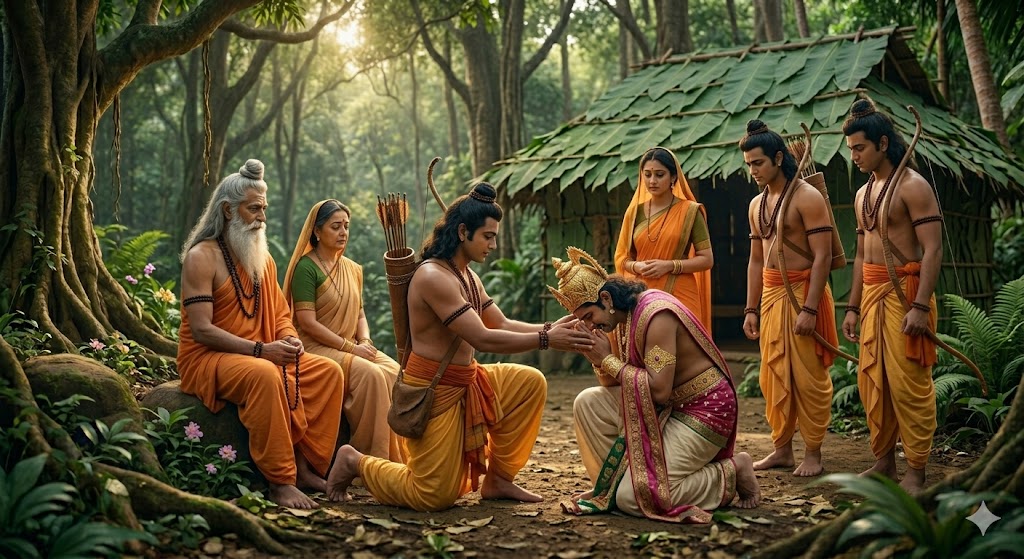
A poignant highlight early in the forest exile – often evoked in retellings of Aranya Kanda – is the Bharat Milap at Chitrakoot. News of Dasharatha’s passing reaches Bharata, who rushes to the forest with an army, pleading Rama to return and rule. The scene unfolds dramatically on Chitrakoot’s serene hills, beside the Mandakini River. Rama, firm in his dharma, refuses, explaining that a son must honor his father’s vow. Instead, he offers his padukas (sandals) as a symbol of his presence on the throne.
Bharata carries them on his head, ruling Ayodhya as a regent from Nandigram. This milap (reunion) beautifully illustrates Sanatan values: fraternal love without rivalry, selfless duty, and governance rooted in ethics. In Ramanand Sagar Ramayan and Telugu pravachanams, it moves audiences to tears, reminding us that true leadership serves dharma, not power. Chitrakoot becomes a pilgrimage site today, echoing the Ramayana’s living legacy.
Encounters with Sages: Wisdom in the Wilderness
Aranya Kanda brims with divine meetings that enrich the exiles’ journey. They visit hermits like Sharabhanga, who ascends to heaven after greeting Rama, and Sutikshna, offering guidance on righteous living. These encounters highlight the forest as a hub of spiritual energy in Sanatan Dharma – a place where tapasya meets protection.
A jewel of this kanda is the visit to Sage Atri and his wife Anasuya. Welcoming the trio warmly, Anasuya – revered for her own austerities that once shortened nights and brought rains – draws Sita aside. With motherly affection, she imparts timeless lessons on pativrata dharma: a wife’s devotion to her husband as her highest deity, regardless of fortune or hardship. Anasuya bestows divine gifts – a celestial garment, garland, ornaments, and fragrant creams that remain ever-fresh and enhance Sita’s radiance without fading. These clothes ease Sita’s forest life, symbolizing grace amid austerity. Sita narrates her marriage story, and the exchange deepens the bond between ideal women of Sanatan tradition.
Such interactions teach that forest exile is not mere survival but elevation. Sages like Agastya later direct them toward Panchavati, reinforcing Rama’s role as guardian of dharma against adharma.
The Rhythm of Forest Life: Culture, Rules, and Religious Harmony
Life in the forest during Aranya Kanda forms the kanda’s soul, beautifully depicting Sanatan Dharma’s rules for harmonious living. The trio rises with the sun, performs sandhya vandanam, gathers wild fruits, and tends their hut. Evenings fill with stories of ancient rishis, reinforcing moral values. They protect hermitages from demons like Viradha – whom Rama defeats, freeing a cursed soul – illustrating that dharma demands action against evil.
This 14-year phase celebrates simplicity: bark garments for Rama and Lakshmana, yet Sita’s divine attire from Anasuya glows like a lotus in the wild. It mirrors Sanatan ideals of vanaprastha (forest retirement) – a stage for reflection and service. The forest becomes a metaphor for life’s uncertainties, where inner strength and devotion prevail. Valmiki’s poetry evokes sensory delight: fragrant breezes, bird songs, and starry nights, reminding readers that nature is divine Prakriti, to be revered, not exploited.
In Telugu Ramayanam Aranyakanda discourses and parayan rituals, devotees meditate on these scenes, drawing strength for modern challenges. The kanda also shows community: sages flock to Rama for safety, affirming the ruler’s duty to protect spiritual seekers. Rama’s friendships with forest dwellers – from rishis to later allies – weave a web of loyalty that echoes through later kandas.
The emotional Bharat milaap at Chitrakoot where Bharat reverently accept Ram's padukas (sandals) to place on The throne symbolising duty and brotherly love
Challenges and Turning Points: Dharma Tested in Panchavati
As the exiles settle in Panchavati by the Godavari, Aranya Kanda intensifies. Spring’s beauty inspires Lakshmana’s poetic descriptions, yet danger lurks. Surpanakha’s encounter leads to the slaying of Khara, Dushana, and their army – a decisive stand for the sages’ peace. These battles showcase Rama’s prowess while upholding ahimsa toward the innocent and justice toward oppressors.
The golden deer episode and Sita’s abduction mark a tragic pivot, but even in sorrow, dharma shines: Jatayu’s heroic sacrifice and Sita’s unwavering fidelity. These events propel the epic forward, affecting Kishkindha and Yuddha Kandas profoundly. Rama’s grief humanizes him, teaching that even avatars feel loss, yet rise through resolve.
The Enduring Legacy: Aranya Kanda’s Impact on Sanatan Culture
Aranya Kanda profoundly shapes Sanatan Dharma’s cultural and religious fabric. It glorifies vanvas as a path to self-realization, influencing festivals, art, and ethics. Temples at Chitrakoot and Panchavati draw pilgrims seeking Rama’s blessings. Pravachanams on Ramayanam Aranyakanda in Telugu or Hindi elucidate lessons on patience, loyalty, and environmental harmony – values vital today.
In Ramanand Sagar’s Ramayan, vivid portrayals bring these scenes alive, making Aranya Kanda accessible across generations. The kanda’s stories ripple through literature, dance, and daily life, reinforcing that dharma triumphs amid trials. It portrays forest life not as exile but as divine play – a fast (vast) and beautiful canvas of culture, rules, and religion where humanity meets divinity.
Conclusion: A Timeless Invitation to Dharma
Aranya Kanda of the Ramayana is more than a chapter; it is a luminous guide for Sanatan living. From Bala and Ayodhya Kandas’ foundations through the forest’s trials – Bharat Milap’s tenderness, Anasuya’s wisdom, sage encounters, and 14 years of austere grace – it weaves a narrative of hope and resilience. As Valmiki describes, the forest transforms the exiles, just as it can transform us.
In an era of distractions, revisit Aranya Kanda through Valmiki’s verses, Telugu recitations, or televised epics. Embrace its message: true victory lies in dharma, devotion, and inner peace. May Lord Rama’s forest journey illuminate your path, fostering the same harmony that defines our eternal Sanatan culture.
Frequently Asked Questions
What is the primary significance of Aranya Kanda Ramayana: Forest Exile & Timeless Dharma?
The Heart of Sanatan Dharma in the WildernessIn the grand tapestry of Sanatan Dharma, the Ramayana stands as an eternal beacon of righteousness, devotion, and cultural harmony. Among its seven kandas, Aranya Kanda – also known as Aranyakanda or the Book of the Forest – shines with unparalleled beauty.
How does this development impact Dharma?
It captures Lord Rama, Mata Sita, and Lakshmana’s exile in the dense forests of Dandaka, transforming hardship into a profound spiritual journey. This chapter does not merely narrate events; it beautifully depicts the essence of Sanatan Dharma, where dharma (duty), artha (purpose), kama (desire), and moksha (liberation) intertwine amid nature’s embrace.The Aranya Kanda reminds us that true strength lies not in palaces but in simplicity, resilience, and unwavering adherence to truth.
What are the key future projections to monitor?
As we explore this sacred section of Valmiki Ramayana (often recited in Telugu as Ramayanam Aranyakanda or celebrated in pravachanams), we witness how forest life for 14 years fosters inner growth, protects sages, and upholds cosmic order.