"Ayodhya Kand Ramayana: Lord Ram Abhishek to Vanvas"
Dharma• April 05, 2026• Global Edition
Editor’s Note-
As an editor deeply immersed in India’s timeless epics, I present this complete, original exploration of the Ayodhya Kand – the second book of the Ramayana. Drawing from Valmiki’s original and Tulsidas’s Shri Ram Charit Manas, this article captures every pivotal moment with heartfelt detail while remaining faithful to the sacred narrative.
The Prelude: A Glimpse into Bal Kand and the Sacred Union
Before stepping into the Ayodhya Kand Ramayana, it is essential to recall the foundation laid in Bal Kand. Lord Ram, the eldest son of King Dasharath of Ayodhya, embodied perfection from birth. Alongside his brothers Bharata, Lakshmana, and Shatrughna, he grew under the guidance of sages like Vishwamitra. The major concern of Lord Ram and Goddess Sita’s divine union unfolded dramatically after the swayamvar in Mithila.
King Janak had set an impossible challenge: stringing and breaking the mighty bow of Shiva. Princes from across the land failed, but Ram lifted the bow effortlessly, snapped it, and won Sita’s hand. Their marriage, along with the weddings of his brothers, filled Ayodhya with celestial joy. Yet even in that bliss, subtle hints of future trials appeared. Ram’s calm acceptance of duty and Sita’s unwavering devotion foreshadowed the sacrifices to come. This union of the ideal man (Maryada Purushottam) and the ideal woman (Sita) set the stage for the profound drama that unfolds in the Ayodhya Kand.
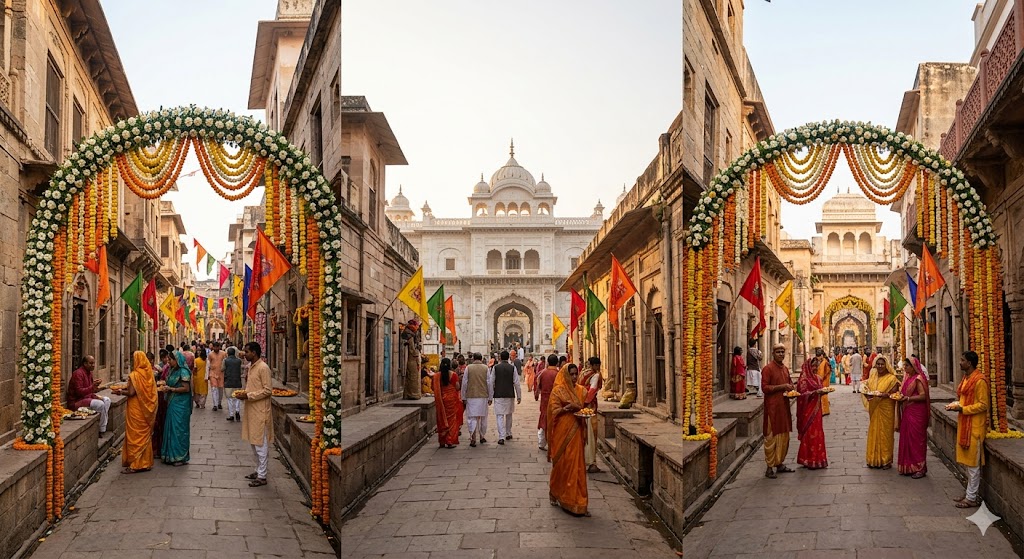
The Ayodhya Kand opens with scenes of immense joy as the ancient city prepares for the coronation of Lord Ram. Every street is adorned with festive decorations, reflecting the people's collective hope and eagerness to see their ideal prince take the throne. This image captures the pinnacle of royal harmony before the arrival of unforeseen trials.
The Joyous Dawn of Ram Abhishek in Ayodhya Kand
The Ayodhya Kand Ramayana opens in the prosperous kingdom of Ayodhya, where King Dasharath, now advanced in years, yearns to pass the throne to his beloved eldest son. The entire city buzzes with excitement as preparations for Ram Abhishek begin. Ministers, priests, and citizens alike decorate streets with flowers and flags. Sacred rituals are planned under the guidance of Guru Vashishtha.
In the Ayodhya Kand, Dasharath formally announces his decision in the royal court. The assembly erupts in cheers. Ram, ever humble, prepares himself with fasting and prayer. This moment captures the pinnacle of royal harmony – a king honoring dharma by choosing the most worthy successor. The Ayodhya Kand Ramayana paints a vivid picture of a kingdom radiant with hope, where every subject feels personally invested in Ram’s coronation.
The Shadow of Intrigue: Manthara’s Poison and the Court’s Tense Watch
Yet the Ayodhya Kand takes a dramatic turn through the scheming of Manthara, Kaikeyi’s maidservant. Watching from the palace windows as the city celebrates Ram Abhishek, Manthara feels envy and fear for her mistress’s future. She rushes to Kaikeyi, painting a dark future where Queen Kaikeyi and her son Bharata would become mere servants to Ram and Sita.
The Ayodhya Kand masterfully shows how one crooked mind can cloud reason. Kaikeyi, initially joyful, falls under Manthara’s influence. She recalls the two sacred boons – often remembered in retellings as part of the three vachans Dasharath once granted her – and decides to claim them now. The royal court, once alive with celebration, falls into stunned silence as the one who was watching (the entire assembly and the citizens outside) senses the gathering storm. Messengers summon the king. What follows is one of the most heart-wrenching scenes in the Ayodhya Kand Ramayana.
Dasharath’s History of the Vachans: Promises That Bind a King
To understand the depth of the Ayodhya Kand, we must revisit Dasharath’s past. Years earlier, during a fierce battle against demons, young Queen Kaikeyi drove the king’s chariot with extraordinary skill and saved his life. Overwhelmed with gratitude, Dasharath offered her boons – promises sealed by his royal word (vachan). Kaikeyi, wise at the time, asked only that they be granted whenever she desired. Tradition and popular narrations sometimes reference these as the foundation of three vachans, encompassing the original promise of gratitude, the freedom to ask later, and the binding nature of a king’s word.
In the Ayodhya Kand, Kaikeyi invokes these vachans. She demands two things: Bharata be crowned king immediately, and Ram be sent to the forest for fourteen years in exile (vanvas). Dasharath is devastated. He pleads, weeps, and reminds her of Ram’s virtues, but a king’s vachan is unbreakable. The Ayodhya Kand Ramayana portrays his agony with raw emotion – a father torn between love and dharma. This history of Dashrath’s vachans becomes the turning point, teaching that even the mightiest ruler is bound by truth.
Lord Ram’s Noble Acceptance of Vanvas
When the news reaches Lord Ram in the Ayodhya Kand, his response defines his character forever. Without a moment’s hesitation, he accepts the exile. “I will go to the forest today,” he declares calmly, honoring his father’s word above personal joy or royal power. Sita, embodying pure devotion, insists on accompanying him, arguing that a wife’s place is beside her husband in joy and sorrow. Lakshmana, the loyal brother, refuses to stay behind, vowing to serve Ram and Sita in the wilderness.
The Ayodhya Kand captures these moments with exquisite tenderness. Ram’s obedience, Sita’s resolve, and Lakshmana’s fierce protectiveness shine as beacons of dharma. Preparations for vanvas begin – simple bark garments replace royal silks. The palace that once prepared for coronation now witnesses a heartbreaking departure.
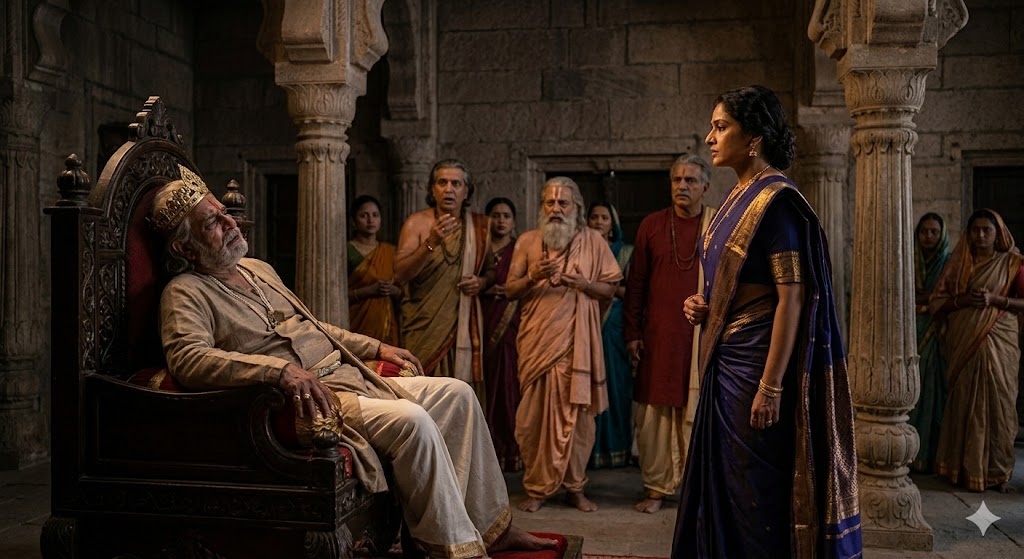
The mood shifts dramatically as the demands are made in the royal court. This scene captures King Dasharath, devastated and clinging to his royal vachan, collapsing onto his throne. Behind him, Queen Kaikeyi stands firm, her expression cold and resolute. This moment represents the heartbreaking conflict between a father’s love and a king’s duty that sets the path for Ram’s exile.
Ayodhya’s Heartbreak: How the People Cried for Ram
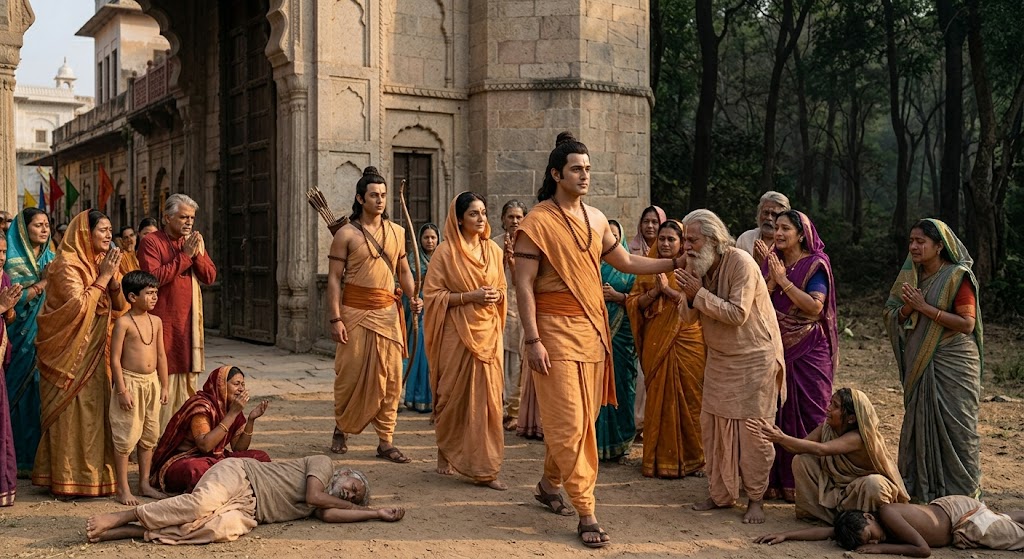
No scene in the Ayodhya Kand Ramayana moves the soul more than the reaction of Ayodhya’s citizens. As word spreads that Lord Ram is leaving for vanvas, the entire city plunges into mourning. Streets that echoed with festive drums fall silent. Men, women, and children gather along the path, weeping openly. Mothers hold their infants and lament, “How can the light of our lives leave us?” Elders recall Ram’s childhood kindness; young warriors grieve the loss of their ideal prince.
The Ayodhya Kand describes their cries in moving detail: rivers of tears, choked voices calling “Ram! Ram!”, and the collective sorrow that even the birds and animals seem to share. People lie on the roads, refusing to let the chariot pass. Ram consoles them gently, promising return after fourteen years. Yet the pain is palpable. This collective grief in the Ayodhya Kand underscores the deep bond between ruler and subjects, a bond forged in love and dharma.
Major Character Changes in the Ayodhya Kand
The Ayodhya Kand brilliantly transforms its central figures:
- Ram: evolves from beloved prince to the ultimate embodiment of duty, earning the title Maryada Purushottam.
- Sita: reveals her strength as a partner ready for hardship, not just palace comfort.
- Lakshmana: shifts from devoted brother to fierce guardian, his anger at injustice balanced by obedience.
- Bharata : upon returning, is shattered. He rejects the throne, berates his mother, and vows to bring Ram back or live as an ascetic himself.
- Dasharath : changes from proud king to a broken father, dying of grief soon after Ram’s departure – a tragic reminder of the cost of vachans.
- Kaikeyi: moves from loving queen to a figure of remorse, later regretting her actions when she sees the kingdom’s pain.
These profound character arcs make the Ayodhya Kand Ramayana a masterclass in human complexity and moral growth.
Dasharath’s Tragic End and the Kingdom’s Void
Unable to bear the separation, King Dasharath breathes his last in the Ayodhya Kand, calling out for Ram in his final moments. The kingdom is plunged into mourning. Bharata performs the last rites and, in a powerful act of dharma, places Ram’s sandals on the throne, ruling as regent until his brother’s return. The Ayodhya Kand closes this chapter with quiet dignity, showing how loss can purify and strengthen resolve.
Lord Ram, embodying absolute calm and serenity, leads Sita and Lakshmana away from the palace. They have exchanged their royal attire for simple bark garments. This image captures the heartbreaking departure as they walk towards the dark forest, while the citizens of Ayodhya weep openly along the path, demonstrating the deep bond between the prince and his subjects.
The Timeless Beauty of Sanatan Dharma in Ayodhya Kand
The true glory of the Ayodhya Kand lies in its reflection of Sanatan Dharma’s eternal beauty. It teaches that dharma is not mere ritual but living truth – Ram’s acceptance of vanvas upholds pitru-vachan (father’s word) over personal comfort. Sita and Lakshmana embody pativrata and bhratr-bhakti. The people’s tears reveal the beauty of a society bound by love and righteousness. Even Kaikeyi’s folly and Bharata’s righteousness illustrate karma and redemption.
In the Ayodhya Kand Ramayana, every trial reveals Sanatan Dharma’s core: sacrifice for the greater good, unwavering truth, and the victory of inner character over external power. These principles remain as relevant today as they were millennia ago, guiding millions toward a life of integrity and devotion.
The Ayodhya Kand is more than a chapter – it is the emotional and moral heart of the Ramayana. From the radiant promise of Ram Abhishek to the sorrow of vanvas, from Dashrath’s vachans to the tears of an entire city, this Kand reveals the beauty of duty, the pain of separation, and the triumph of dharma.
Whether you read the Valmiki Ramayan, Shri Ram Charit Manas Ayodhya Kand, or listen to Sampurna Ayodhya Kand recitations, the message remains pure: true kingship lies in sacrifice, true love in companionship, and true devotion in obedience to higher principles. May the spirit of the Ayodhya Kand inspire every reader to walk the path of righteousness with the same grace Lord Ram displayed.
Jai Shri Ram.
Frequently Asked Questions
What is the primary significance of "Ayodhya Kand Ramayana: Lord Ram Abhishek to Vanvas"?
Editor’s Note-As an editor deeply immersed in India’s timeless epics, I present this complete, original exploration of the Ayodhya Kand – the second book of the Ramayana. Drawing from Valmiki’s original and Tulsidas’s Shri Ram Charit Manas, this article captures every pivotal moment with heartfelt detail while remaining faithful to the sacred narrative.The Prelude: A Glimpse into Bal Kand and the Sacred Union Before stepping into the Ayodhya Kand Ramayana, it is essential to recall the foundation laid in Bal Kand.
How does this development impact Dharma?
Lord Ram, the eldest son of King Dasharath of Ayodhya, embodied perfection from birth. Alongside his brothers Bharata, Lakshmana, and Shatrughna, he grew under the guidance of sages like Vishwamitra.
What are the key future projections to monitor?
The major concern of Lord Ram and Goddess Sita’s divine union unfolded dramatically after the swayamvar in Mithila. King Janak had set an impossible challenge: stringing and breaking the mighty bow of Shiva.