Liquefied Petroleum Gas (LPG) has transitioned from a luxury to a fundamental necessity for millions of Indian households. In a country where the kitchen is the heart of the home, the consistent availability of fuel is not just an economic requirement but a matter of national security. As the world faces unprecedented geopolitical shifts and economic volatility in 2026, the Indian government, led by Prime Minister Narendra Modi, has implemented a multi-layered strategy to ensure that no stove goes cold.
This article explores the robust infrastructure of LPG distribution in India, the strategic maneuvering to bypass global bottlenecks like the Strait of Hormuz, and the fiscal policies protecting the common man from the "Asian Economic Crisis."
1. Strengthening the Domestic LPG Backbone
India’s LPG supply chain is one of the most sophisticated in the world. With over 33 crore active domestic consumers, the logistics involve a massive network of bottling plants, refineries, and distributors.
Maximizing Refinery Yields
To reduce reliance on volatile international markets, the Ministry of Petroleum and Natural Gas has issued directives to domestic refineries to prioritize LPG production. By channeling C3 and C4 hydrocarbon streams—specifically propane and butane—exclusively toward domestic cooking gas, India has managed to ramp up domestic production by nearly 40% in early 2026.
The Role of the Three Giants
The distribution is spearheaded by three Public Sector Undertakings (PSUs):
Indian Oil Corporation Limited (IOCL)
Bharat Petroleum Corporation Limited (BPCL)
Hindustan Petroleum Corporation Limited (HPCL)
These entities ensure that from the moment a cylinder is booked via digital platforms or IVRS, it reaches the consumer’s doorstep within an average of 2.5 days, maintaining pre-crisis efficiency levels even during global disruptions.
2. Navigating the Strait of Hormuz: Energy Security Tactics
The Strait of Hormuz is a critical maritime chokepoint through which nearly 90% of India’s LPG imports and 50% of its LNG demand traditionally flow. Recent regional tensions in West Asia have put this route under significant pressure.
Strategic Passage of Indian Tankers
The Modi government has successfully coordinated the safe passage of Indian-flagged LPG tankers through these high-risk zones. Recent breakthroughs include the successful navigation of vessels like the Green Sanvi and BW TYR, which brought in over 90,000 tonnes of LPG—enough to meet a full day’s national demand.
Diversifying the Energy Basket
To mitigate the "Hormuz Risk," India is aggressively diversifying its sourcing:
The African Pivot: India has deepened energy ties with Angola, moving toward long-term, 10-year contracts for LPG and LNG to bypass West Asian bottlenecks.
US and Iran Shipments: In a pragmatic move, India has increased imports from the United States and resumed shipments from Iran to fill gaps created by traditional Gulf suppliers like Qatar and Saudi Arabia.
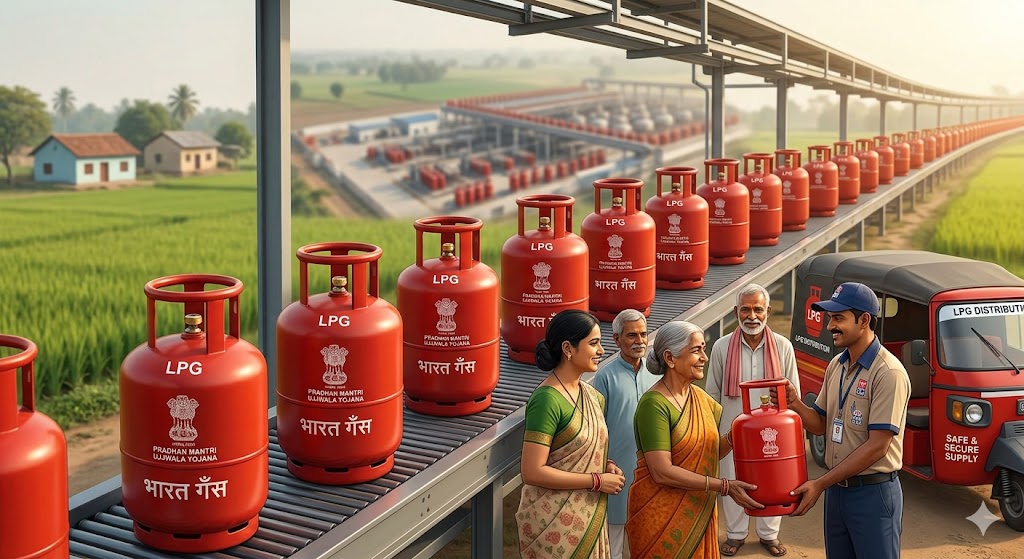
"Energy for All: India’s robust LPG infrastructure and the Pradhan Mantri Ujjwala Yojana ensure seamless fuel delivery to every household, bridging the gap between modern energy solutions and rural heartlands."
3. Pradhan Mantri Ujjwala Yojana (PMUY): Protecting the Vulnerable
The Pradhan Mantri Ujjwala Yojana remains the cornerstone of the government's energy policy. As of April 2026, the scheme has crossed over 10.5 crore connections, bringing clean cooking fuel to the poorest of the poor.
Feature PMUY Benefit Details (2026)
Cylinder Subsidy Approximately ₹300 per 14.2kg cylinder
Effective Price Roughly ₹613 in Delhi (vs ₹1,200+ in neighboring countries)
Digital Security 90% DAC (Delivery Authentication Code) coverage to prevent black marketing
By maintaining a significant price gap between subsidized domestic gas and market-linked commercial gas, the government ensures that global inflation does not hit the rural "Chulha."
4. Addressing the Asian Economic Crisis and Market Volatility
The current economic climate in Asia has seen currencies weaken and energy prices fluctuate. The Modi government has adopted a proactive "Observe and Act" stance to insulate the Indian economy.
Fiscal Buffers and Subsidies
While the Saudi Contract Price for LPG rose significantly between 2024 and 2026, the Indian government absorbed the shock. An approved compensation of ₹30,000 crore for Oil Marketing Companies (OMCs) has prevented these costs from being passed on to the consumer.
The Push Toward PNG and Electric Cooking
To further balance the energy crisis, the government is accelerating the transition to Piped Natural Gas (PNG). In March 2026 alone, over 2.9 lakh new PNG connections were registered, reducing the immediate demand for physical LPG cylinders and freeing up stocks for remote rural areas.
5. Preventing Hoarding and Ensuring Fair Distribution
To maintain a "Zero Shortage" environment, the government has implemented strict regulatory measures:
LPG Control Order 2026: Restricts the diversion of domestic cylinders for commercial use.
Anti-Adulteration Cells: Coordination between the central and state governments (like UP, Gujarat, and Maharashtra) has led to thousands of raids and seizures to curb black marketing.
Smart Booking Gaps: A mandatory 25-day gap between bookings in urban areas and 45 days in rural areas helps manage demand and prevents panic buying during periods of high global volatility.
Conclusion: A Resilient Energy Future
The proactive measures taken by the Modi government—ranging from tactical maritime maneuvers in the Strait of Hormuz to aggressive domestic production and fiscal shielding—have ensured that India remains an island of stability in a turbulent global energy market. By blending diplomacy, technology, and social welfare, India is not just surviving the fuel crisis but is setting a global benchmark for energy resilience.
Frequently Asked Questions
What is the primary significance of How India Secures LPG Supply Amid Global Energy Crisis?
The Lifeline of Indian KitchensLiquefied Petroleum Gas (LPG) has transitioned from a luxury to a fundamental necessity for millions of Indian households. In a country where the kitchen is the heart of the home, the consistent availability of fuel is not just an economic requirement but a matter of national security.
How does this development impact Current Affairs?
As the world faces unprecedented geopolitical shifts and economic volatility in 2026, the Indian government, led by Prime Minister Narendra Modi, has implemented a multi-layered strategy to ensure that no stove goes cold.This article explores the robust infrastructure of LPG distribution in India, the strategic maneuvering to bypass global bottlenecks like the Strait of Hormuz, and the fiscal policies protecting the common man from the "Asian Economic Crisis."1. Strengthening the Domestic LPG BackboneIndia’s LPG supply chain is one of the most sophisticated in the world.
What are the key future projections to monitor?
With over 33 crore active domestic consumers, the logistics involve a massive network of bottling plants, refineries, and distributors.Maximizing Refinery YieldsTo reduce reliance on volatile international markets, the Ministry of Petroleum and Natural Gas has issued directives to domestic refineries to prioritize LPG production.