April 7 Iran-Israel War: US Threats & Strikes Escalate
International Affairs• April 06, 2026• Global Edition
A Tense Day in the Iran Israel War
As dawn broke over the Middle East on April 7, 2026, the Iran Israel war entered its 39th day with no signs of de-escalation. What began as a limited exchange in late February has now engulfed regional powers, drawing in the United States, Lebanon, and Gulf states. Israeli forces continued precision strikes on Iranian infrastructure, while Tehran launched retaliatory operations, including a confirmed attack on a key Kuwait air base. Meanwhile, the United States issued its strongest warnings yet to Tehran, and fresh reports from Beirut highlighted the human cost in Lebanon.
This comprehensive update on the April 7 Iran Israel war developments focuses on the interconnected Lebanon Gaza Israel little conflict that has now merged into a broader US-backed campaign against Iran. From power plants in southern Iran to chemical facilities and Lebanese border villages, the strikes reveal a strategy aimed at crippling supply lines and military capabilities. With 15 US personnel reported injured in the latest Iranian strike, the risk of wider escalation remains high.
Israeli airstrikes on April 7 targeted critical energy and industrial sites deep inside Iran, marking another chapter in the systematic campaign to degrade Tehran’s war-making capacity. Military sources confirmed hits on utility plants supporting the massive Mahshahr petrochemical complex, already offline since earlier strikes this week. These facilities produce essential chemicals used in missile propellants and explosives, according to Israeli statements.
The strikes extend beyond military targets. Israeli jets also hit infrastructure linked to Iran’s power grid in the South Pars natural gas field, the country’s largest energy hub shared with Qatar. Officials in Jerusalem described the operations as necessary to disrupt revenue streams funding Iran’s proxy network, including Hezbollah in Lebanon. Power outages were reported in several Iranian provinces, though Tehran has not released full casualty figures from these specific April 7 hits.
This pattern of targeting power plants and chemical plants is not new in the Iran Israel war, but the intensity on April 7 suggests a shift toward sustained pressure ahead of any potential ceasefire talks. Israeli Defense Minister Israel Katz reiterated that such sites remain legitimate targets because they support the production of weapons used against Israeli cities. Independent analysts note that repeated strikes on these dual-use facilities could have long-term effects on Iran’s civilian electricity supply and industrial output.
Strikes on Lebanon’s Infrastructure and the Beirut Front
The Iran Israel war has never been confined to direct borders. On April 7, Israeli forces conducted multiple airstrikes across southern Lebanon and areas near Beirut, hitting suspected Hezbollah supply routes and infrastructure. Lebanese health authorities reported at least 15 killed in the latest wave, with additional damage to roads, bridges, and power lines in the Bekaa Valley and coastal regions.
Beirut itself saw heightened alerts as explosions echoed near the capital. Reports from the ground describe Israeli drones and jets focusing on sites believed to house Iranian-supplied weapons caches. Lebanon’s fragile infrastructure—already strained by years of economic crisis—has suffered further blows, with power plants and fuel depots among the reported targets.
This escalation ties directly into the Lebanon Gaza Israel little conflict that has simmered since the original Hamas attacks. Hezbollah, Iran’s most potent proxy, has fired hundreds of rockets into northern Israel since early March, prompting Israel to respond with ground operations south of the Litani River and airstrikes deeper into Lebanon. On April 7, the IDF confirmed targeting Hezbollah command posts and weapons storage facilities, framing these as defensive measures against the broader Iran Israel war.
Civilian areas have not been spared. Villages near the border reported damaged water treatment plants and communication towers, compounding the humanitarian challenges for over one million displaced Lebanese citizens. International observers warn that continued infrastructure strikes risk a full-scale collapse of services in southern Lebanon.
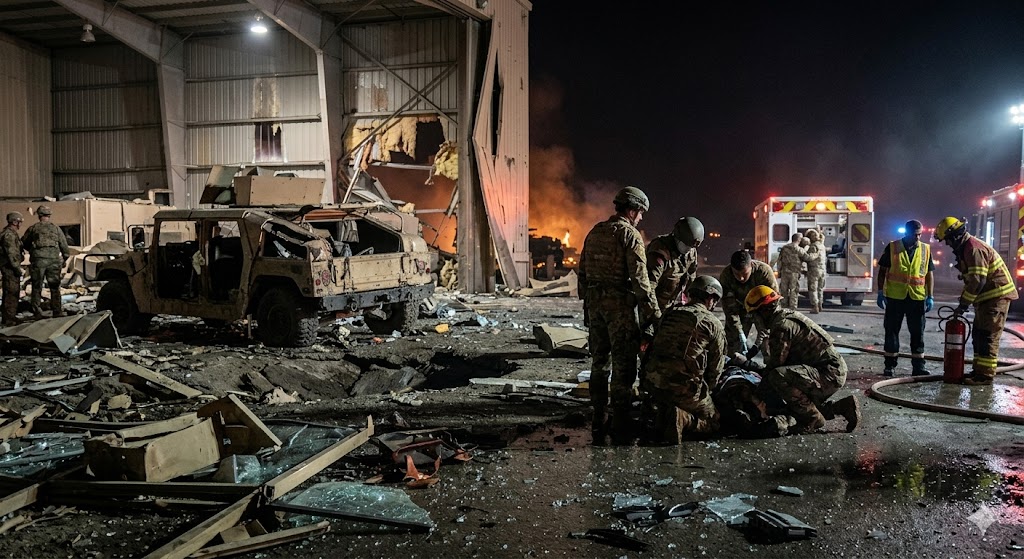
A high-stakes moment at the Kuwaiti air base on April 7, 2026, where military first responders and medical teams work under floodlights to treat the injured. The image captures the immediate aftermath of the Iranian drone and missile attack that left 15 US service members wounded.
US Threats to Tehran and the American Role in the Iran Israel War
President Donald Trump’s rhetoric on April 7 left little room for ambiguity. In public statements and social media posts, the US leader reiterated threats to strike Iranian power plants and bridges if Tehran fails to reopen the Strait of Hormuz by the Tuesday evening deadline. Pentagon officials, including Defense Secretary Pete Hegseth, held a briefing confirming that US forces stand ready to support Israeli operations and conduct independent strikes on Iranian energy infrastructure.
The US warnings to Tehran come amid growing concerns over freedom of navigation in the Gulf. Iranian forces have mined or blocked parts of the strait, disrupting global oil flows and raising energy prices worldwide. Trump described April 7 as potentially “power plant day,” signaling that US assets could join Israel in targeting electrical grids and chemical plants if diplomacy fails.
Washington’s involvement has transformed the Iran Israel war from a bilateral clash into a multi-national confrontation. US Central Command coordinates closely with the IDF, providing intelligence and logistical support. The threats have drawn sharp criticism from some international legal experts, who argue that deliberate targeting of civilian infrastructure could violate international humanitarian law. Yet US officials maintain that the strikes are proportionate responses to Iranian aggression.
Ian’s Retaliatory Air Strike on Kuwait Air Base
In a significant escalation reported on April 7, Iranian forces launched a drone and missile attack on Kuwait’s Ali Al Salem Air Base, a facility hosting US military personnel. Initial reports confirm at least 15 American service members were injured in the strike, with several requiring medical evacuation. Kuwaiti air defenses intercepted some incoming projectiles, but explosions were visible near the base perimeter.
Tehran’s Islamic Revolutionary Guard Corps claimed responsibility, describing the operation as retaliation for US and Israeli strikes on Iranian territory. The Kuwait air base attack marks one of the most direct hits on US assets since the Iran Israel war began on February 28. Earlier Iranian drone strikes had already damaged a US helicopter and refinery infrastructure in Kuwait, but the April 7 incident resulted in confirmed casualties among American troops.
This development has raised alarms across Gulf capitals. Bahrain and other US allies have increased alert levels, fearing spillover from the Iran Israel war. The injured US personnel bring the total American casualties in the conflict to over 370 wounded, according to Pentagon tallies.
Latest Reports from Beirut, Lebanon, and Regional Casualties
Live updates from Beirut on April 7 paint a grim picture. Rescue teams continue searching rubble after Israeli strikes on apartment buildings and infrastructure in eastern suburbs. Lebanese officials link these attacks to the broader campaign against Hezbollah, which remains Iran’s primary ally in the Lebanon Gaza Israel little conflict.
Casualty figures from Lebanon have climbed steadily. The health ministry reported additional deaths from the latest strikes, bringing the toll in recent days to at least 15 in one wave alone. Hospitals near Beirut are overwhelmed, treating both military and civilian patients. Power outages and damaged chemical storage sites have raised secondary concerns about environmental hazards.
In Gaza, while direct fighting has decreased, the shadow of the Iran Israel war lingers. Hamas remnants and other factions continue sporadic rocket fire, supported indirectly through Iranian supply lines via Lebanon and Yemen. Israeli operations in Gaza remain limited but persistent, focused on dismantling remaining militant infrastructure.
Broader Context: How the Lebanon Gaza Israel Little Conflict Fuels the Wider War
The current Iran Israel war cannot be understood without examining its roots in the Lebanon Gaza Israel little conflict. Hezbollah’s entry into the fray on March 2 transformed a localized Gaza crisis into a multi-front war. Iran’s support for these proxies—through weapons, funding, and strategic guidance—has prompted Israel’s preemptive and retaliatory strikes across borders.
On April 7, the interplay remains clear. Israeli strikes in Lebanon target not only Hezbollah but also Iranian advisors and supply depots. In response, Iran accelerates attacks on US and Israeli interests in the Gulf, as seen in the Kuwait air base strike. The cycle of escalation shows no immediate off-ramp.
Analysts monitoring the Iran Israel war note that each side views the other’s infrastructure strikes as existential threats. Israel aims to prevent Iran from rebuilding its nuclear or missile programs, while Tehran seeks to impose economic pain through energy disruptions and proxy warfare.
Global Implications and Risk Assessment
The events of April 7 underscore the fragile state of the Iran Israel war. Oil markets reacted sharply to the Kuwait incident and US threats, with prices climbing amid fears of strait closure. European and Asian allies have urged restraint, calling for renewed diplomatic efforts through intermediaries.
Humanitarian organizations report rising displacement in Lebanon and Iran, with civilian infrastructure bearing the brunt. Power plants, chemical plants, and transportation networks in multiple countries now stand damaged or destroyed.
For the United States, the injury of 15 personnel in Kuwait marks a red line. Pentagon briefings on April 7 emphasized readiness for further action, but officials stopped short of announcing immediate new strikes.
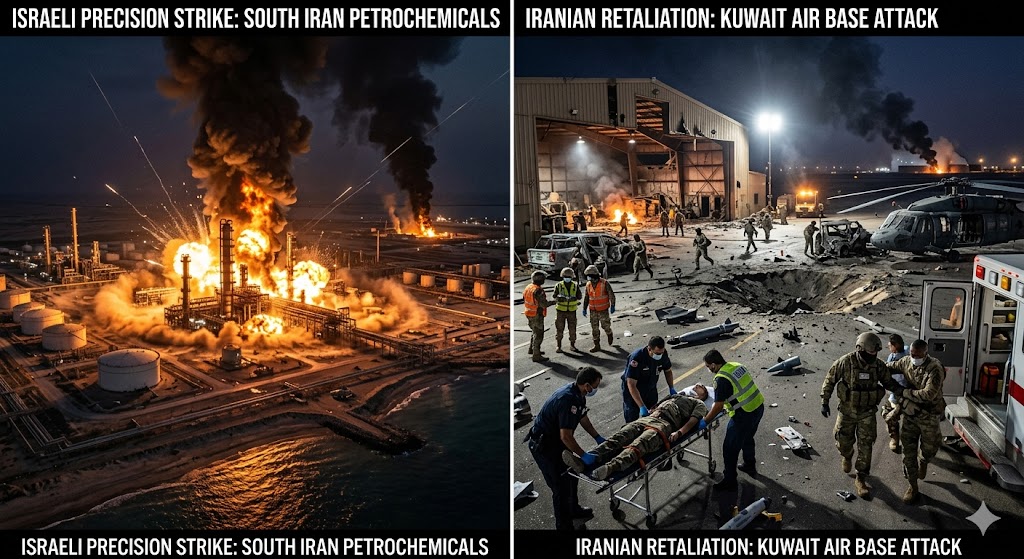
This split-pane composition illustrates the two defining escalations of the day. On the left, the economic degradation of Iranian energy assets; on the right, the direct military retaliation against US-hosted facilities in the Gulf.
Conclusion: What April 7 Means for the Iran Israel War
April 7, 2026, will be remembered as another day of high-stakes maneuvering in the Iran Israel war. Israeli strikes on power plants and chemical plants, combined with operations against Lebanese infrastructure, demonstrate Jerusalem’s determination to degrade Iran’s capabilities. US threats to Tehran add diplomatic and military weight, while Iran’s bold strike on the Kuwait air base and the resulting 15 US injuries signal Tehran’s willingness to hit back directly.
Reports from Beirut and the ongoing Lebanon Gaza Israel little conflict remind us that this is not merely a distant geopolitical struggle—it carries immediate human consequences across the region. As night falls on April 7, the world watches to see whether Trump’s deadline will trigger even greater violence or open a narrow window for de-escalation.
The Iran Israel war remains fluid, with each strike reshaping the battlefield. For now, the focus stays on infrastructure, proxies, and the human cost in Beirut, Gaza, and beyond. Updates will continue as new developments emerge from this volatile theater.
Frequently Asked Questions
What is the primary significance of April 7 Iran-Israel War: US Threats & Strikes Escalate?
A Tense Day in the Iran Israel War As dawn broke over the Middle East on April 7, 2026, the Iran Israel war entered its 39th day with no signs of de-escalation. What began as a limited exchange in late February has now engulfed regional powers, drawing in the United States, Lebanon, and Gulf states.
How does this development impact International Affairs?
Israeli forces continued precision strikes on Iranian infrastructure, while Tehran launched retaliatory operations, including a confirmed attack on a key Kuwait air base. Meanwhile, the United States issued its strongest warnings yet to Tehran, and fresh reports from Beirut highlighted the human cost in Lebanon. This comprehensive update on the April 7 Iran Israel war developments focuses on the interconnected Lebanon Gaza Israel little conflict that has now merged into a broader US-backed campaign against Iran.
What are the key future projections to monitor?
From power plants in southern Iran to chemical facilities and Lebanese border villages, the strikes reveal a strategy aimed at crippling supply lines and military capabilities.