International Affairs• April 06, 2026• Global Edition
Escalating Tensions Reach a Critical Deadline
In a dramatic escalation of the ongoing conflict, President Donald Trump has once again issued a stark ultimatum to Iran, warning of severe consequences if the Strait of Hormuz is not reopened immediately. Yesterday evening, fresh from high-level meetings at the White House, the president reiterated his demand for unrestricted access through the vital waterway, threatening strikes on critical infrastructure that could leave the country in ruins. This comes as Israeli forces today conducted targeted attacks on Iranian power plants and chemical facilities, underscoring a coordinated pressure campaign that shows no signs of letting up.
The Trump administration's strategy blends tough rhetoric with precise military planning, aiming not just to resolve the immediate crisis but to force a broader resolution. With a proposed 45-day ceasefire on the table—one that demands complete cessation of hostilities and effective surrender terms from Tehran—the stakes could not be higher. As global markets react to the turmoil and oil prices surge, the world watches to see whether these threats represent a path to decisive victory or a calculated bid to compel Iran’s compliance.
President Trump’s latest warning, delivered through a series of public statements and a Truth Social post that quickly went viral, leaves little room for ambiguity. Speaking from the White House on Monday, he made clear that failure to open the Strait of Hormuz by the Tuesday evening deadline—set for 8:00 p.m. Eastern Time—would trigger immediate action against Iran’s power plants, bridges, and other key assets.
“Tuesday will be Power Plant Day, and Bridge Day, all wrapped up in one,” the president stated in his characteristically direct style. He warned that Iran’s leadership would be “living in Hell” unless the strait was fully reopened, framing the move as essential to restoring global energy flows. This echoes earlier comments where Trump emphasized the U.S. military’s capability for rapid, overwhelming response.
Central to the message was the notion of complete demolition. Trump explicitly referenced plans that could result in the total neutralization of Iran’s energy infrastructure in a single operation. “We have a plan,” he told reporters, “where every bridge in Iran will be decimated… every power plant will be out of business, burning, exploding, and never to be used again.” Such language has drawn both support from allies concerned about regional stability and criticism from those wary of broader escalation.
This is not Trump’s first such declaration. Over recent weeks, the president has repeatedly extended deadlines while maintaining pressure through the Trump administration’s military plan for Iran. Analysts note that these statements serve dual purposes: deterring Iranian aggression while signaling to domestic audiences and international partners that the United States will not tolerate disruptions to critical shipping lanes.
Israel’s Strikes Today: Targeting Power and Chemical Plants
Compounding the pressure, Israeli forces carried out significant strikes today on Iranian petrochemical complexes and related facilities. Reports confirm attacks on key sites, including the Mahshahr petrochemical complex in southern Iran, which plays a central role in the country’s energy production and chemical processing. These operations targeted infrastructure vital for electricity generation and industrial output, aligning closely with the type of targets referenced in U.S. warnings.
Israeli officials have described the actions as necessary self-defense measures, aimed at degrading Iran’s capacity to sustain conflict. State media in Iran reported evacuations and limited casualties, but the symbolic and strategic impact is clear: these strikes demonstrate that warnings from both Washington and Jerusalem are being acted upon. Israel has shown little inclination to accept further delays or softened terms, continuing operations despite diplomatic overtures.
The timing is notable. Yesterday’s meetings, involving U.S., Israeli, and intermediary representatives from Pakistan, Egypt, and Turkey, focused on ceasefire proposals. Yet Iran’s response—rejecting a temporary pause in favor of a permanent end to hostilities—appears to have hardened positions. Israeli strikes today signal that neither nation is prepared to wait indefinitely while Tehran debates terms.
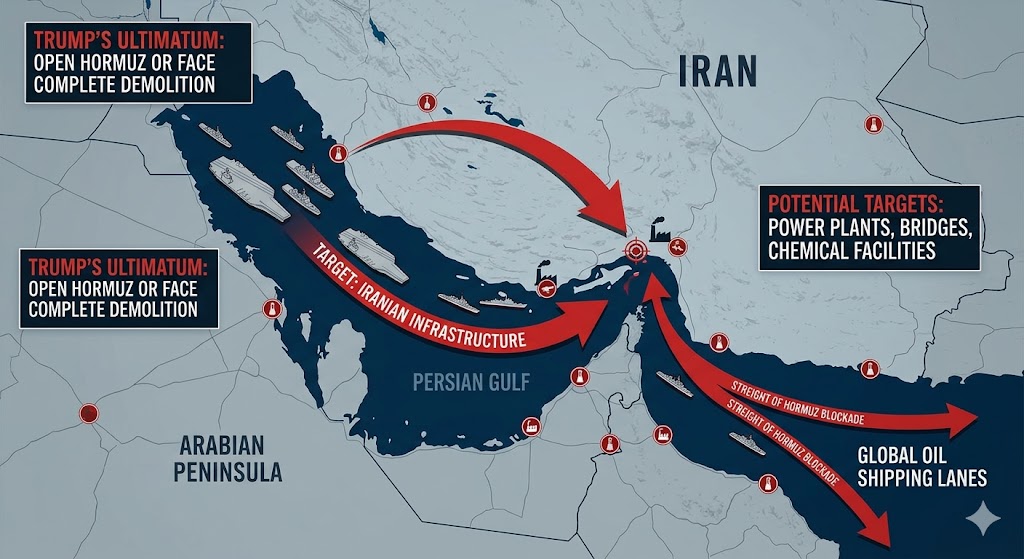
A conceptual military briefing map illustrating Trump's ultimatum regarding the Strait of Hormuz, highlighting potential Iranian infrastructure targets and global shipping lanes.
The 45-Day Ceasefire Proposal: Terms, Conditions, and Path to Surrender
At the heart of current diplomacy lies a 45-day ceasefire framework, advanced through multiple mediators and reviewed directly by the Trump administration. The proposal calls for an immediate and complete cessation of fire, reopening of the Strait of Hormuz to all international shipping, and verifiable steps toward de-escalation. In exchange, it envisions a structured pause that could lead to broader negotiations—but only if Iran demonstrates full compliance.
President Trump has described the Iranian counter-proposal as “significant” yet “not good enough.” Tehran seeks a permanent resolution, including sanctions relief and guarantees against future strikes, but U.S. officials insist on concrete actions first: full access to the strait, cessation of attacks on regional allies, and commitments that effectively amount to strategic surrender on key military fronts.
The rules and conditions outlined by the United States are straightforward yet uncompromising. Complete stoppage of war means no further missile launches, proxy actions, or disruptions to global trade. Surrender, in this context, does not imply total capitulation but a binding agreement to dismantle elements of Iran’s nuclear and ballistic programs under international verification. The 45-day window provides a structured timeline for implementation, with clear benchmarks for compliance and consequences for violations—including the very infrastructure strikes now threatened.
Why this approach? The Trump administration views the Strait of Hormuz closure as an existential threat to global energy security. With roughly one-fifth of the world’s oil passing through the waterway, prolonged blockage has already sent shockwaves through markets. By coupling the ultimatum with the ceasefire proposal, the U.S. aims to create an off-ramp that favors de-escalation while preserving leverage.
Trump’s Bold Statement: Destruction Possible “in a Single Night”
One of the most striking elements of recent rhetoric came when President Trump declared that “the entire country can be taken out in one night—and that night might be tomorrow night.” Delivered during a White House briefing, the comment underscored the overwhelming military superiority the United States believes it holds.
This was no idle boast, according to administration sources. Detailed contingency plans reportedly exist for rapid, precision strikes that could achieve complete demolition of targeted infrastructure within hours. Bridges critical for logistics, power plants essential for daily life, and chemical facilities tied to industrial capacity—all could be rendered inoperable in a coordinated operation.
Experts debate whether such threats represent genuine intent or a high-stakes negotiating tactic. On one hand, the precision of U.S. and Israeli capabilities, demonstrated in recent actions, lends credibility. On the other, history shows that Trump often uses bold language to force concessions without necessarily following through to the extreme. In this case, the goal appears twofold: to compel Iran’s surrender on favorable terms and to deter further aggression from Tehran and its proxies.
The president’s statement aligns with his broader Trump military plan for Iran, which prioritizes swift, decisive action over prolonged engagement. By framing the possibility of overnight destruction, he signals that patience is exhausted and that the next 24 hours could determine the conflict’s trajectory.
Yesterday’s Meetings and Responses: Diplomacy Meets Resolve
Yesterday’s diplomatic engagements provided important context for today’s developments. High-level talks, including virtual and in-person sessions involving U.S. officials, Israeli counterparts, and regional mediators, centered on the ceasefire proposal and Iran’s response. Comments from Iranian representatives indicated a willingness to negotiate but rejection of any framework perceived as surrender.
The Trump administration characterized the exchanges as constructive yet insufficient. President Trump noted that Iran’s proposals failed to address core demands, particularly immediate reopening of the strait and verifiable halt to hostilities. Israel, for its part, made clear through both public statements and on-the-ground actions that it would not accept further delays.
Around these meetings, responses highlighted divergent priorities. The United States and Israel emphasized security and economic stability, while Iran focused on long-term guarantees. The result has been a hardening of lines, with today’s Israeli strikes serving as a tangible demonstration that warnings carry weight.
Analysis: Ultimate Threat or Strategic Pressure for Surrender?
The central question remains: does the rhetoric of complete demolition and single-night destruction point toward imminent large-scale action, or is it primarily designed to force Iran’s hand? Evidence suggests a blend of both. The Trump administration has consistently backed words with deeds—through support for Israeli operations and readiness of U.S. assets in the region.
By tying threats to a clear deadline and linking them to the 45-day ceasefire framework, the strategy creates urgency. Iran faces a choice: accept terms that include complete fire stoppage and effective surrender on key issues, or risk devastating infrastructure losses. The president’s repeated extensions of deadlines indicate a preference for resolution without full-scale war, yet the military plan stands ready.
Global reactions have been mixed. Allies praise the firm stance on freedom of navigation, while critics worry about humanitarian impacts and escalation risks. What is undeniable is the professionalism and coordination between the Trump White House, the Pentagon, and Israeli partners.
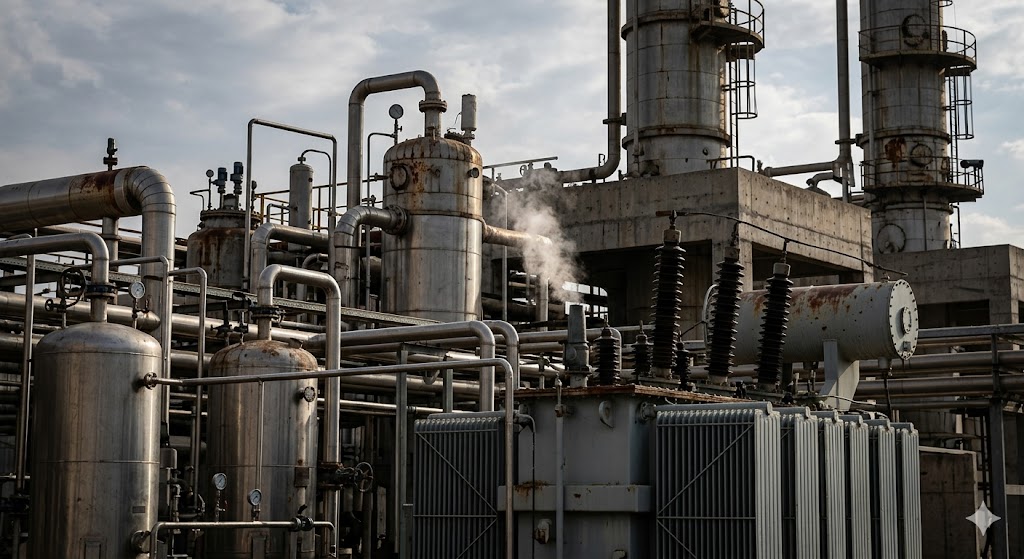
A detailed photographic study of complex industrial infrastructure in Iran, visualizing the types of power and chemical facilities mentioned as potential targets.
Looking Ahead: What the Next 24 Hours May Bring
As the Tuesday deadline approaches, the world holds its breath. Will Iran reopen the Strait of Hormuz and engage seriously with the 45-day proposal? Or will the threats of complete demolition materialize, potentially reshaping the Middle East overnight?
President Trump has made clear that the choice rests with Tehran. Through his speeches, tweets, and administration actions, he has projected resolve rooted in strength. Whether this leads to surrender, sustained pressure, or something bigger remains to be seen—but the path forward is illuminated by today’s events.
The coming hours will test the effectiveness of this high-stakes approach. For now, the focus remains on the Strait of Hormuz, the infrastructure at risk, and the diplomatic efforts that could still avert further conflict.
Frequently Asked Questions
What is the primary significance of "Trump Issues Iran Ultimatum: Complete Demolition"?
Escalating Tensions Reach a Critical DeadlineIn a dramatic escalation of the ongoing conflict, President Donald Trump has once again issued a stark ultimatum to Iran, warning of severe consequences if the Strait of Hormuz is not reopened immediately. Yesterday evening, fresh from high-level meetings at the White House, the president reiterated his demand for unrestricted access through the vital waterway, threatening strikes on critical infrastructure that could leave the country in ruins.
How does this development impact International Affairs?
This comes as Israeli forces today conducted targeted attacks on Iranian power plants and chemical facilities, underscoring a coordinated pressure campaign that shows no signs of letting up.The Trump administration's strategy blends tough rhetoric with precise military planning, aiming not just to resolve the immediate crisis but to force a broader resolution. With a proposed 45-day ceasefire on the table—one that demands complete cessation of hostilities and effective surrender terms from Tehran—the stakes could not be higher.
What are the key future projections to monitor?
As global markets react to the turmoil and oil prices surge, the world watches to see whether these threats represent a path to decisive victory or a calculated bid to compel Iran’s compliance.Trump’s Renewed Threat: “Complete Demolition” of Iranian InfrastructurePresident Trump’s latest warning, delivered through a series of public statements and a Truth Social post that quickly went viral, leaves little room for ambiguity.