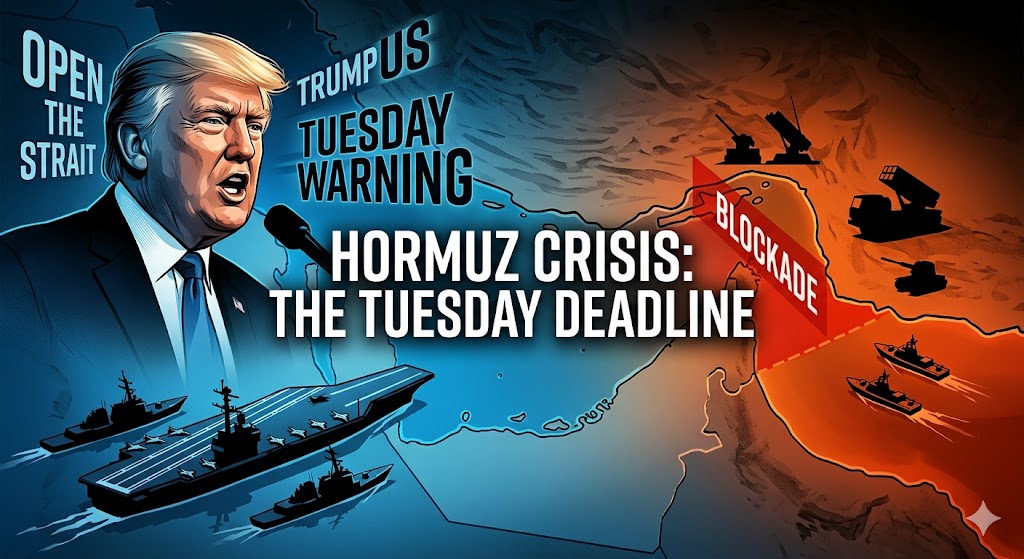
In a dramatic escalation of the ongoing US-Iran conflict, President Donald Trump delivered a blunt and expletive-laden message to Tehran on Easter Sunday, April 5, 2026. His warning centered on Iran's continued control over the Strait of Hormuz, a vital chokepoint for global oil shipments. Trump demanded immediate reopening of the waterway, threatening severe military action starting Tuesday if Iran failed to comply. This latest Trump Iran warning underscores the high stakes in the West Asia region, where diplomatic efforts and military operations continue to unfold amid heightened risks to international energy security.
The president's post on Truth Social left little room for interpretation. "Tuesday will be Power Plant Day, and Bridge Day, all wrapped up in one, in Iran. There will be nothing like it!!! Open the F***in’ Strait, you crazy bastards, or you’ll be living in Hell - JUST WATCH!" he wrote, adding an unusual "Praise be to Allah" at the end. The message, widely reported across global media, reflects Trump's frustration with Iran's retaliatory blockade following weeks of intense fighting. Analysts view this Trump Iran warning as both a tactical pressure tactic and a signal of Washington's determination to restore free passage through the strait, which handles roughly 20 percent of the world's seaborne oil trade.
This development comes against the backdrop of a broader US-Iran conflict that has drawn in regional players and raised alarms about potential disruptions to global supply chains. As markets monitor the situation closely, the Trump Iran warning has already contributed to volatility in oil prices, with traders bracing for possible supply shocks if hostilities intensify.
US Forces Execute Daring Rescue of Downed Airman in Iran
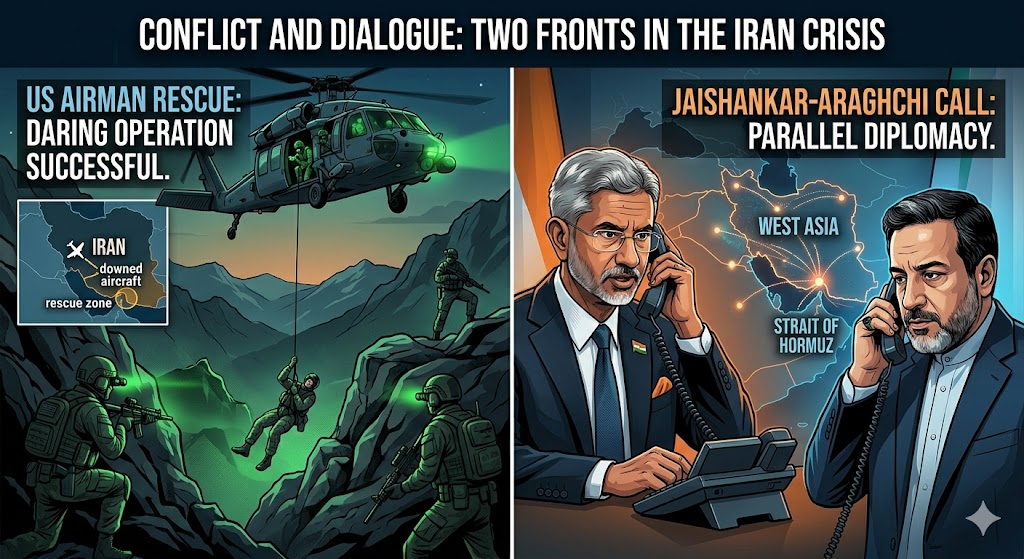
In a separate but closely related development highlighting the intensity of current operations, US forces successfully rescued a missing airman from deep inside Iranian territory. The F-15E Strike Eagle jet was shot down over Iran on Friday, April 3. While the pilot was recovered shortly afterward, the weapons systems officer—a highly respected colonel—evaded capture for more than 24 hours in rugged mountainous terrain before being extracted in a high-risk mission.
President Trump personally announced the success early Sunday, posting "WE GOT HIM!" on Truth Social. He described the operation as "one of the most daring Search and Rescue Operations in U.S. History," praising the bravery of US special forces, air support crews, and intelligence personnel involved. Reports indicate the mission incorporated CIA deception tactics, extensive air cover, and coordinated ground teams to ensure the wounded airman's safe return without further casualties. The colonel sustained injuries but is expected to recover fully.
This US airman rescue Iran operation not only demonstrates American military resolve but also serves as a symbolic counterpoint to Iran's claims of inflicting heavy losses during the conflict. Israeli Prime Minister Benjamin Netanyahu reportedly congratulated Trump on the successful extraction, further illustrating the close coordination between the two allies. For the Trump administration, the rescue reinforces confidence in US capabilities even as the Trump Iran warning escalates rhetoric around future strikes.
The incident has fueled discussions about the human cost of the US-Iran conflict. With both sides exchanging accusations of aggression, the safe return of the airman provides a rare positive note amid otherwise grim headlines. Defense experts emphasize that such operations require meticulous planning and carry significant risks, underscoring the precarious nature of engagements in hostile airspace.
A graphic illustration visualizing the intense geopolitical standoff, as President Trump delivers a blunt Tuesday ultimatum demanding Iran reopen the Strait of Hormuz chokepoint.
Iran FM Araghchi Holds Key Talks with India's Jaishankar Amid Regional Turmoil
Parallel to these military developments, diplomatic channels remain active. Iran's Foreign Minister Seyed Abbas Araghchi recently engaged in detailed telephone conversations with India's External Affairs Minister S. Jaishankar. The discussions focused on the latest developments in the West Asia conflict, including the critical situation in the Strait of Hormuz and its implications for regional stability and bilateral ties.
In the calls—part of multiple engagements between the two ministers since the conflict intensified—Araghchi briefed Jaishankar on Iran's perspective, highlighting what Tehran describes as aggressive actions by the US and Israel. Jaishankar, for his part, emphasized the need for continued dialogue and expressed India's interest in safeguarding energy security and the safety of Indian nationals in the region. Both sides agreed to remain in close touch, reflecting New Delhi's balanced approach to the crisis.
India, as a major importer of Iranian oil in the past and a key player in BRICS, has a vested interest in de-escalation. The Jaishankar Araghchi call underscores New Delhi's proactive diplomacy aimed at protecting merchant vessels and ensuring uninterrupted supply lines. With over two dozen Indian-flagged ships potentially affected by disruptions in the strait, these conversations carry practical significance for India's economy.
Iran has used these platforms to call for broader international cooperation, including through BRICS, to address what it terms "military aggression." While India has refrained from direct criticism of US or Israeli actions, its engagement with Tehran demonstrates a commitment to multilateral solutions and energy stability—priorities that align with Jaishankar's long-standing emphasis on strategic autonomy in foreign policy.
Iran's Response to the Trump Iran Warning and Broader Context
Tehran has pushed back firmly against the latest Trump Iran warning. Iranian officials, including Parliament Speaker Mohammad Bagher Ghalibaf, described the threats as "reckless" and warned that they could drag the United States into a "living hell" for its own people. Ghalibaf accused Trump of acting on behalf of Israeli interests and insisted that respect for Iranian rights remains the only path to resolution.
Another senior aide indicated that the Strait of Hormuz could reopen once compensation mechanisms address damages from the conflict, suggesting Tehran views the blockade as leverage rather than permanent policy. Iran has also conducted retaliatory strikes on infrastructure in neighboring Gulf states, further complicating the regional picture.
The current US-Iran conflict traces back to escalating strikes that began in late February 2026, resulting in significant casualties and infrastructure damage on both sides. The Strait of Hormuz has emerged as the central battleground, with Iran's ability to disrupt shipping posing direct threats to global markets. Economists estimate that prolonged closure could spike oil prices by 30-50 percent, affecting everything from transportation costs to inflation worldwide.
For India specifically, the Jaishankar Araghchi engagement is part of a larger strategy to navigate these choppy waters. As BRICS chair, New Delhi is positioned to facilitate dialogue, though balancing relations with Washington, Tehran, and Gulf partners requires careful calibration. Energy security remains paramount, given India's reliance on imported crude and the potential ripple effects on domestic fuel prices.
Implications for Global Stability and Future Outlook
The convergence of Trump's Tuesday deadline, the successful US airman rescue, and ongoing diplomatic outreach—including the Jaishankar Araghchi channel—paints a complex picture of confrontation mixed with backchannel communication. While military posturing dominates headlines, the persistence of high-level talks suggests neither side is entirely closed to negotiation.
Global leaders are watching closely. European allies have expressed concern over energy security, while Asian economies like India and China fret over supply disruptions. The Trump Iran warning has injected urgency into these discussions, potentially accelerating efforts for a mediated resolution.
Looking ahead, Tuesday's developments could prove pivotal. If Iran maintains its position, further US strikes on power plants and bridges appear likely, according to Trump's statements. Conversely, any softening could open doors for de-escalation. In either scenario, the role of diplomacy—exemplified by India's engagement with Iran—will remain crucial.
The US airman rescue also serves as a reminder of the human elements often overshadowed by geopolitical rhetoric. It highlights the professionalism of US forces while reinforcing the dangers faced by personnel operating in contested zones.
A split-panel news illustration contrasting the military and diplomatic fronts of the crisis: showing the high-risk night rescue of the downed US airman (left), and the urgent diplomatic phone call between India's Jaishankar and Iran's Araghchi (right).
Conclusion: Navigating a Volatile Landscape
As the world absorbs the latest Trump Iran warning and its implications for the Strait of Hormuz, the interplay between military action, rescue operations, and diplomatic initiatives offers a multifaceted view of the crisis. India's Jaishankar continues to prioritize dialogue with Araghchi, providing a steady voice amid volatility. Meanwhile, the successful extraction of the downed airman demonstrates operational excellence under pressure.
The coming days will test whether threats translate into action or serve as catalysts for renewed talks. For now, the focus remains on safeguarding global trade routes, protecting lives, and seeking paths to stability in a region long accustomed to tension. Stakeholders across governments, markets, and civil society must prepare for uncertainty while hoping that cooler heads prevail before Tuesday's deadline arrives.
This evolving situation underscores the interconnected nature of modern geopolitics, where a single waterway can influence economies worldwide and where persistent diplomacy—such as the Jaishankar Araghchi exchanges—offers a vital counterbalance to escalation.
Frequently Asked Questions
What is the primary significance of "Trump's Tuesday Warning to Iran: Hormuz Crisis 2026"?
Trump's Tuesday Warning to Iran: Escalating Tensions in the Strait of HormuzIn a dramatic escalation of the ongoing US-Iran conflict, President Donald Trump delivered a blunt and expletive-laden message to Tehran on Easter Sunday, April 5, 2026. His warning centered on Iran's continued control over the Strait of Hormuz, a vital chokepoint for global oil shipments.
How does this development impact International Affairs?
Trump demanded immediate reopening of the waterway, threatening severe military action starting Tuesday if Iran failed to comply. This latest Trump Iran warning underscores the high stakes in the West Asia region, where diplomatic efforts and military operations continue to unfold amid heightened risks to international energy security.The president's post on Truth Social left little room for interpretation.
What are the key future projections to monitor?
"Tuesday will be Power Plant Day, and Bridge Day, all wrapped up in one, in Iran.