India-US Trade War 2026: From 50% Tariffs to 18%Interim Deal – India's Resilience, Diversification, and Diplomatic Victory
International Affairs • February 17, 2026 • Global Edition
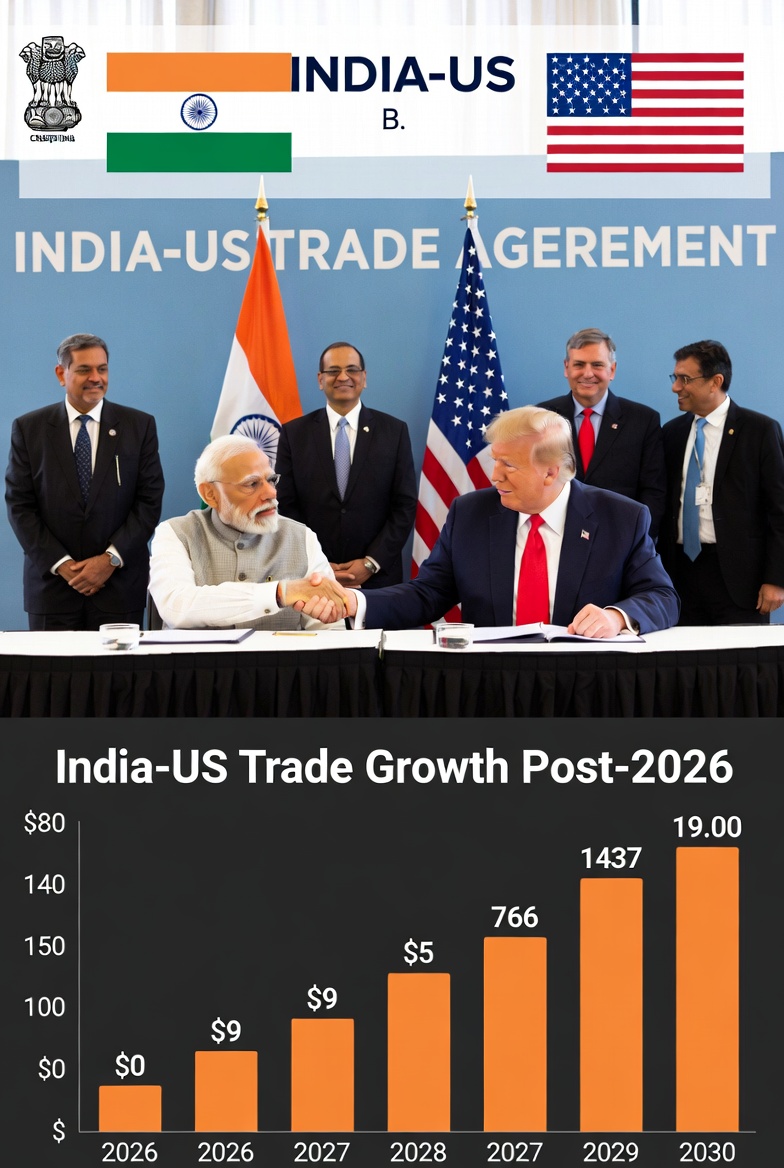
The India-US trade relationship, a pillar of the strategic partnership between the world's largest democracies, faced its most severe test in 2025-2026 amid escalating tariffs under the second Trump administration. What began as reciprocal measures to address trade imbalances escalated into a full-blown "trade war," with US tariffs on Indian exports reaching effective rates of 50% by mid-2025. This included a baseline reciprocal tariff of around 25-26% plus an additional 25% punitive duty linked to India's continued purchases of Russian oil.
However, diplomacy prevailed. On February 6, 2026, the United States and India announced a framework for an Interim Agreement on reciprocal and mutually beneficial trade. This landmark deal eliminated the additional 25% punitive tariff effective February 7, 2026, and reduced the reciprocal tariff on key Indian goods to 18%. In exchange, India committed to eliminating or reducing tariffs on US industrial goods and a wide range of agricultural products, while signaling intent to increase US imports significantly.
Background of India-US Trade Relations
Bilateral trade between India and the US has grown exponentially, crossing $200 billion annually by 2024, with India enjoying a goods trade surplus of approximately $45.8 billion. Key Indian exports include pharmaceuticals, textiles, gems, engineering goods, and IT services, while the US supplies energy, aircraft, and agricultural products.
Tensions trace back to Trump's first term, when the US revoked India's Generalized System of Preferences (GSP) in 2019, impacting $5.6 billion in duty-free exports. India retaliated with tariffs on select US goods. The Biden era saw some resolutions, including six WTO disputes settled in 2023 on steel, aluminum, and renewables.
Trump's 2025 return intensified pressures. Invoking a "national emergency" over persistent US trade deficits, Executive Order 14257 (April 2025) imposed reciprocal tariffs, starting at 10% baseline and escalating for India to around 26%. In August 2025, an additional 25% punitive tariff targeted India's Russian oil imports (which reached 40% of total crude in 2024), pushing effective rates to 50% on many goods. This disrupted Indian exporters, causing a 22% drop in US-bound shipments in early 2026 months.
India's average tariffs on US goods (around 13.5%) protected sensitive sectors like agriculture and autos, but the US viewed them as imbalanced. Non-tariff issues, including digital services tax (later lifted) and market access barriers, compounded the friction.
The Trade Dispute: Origins and Key Issues
The core "mudda" stemmed from trade imbalances, geopolitical energy alignments, and national security concerns. The US cited India's large surplus and Russian oil purchases (seen as undermining sanctions on Russia amid the Ukraine conflict) as justification for escalation.
Key developments:
- April 2025: Baseline reciprocal tariffs under EO 14257.
- August 2025: Additional 25% duty on Indian goods for Russian oil imports, effective rates hitting 50%.
- Impact: Indian exports to US fell sharply (e.g., 21.77% drop to $6.6 billion in January 2026), affecting textiles, leather, pharmaceuticals, and machinery.
The US pushed for greater market access in India's agriculture and industrial sectors, while India resisted opening sensitive areas to protect farmers and domestic industries.
Verified data from US Trade Representative and India's Ministry of Commerce highlight the deficit-driven rhetoric, but services trade (India's surplus in IT) balanced the overall picture.
India's Firm Stance: Not Bowing to Tariff Threats
India refused to "jhuka" under pressure, maintaining strategic autonomy while protecting economic interests. Commerce Minister Piyush Goyal and officials emphasized "Atmanirbhar Bharat," appealing to WTO principles and avoiding unilateral concessions.
To counter "terrif se hone vale loss" (losses from tariffs), India accelerated trade diversification:
- India-EU FTA (January 2026): Eliminates/reduces tariffs on 96.6% of goods by value; expected to double EU exports to India by 2032, saving €4 billion in duties for European firms. Boosts Indian textiles, pharma, and machinery exports by 15-20%.
- India-UK FTA (2025): Targets doubling trade to $50 billion by 2030 with 90% tariff reductions.
- India-Oman CEPA (2025): Duty-free access for 98% of Indian exports, strengthening Gulf ties.
- India-New Zealand FTA (2025): Aims to double trade in five years.
- India-EFTA TEPA (2024): Adds $10 billion in annual trade with Switzerland and others.
These deals cushioned US tariff impacts: Overall exports grew despite US slowdowns, with non-US markets showing resilience (e.g., exports to rest of world up slightly in early 2026). Diversification reduced US dependence, hedging against volatility.
Diplomatic Efforts: Bringing the US Back in Line
India's "kutniti" combined firmness with engagement. High-level calls between PM Modi and President Trump, Quad summits, and negotiations emphasized mutual benefits and shared security interests.
The breakthrough: February 6, 2026 Joint Statement announced the Interim Agreement framework. Key terms:
- US eliminates additional 25% punitive tariff (effective Feb 7, 2026) in recognition of India's commitment to cease Russian oil imports and expand defense cooperation.
- US applies 18% reciprocal tariff on select Indian goods (textiles, apparel, leather, footwear, plastics, chemicals, machinery, etc.).
- Post-finalization, removes reciprocal tariffs on generics, gems, diamonds, aircraft parts.
- India eliminates/reduces tariffs on US industrial goods and agri-products (DDGs, sorghum, tree nuts, fruits, soybean oil, wine, spirits).
India's delegation visited Washington in mid-February 2026 to finalize details, with the full Interim Agreement expected by March 2026, paving way for a comprehensive Bilateral Trade Agreement (BTA).
This de-escalation aligned the US "vapis line par" through pragmatic diplomacy, recognizing India's strategic value.
The 2026 Interim Deal: Key Milestones and Impacts
The February 2026 framework slashed effective US tariffs from 50% to 18%, providing immediate relief. US executive orders modified duties, with monitoring to prevent backsliding on Russian oil.
Impacts:
- Indian exporters gain competitiveness; sectors like textiles benefit from aligned rates (e.g., zero if using US cotton, per reports).
- Projected boost: Enhanced market access, potential $500 billion US import intent over five years (non-binding), focusing on energy, tech, coal.
- Broader effects: Stabilizes supply chains, supports Quad momentum, and counters global fragmentation.
Table: US Tariff Evolution on Indian Goods (2025-2026)
| Period | Baseline Reciprocal | Punitive (Russian Oil) | Effective Rate | Status |
|---|---|---|---|---|
| Pre-2025 | Low (2-3%) | None | Low | Normal |
| April-Aug 2025 | ~26% | None | ~26% | EO 14257 |
| Aug 2025-Jan 2026 | ~25-26% | +25% | ~50% | Escalation |
| Feb 7, 2026 onward | 18% | Removed | 18% | Interim Framework |
Sources: White House, KPMG, Reuters.
Economic Impact on India
The deal mitigates losses: January 2026 saw widened trade deficit due to prior 50% tariffs, but relief spurred recovery. Export-oriented sectors (textiles, pharma) expect earnings visibility; Goldman Sachs revised India's 2026 GDP growth upward to 6.9%.
Diversification ensured resilience: EU FTA and others offset US exposure, reducing dependence from ~18% to lower levels. Challenges remain — potential deficit widening from increased US imports, agriculture sensitivities — but overall positive for MSMEs and jobs.
Future Prospects: Toward a Full Bilateral Trade Agreement
The Interim Agreement is a stepping stone to a comprehensive BTA, covering services, investment, and supply chains. With tariffs stabilized, trade could surge, strengthening strategic ties amid Indo-Pacific dynamics.
India's approach — resilience, diversification, diplomacy — sets a model for navigating great-power pressures.
Conclusion
The India-US trade saga of 2025-2026 transformed from confrontation to cooperation. By standing firm, diversifying markets via EU, UK, Oman deals, and engaging diplomatically, India secured a favorable interim resolution: US tariffs down to 18%, punitive duties removed. This "historic milestone" (per White House) underscores mutual benefits in a volatile global order. As negotiations continue toward a full BTA, the partnership emerges stronger, benefiting businesses, economies, and strategic stability.
Frequently Asked Questions
What is the primary significance of India-US Trade War 2026: From 50% Tariffs to 18%Interim Deal – India's Resilience, Diversification, and Diplomatic Victory?
The India-US trade relationship, a pillar of the strategic partnership between the world's largest democracies, faced its most severe test in 2025-2026 amid escalating tariffs under the second Trump administration. What began as reciprocal measures to address trade imbalances escalated into a full-blown "trade war," with US tariffs on Indian exports reaching effective rates of 50% by mid-2025.
How does this development impact International Affairs?
This included a baseline reciprocal tariff of around 25-26% plus an additional 25% punitive duty linked to India's continued purchases of Russian oil.However, diplomacy prevailed. On February 6, 2026, the United States and India announced a framework for an Interim Agreement on reciprocal and mutually beneficial trade.
What are the key future projections to monitor?
This landmark deal eliminated the additional 25% punitive tariff effective February 7, 2026, and reduced the reciprocal tariff on key Indian goods to 18%.